Tag

Thermosphere

All articles tagged with #thermosphere

science1 year ago

Scientists Uncover the Mystery Behind Uranus' Cooling

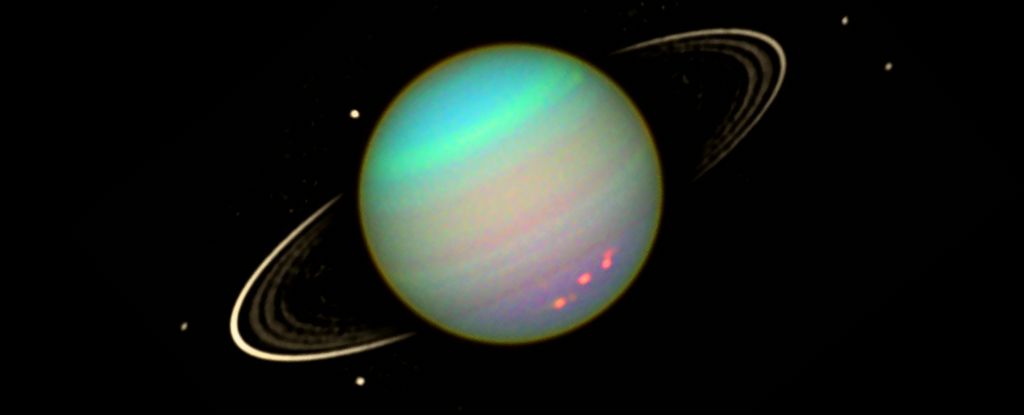
Uranus' upper atmosphere is cooling, a phenomenon not observed in other planets, and new research attributes this to the solar wind rather than solar photons. The solar wind's decreasing pressure allows Uranus' magnetosphere to expand, reducing the solar wind's heating effect on the thermosphere. This discovery, published in Geophysical Review Letters, could influence future missions to Uranus and has implications for understanding exoplanet atmospheres, suggesting that stellar wind, rather than radiation, may govern their thermal evolution.
science-and-technology2 years ago

NASA warns of satellite peril from solar storms.

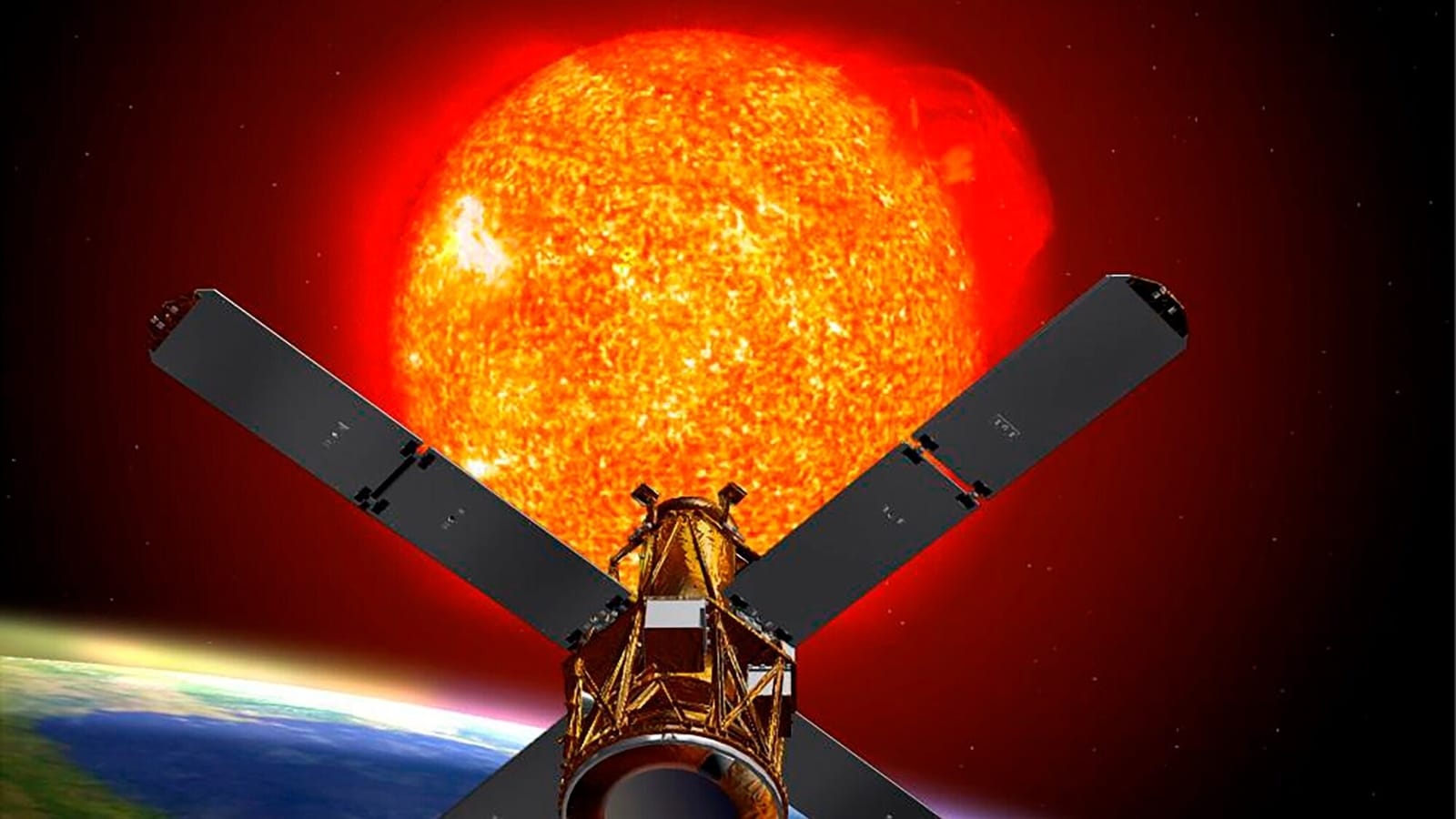
Intense solar storms have caused a significant increase in the temperature of the Earth's thermosphere, the second-highest layer of the atmosphere, according to NASA. This temperature spike poses challenges for satellites in low-Earth orbit, as the expanding and warming thermosphere increases aerodynamic drag on spacecraft, potentially leading to collisions or orbital instability. While the thermosphere's temperature is expected to continue rising in the coming years due to heightened solar activity, long-term trends suggest a decline due to the effects of climate change.

science2 years ago

Record-breaking solar storms intensify space weather, putting Earth and satellites in danger.

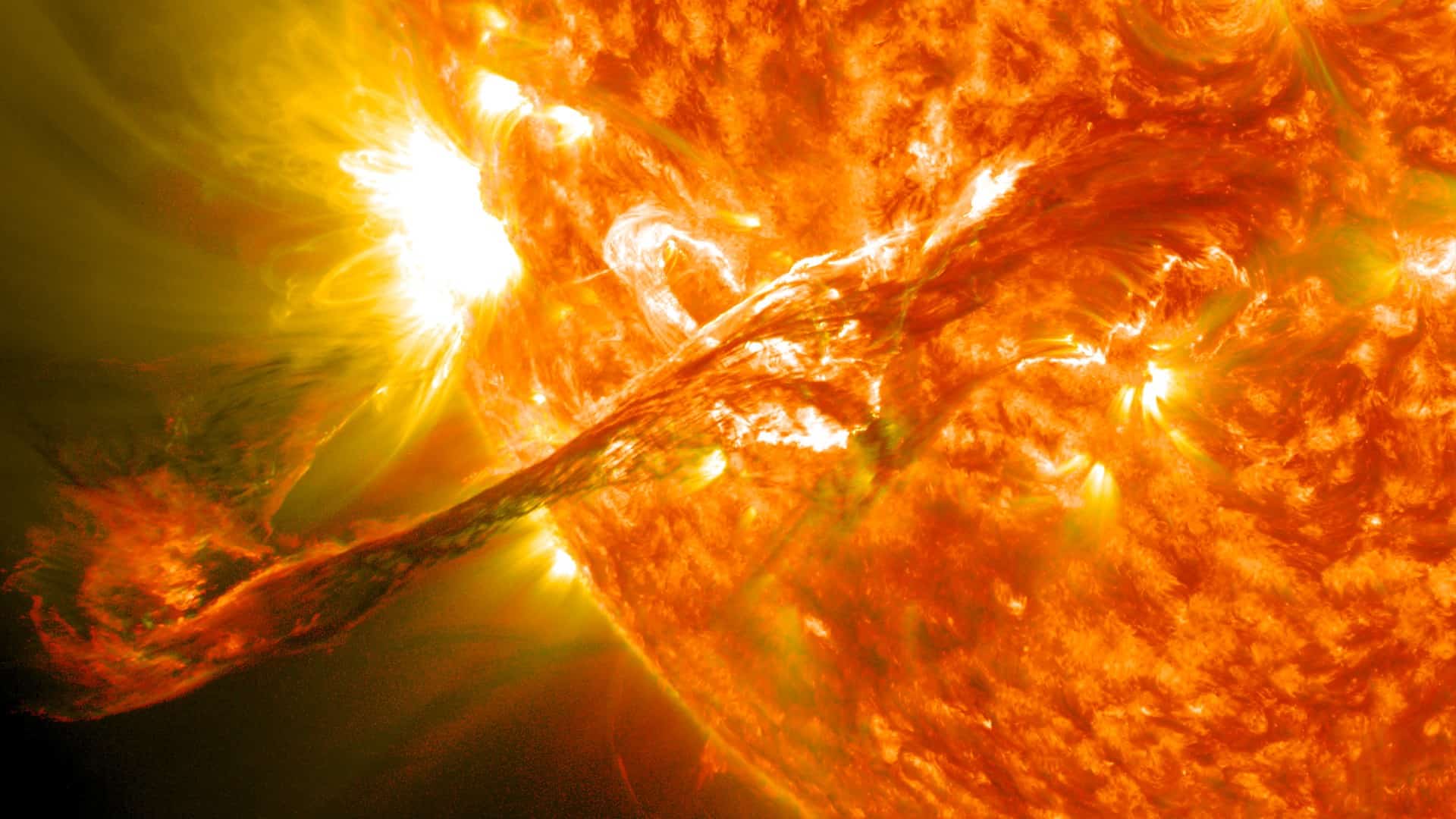
Solar storms are causing Earth's thermosphere to experience a significant temperature increase, the highest it's been in two decades, and this warming trend may continue over the next few years as the sun's activity intensifies. This could have potentially negative implications for Earth-orbiting satellites, as the thermosphere expands as it warms, resulting in increased aerodynamic drag on all satellites and on space debris. Developing strategies to predict space weather more accurately and implementing contingency plans for satellite repositioning is essential for safeguarding valuable space assets.

science2 years ago

Solar Storms Heat Up Earth's Thermosphere to 20-Year High

Earth's thermosphere reached its highest temperature in nearly 20 years due to energy from geomagnetic storms caused by solar activity. The temperature in the thermosphere is expected to continue to rise over the next few years as the sun's activity increases, which could impact Earth-orbiting satellites. Changes to the thermosphere can pose challenges for satellites in low-Earth orbit, as increased aerodynamic drag can pull satellites closer to Earth, causing them to crash into one another or fall out of orbit.

science2 years ago

Solar Storms Heat Up Earth's Thermosphere to 20-Year High

Earth's thermosphere, the second-highest layer of the atmosphere, recently hit a near 20-year temperature peak due to energy from geomagnetic storms caused by solar activity. The temperature is expected to continue to climb over the next few years, which could impact Earth-orbiting satellites. Changes to the thermosphere can pose challenges for satellites in low-Earth orbit that are positioned around the thermosphere's upper boundary. The unpredictability of space weather makes it hard to know when these manoeuvres are required until it is often too late.

science2 years ago

"Space Satellite Observes Carbon Dioxide Aurora"

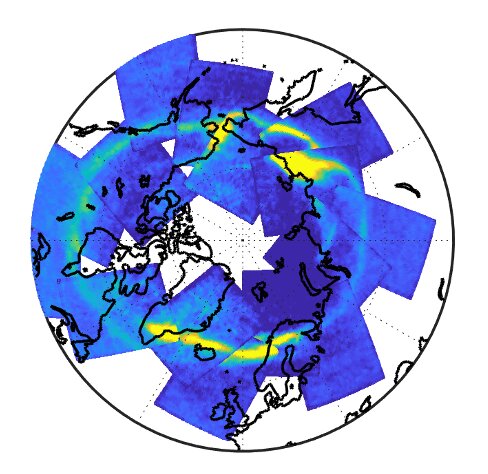
Scientists have used satellite measurements to observe aurora associated with carbon dioxide in Earth's thermosphere. Carbon dioxide becomes vibrationally excited during an aurora, emitting more infrared radiation than typically observed in the atmosphere. The Atmospheric Infrared Sounder, which gathers infrared energy emitted from Earth's surface and atmosphere globally, was used to observe elevated infrared signals from carbon dioxide during an aurora. This dataset and analysis method provides the first daily global observations over regions of the northern and southern hemispheres using a nadir-viewing satellite instrument.

tech2 years ago

Solar Storms Threaten Satellites and Power Grids

Solar storms in 2023 have caused the thermosphere to shift upwards and heat up, increasing the risk for satellites in low Earth orbit. The heated-up air will be more prone to drag and can push around the satellites, resulting in collisions and damage to instruments. NASA's TIMED satellite has recorded the thermosphere to be at a 20-year high. With the peak of the Solar Cycle approaching, more solar storms are expected, which can further worsen the condition for Earth's low-orbit satellites.