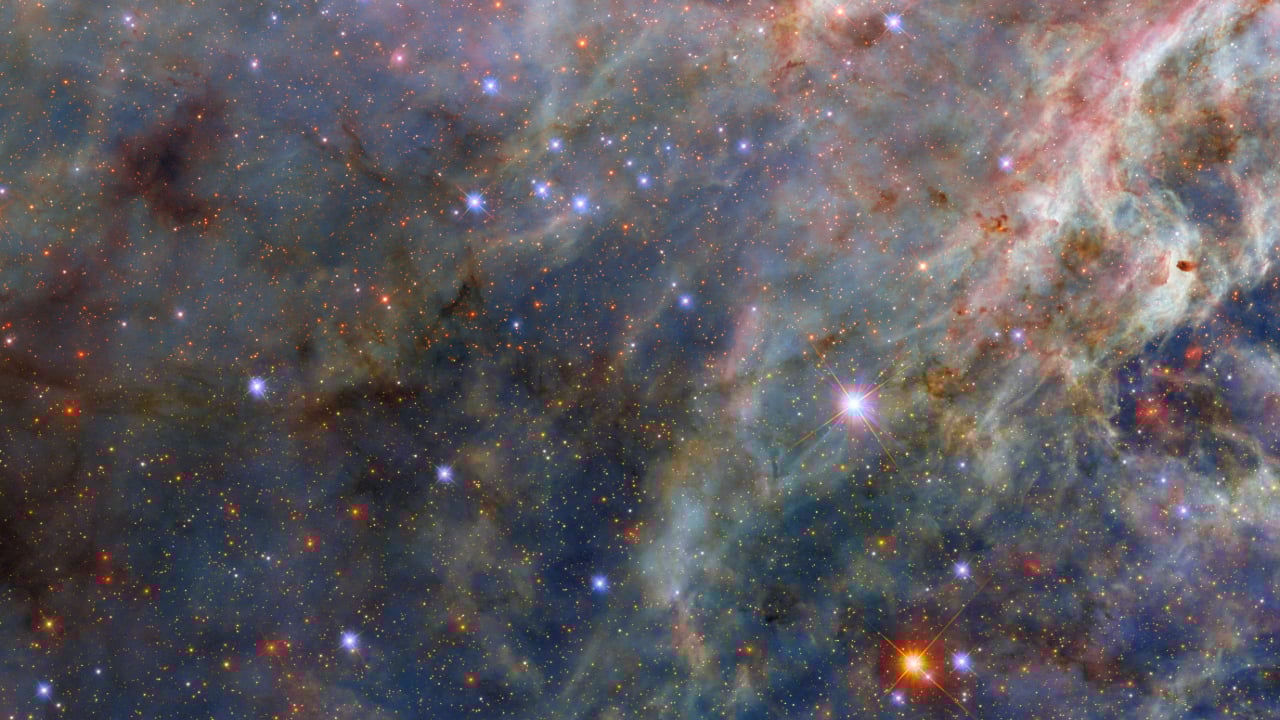
Hubble captured a stunning image of the Tarantula nebula in the Large Magellanic Cloud, revealing active star formation and massive Wolf-Rayet stars, highlighting the nebula as a significant stellar nursery about 160,000 light-years away.
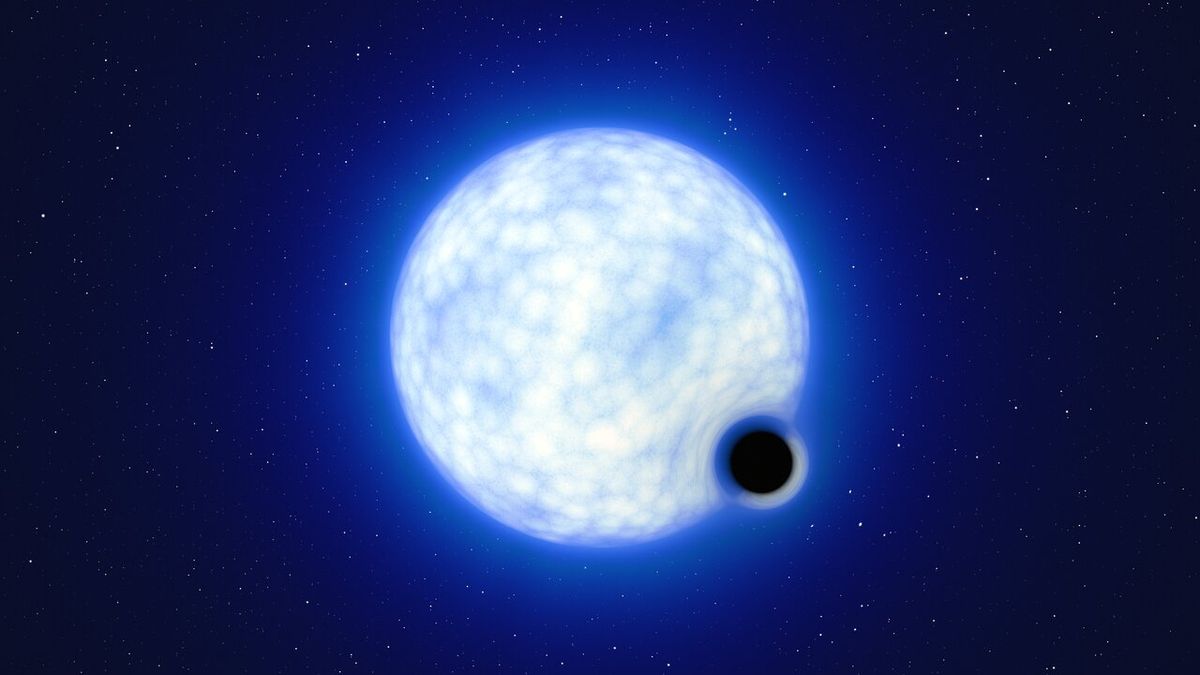
Scientists have found evidence that some massive stars may collapse into black holes without a supernova explosion, as observed in the binary system VFTS 243. This challenges the traditional understanding of stellar evolution and has implications for the creation and distribution of elements in the universe.
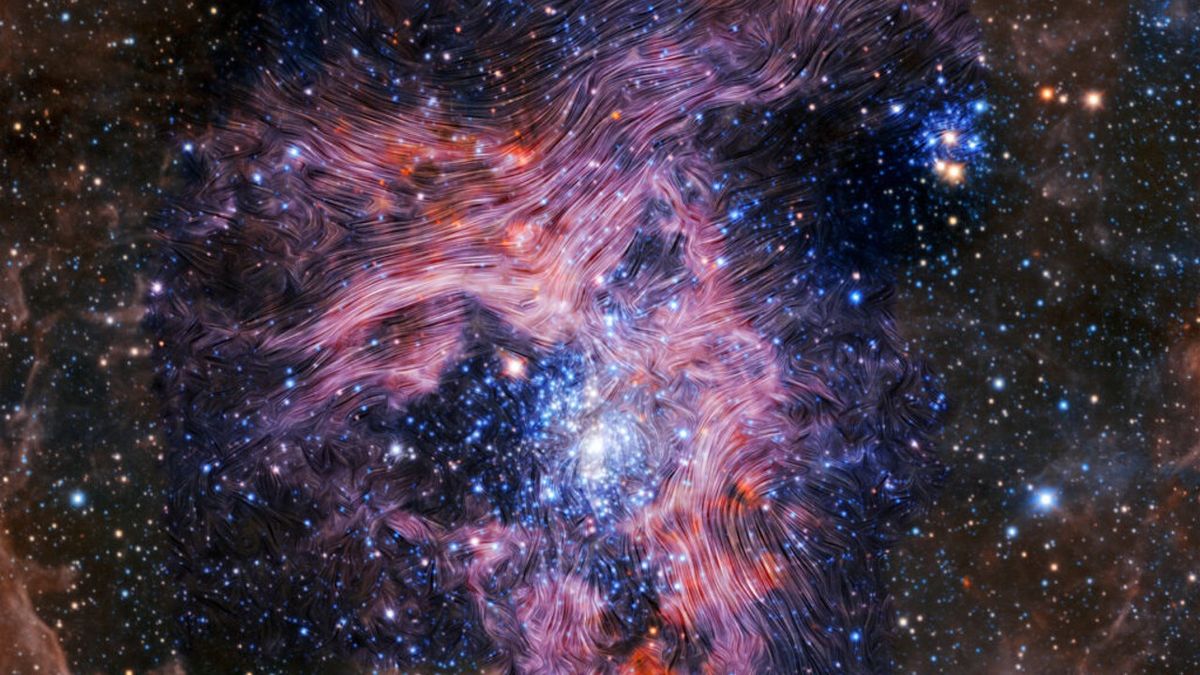
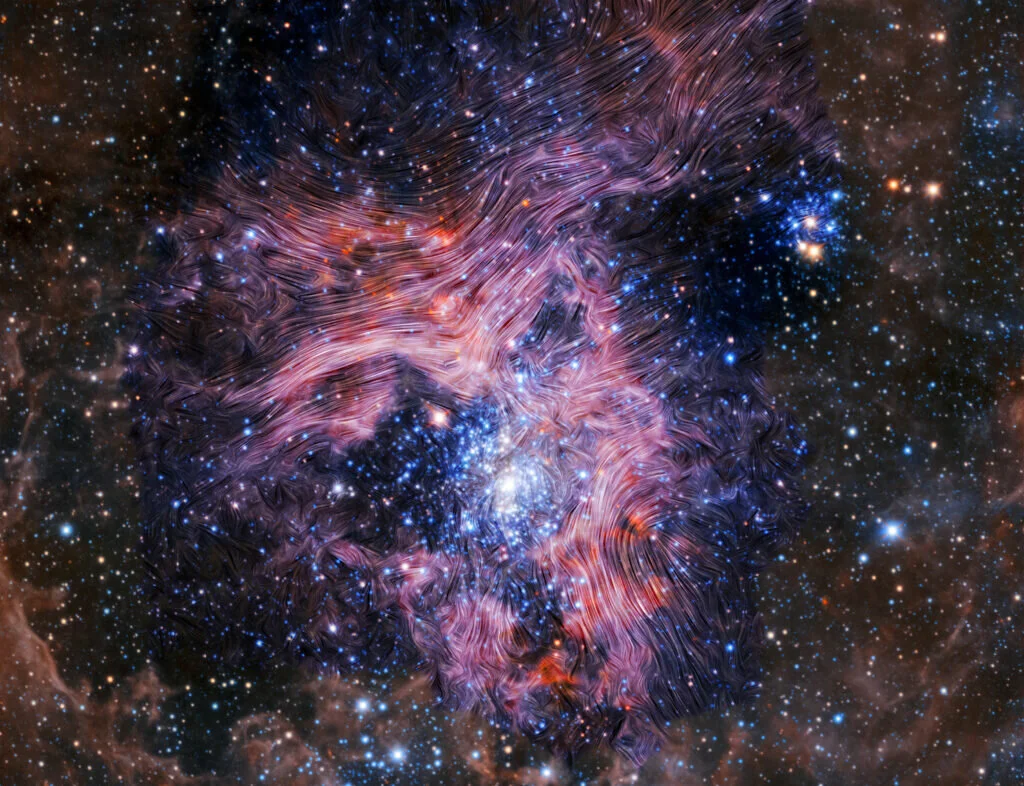
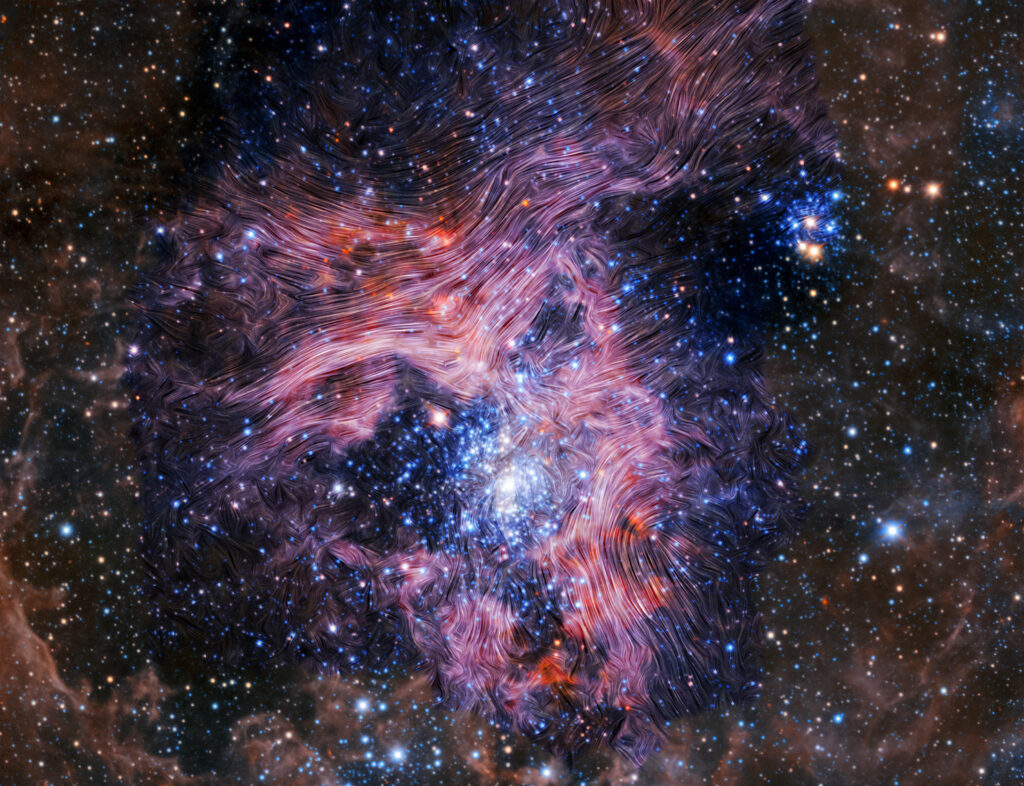
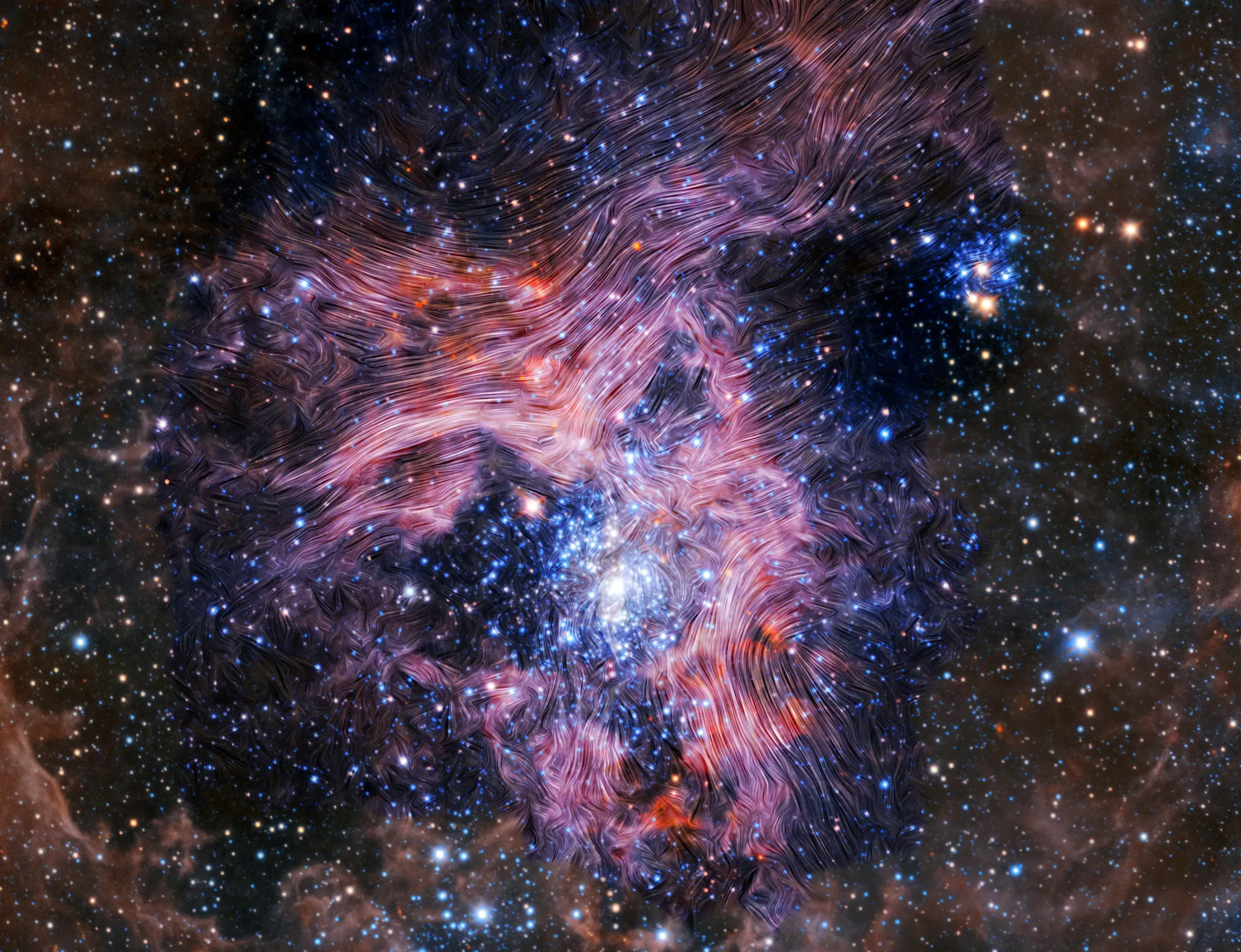
The Tarantula Nebula, a region of star-forming gas in the Large Magellanic Cloud, may owe its longevity to powerful magnetic fields at its heart, according to new research. The magnetic fields constrict gases in some areas and allow them to escape in others, which could explain why the region displays a lower gas pressure than would be expected alongside the intense radiation from the massive star cluster near its center. The interplay of gravity and magnetic fields in the region was observed using the Stratospheric Observatory for Infrared Astronomy (SOFIA) High-resolution Airborne Wideband Camera Plus (HAWC+) instrument.
The Tarantula Nebula, a star formation region in the Large Magellanic Cloud, is dominated by a massive cluster of stars called R136. The stars are both young and massive, and when enough of them are concentrated in one area, it's called a starburst region. In a new paper published in The Astrophysical Journal, researchers explain that the magnetic fields in the Tarantula Nebula are responsible for keeping the region together and regulating the flow of gas, allowing for ongoing star formation despite the combined stellar winds from all the young stars.
The Tarantula Nebula, a star formation region in the Large Magellanic Cloud, is dominated by a massive cluster of young and massive stars called R136. The stars in R136 output enormous amounts of energy, shaping the nebula. However, the center of the nebula is less massive than expected, and the gas in the region should be dispersed, slowing star formation. A new study using SOFIA's observations shows that the magnetic fields in the Tarantula Nebula are responsible for keeping the region together and regulating the flow of gas, allowing star formation to continue. More research is needed to understand the role of magnetic fields in shaping the entire nebula.
New research from the Stratospheric Observatory for Infrared Astronomy (SOFIA) has shown that the magnetic fields in 30 Doradus, also known as the Tarantula Nebula, could be the key to its surprising behavior. The recent study found that the magnetic fields in this region are simultaneously complex and organized, with vast variations in geometry related to the large-scale expanding structures at play. The magnetic fields are strong enough to resist turbulence, regulate gas motion, and hold the cloud's structure intact, but weaker in some spots, enabling gas to escape and inflate the giant shells, allowing stars to continue to form despite the strong magnetic fields.