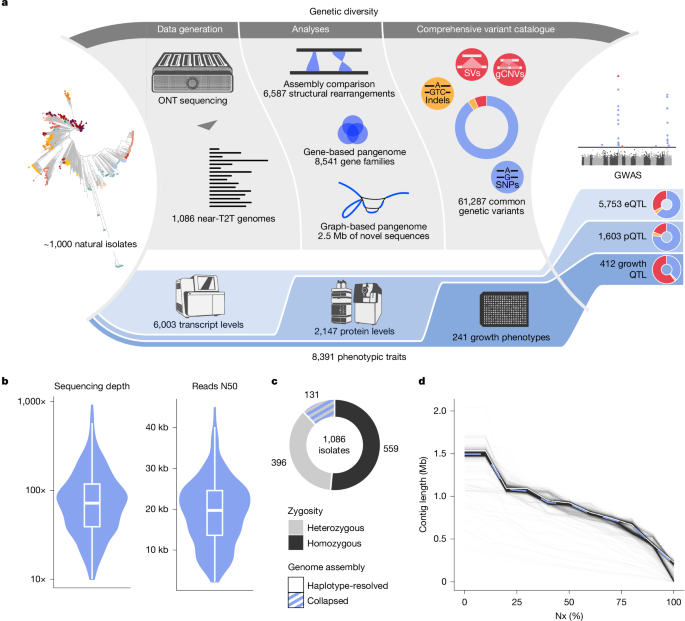
This study assembled near telomere-to-telomere genomes for 1,086 yeast isolates, revealing extensive structural variation and gene content diversity, and demonstrated that structural variants are more frequently associated with phenotypic traits and exhibit greater pleiotropy than SNPs, significantly advancing our understanding of the genetic basis of phenotypic diversity in yeast.
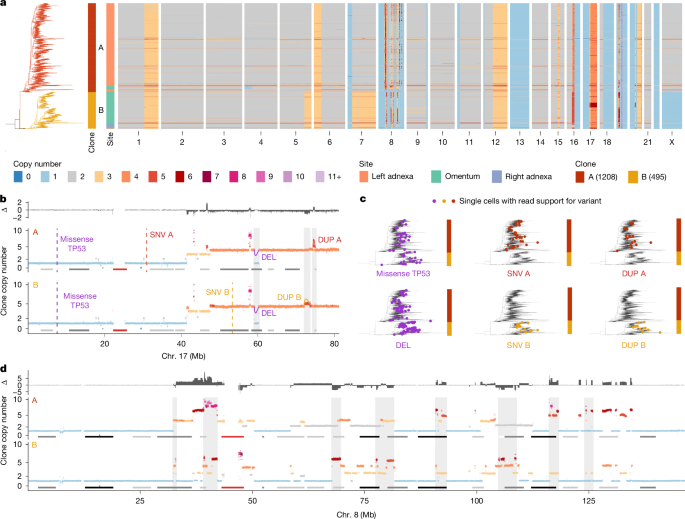
The study introduces CloneSeq-SV, a method combining single-cell whole-genome sequencing and circulating tumor DNA analysis to track clonal evolution and structural variants in ovarian cancer, revealing mechanisms of drug resistance and potential for adaptive therapy.
Researchers at the National Institutes of Health have identified new genetic risk factors for non-Alzheimer's dementia, specifically Lewy body dementia (LBD) and frontotemporal dementia (FTD). The team identified large-scale DNA changes, known as structural variants, that could increase the risk of these diseases. A previously unknown variant in the gene TCPN1 was linked to a higher risk for LBD, highlighting the significance of genetic research in combating neurodegenerative diseases. The team created a data catalog, analysis code, and an interactive app, making them available to the scientific community to facilitate further research.
NIH researchers have identified new genetic risk factors for Lewy body dementia (LBD) and frontotemporal dementia (FTD) by analyzing thousands of DNA samples and identifying large-scale DNA changes, known as structural variants. The team discovered several structural variants that could be risk factors for LBD and FTD, including a previously unknown variant in the gene TCPN1. The analyses also identified two well-established risk factors for FTD changes in the C9orf72 and MAPT genes. The researchers generated a catalog based on the data obtained in these analyses, which is now available to the scientific community for use in their studies.