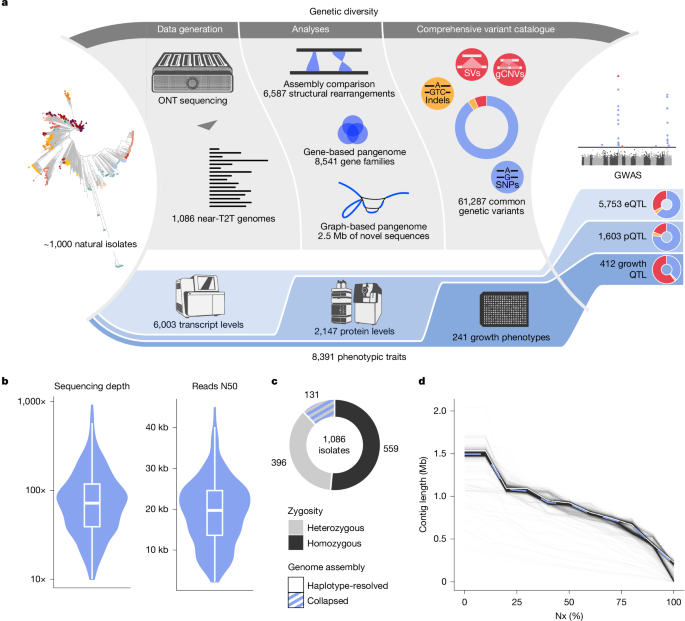
This study assembled near telomere-to-telomere genomes for 1,086 yeast isolates, revealing extensive structural variation and gene content diversity, and demonstrated that structural variants are more frequently associated with phenotypic traits and exhibit greater pleiotropy than SNPs, significantly advancing our understanding of the genetic basis of phenotypic diversity in yeast.
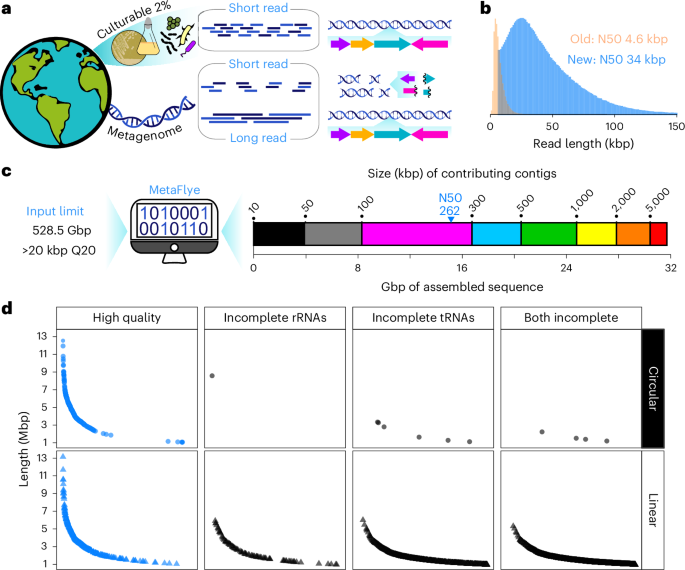
A soil metagenome was sequenced using terabase-scale long-read nanopore technology, leading to the assembly of hundreds of complete bacterial genomes and the discovery of novel biosynthetic gene clusters, including new antibiotics, demonstrating the power of long-read sequencing for exploring microbial dark matter and natural product potential.
Scientists have achieved the most complete decoding of the human genome to date by filling in 92% of previously unresolved DNA gaps using advanced long-read sequencing techniques, revealing important genetic variations linked to health conditions and improving the accuracy of genetic testing across diverse populations.