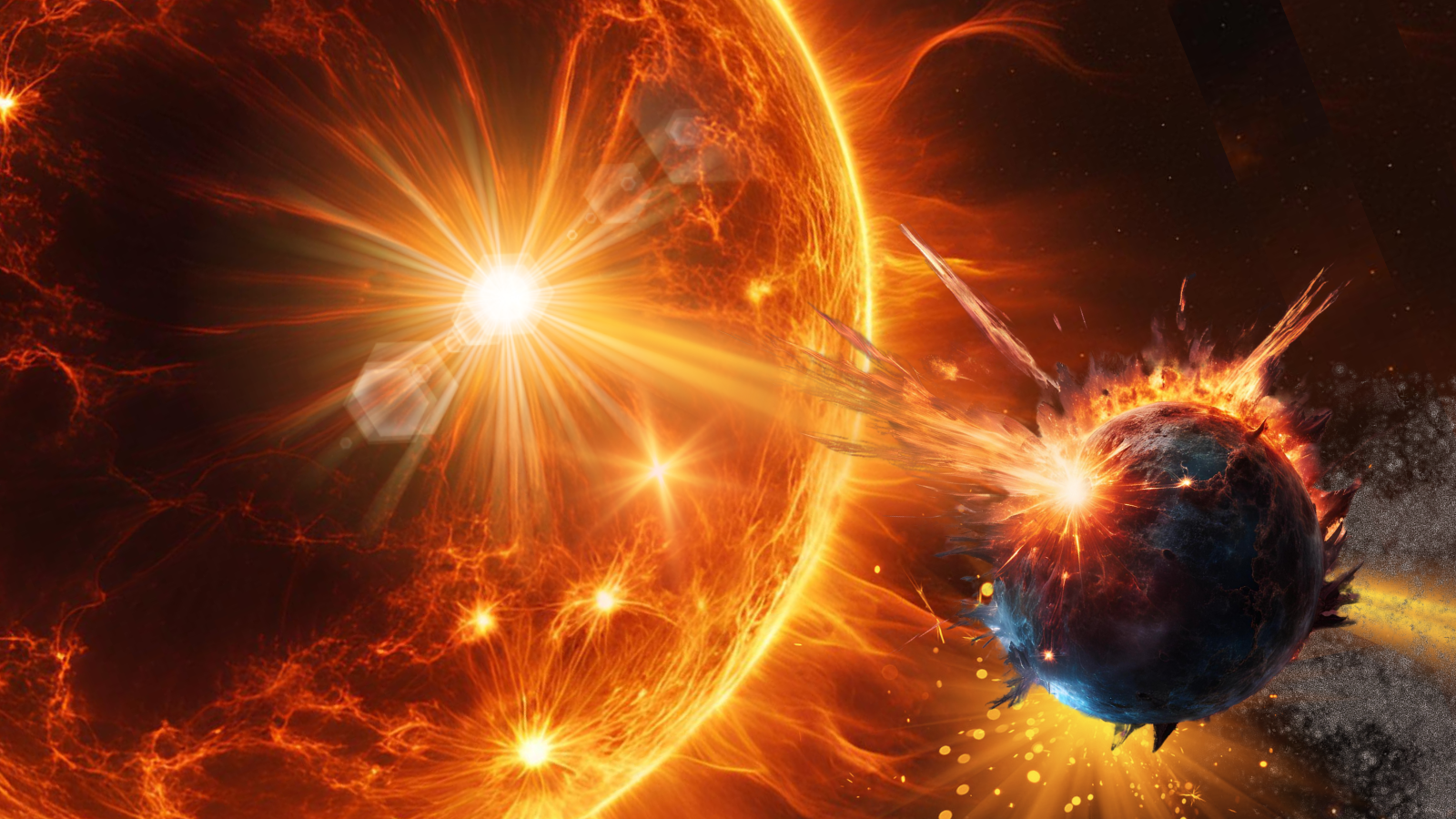
Scientists using TESS data have observed that planets are becoming rarer around aging stars, likely due to the stars' expansion and tidal forces that cause planets to decay or be engulfed, providing insights into the future fate of our solar system.
Astrophysicists have detected radio signals from the exoplanet YZ Ceti b, suggesting it may have a magnetic field that interacts with its star, providing insights into how rocky planets can retain their atmospheres despite stellar activity.
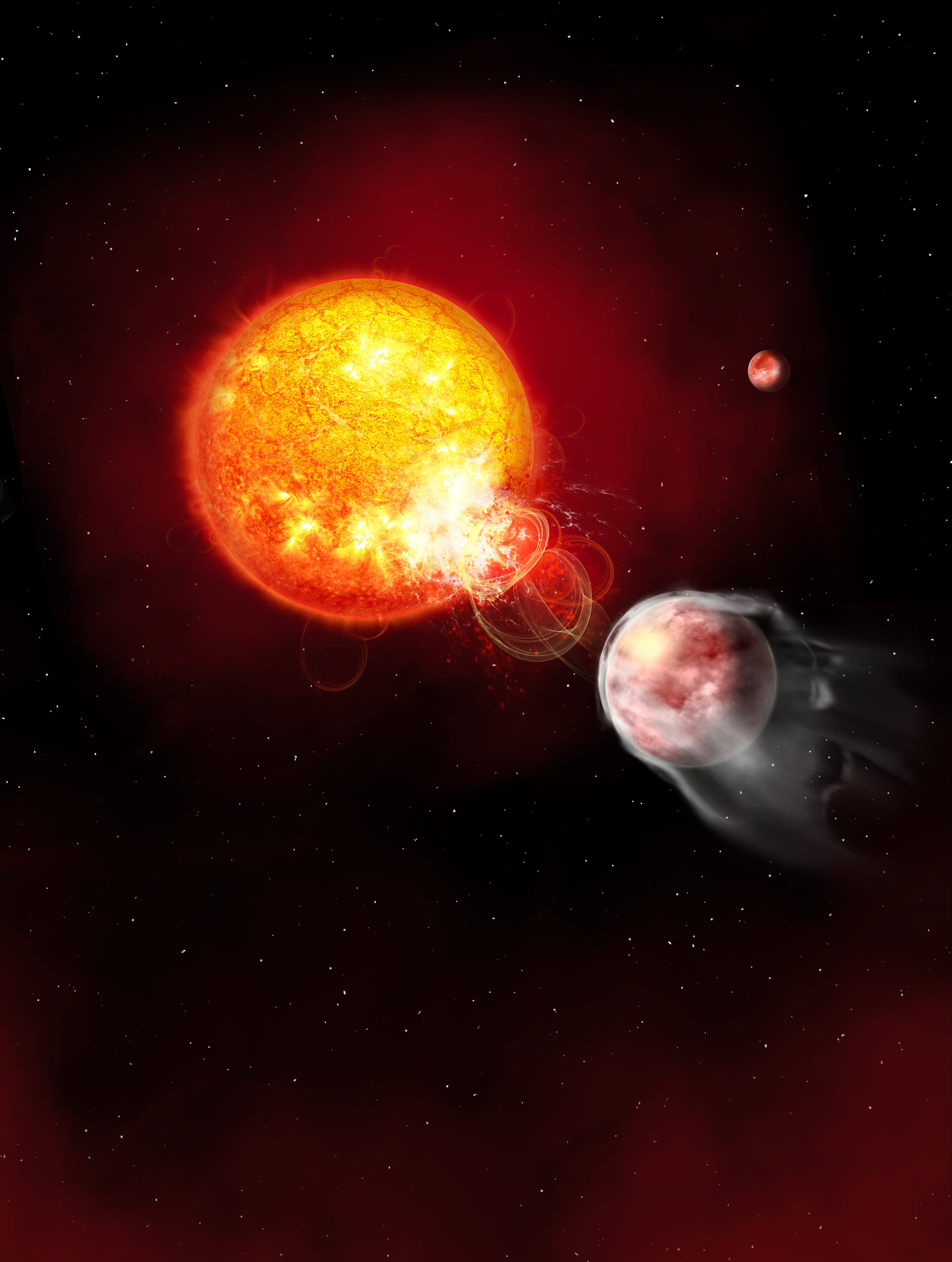
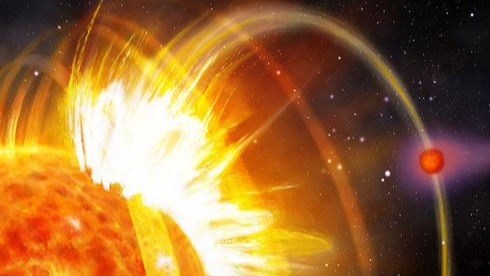
Astronomers using Cheops and TESS have discovered that the exoplanet HIP 67522 b, which orbits a young, active star, appears to trigger intense stellar flares that erode its wispy atmosphere, potentially leading to its transformation from a Jupiter-sized to a Neptune-sized planet within 100 million years, marking the first evidence of a planet influencing its host star's magnetic activity.
Astronomers have observed a Jupiter-sized exoplanet, HIP 67522 b, so close to its star that it triggers intense stellar flares, causing the star to erupt and potentially shrinking the planet over time, marking a first in observing a planet influencing its host star.
Astronomers have observed a Jupiter-sized exoplanet, HIP 67522 b, so close to its star that it triggers intense stellar flares, causing the star to explode and gradually strip away the planet's atmosphere, marking a new phenomenon in star-planet interactions.
The giant planet Halla has defied the odds by surviving the engulfment of its dying star, Baekdu. Scientists propose that Baekdu may have formed from the merger of two stars, preventing it from growing large enough to swallow Halla. Alternatively, Halla could be a newborn planet that formed from the debris of the stellar merger. However, Halla's survival is temporary, as Baekdu is expected to expand again in the future. This discovery suggests the existence of other death-defying planets in the galaxy and calls for further research on star-planet interactions and stellar mergers.
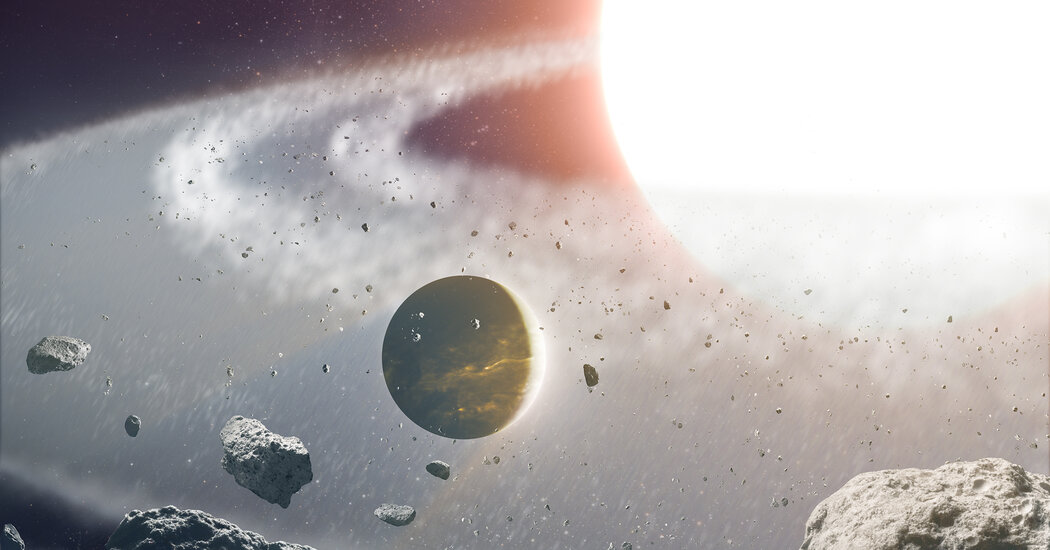
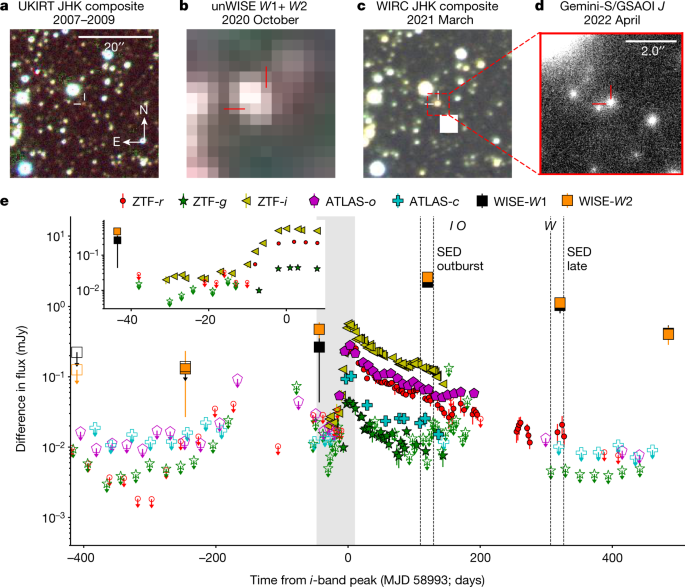
Astronomers have observed an infrared transient from a star that appears to have engulfed a planet. The event, detected by the Zwicky Transient Facility, is thought to have been caused by the tidal forces of the star tearing apart the planet as it orbited too close. The observation provides new insights into the interaction between stars and planets in binary systems and the effects of tidal forces.