
Astronomers have discovered a planet, named Halla, orbiting a red giant star called Baekdu, which should have been engulfed by the star's expansion. The star has already started fusing helium in its core, indicating that it should have grown large enough to consume the planet. However, two possible scenarios have been proposed to explain Halla's survival: either Baekdu was once part of a binary star system that prevented its expansion, or Halla is a relatively newborn planet formed from the collision of two stars. This discovery challenges our understanding of where exoplanets can exist.
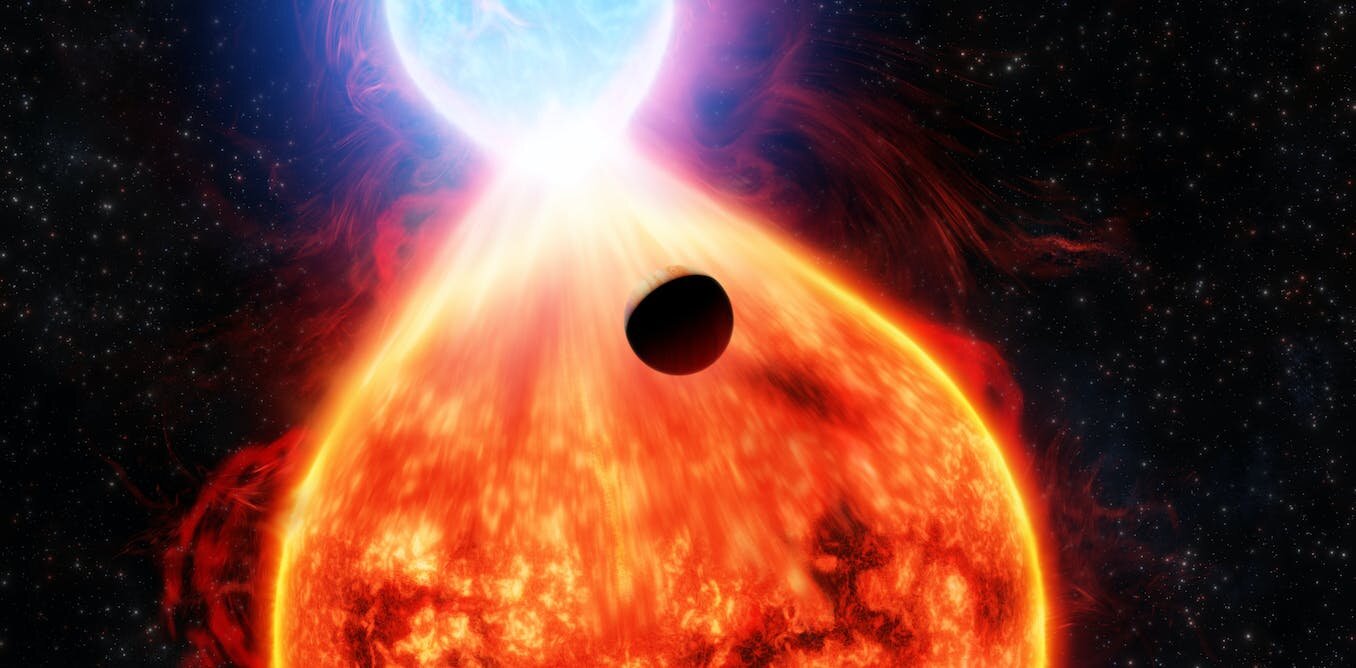
Astronomers have discovered a planet, named Halla, orbiting a red giant star called Baekdu, which is currently fusing helium in its core. This is puzzling because the star should have grown so large in the past that it would have engulfed the planet. Possible explanations include the star being part of a binary system, preventing its expansion, or the planet being a relatively newborn one formed from a collision between two stars. This discovery challenges our understanding of where exoplanets can exist.
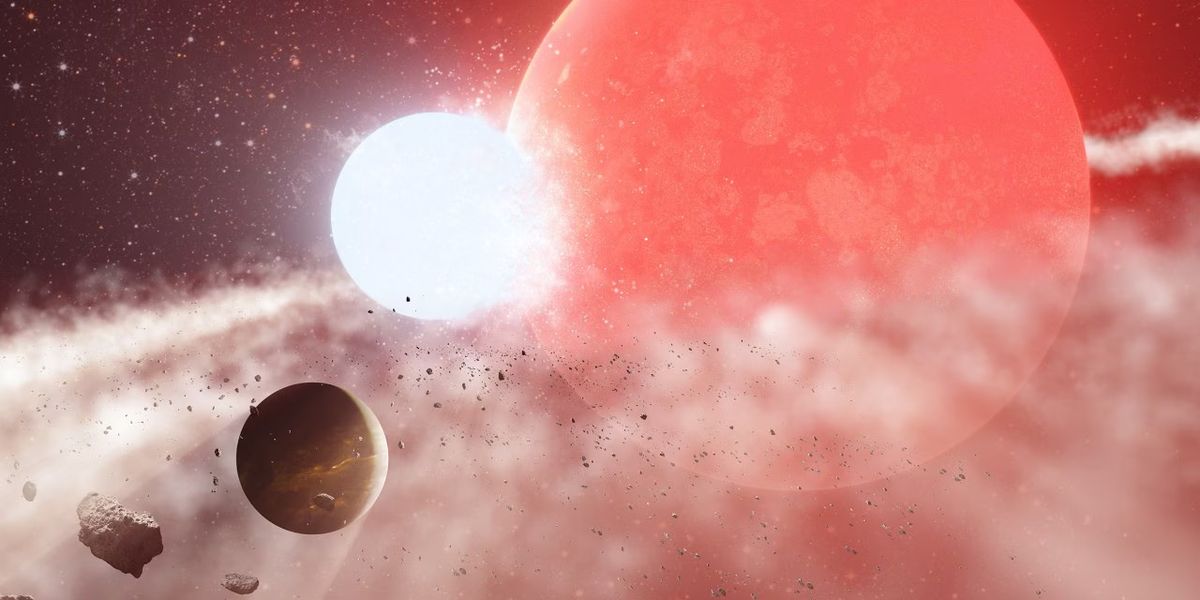
Astronomers have discovered a Jupiter-size planet named Halla that miraculously survived the explosive expansion of its host star, Baekdu. Halla, also known as a "hot Jupiter," should have been engulfed and incinerated by the expanding star, but it managed to survive. The researchers propose two possibilities: either Halla was born after Baekdu transformed into a red giant, or Baekdu was once part of a binary system that later merged, preventing either star from expanding enough to consume Halla.
The giant planet Halla has defied the odds by surviving the engulfment of its dying star, Baekdu. Scientists propose that Baekdu may have formed from the merger of two stars, preventing it from growing large enough to swallow Halla. Alternatively, Halla could be a newborn planet that formed from the debris of the stellar merger. However, Halla's survival is temporary, as Baekdu is expected to expand again in the future. This discovery suggests the existence of other death-defying planets in the galaxy and calls for further research on star-planet interactions and stellar mergers.