The article discusses the upcoming potential government shutdown in the US, highlighting the longest shutdown in over 40 years from December 2018 to January 2019, its costs, and the current political situation where Congress has not passed necessary funding bills, risking a full shutdown if an agreement isn't reached by October 1.
House Republican leaders have reached a spending deal with the White House on a bill to fund the Department of Homeland Security, paving the way for six spending bills to pass by the end of the week. The package includes funding for defense, homeland security, financial services, general government, labor-HHS, the legislative branch, and state-foreign operations, and would fund the government until the end of the fiscal year. With current funding set to end on Friday, Congress faces a tight timeline to finalize the text of the agreement and bring it for votes in both chambers before the deadline.
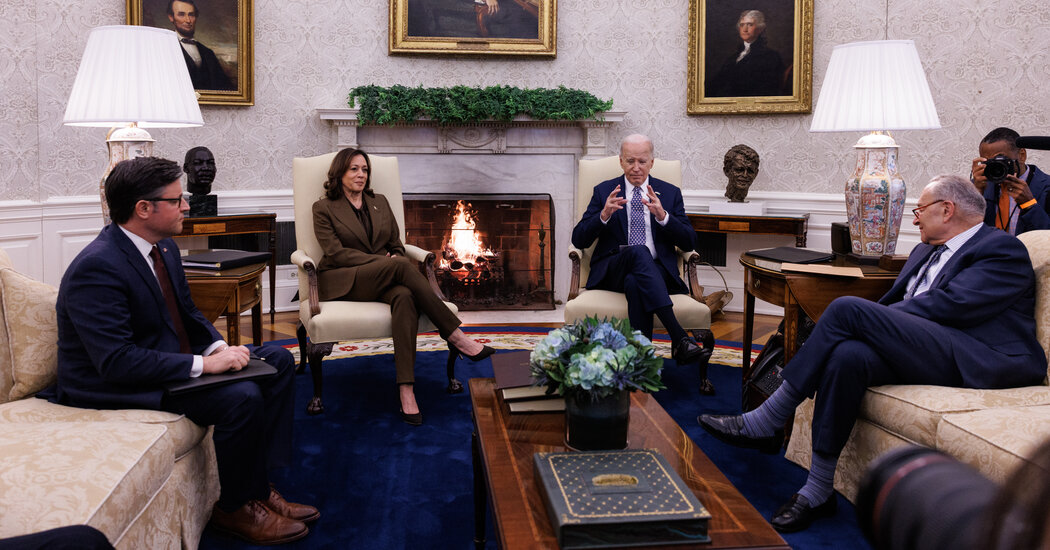
Congressional leaders, including Speaker Mike Johnson and Senator Chuck Schumer, expressed optimism about avoiding a government shutdown after meeting with President Biden, but no concrete deal has been reached yet. With just days to go before the deadline, there is pressure to reach a spending deal amidst objections from right-wing lawmakers, and while progress has been made, it remains uncertain whether an agreement will be reached before the funding deadline.
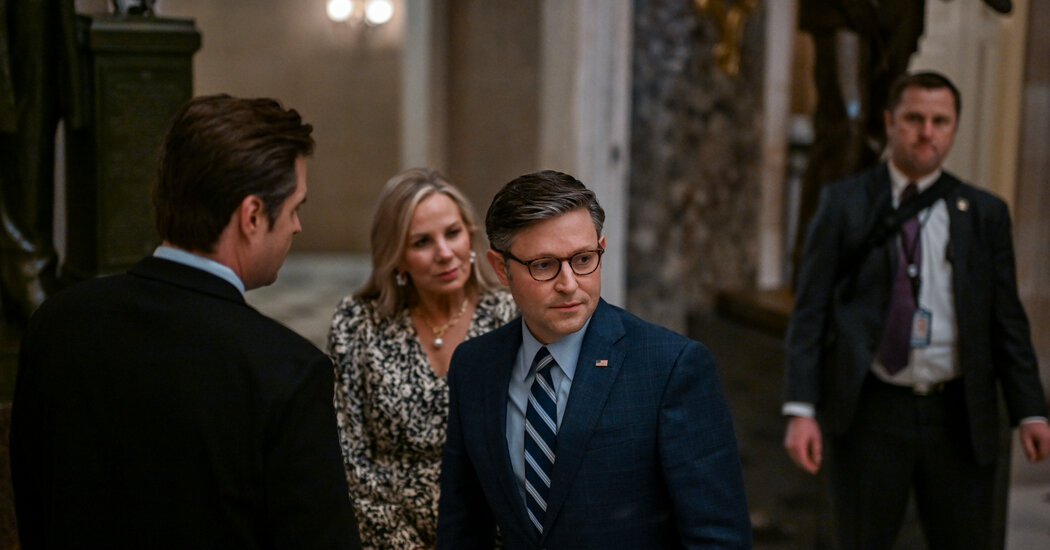
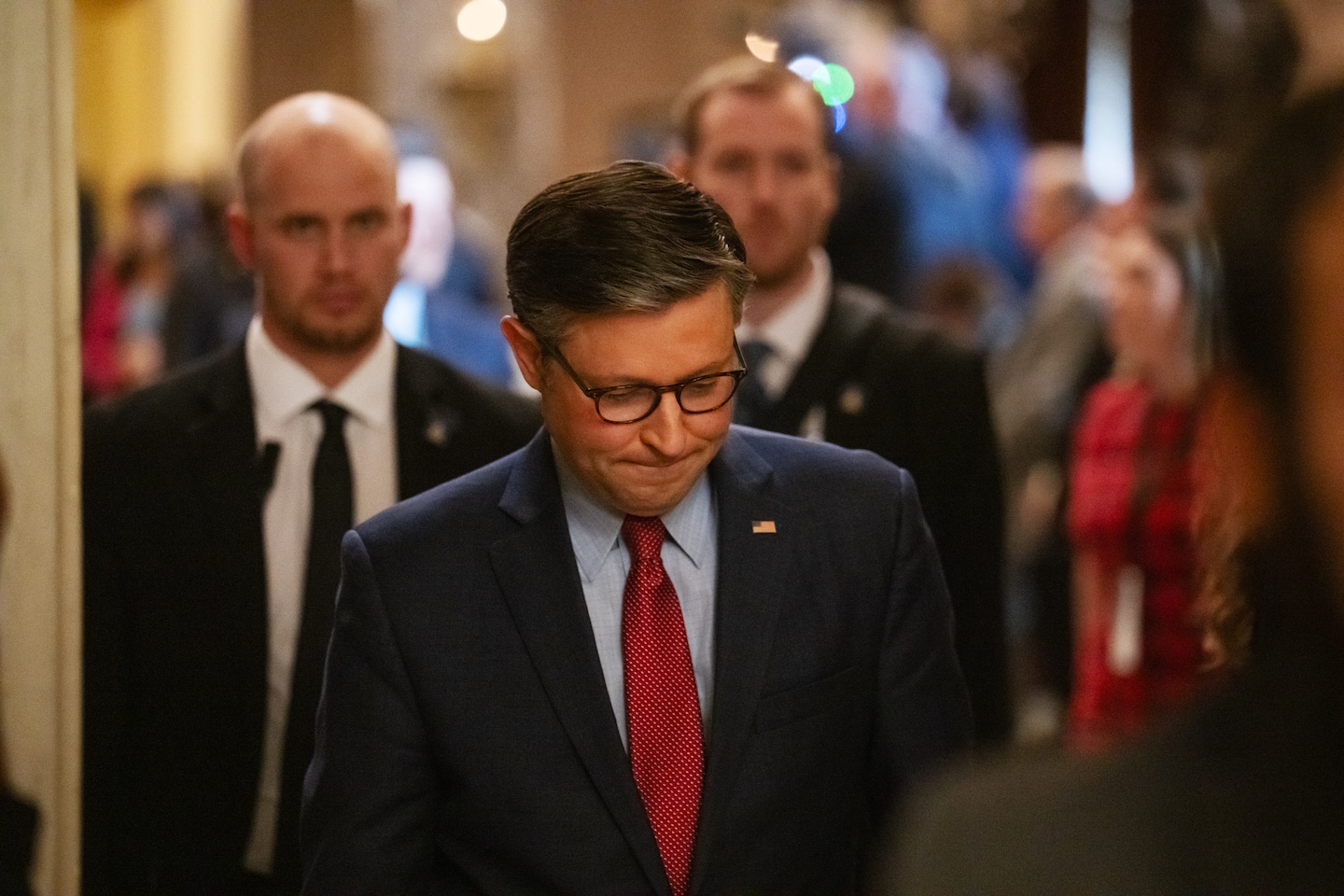
Speaker Mike Johnson has announced that he will stand by the spending deal he negotiated with Democrats to avert a government shutdown, despite pressure from hard-right Republicans to abandon the agreement. This decision means that Johnson will need to work with Democrats to pass a short-term bill to keep the government funded past upcoming deadlines. The hard-right Republicans are furious at the spending levels in the bipartisan plan and have threatened to force a vote to oust Johnson, but he has reaffirmed the compromise, citing concessions secured by Republicans.
Speaker Mike Johnson reaffirms commitment to the topline spending deal with Senate Majority Leader Chuck Schumer, despite pressure from hardline conservatives to walk away. The agreement, which sets spending at close to $1.66 trillion overall, aims to keep bipartisan efforts to fund the government on track. Johnson's position is precarious as he navigates between competing factions within his own conference, and while the next steps to avert a shutdown remain unclear, he defends the deal as a significant achievement in achieving a strong topline agreement.
Speaker Mike Johnson, a Republican, is standing by a spending deal he made with congressional Democrats and the White House, despite pressure from hard-line conservatives to scrap the plan and come up with an alternative. The deal, largely in line with the Fiscal Responsibility Act spending caps, has sparked division within the Republican Party, with some members pushing for lower spending levels and changes in border policies. The government faces a partial shutdown deadline on Jan. 19 and a full shutdown deadline on Feb. 2.
House Republicans are in revolt over a spending deal, scrambling plans to prevent a government shutdown next week. While the Senate took steps to pass a stopgap funding bill, hard-right House Republicans are pushing Speaker Mike Johnson to renege on the budget deal and demanding alternate ways to fund the government. Tensions within the Republican conference are high, with some warning of negative political consequences if the deal is rejected, while others advocate for leveraging a partial government shutdown to achieve spending cuts.
Speaker Mike Johnson is facing pressure from ultraconservative House Republicans to back out of a spending agreement with Democrats to avert a government shutdown. The right-wing faction is unhappy with the deal and is pushing for lower spending levels, risking the government's funding. Johnson's potential renegotiation has caused division within the GOP, with some warning against reneging on the deal while others show little concern for the Senate or White House's opinion. The possibility of Johnson abandoning the original deal has drawn criticism from House Democrats, who accuse the hard-right lawmakers of not wanting to govern.
Hardline conservatives are pressuring Speaker Mike Johnson to walk away from a spending deal with Senate Majority Leader Chuck Schumer, threatening bipartisan negotiations and a potential government shutdown. House Republicans are divided over the best path forward, with hardliners pushing for spending cuts and border security measures, while others warn against reneging on the deal. Johnson is caught in the middle of the high-stakes debate between competing factions in his party, with multiple shutdown deadlines looming and calls from the right flank to force a shutdown if their demands are not met.
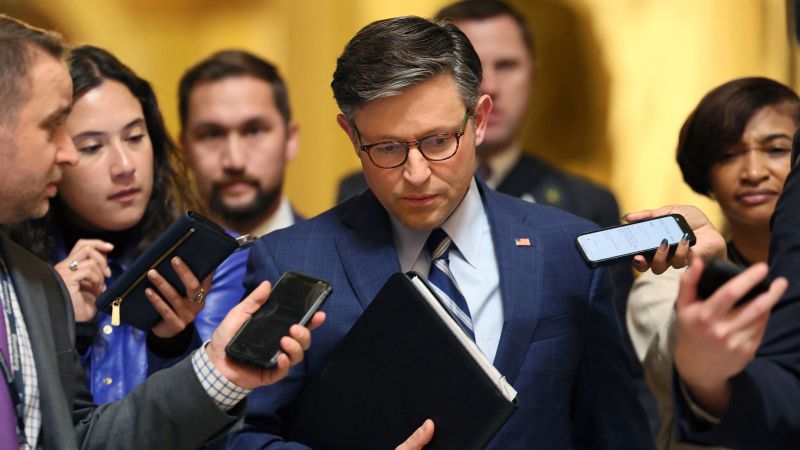
House Speaker Mike Johnson is facing pressure from House Republicans, particularly ultraconservatives, to abandon the spending deal he made with Democrats to avert a government shutdown. The hard-liners are demanding deeper spending cuts and a severe crackdown on immigration, threatening to disrupt the House if their demands are not met. Johnson has not committed to walking away from the bipartisan agreement but is discussing the demands with his colleagues.
Senate Republicans were caught off guard by reports of House conservatives discussing an alternative to the bipartisan spending deal, with some expressing skepticism and warning of a potential shutdown if the deal is reneged. The recent deal, which sets a $1.59 trillion top line for fiscal 2024 government funding, has faced opposition from hard-line conservatives due to increased funding for nondefense programs. Speaker Mike Johnson hasn't committed to an alternative plan, and there are doubts about the feasibility of pulling out of the recent deal.
Hard-right House Republicans are pressuring Speaker Mike Johnson to back out of the bipartisan spending deal he made with Senate Majority Leader Chuck Schumer, expressing anger over the lack of focus on border security and opposition to providing additional aid to Ukraine. Johnson has not committed to backing out of the deal, but the clash highlights the challenge of balancing demands from ultraconservative forces while striking deals with a Democratic-led Senate and White House. The hard-right Republicans see the must-pass spending legislation as leverage to force Democrats to accept budget cuts and conservative policy provisions. Senate leaders intend to follow through with the deal to avert a government shutdown, while House Democratic Leader Hakeem Jeffries warns that backing out of the agreement would harm the American people.
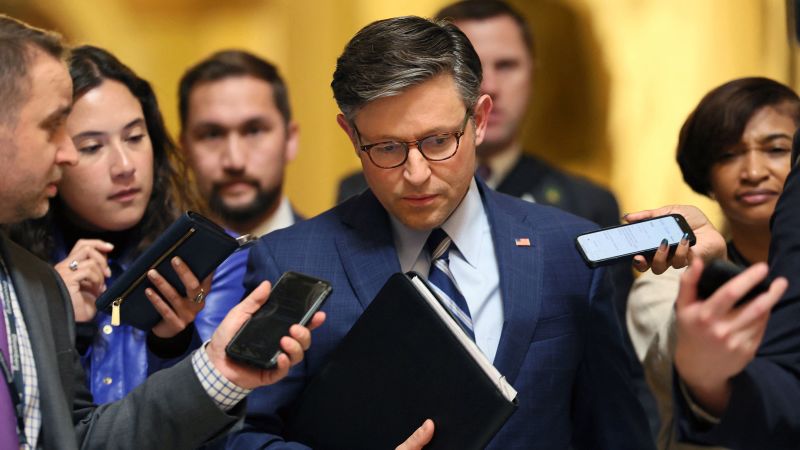
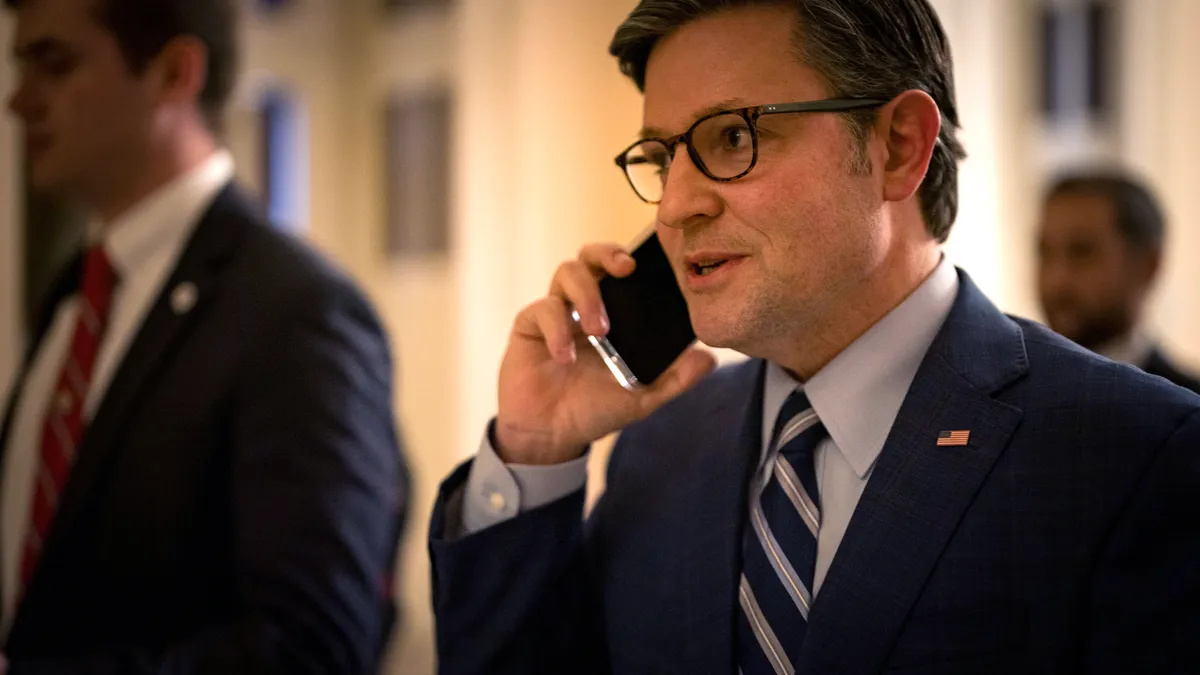
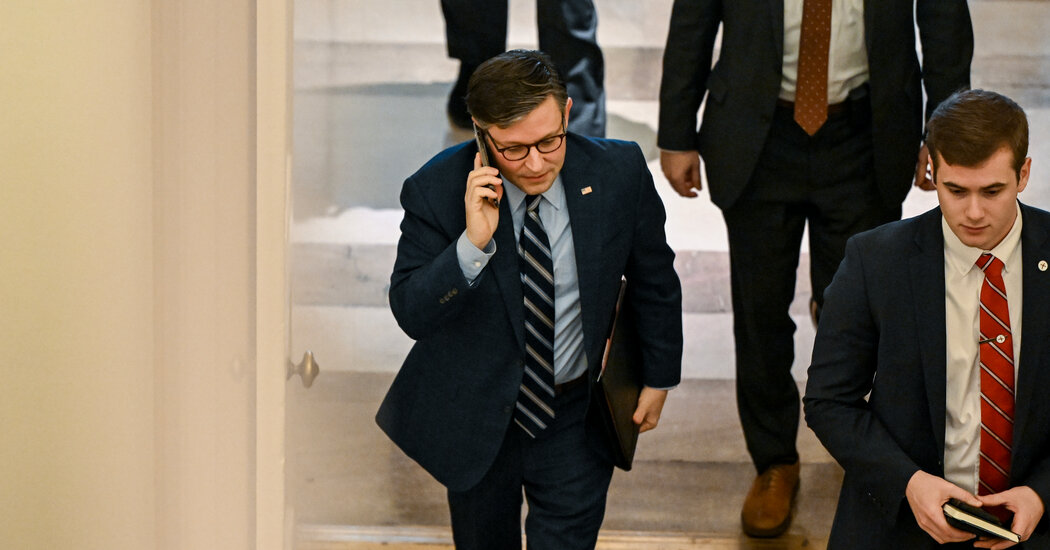
House Speaker Mike Johnson is considering reneging on a spending deal with Democrats to satisfy the demands of conservative members of his party, just days before a potential government shutdown. Johnson stated that no commitments have been made and that the party is engaged in discussions regarding funding options and priorities.
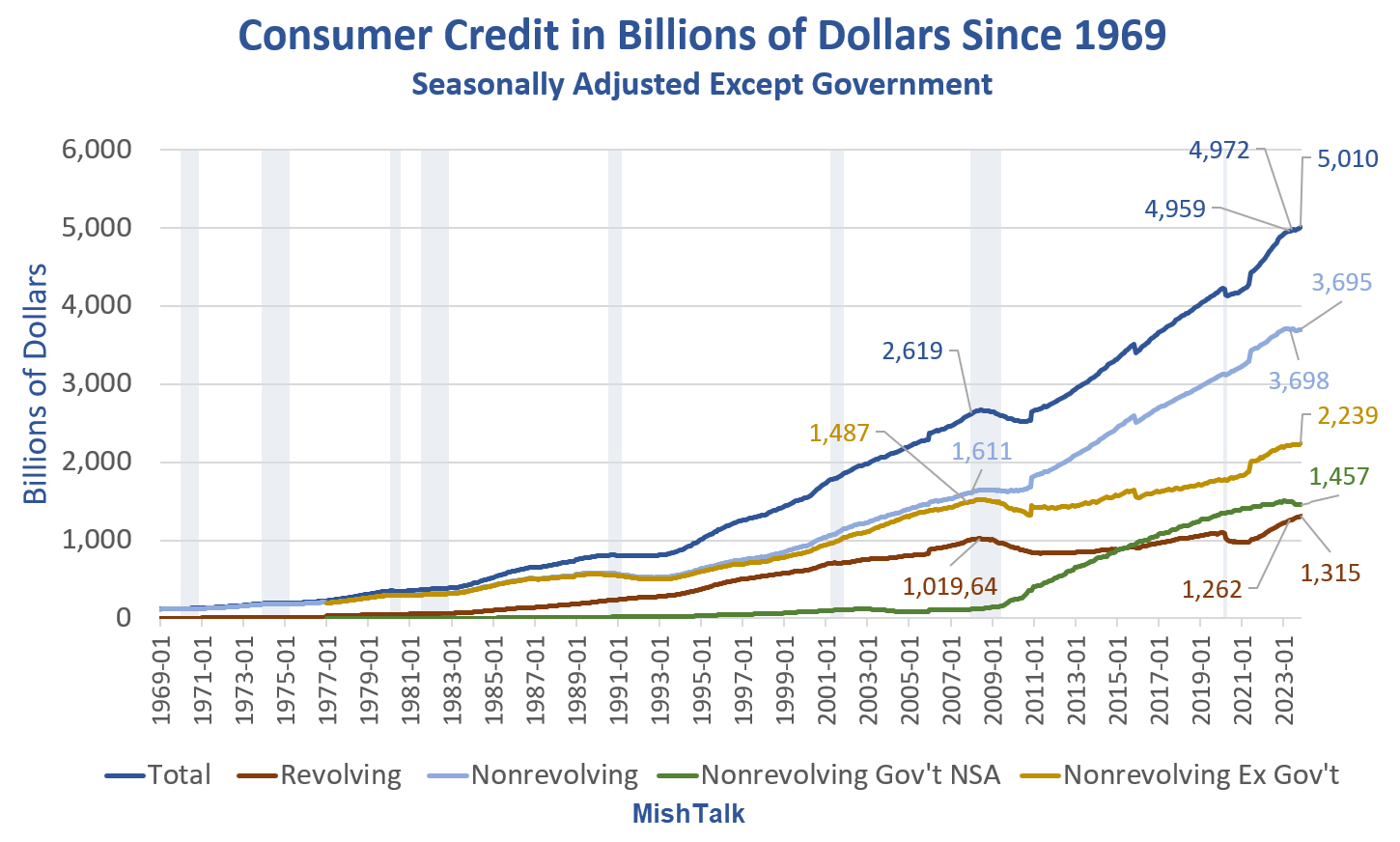
Consumer credit has reached a record $5 trillion, with revolving credit and credit card interest rates also hitting new highs in November. Adjusted for inflation, revolving credit is approaching levels seen during the Great Recession. Credit card rates, which averaged between 12-14 percent for most of 2000-2020, have now reached an average of 21.47 percent. Additionally, a spending deal has been reached, but the Republican Freedom Caucus has condemned it for not addressing border funding, potentially leading to further negotiations.
Conservative outrage over the spending deal negotiated by Speaker Mike Johnson has fueled speculation about the possibility of a motion to vacate, similar to what happened to his predecessor, Kevin McCarthy. Some Republicans are considering forcing a vote to remove Johnson due to dissatisfaction with the spending deal, but others believe it's premature. Johnson argues that the deal is the best possible outcome given the divided government. While some Republicans criticize Johnson openly, Democrats are divided on whether they would support his removal, with some suggesting they would if he worked with House Minority Leader Hakeem Jeffries on legislation.