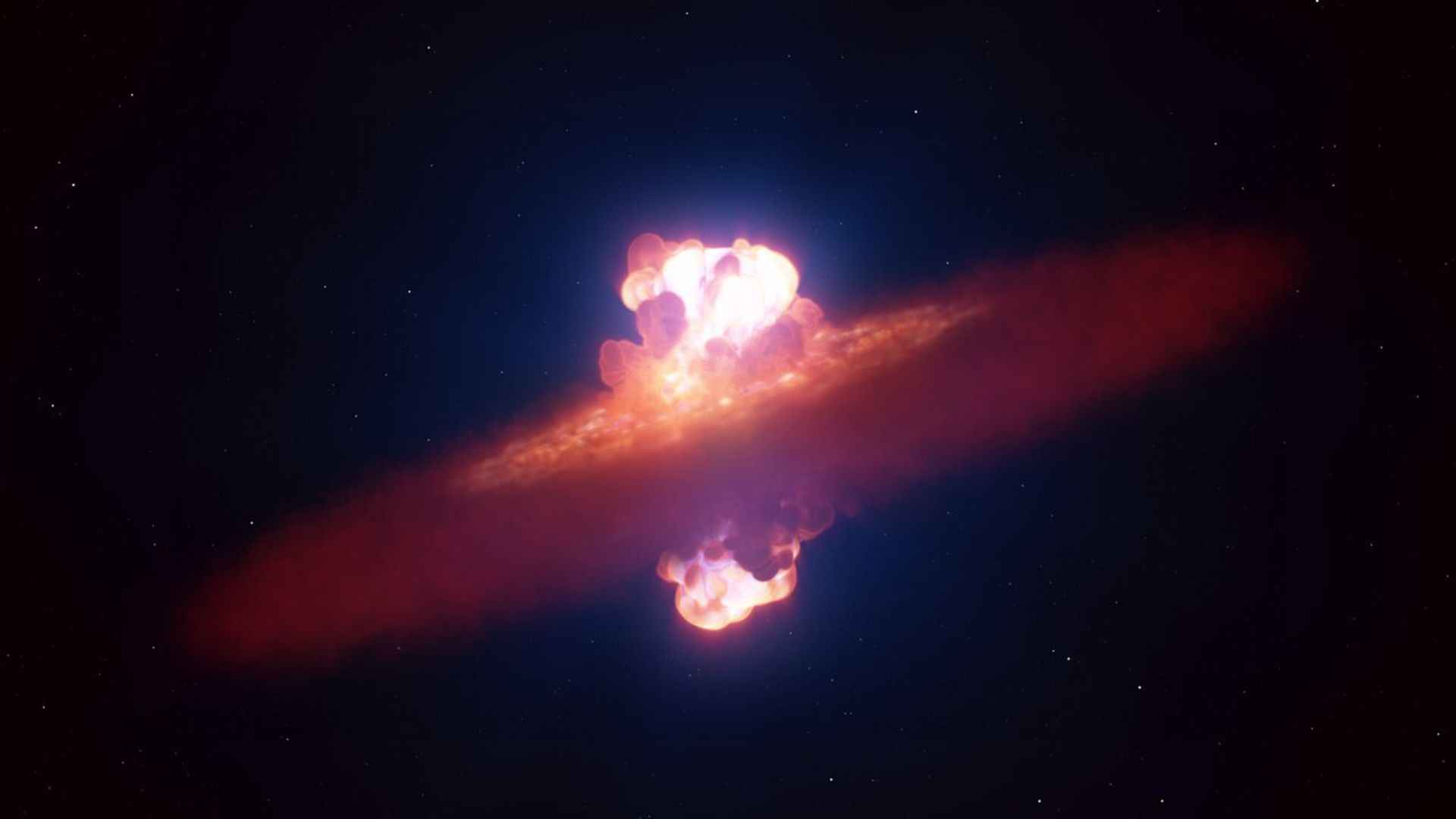
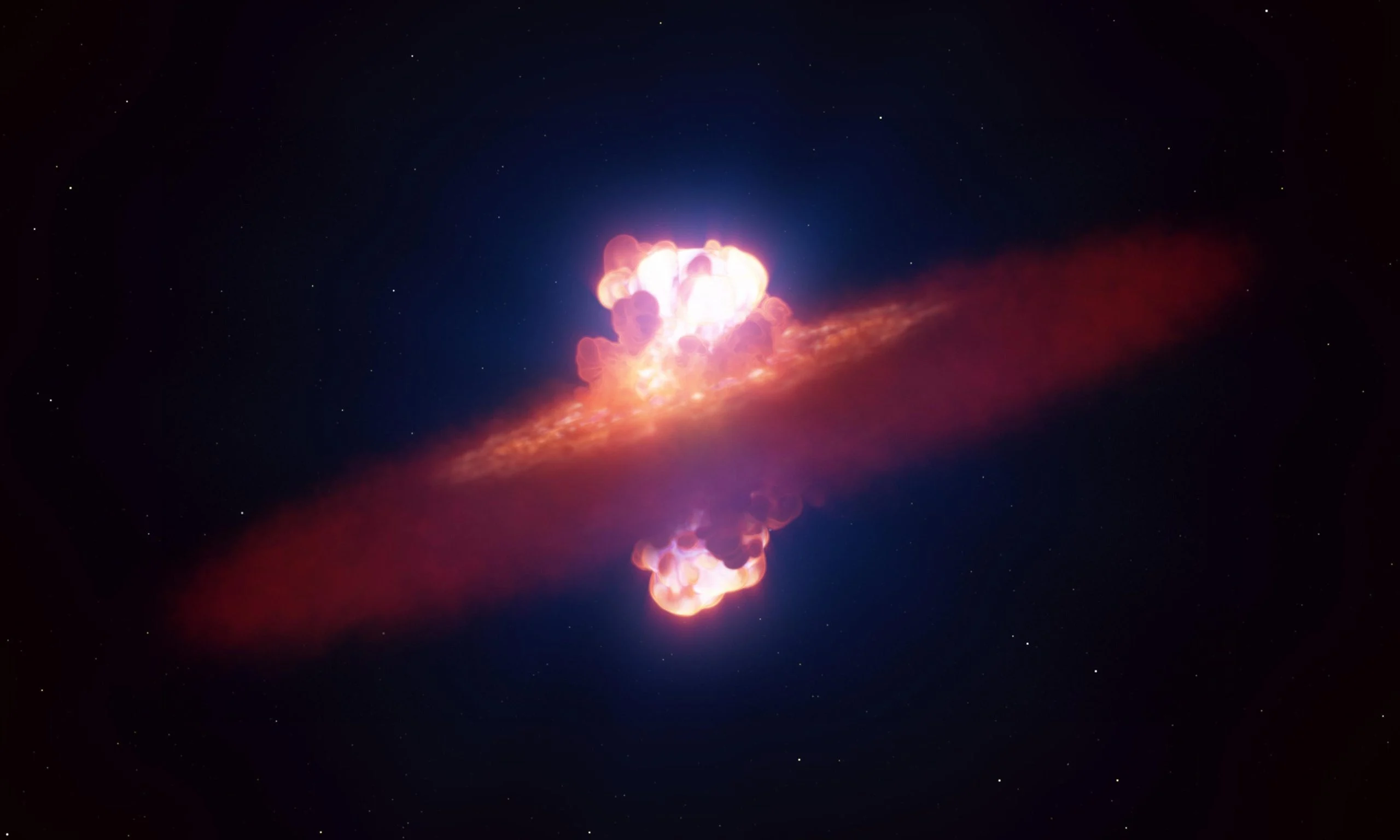
Scientists captured the first detailed observation of a supernova shockwave breaking through a star's surface, revealing a surprisingly symmetrical explosion, which provides new insights into the mechanisms driving such cosmic events.
Astronomers using ESO’s Very Large Telescope captured the earliest moments of a supernova explosion, SN 2024ggi, revealing its olive-like shape and providing new insights into how massive stars end their lives, marking a historic first in observing a supernova's initial breakout shape.
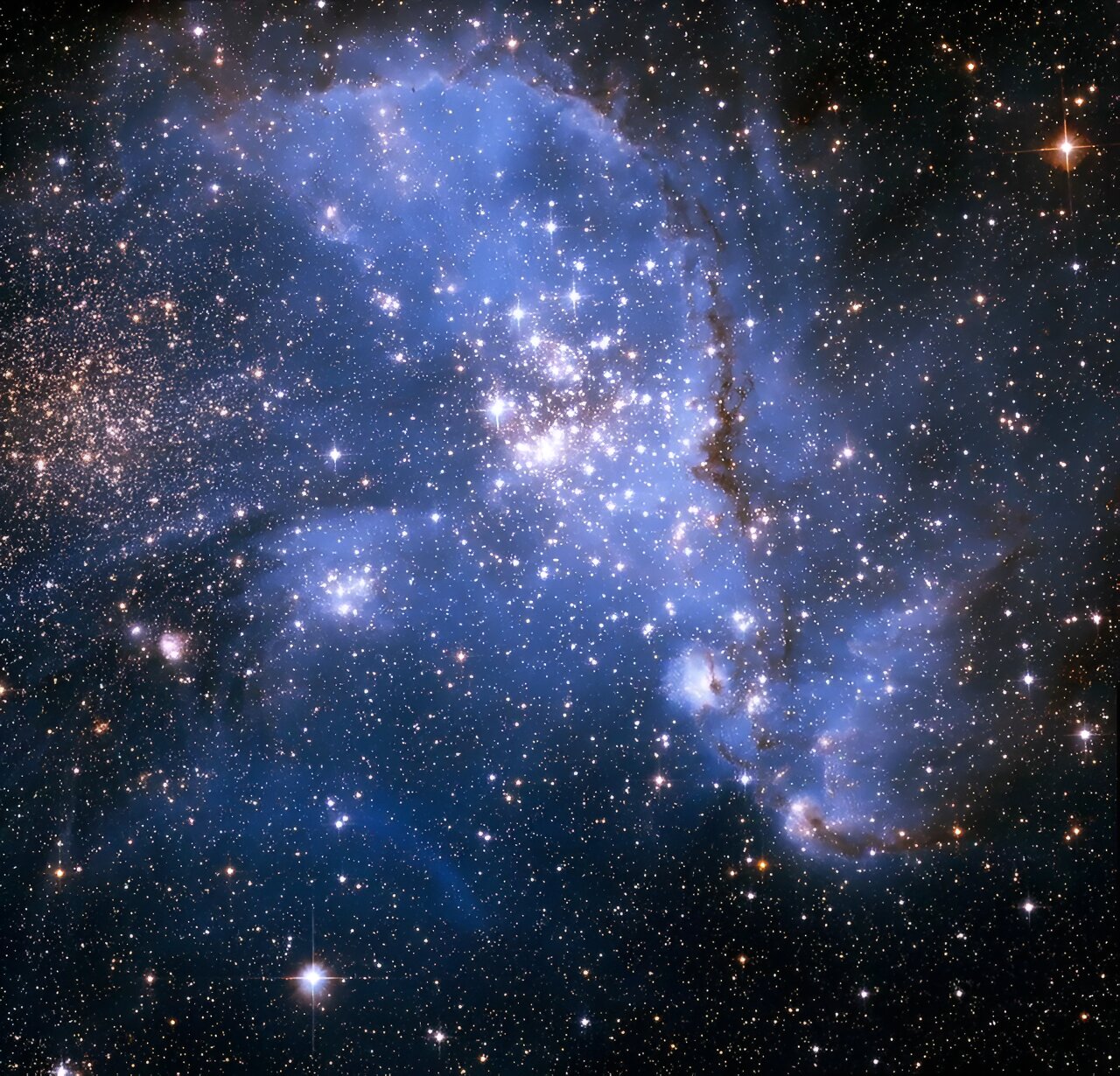
For the first time, magnetic fields have been detected in three massive, hot stars in the Large and Small Magellanic Clouds, providing a unique opportunity to study star formation and evolution in galaxies with young stellar populations. This discovery, achieved using the FORS2 spectropolarimeter on the Very Large Telescope, offers crucial insights into the role of magnetic fields in the early universe and the formation of neutron stars and black holes.
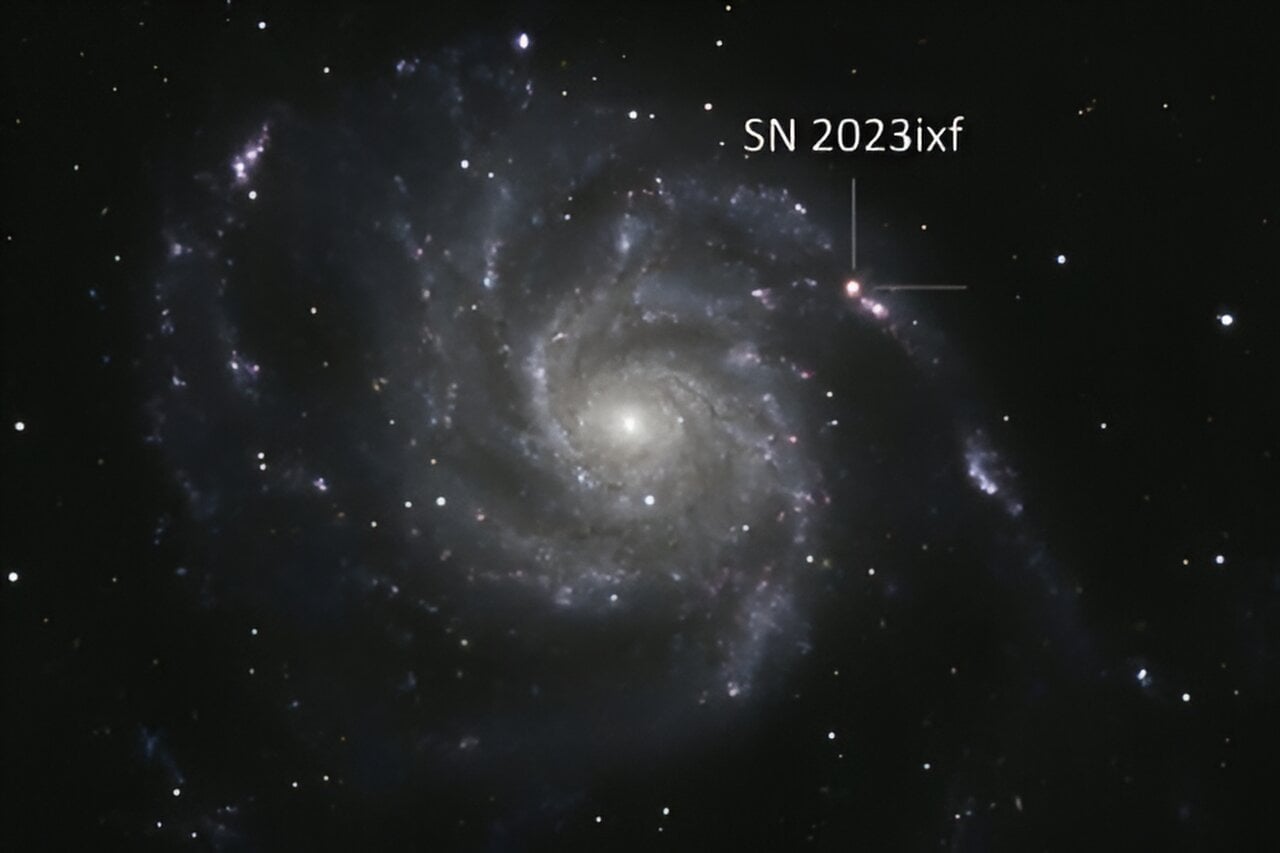
Astronomers have observed the closest supernova since 2014, providing valuable insights into the evolution of exploding stars. The supernova, named SN 2023ixf, occurred in the Pinwheel Galaxy, located 21 million light years from Earth. The early measurements of polarized light from the supernova revealed the evolving shape of the explosion, shedding light on the geometry of the object emitting the light. The observations indicated that the star had shed gas for several years before the explosion, challenging previous assumptions about mass loss. The findings could help refine the use of Type II supernovae as distance measures in the expanding universe.