Tag

Space Warfare

All articles tagged with #space warfare

international-security1 year ago

"U.S. Prepares for Space Warfare Amid Rising Counterspace Threats"

As the US maintains its dominance in space, Russia and China are developing counterspace technologies to disrupt American satellite capabilities. This includes cyberattacks, signal jamming, and potential anti-satellite weapons. The competition is intensifying amid geopolitical tensions, with concerns about the militarization of space and the potential for devastating impacts on global satellite networks.

space-and-defense1 year ago

"Space Force's Groundbreaking Orbital Military Exercise and Responsive Space Contracts"

The U.S. Space Force is teaming up with Rocket Lab and True Anomaly to conduct a demonstration mission, named Victus Haze, to simulate responses to potential threats in Earth's orbit. Scheduled for 2025, the mission aims to test scenarios such as satellite interference and espionage. This initiative reflects the Space Force's focus on countering threats in space, particularly from adversaries like China, and underscores its role in safeguarding American interests in space.

international-security1 year ago

"Assessing the Threat: Russia's Nuclear Space Weapon and Global Security"

Reports of Russia developing a nuclear space weapon to destroy satellites have raised concerns, but experts suggest it's not yet time to panic. While the existence of such a weapon could escalate global tensions, the potential risks and consequences are still uncertain. The development of this weapon could violate international treaties and normalize nuclear threats as a tool of international relations, leading to increased tensions between the US and Russia.

international-relations1 year ago

"Russian Nuclear Space Weapon Threatens Global Security, Warns German Space Commander"

The commander of German Space Command warned that a Russian nuclear weapon detonated in orbit could devastate the "global commons" of space, rendering it unusable and causing trillions of dollars in economic fallout. Despite U.S. intelligence indicating Russia's development of an anti-satellite weapon with a nuclear component, the White House downplayed an imminent threat. House Intelligence Committee Chair Rep. Mike Turner called the Russian activities a "serious national security threat" and urged President Biden to declassify information, while the White House confirmed the Russian system under development would violate the 1967 Outer Space Treaty.

international-relations1 year ago

"US Concerned Over Russia's Advances in Space-Based Anti-Satellite Weapons"

The US has raised concerns about Russia developing a new anti-satellite weapon, emphasizing that it has not been deployed yet. While details about the weapon remain vague, the US is taking the threat seriously and has initiated diplomatic engagement with Russia. Experts warn that any threat to US satellites could have a significant impact, as the country heavily relies on satellite communications for military and civilian functions. The development underscores the growing focus on securing space as a potential new battlefield, amid concerns about the militarization of space and adherence to international treaties.

international-relations1 year ago

"White House Raises Alarm Over Russia's Advances in Space-Based Weapons"

The White House has revealed that Russia has made a "troubling" advancement in anti-satellite technology, posing a potential threat to US national security. This disclosure comes amid growing concerns about space warfare capabilities and the need for international regulations to prevent the weaponization of space.

space-warfare1 year ago

"Russia's Escalating Space Weaponry Raises National Security Concerns"

Russia is reportedly developing space weapons aimed at disabling space-based communication and intelligence networks, posing a potential national security threat to the United States. The Ukraine conflict and the role of space systems in aiding Ukraine triggered Russia to rush the development of these new space tactics. Russia's new capability may involve directed-energy weapons or electromagnetic pulses in space that could disable commercial and military networks. Meanwhile, the United States is working on building a more resilient architecture in space, and commercial companies like Starlink have developed hard-to-target satellite networks, which worries Russia.

military-technology2 years ago

Chinese Lab Simulates Hypersonic Missile Attack on US Warships, Claims Radar Blocking Prep for War

A Chinese lab reportedly conducted a simulation in which hypersonic missiles and satellites launched an attack on US warships, with the missiles launched from 750 miles away and assisted by low-orbit electronic warfare satellites to mask their locations. The simulation highlighted the contested nature of space as a new commanding height in modern warfare, and raised concerns about the vulnerability of US Navy ships to such attacks.

defense2 years ago

Houthis' Aerial Attack on Israel Marks First Space Warfare Instance

Israel's Arrow missile defense system successfully intercepted a ballistic missile fired by Houthi rebels in Yemen, marking the first instance of space warfare for Israel. The missile was intercepted outside of the Earth's atmosphere, and the operation was the third targeting Israel. The Arrow system, developed by Israel Aerospace Industries in collaboration with the Israeli and US defense establishments, is considered one of the most advanced technologies for defense against ballistic missiles.

space2 years ago

China's Mysterious Spaceplane Successfully Completes 9-Month Orbital Mission and Returns to Earth.

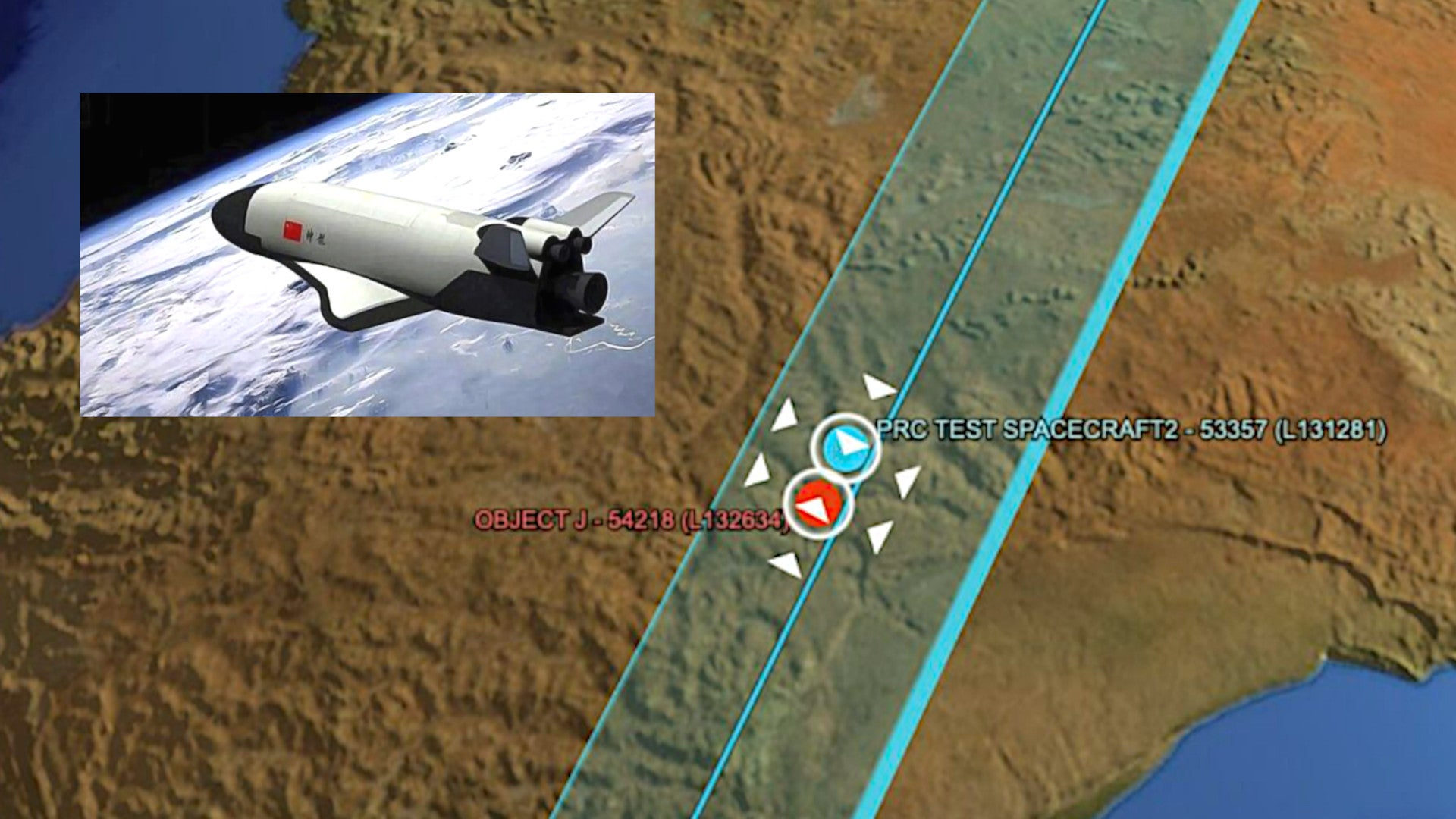
Data from LeoLabs shows that a Chinese reusable space vehicle, believed to be a miniature spaceplane design, docked with or captured a separate object on multiple occasions during its recent 276-day-long stint in orbit. The vehicle's maneuverability could be used to surveil, disrupt, and attack an opponent's space-based assets, as well as retrieve or interact with friendly ones. The docking or capture capability could indicate the presence of robotics arms or other protrusions that could be used to damage or destroy an opposing satellite. The data adds to the already growing evidence of China's anti-satellite capabilities.