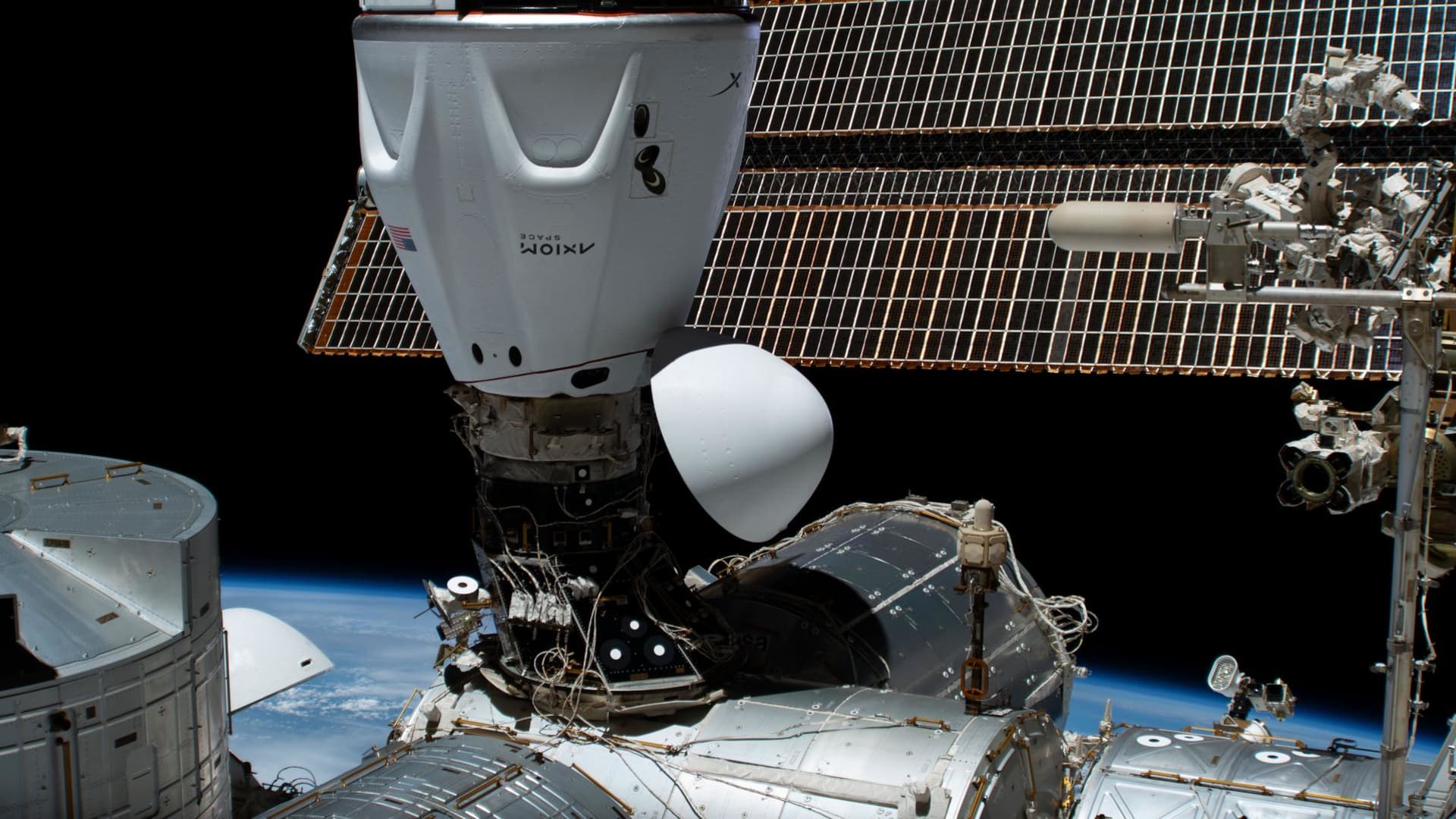
Axiom Space has appointed Dr. Jonathan Cirtain as its new CEO and President to lead the company's development of space infrastructure and innovation in human spaceflight technologies, building on its mission to create a commercial space station and expand humanity's presence in space.
President Trump signed an executive order to accelerate U.S. commercial space activities by streamlining regulations, expanding launch infrastructure, and shifting some authority from NASA to other federal agencies, aiming to boost innovation and maintain American leadership in space, though it raises concerns about environmental impacts and NASA's authority.
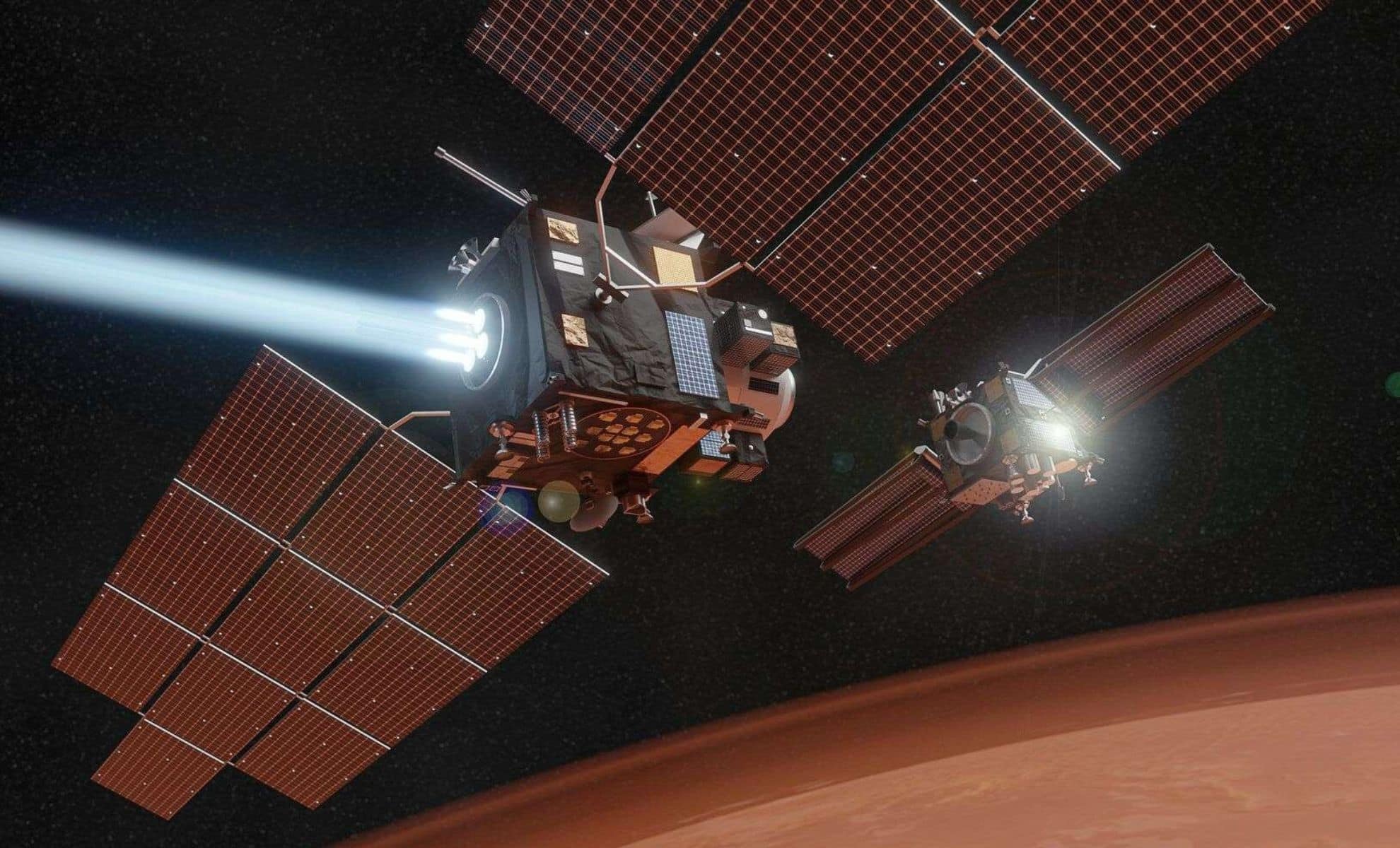
The European Space Agency is developing LightShip, a solar-powered reusable interplanetary tugboat set to launch in 2032, which will transport cargo to Mars, serve as a communication relay, and lay the groundwork for sustainable Mars exploration and scientific research infrastructure.
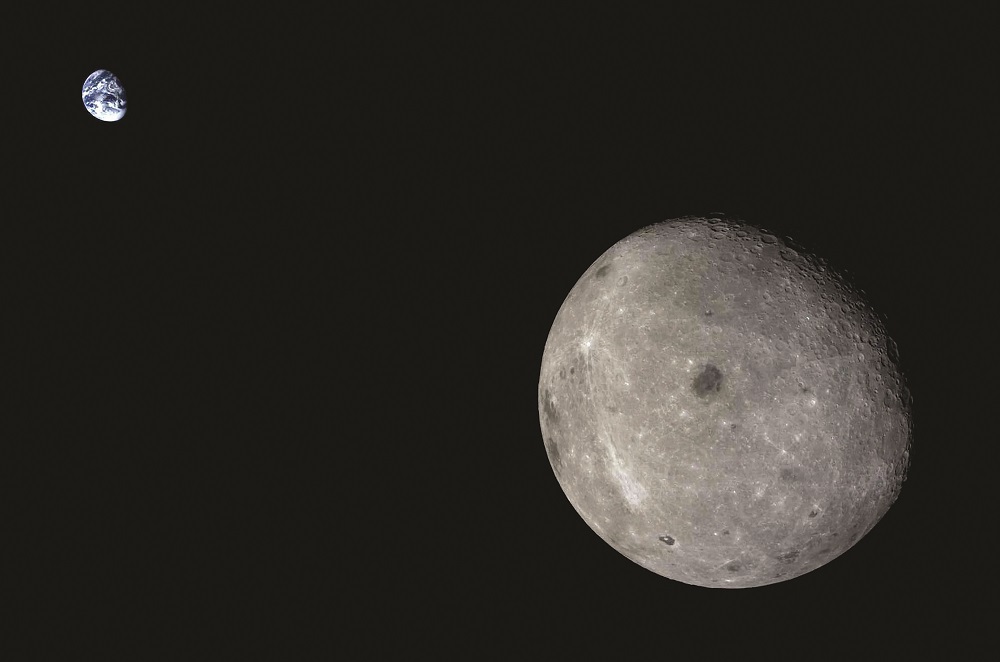
China is set to launch Tiandu-1 and Tiandu-2, experimental technology satellites, along with Queqiao-2, a lunar communications relay satellite, to support upcoming Chang’e lunar missions. The Tiandu satellites will conduct tests for navigation and communications technology verification in lunar orbit, informing the design of China’s proposed Queqiao lunar navigation and communication constellation. These efforts are part of building infrastructure to support the China-led International Lunar Research Station (ILRS) and aim to establish a lunar base in the 2030s. China is also aiming to put a pair of astronauts on the moon before 2030.
A new report from the Mitchell Institute for Aerospace Studies calls for increased U.S. military collaboration with NASA and investment in infrastructure for cislunar space to counter China's lunar ambitions. The report suggests that the Department of Defense (DoD) should allocate an additional $250 million annually for cislunar space activities to support scientific and economic endeavors and address potential threats. Former NASA administrator Jim Bridenstine endorsed the report's recommendations, emphasizing the importance of DoD investments in non-combative technologies for space security.
Investment in the space sector rebounded in 2023, nearing the record high of 2021, with infrastructure accounting for 70% of total investment. Space infrastructure companies raised $2.6 billion in the fourth quarter, contributing to a total of $12.5 billion for the year. The report also highlighted 39 merger and acquisition deals in the sector, signaling a year of consolidation, with expectations for more M&A activity in 2024.
Jeff Bezos and Elon Musk, two of the world's richest billionaires, believe that the human population is not nearly big enough and that we need more humans for the future. Bezos envisions a trillion humans living in the solar system, creating a vibrant and intelligent society. He aims to build space infrastructure to support future generations of space entrepreneurs. Musk, on the other hand, emphasizes the need for humanity to become a multi-planet species and establish a permanent human presence on Mars. Both billionaires warn about the dangers of declining birth rates and advocate for the importance of having children to ensure the survival and progress of civilization.
Jeff Bezos and Elon Musk, two of the world's richest billionaires, believe that the human population is not nearly big enough and advocate for a future with a trillion humans living in the solar system. Bezos envisions a future with space stations and heavy manufacturing in space, while Musk emphasizes the need for humanity to become a multi-planet species, with a permanent human presence on Mars. Both agree on the importance of building space infrastructure and using resources in space to preserve the Earth's environment. They also express concerns about declining birth rates and warn of the dangers of underpopulation.
NASA scientists are planning to construct civilian housing on the lunar surface using 3D-printing robots by 2040. The agency is developing concepts for lunar rocket landing pads, construction robots, and concrete mixtures to build structures that would shelter humans on the moon. NASA is partnering with ICON, a Texas-based construction company, to develop the necessary infrastructure for a long-term human presence on the moon. The agency aims to send a construction robot to the moon that will use lunar materials to build dwellings. This project is part of NASA's Moon to Mars approach, with lunar missions serving as precursors to future journeys to Mars.
Investment in the space sector, particularly from venture capital, is primarily flowing into companies pursuing and winning government contracts, according to a report by Space Capital. The report highlights that space infrastructure companies received $1.6 billion in private investment during Q3, bringing the sector's total investment for the year to $8.4 billion, surpassing the 2022 total. Venture capital accounted for 50% of Q3's space infrastructure investment, with companies and investors increasingly chasing government funds, particularly in emerging markets like space stations and the moon. However, the report suggests that lunar and logistics markets offer larger opportunities for investment compared to space stations.
Loft Orbital has ordered 15 more satellite buses from Airbus OneWeb Satellites to meet growing demand for its standardized space platforms. The Longbow bus is based on the design of the bus used for OneWeb satellites, but with modifications to accommodate higher resolution and stability optical missions and a longer lifetime. Loft Orbital has previously ordered satellites from LeoStella, Raytheon, and other companies. The company provides an "abstraction layer" for customers, handling the technical details of both the space and ground segment. The demand is coming from a variety of customers, such as government agencies, traditional space companies, and startups.