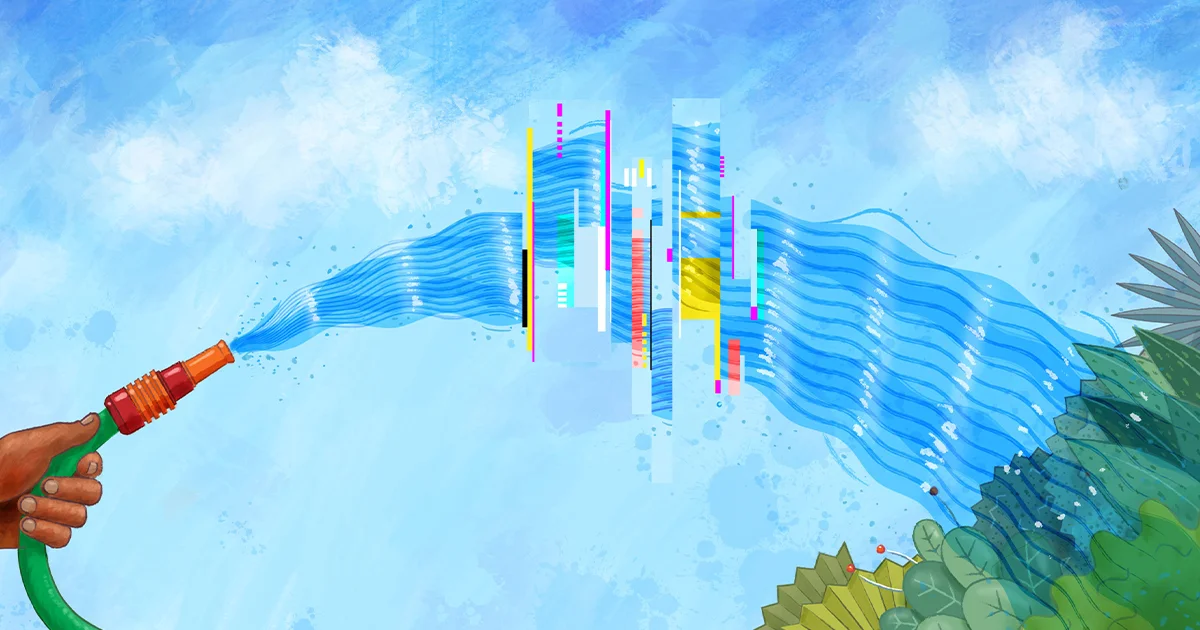
Mathematicians have used AI to identify potential unstable singularities in simplified fluid equations, raising hopes of understanding whether the Navier-Stokes equations can predict real-world fluid behavior or fail in certain scenarios, a problem that remains unsolved and is worth a $1 million reward.
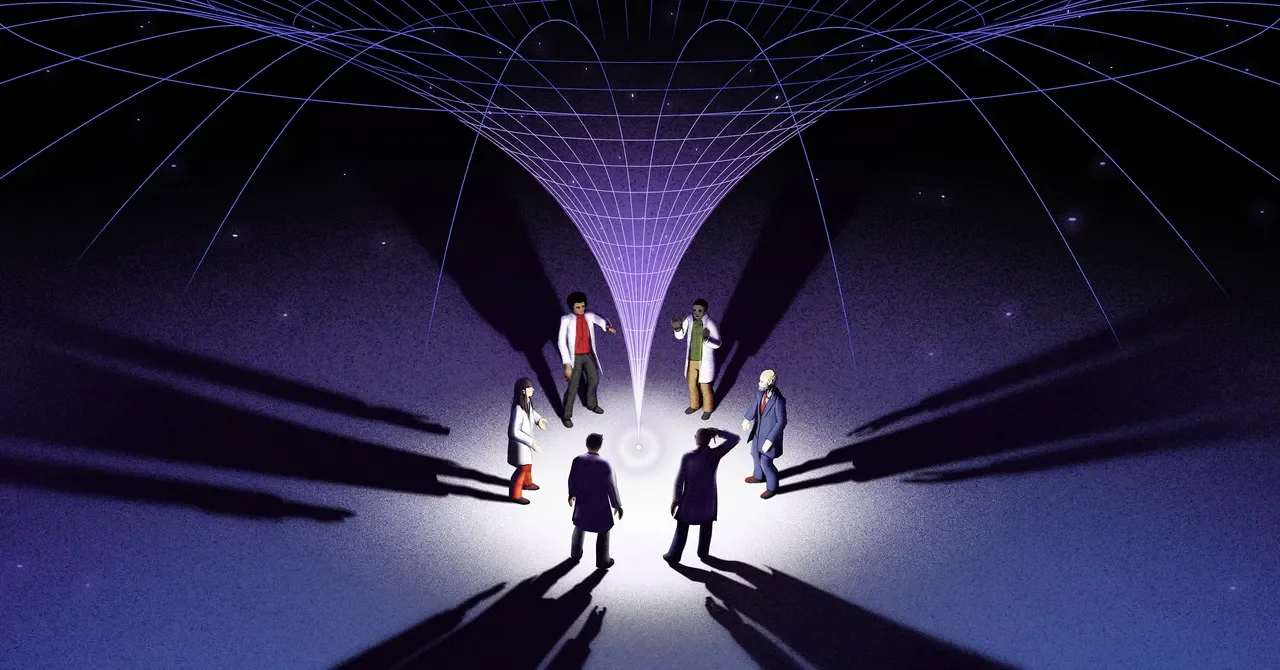
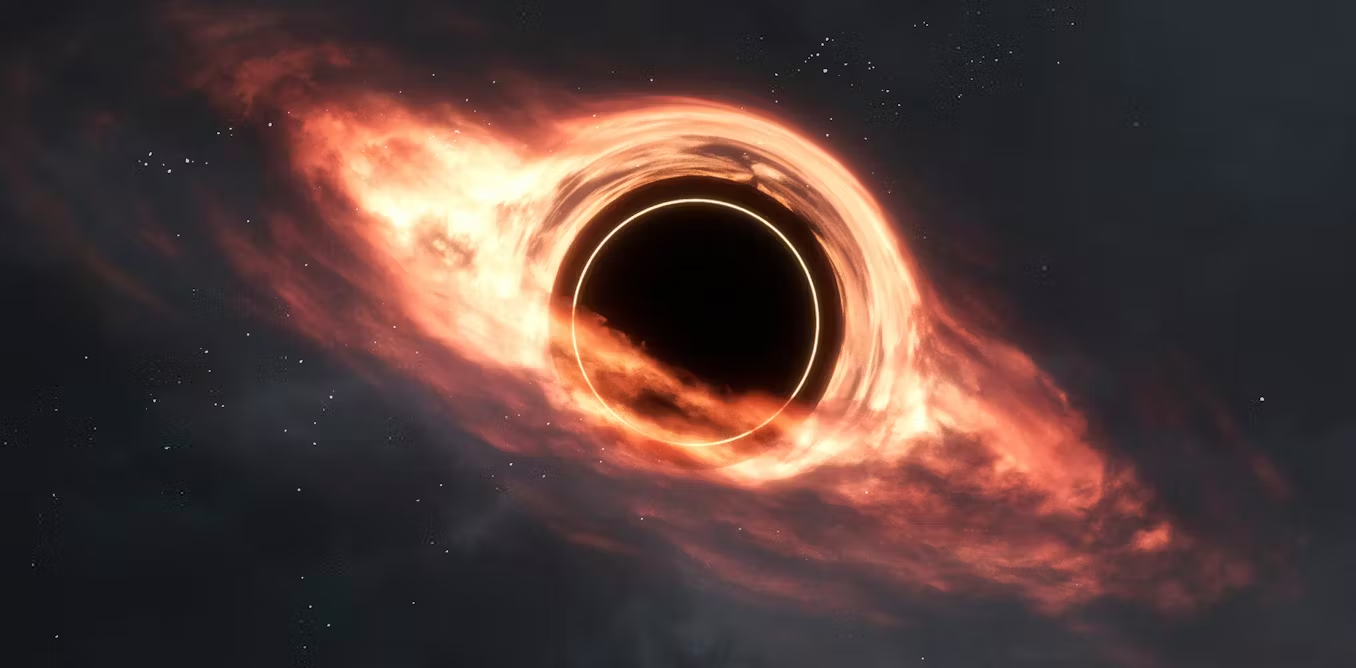
Physicists are exploring the nature of singularities—points like black hole centers and the universe's beginning—through a series of theorems that suggest these may be unavoidable features of space-time, challenging the quest for a complete quantum theory of gravity that can resolve these infinities.
Physicists are exploring the nature of singularities—points where space and time break down—predicted by Einstein's general relativity, and recent research suggests these may be more than mathematical artifacts, potentially existing in black holes and the early universe, challenging the quest for a complete quantum theory of gravity.
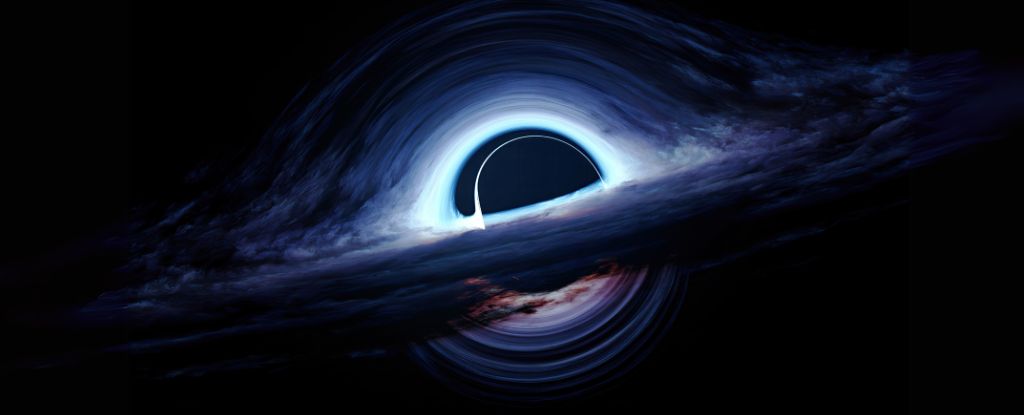
Recent research supports the idea of cosmic censorship, suggesting that quantum mechanics may prevent the observation of singularities within black holes. This aligns with Roger Penrose's conjecture that singularities are hidden by event horizons, maintaining the predictability of physics. The study introduces a quantum Penrose inequality, linking the energy of space-time to the entropy of black holes and quantum matter, reinforcing the concept of quantum cosmic censorship and its implications for a theory of quantum gravity.
The article explores the concept of naked singularities and how quantum black holes might provide insights into why we don't observe the end of space and time. It delves into the intersection of quantum physics and cosmology, discussing the implications of these phenomena on our understanding of the universe.
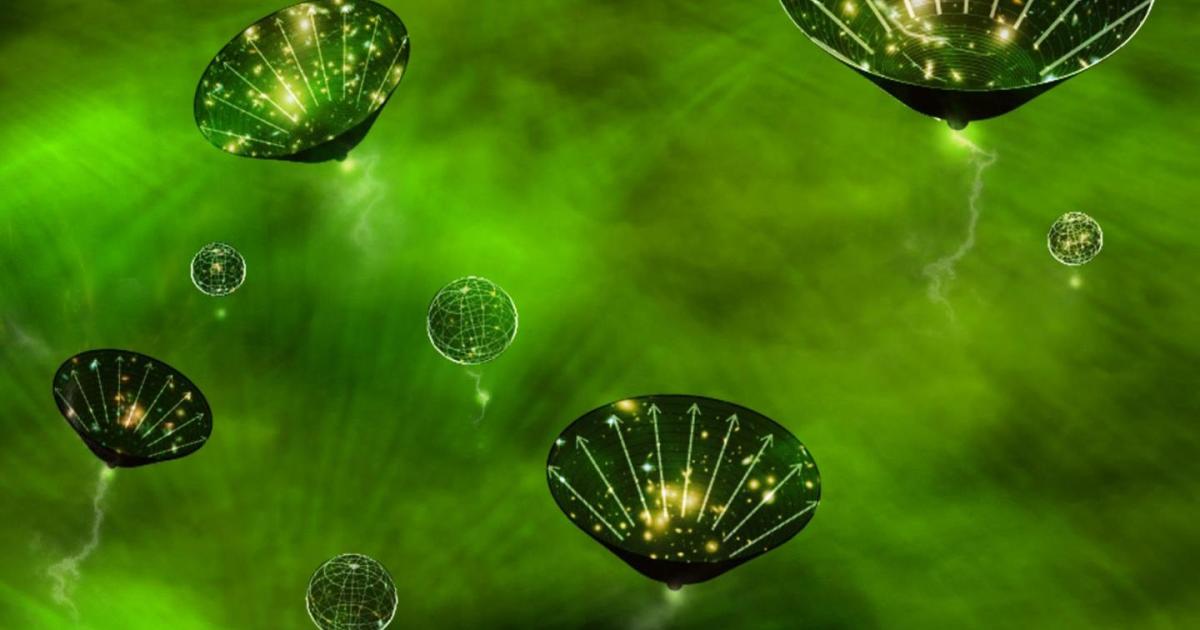
Mathematicians are exploring what might have existed before the Big Bang by applying Einstein's general theory of relativity to the earliest moments of the universe. Researchers Ghazal Geshnizjani, Eric Ling, and Jerome Quintin have published a paper suggesting that the singularity at the start of the Big Bang might be a coordinate singularity, which can be mathematically bypassed, rather than a curvature singularity, which represents a breakdown of physical laws. This work could help extend our understanding of the universe's history beyond the Big Bang.
The existence of singularities, such as those found in black holes, is still a topic of debate in physics. While the Big Bang theory suggests that the universe began from a singularity, the addition of cosmic inflation complicates this idea. Inflationary spacetimes, which are dominated by vacuum energy, do not necessarily lead to a singularity but rather to a progressively smaller and finite size. As for black holes, they inevitably collapse to a singularity, and attempts to avoid this fate have been unsuccessful within the framework of general relativity. The possibility of a singularity-free universe or a connection between black holes and the birth of new universes remains speculative and requires further exploration in the realms of quantum gravity and unified theories.
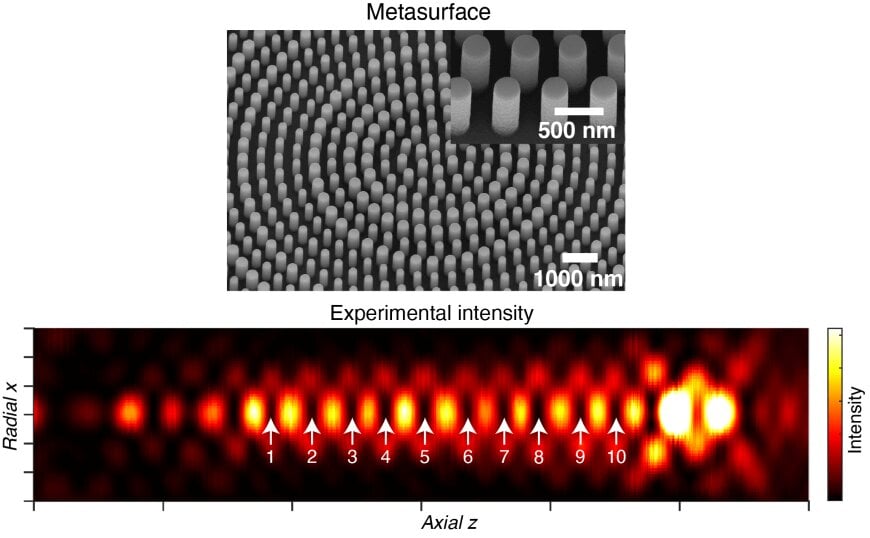
Researchers at the Harvard John A. Paulson School of Engineering and Applied Sciences have developed new techniques using metasurfaces to control points of darkness, or optical singularities. These dark spots have potential applications in remote sensing, precision measurement, and imaging. The team designed metasurfaces with titanium dioxide nanopillars to create an array of optical singularities, which could be used as optical traps for capturing atoms or as reference positions for imaging. They also developed extremely stable points of darkness in a polarized optical field, known as polarization singularities, which are topologically protected and can withstand perturbations. These advancements in optical singularities have implications for remote sensing, covert detection, and creating compact, lightweight optical devices.