
The Rise of the People Pleaser
The author reflects on her experience as a people pleaser, highlighting how she often sacrifices her comfort and visibility to accommodate others, and explores the emotional impact of these choices.

All articles tagged with #self esteem
The author reflects on her experience as a people pleaser, highlighting how she often sacrifices her comfort and visibility to accommodate others, and explores the emotional impact of these choices.

A woman struggles with her husband's online interactions with women, which he claims are harmless and related to boosting their self-esteem, but they cause her feelings of inadequacy and trust issues. Despite counseling and some behavioral changes, concerns remain about his impulse control and emotional fidelity, highlighting ongoing relationship challenges.

The article defends millennials against negative stereotypes, explaining that their upbringing was shaped by a social experiment in the 1980s and '90s that emphasized boosting self-esteem, leading to a generation characterized by perfectionism and a desire for honest feedback, which is often misunderstood as selfishness.

Breadcrumbing, a toxic dating behavior where someone gives minimal attention to keep a partner interested without commitment, is more prevalent than ghosting and can cause significant damage to self-esteem by fostering uncertainty and emotional manipulation. Experts warn that this slow-burn form of rejection is amplified by social media and dating apps, leading to emotional distress, especially among young adults, and recommend setting boundaries and prioritizing self-worth to cope.

The article explores why accepting compliments can be difficult for many people, highlighting how reactions to praise reflect self-esteem and impact social interactions, and emphasizes the importance of accepting kind remarks to foster positive relationships.
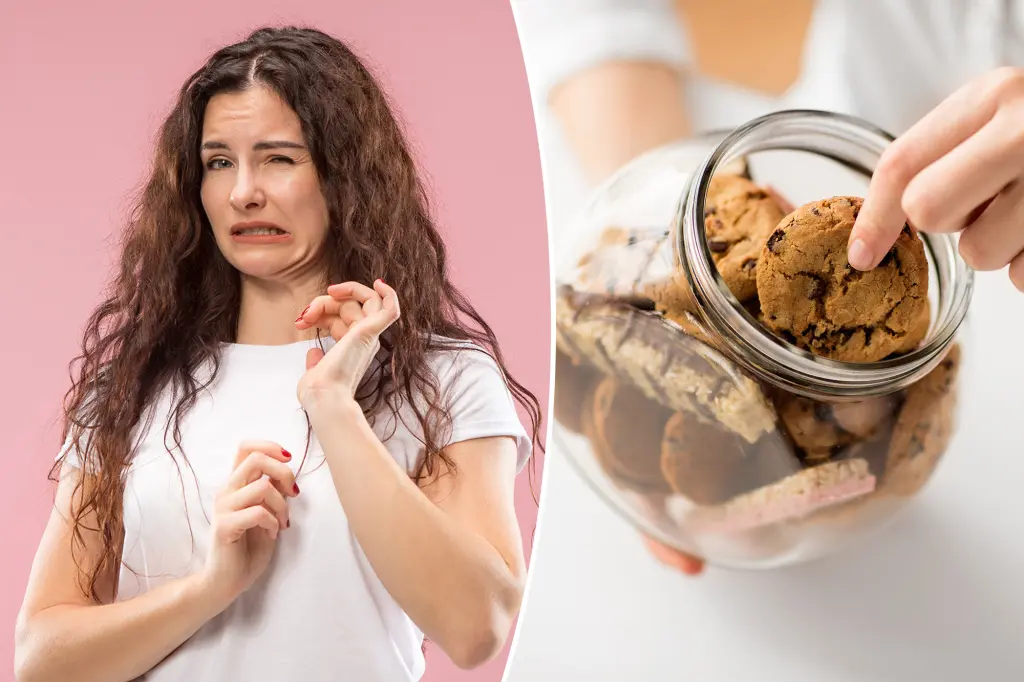
Relationship experts warn about 'cookie jarring,' a harmful dating practice where individuals keep multiple partners as backups, which can damage self-esteem and lead to feelings of disgust and selfishness among those involved.

A man seeks advice on how to handle local gossip about his girlfriend's past and how to explore ethical nonmonogamy himself, with suggestions including ignoring or confronting the gossip, improving self-confidence, and using dating apps like Feeld to meet like-minded people. The article also discusses health issues related to aging and genital concerns, emphasizing the importance of consulting a doctor.

Khloe Kardashian has shared that she is happily single and not interested in dating, three years after her breakup with Tristan Thompson. She emphasized focusing on self-improvement and maintaining her confidence, which was affected by past relationships. Khloe also expressed concerns about dating as a single mother in the public eye, preferring to prioritize her children and personal growth over new relationships.

A new study suggests that loneliness contributes to addictive smartphone use among adolescents, with self-esteem and boredom proneness acting as mediators. The need to belong also plays a role, amplifying the effects of boredom proneness and loneliness on addictive smartphone use. The findings highlight the complexity of factors contributing to smartphone addiction and emphasize the importance of social dynamics in understanding this behavior among young people. However, the study's cross-sectional design and reliance on self-reported measures are noted as limitations, and future research is recommended to explore the evolution of addictive smartphone use over time and consider additional motivational and contextual factors.

A body image survey revealed that many women experience negative thoughts about their bodies daily, with social media likely exacerbating the issue. Neuroscience suggests that habitual negative self-talk strengthens neural pathways, but purposeful attention and mental training can change the brain to develop body-affirming thinking. Projection of negative feelings onto the body can lead to body dissatisfaction, as demonstrated by a college student's experience. An exercise is recommended to track negative body thoughts and recognize underlying emotional issues, with seeking help and support as a more effective approach to addressing body dissatisfaction.

A new study published in the Journal of Eating Disorders suggests that individuals with lower self-esteem and heightened obsessive perfectionism are more susceptible to orthorexia nervosa tendencies, a pathological fixation on healthy eating. The study, which included 977 participants from Italy, Lebanon, and Poland, found that those with high levels of obsession-compulsion and perfectionism, alongside low self-esteem, were significantly more prone to exhibit orthorexia nervosa tendencies. Geographical differences also emerged, with participants from Lebanon showing higher orthorexia nervosa tendencies. The study highlights the importance of assessing self-esteem, obsessive–compulsive symptoms, and perfectionism in individuals with orthorexia nervosa tendencies and suggests that interventions aimed at building self-esteem and reducing obsessive–compulsive and perfectionism symptoms may benefit those at risk.

Eight-year-old James Ramage from Chelsea, Maine, started wearing a suit to school, inspiring his classmates to join him in dressing up for "Dapper Wednesday." The initiative, created by the students, has become a hit at Chelsea Elementary, with teacher Dean Paquette noting the positive impact on self-esteem. The school has even established a "Dapper Closet" for donations to ensure all students can participate. Ramage's message is simple: "Just wear what they want to wear."

Niecy Nash's Emmy acceptance speech for Outstanding Supporting Actress in a Limited Series or Movie went viral as she thanked herself, sparking applause and praise on social media. Nash also honored victims of police violence and emphasized the importance of speaking truth to power. In a follow-up interview, she explained the significance of crediting herself and encouraged others to believe in themselves, hoping her speech serves as an invitation for self-esteem.

The author shares her experience of falling in love with a narcissist who manipulated her with flattery and affection, only to abruptly discard her without explanation. She reflects on the emotional abuse and the devastating impact it had on her self-esteem and mental well-being, while also acknowledging her own role in the relationship. The article serves as a cautionary tale and offers support for those who may be experiencing similar situations.

Esther Hollander shares her experience with lipedema, a connective tissue disease that causes abnormal fat buildup in the lower extremities. Lipedema, often misdiagnosed as obesity, affects 1 in 72,000 people, mostly women. Hollander's struggle with weight and the societal pressure to conform to certain beauty standards took a toll on her self-esteem. After years of unsuccessful diets and weight fluctuations, she discovered she had lipedema, which explained the rapid growth of fat in her lower body. The condition is resistant to traditional diet and exercise, but surgical intervention and other treatments can help alleviate symptoms and improve mobility. Hollander emphasizes the importance of medical professionals taking lipedema seriously and not dismissing it as a result of obesity.