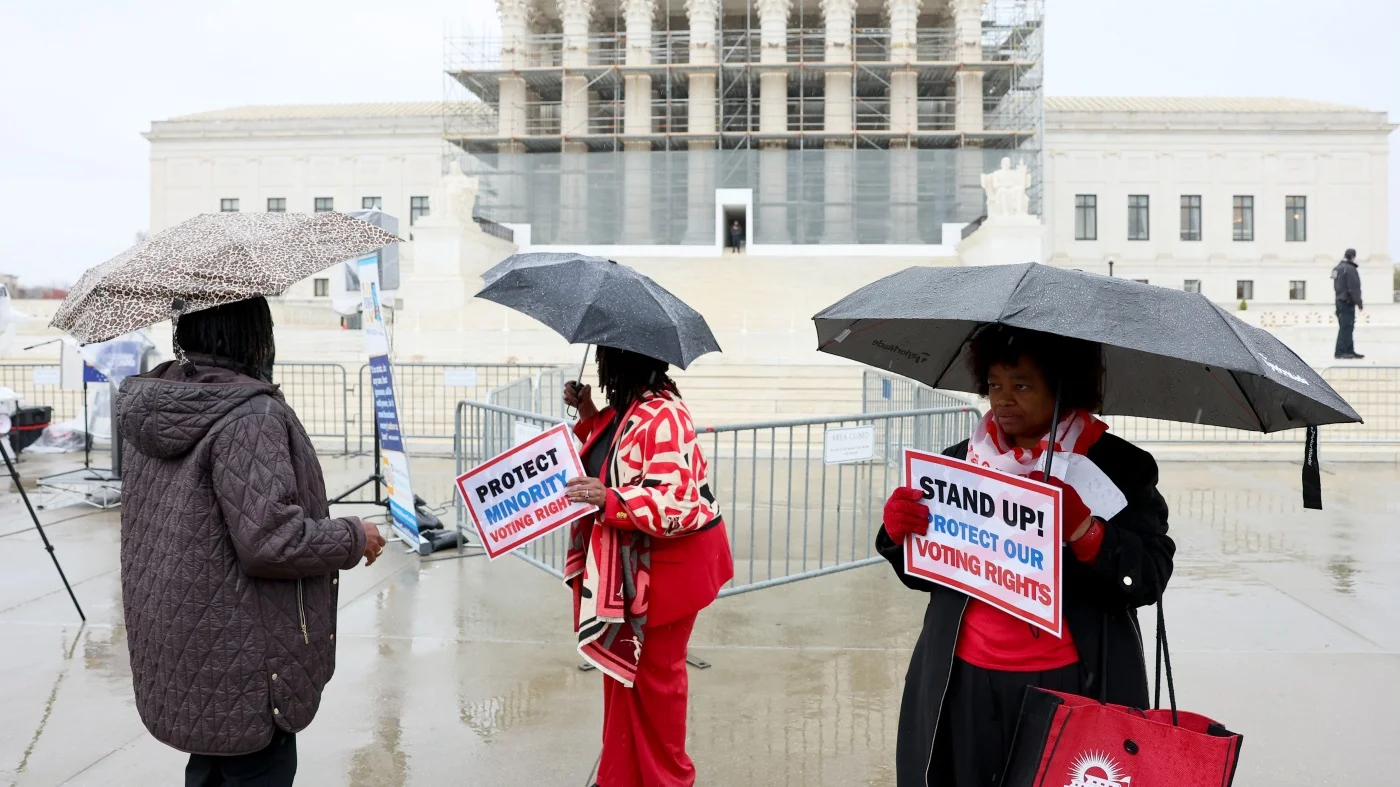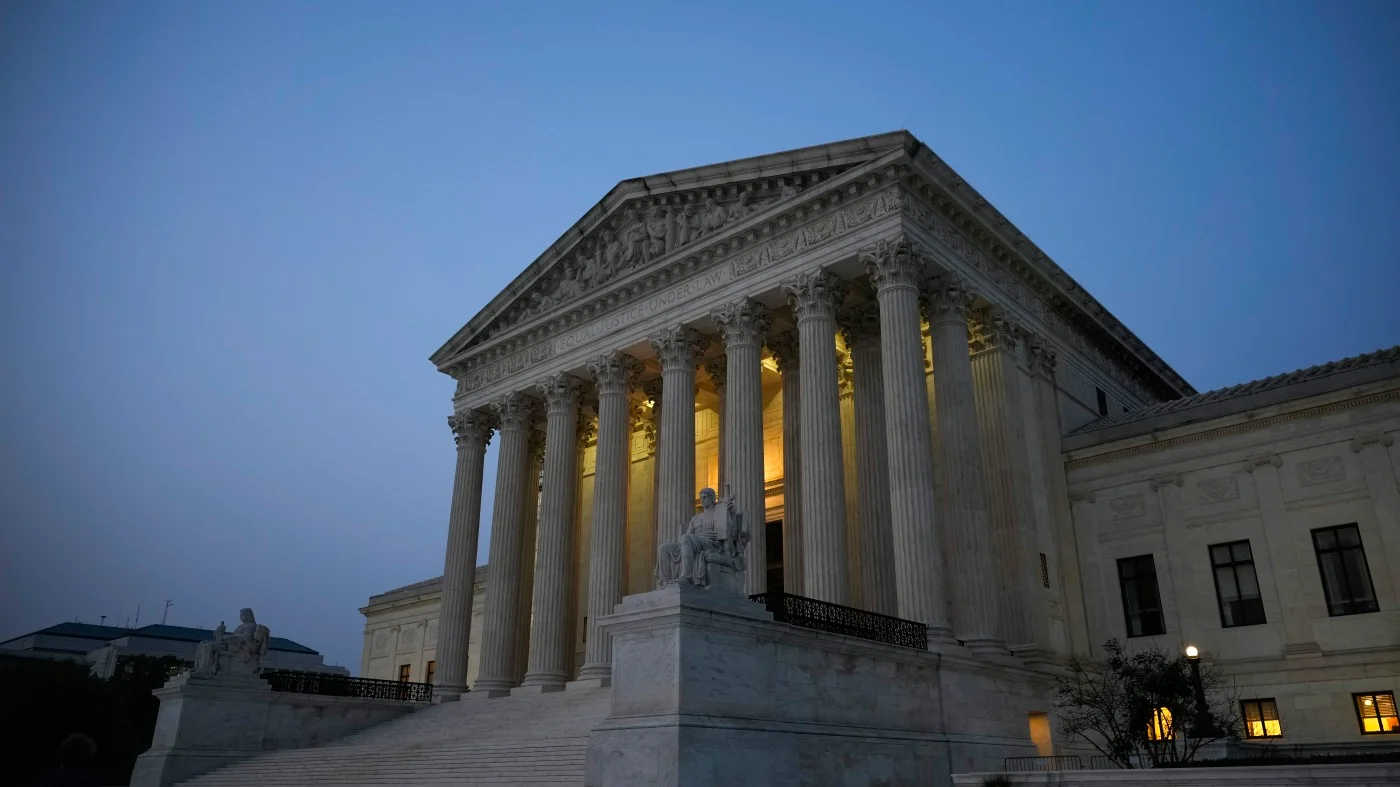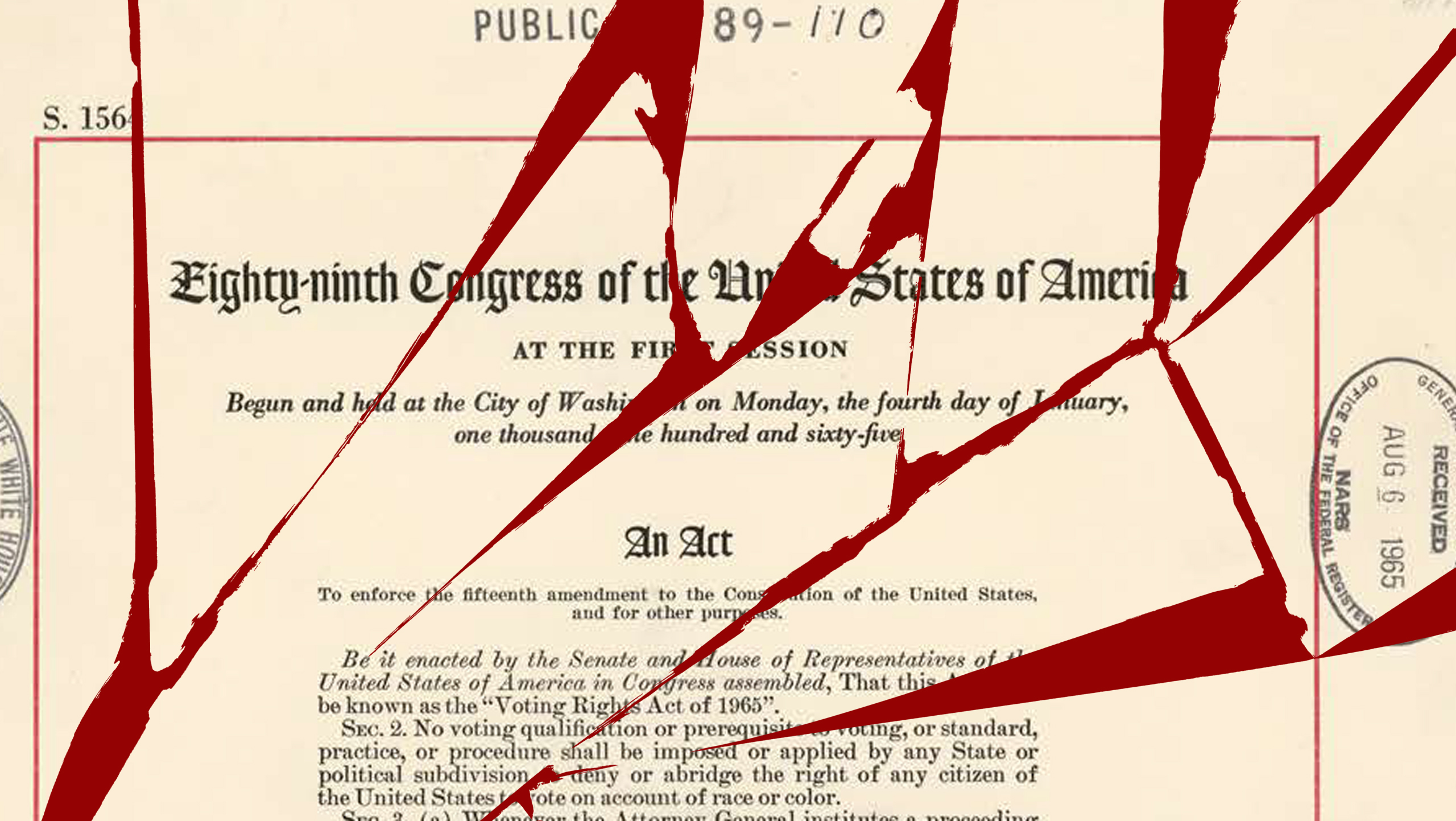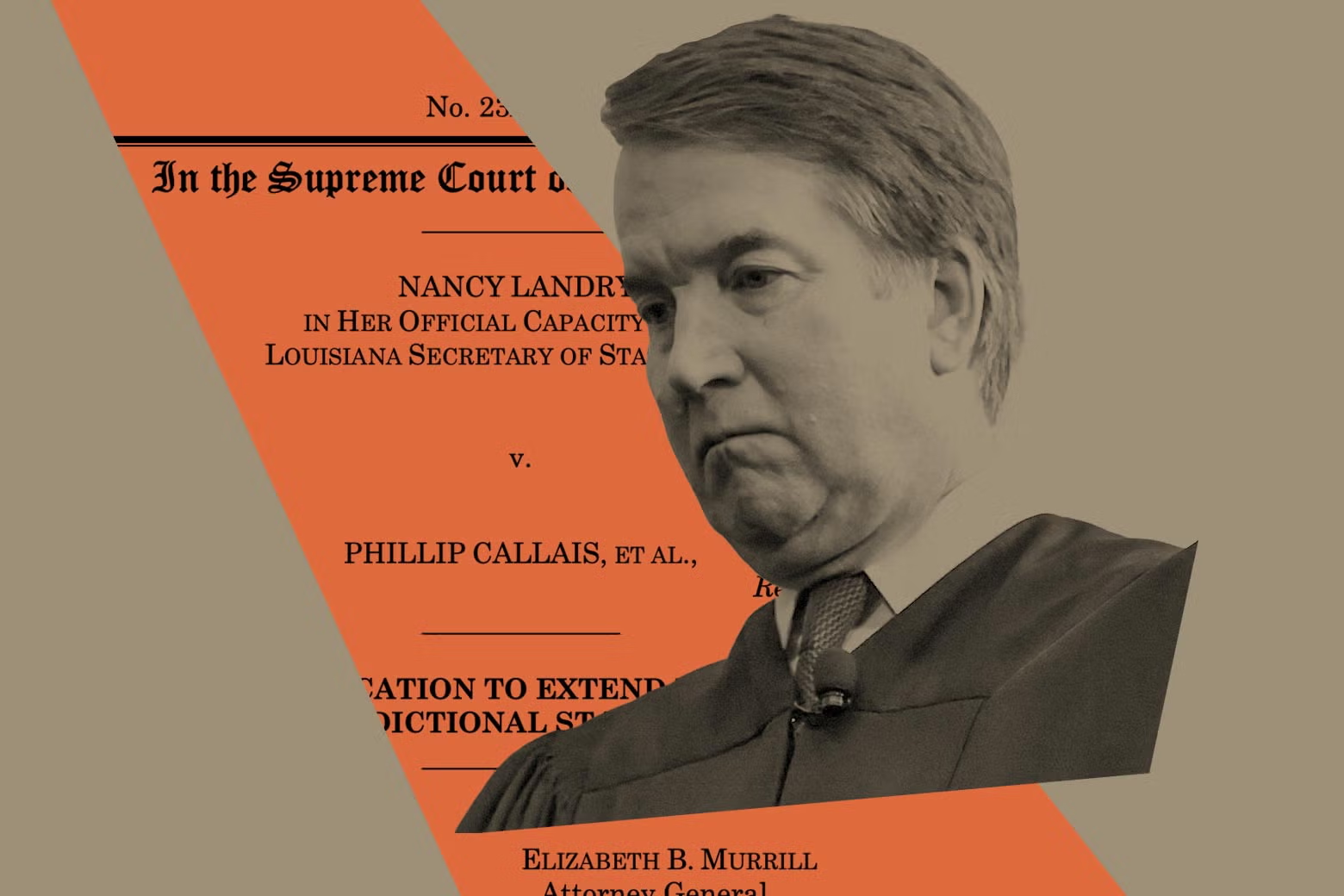
The Supreme Court is hearing a critical case, Callais v. Louisiana, which could significantly restrict or overturn protections against racial vote suppression under the Voting Rights Act of 1965, raising concerns about potential overreach and the future of multiracial democracy. Janai Nelson of the NAACP Legal Defense Fund emphasizes the importance of upholding longstanding legal precedents and the constitutional protections embedded in the Act, warning that a decision to weaken or eliminate these protections could have widespread and lasting impacts on voting rights and democracy in the U.S.
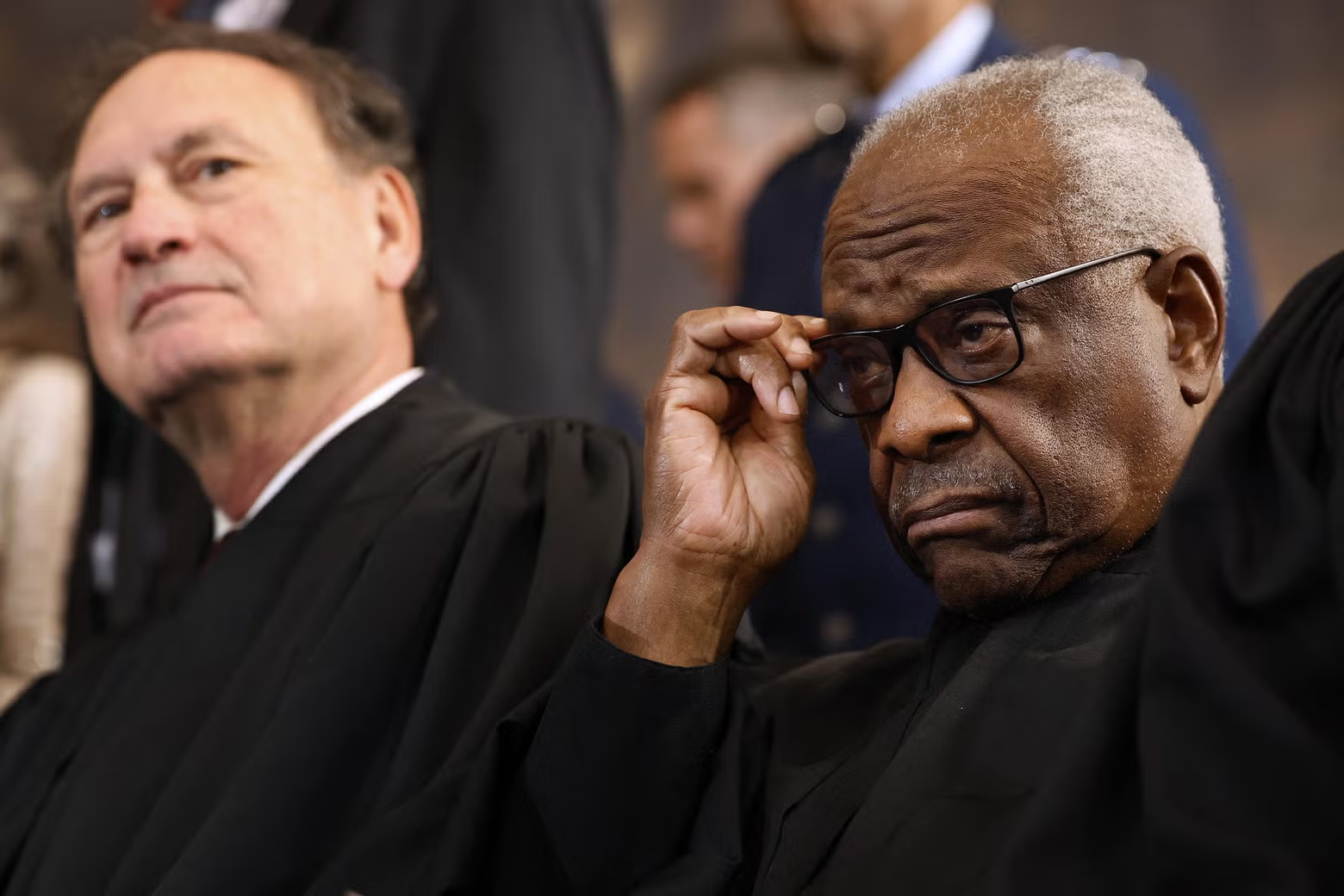
The Supreme Court's conservative majority appears inclined to weaken or eliminate key protections under the Voting Rights Act, particularly Section 2, which has historically safeguarded Black voters' political power, raising concerns about increased gerrymandering and the rollback of civil rights gains. An official ruling is expected next summer.
A Supreme Court case could overturn or weaken the Voting Rights Act's Section 2, potentially allowing GOP-controlled states to redraw districts favoring Republicans, which could lead to significant reductions in minority and Democratic representation in Congress, impacting the balance of power for years to come.
The Supreme Court appears poised to reconsider or potentially strike down key provisions of the Voting Rights Act, particularly Section 2, which could significantly impact voting rights and minority representation in elections, signaling a possible shift towards a more race-neutral interpretation of voting laws and raising concerns about the future of civil rights protections.
The Supreme Court has signaled interest in a major Voting Rights Act case involving Louisiana's redistricting, highlighting ongoing tensions between protecting minority voting rights and equal protection principles, amid a broader conservative skepticism towards the Act.
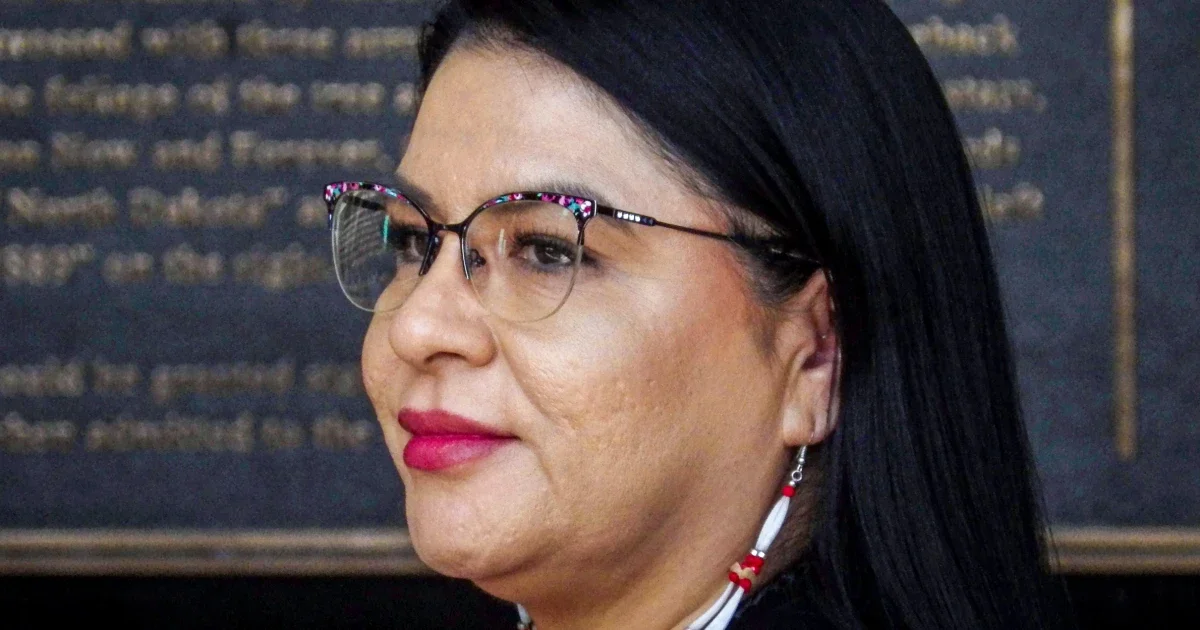
The U.S. Supreme Court has temporarily preserved voters' rights to sue under the Voting Rights Act, blocking enforcement of a redistricting map in North Dakota that was challenged for diluting Native American voting strength, while also considering broader issues about the constitutionality of Section 2 of the Act in upcoming cases.
The Supreme Court blocked a North Dakota redistricting case that challenged the Voting Rights Act, with some justices dissenting. The case involved Native American tribes arguing that the state's 2021 legislative map diluted their voting power, but a lower court's decision was challenged by the 8th Circuit, which ruled only the Justice Department can sue under Section 2, conflicting with previous court decisions. The Court also has a separate case involving Louisiana's congressional districts and is set to hear more redistricting issues in its upcoming term.
The Supreme Court temporarily blocked a lower court ruling that would weaken a key provision of the Voting Rights Act, allowing Native American tribes to continue challenging a North Dakota legislative map they argue dilutes their voting power, with litigation ongoing and potential for future Supreme Court review.
A federal court ruling has raised concerns about the future of the Voting Rights Act by embracing a legal theory that limits the ability of private plaintiffs to bring cases under section 2 of the law, which prohibits voting discrimination based on race. The ruling, if upheld by the US Supreme Court, could significantly hinder the enforcement of the VRA, as private plaintiffs have historically played a crucial role in identifying and challenging voting discrimination at the local level. The decision has sparked fears that the rights of voters of color could be further marginalized, and while other courts have yet to agree with this ruling, it represents a concerning trend in recent attacks on section 2 of the VRA.
The 5th U.S. Circuit Court of Appeals has affirmed that Galveston County, Texas violated the Voting Rights Act (VRA) by diluting the voting power of Black and Latino communities. However, the court has called for a rehearing of the case in full, expressing its intent to overturn established precedent that allows the aggregation of distinct minority communities for Section 2 vote dilution claims. The ruling follows a trial decision that found Galveston County engaged in a "stark and jarring" VRA violation by dismantling the county's sole majority-minority commissioners court precinct. The future trajectory of the case and the viability of minority-coalition Section 2 claims in the 5th Circuit remain uncertain.
Alabama Republican legislators are reportedly defying a Supreme Court directive to redraw congressional voting maps with a second majority-Black district as part of a larger strategy to force the high court to rehear the entire case and strike down Section 2 of the Voting Rights Act. The plan, championed by Alabama Attorney General Steve Marshall and other ALGOP officials, is rooted in the belief that the Supreme Court never seriously considered the merits of Alabama's case and instead limited its ruling to the stay issued by the lower federal court. Critics argue that this plan ignores Chief Justice John Roberts' directive to include two majority-Black districts. Alabama Republicans believe their D.C. connections have "intelligence" that Justice Brett Kavanaugh is open to rehearing the case on its merits. The goal is to overturn Section 2 and polish Marshall's conservative credentials for a future run for higher office.
The U.S. Supreme Court's recent ruling on the Voting Rights Act has left the landmark law intact, but the legal fight over it is far from over. Alabama's GOP-controlled legislature is expected to come up with a new redistricting plan by July 21, and challenges to voting districts in other states are also set to move ahead, potentially reshaping the political landscape across much of the South. While voting rights advocates and many legal scholars welcomed the ruling, they are also bracing for more challenges that could make it harder to protect voters of color across the country from racial discrimination in the election process.