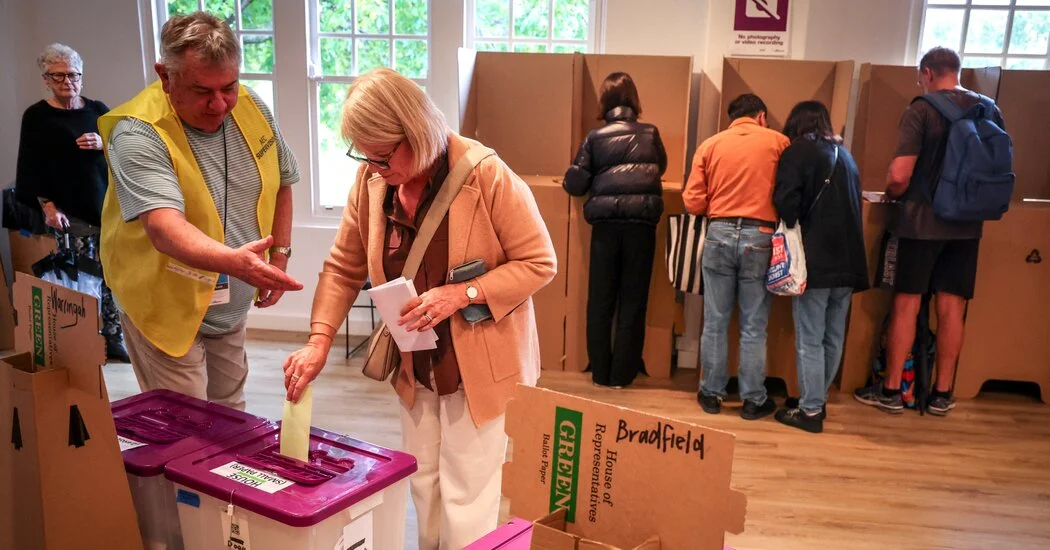
Missouri Secretary of State Denny Hoskins admitted to writing a flawed and potentially prejudicial ballot summary for a referendum on redistricting, leading to a court case that may result in revisions. The controversy centers on the language used to describe the state's gerrymandered congressional map, with objections from a political action committee, People Not Politicians, who argue the summary is misleading and unfair. The case is ongoing, with a new hearing scheduled for February 9, amid broader legal disputes related to the redistricting process.
Louisiana will use its current six congressional districts for the 2026 elections after the Supreme Court declined to expedite a decision on a legal challenge to the districts' boundaries, delaying potential redistricting until a ruling is issued in the spring.
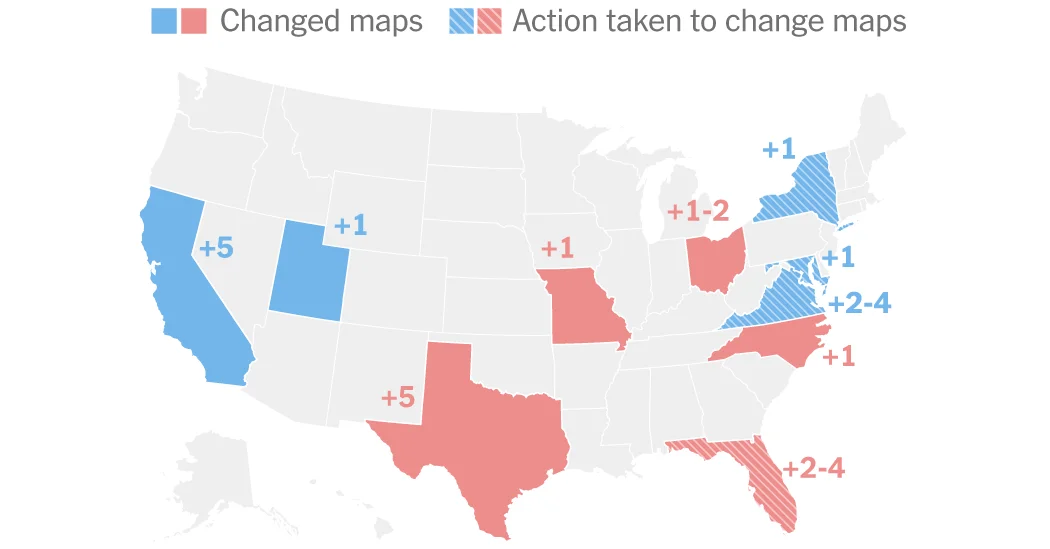
In 2025, the Trump White House orchestrated a nationwide effort to strategically redraw congressional districts through mid-decade gerrymandering, targeting red states like Texas and Indiana to insulate Republican majorities ahead of the 2026 midterms, despite internal and external opposition, revealing a bold and controversial approach to electoral manipulation.
The article discusses a political rivalry in California's Democratic primary, highlighting campaign strategies, endorsements, and personal attacks amid ongoing redistricting battles, with candidates navigating issues of identity, community safety, and political endorsements.
A college freshman, Daniel DiDonato, created new legislative maps for Alabama's State Senate Districts 25 and 26 as part of a public redistricting process following a lawsuit alleging voting rights violations, showcasing an unlikely but impactful contribution to political mapmaking.
Senator Liz Brown was removed as chair of the Indiana Senate Judiciary Committee after her support for a redistricting plan that was rejected by the Senate, leading to a leadership reshuffle with Cyndi Carrasco replacing her. Brown expressed that the change reflects ongoing tensions from the redistricting debate, while the Senate leadership did not specify reasons for her removal.
The article discusses the ongoing and upcoming redistricting efforts in several states ahead of the 2026 midterm elections, highlighting the political strategies, legal battles, and potential impacts on party control of the House, with key focus on states like Virginia, Florida, Kansas, Maryland, Illinois, Missouri, and the influence of a possible Supreme Court ruling on voting rights.
Indiana Democrat Mrvan and Carson are advocating for a ceasefire in redistricting efforts, emphasizing the importance of bipartisan cooperation and warning that aggressive redistricting could threaten their political positions and Indiana's influence in Congress, especially with upcoming census-based redistricting.
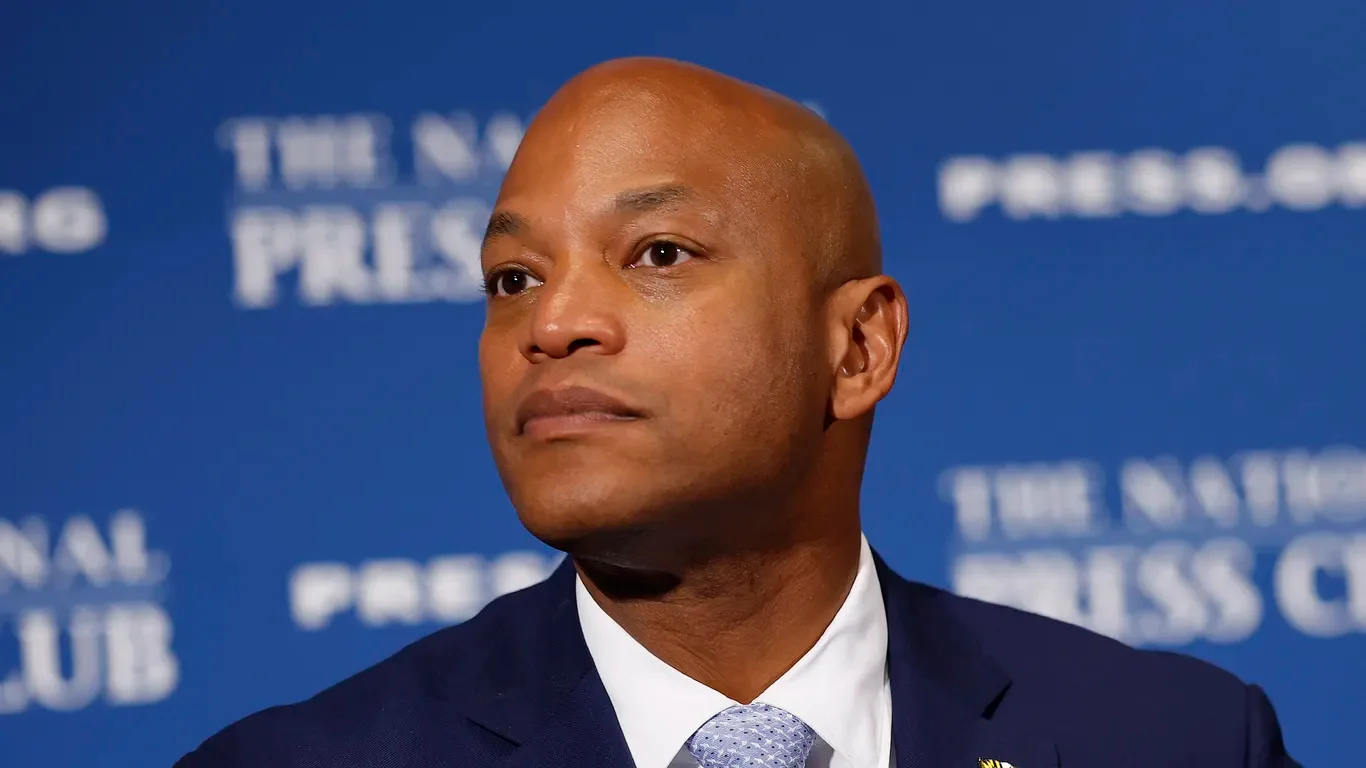
A Maryland redistricting commission voted behind closed doors to proceed with redistricting efforts, sparking criticism over lack of transparency and accusations of predetermined outcomes, despite promises of public engagement and upcoming hearings.
Over 10% of current U.S. Congress members plan not to return after 2026, due to retirements, redistricting, and seeking other offices, marking a record level of turnover driven by political shifts and redistricting efforts.
California's Republican Party and the Trump administration are challenging the state's new Prop. 50 congressional maps in federal court, alleging racial gerrymandering, but their chances are slim given recent Supreme Court rulings supporting race-conscious redistricting and potential future restrictions on race-based districting. The case highlights ongoing debates over the legality of using race in redistricting and the political implications for California Republicans, with the maps having been approved by voters and potentially affecting future elections.
U.S. Rep. Marc Veasey withdrew from the race for Tarrant County judge to focus on his final year in Congress, citing redistricting that split his district and his desire to prioritize national issues over local office.
The Indiana redistricting debate, influenced by national figures and internal GOP disagreements, has caused some tensions among state lawmakers, but most expect to move past the conflicts and continue working together in the upcoming legislative session.
In North Texas, a complex Democratic primary is unfolding between incumbent Julie Johnson and former Rep. Colin Allred, both vying for the newly drawn 33rd Congressional District amid redistricting and party dynamics, with notable endorsements and strategic moves shaping the race.
In 2013, Virginia Republicans attempted a mid-decade redistricting to favor their party, but the plan was halted by House Speaker Bill Howell, highlighting the intense partisan tactics involved in district boundary redrawings and foreshadowing similar strategies in 2026.