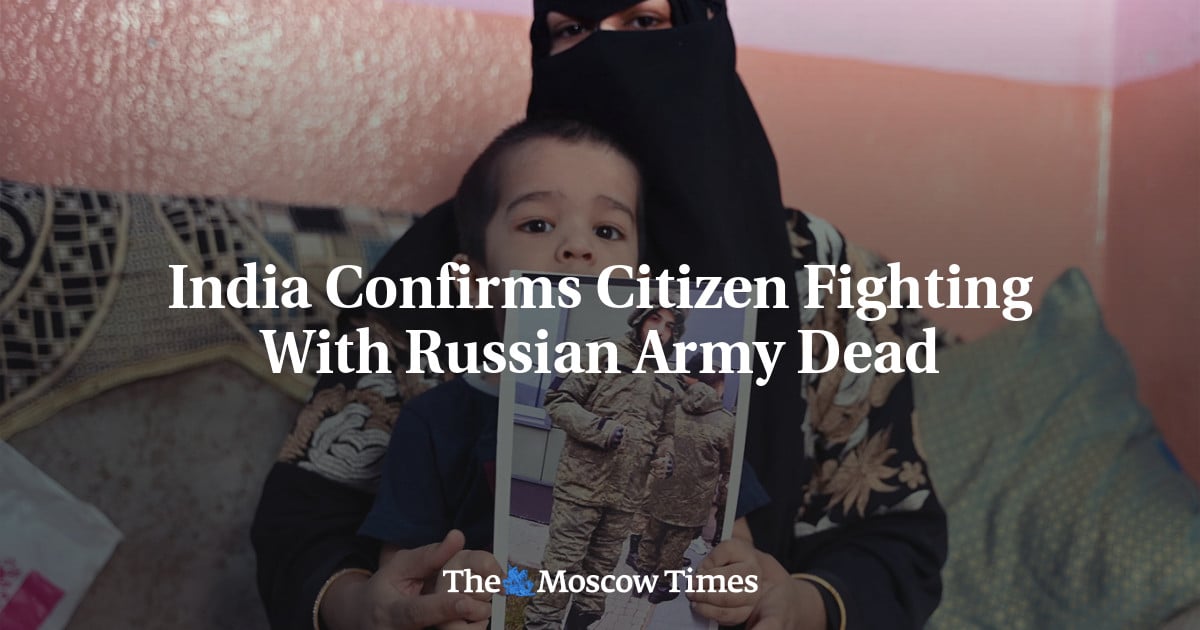
India's embassy in Moscow has confirmed the death of a citizen recruited by the Russian army to fight in Ukraine, marking the first confirmed death among Indian citizens serving with the Russian army. The deceased, Mohammed Asfan, had reportedly been promised a non-combatant role but was deployed to the frontlines, where he was allegedly wounded by a bullet. This revelation comes amid reports of Indian recruits being lured into joining the Russian army with promises of high salaries and a Russian passport before being sent to Ukraine.
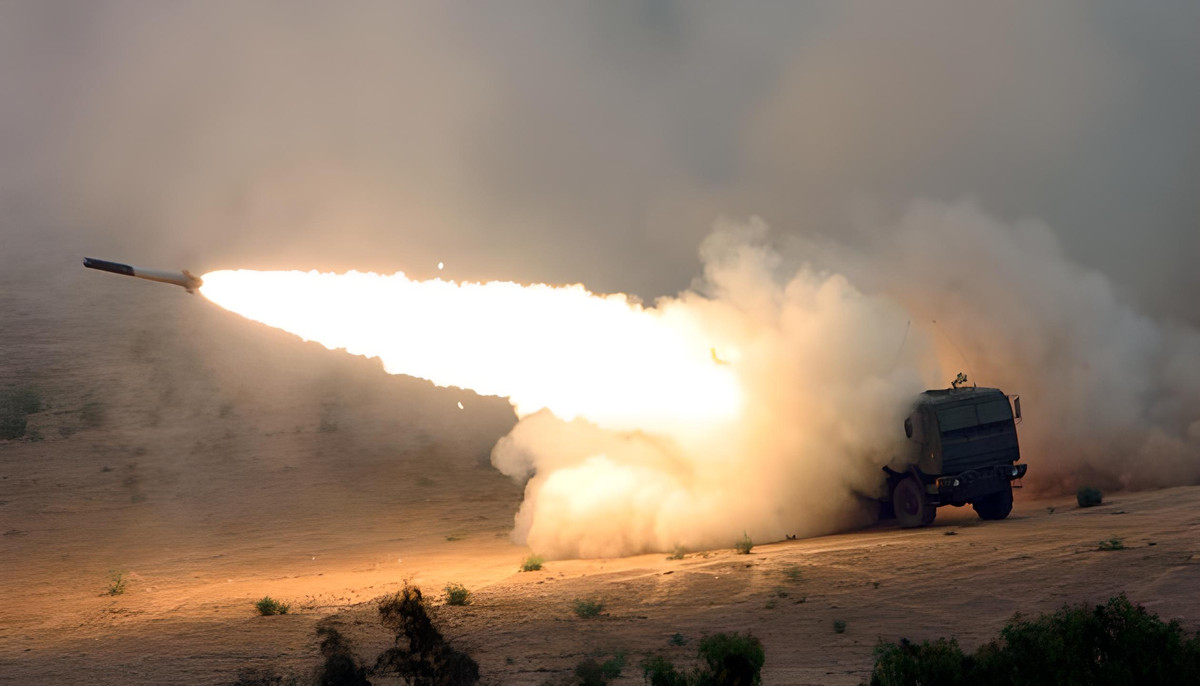
A Ukrainian long-range missile strike reportedly hit a Russian infantry battalion waiting for a ceremonial inspection, killing dozens of soldiers, including junior commanders, and wounding at least 300 others. The attack, blamed on US-made HIMARS precision-guided missiles, occurred near the Ukrainian town of Trudivske, with photos and videos showing heavy Russian casualties. The strike has not been officially commented on by either side, but both Ukrainian and Russian milbloggers described the incident as accurate. The alleged location site of the attack had been used by Ukrainian troops for training and was captured by advancing Russian troops in 2022.
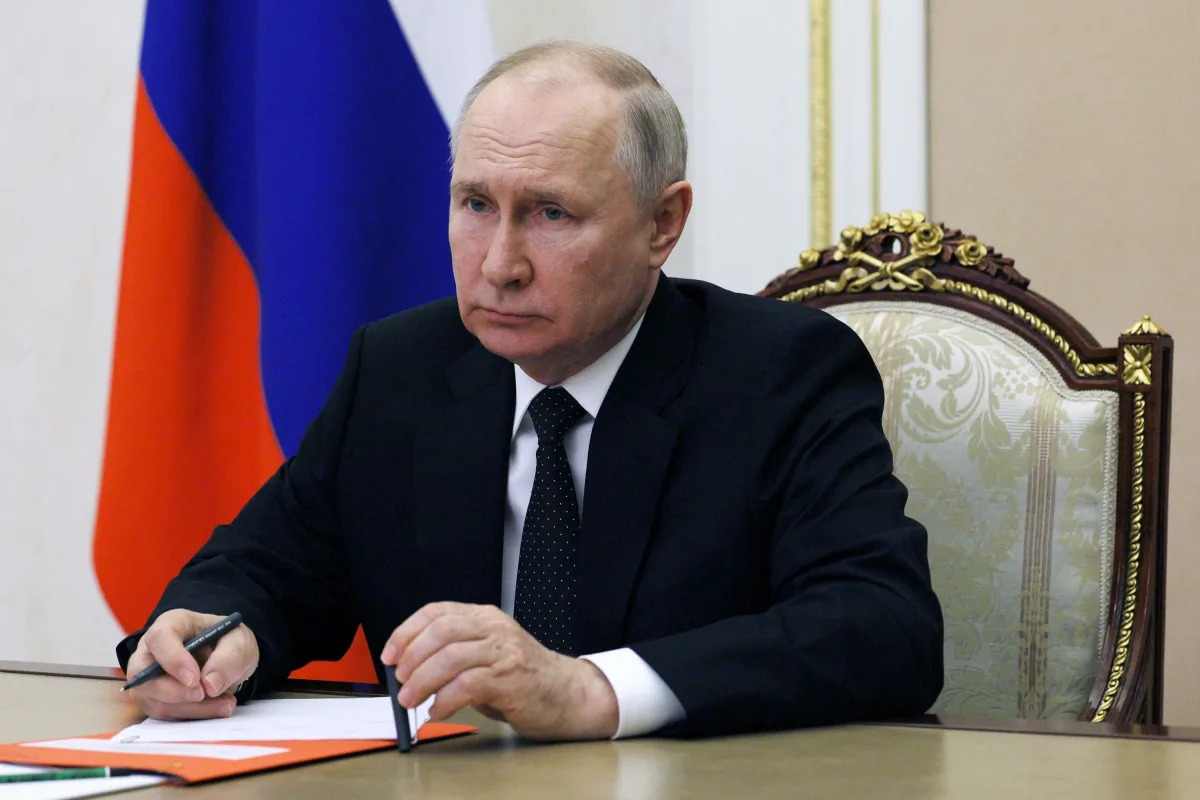
In a New Year's Eve address, President Vladimir Putin praised the Russian army and called for national unity, avoiding direct mention of the war in Ukraine. The speech, which marks a departure from last year's military-centric presentation, focused on the theme of "the year of the family" for 2024. Putin expressed support for Russian soldiers and emphasized the country's strength and resilience during a significant "historical stage," promising the development and well-being of Russia. The address is a long-standing tradition watched by millions across Russia's 11 timezones.
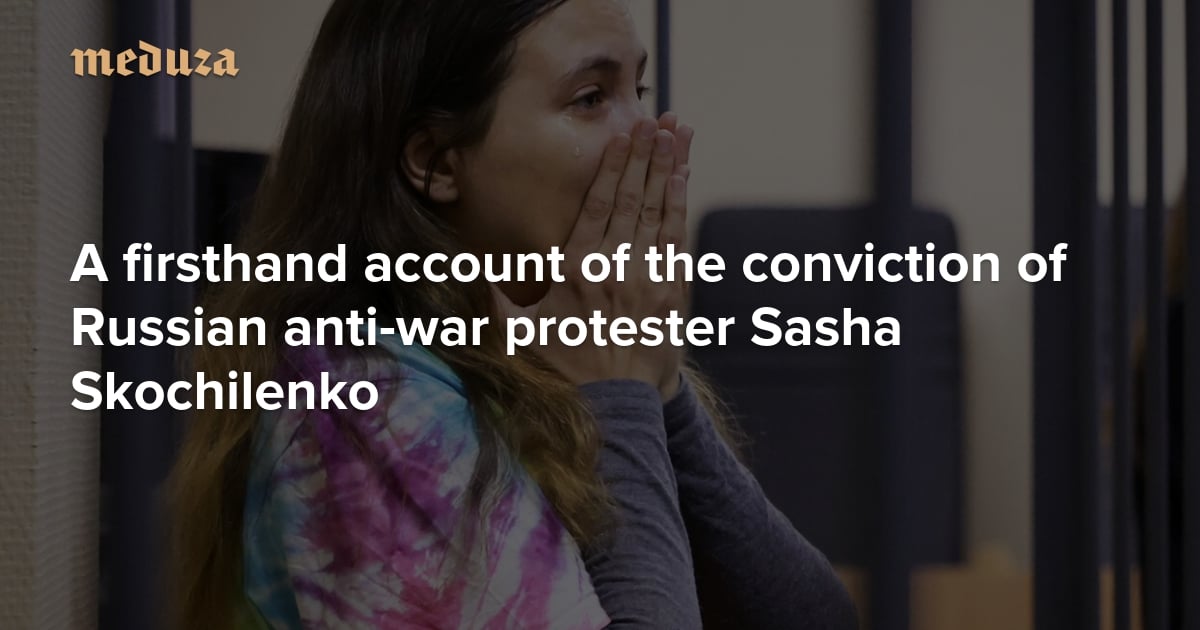
Russian artist Sasha Skochilenko has been sentenced to seven years in prison for spreading "disinformation" about the Russian army. Skochilenko, who has chronic health conditions, was arrested in April 2023 after replacing price tags in a supermarket with anti-war messages. Her trial revealed multiple flaws in the prosecution's case, including unreliable testimonies and unscientific analysis. Skochilenko's lawyers argued for her innocence and highlighted her need for proper medical care. Despite the defense's efforts, she was sentenced to prison, sparking outrage among supporters.
Inmates serving in the Russian army are being used as cannon fodder in the ongoing conflict in Ukraine, according to testimonies from former inmates. These convicts, enlisted in special units called "Storm Z," endure relentless bombardment, sniper attacks, and ambushes, with little cover or support. Many have died, and survivors are pressured to remain on the battlefield beyond their contracts. The Russian military is accused of treating them as expendable, denying them proper compensation and preventing families from claiming compensation for deceased soldiers. The use of inmate units has become a cornerstone of Russian military strategy as regular forces have been decimated.
Ukrainian intelligence official Andriy Chernyak revealed that between 55,000 and 60,000 residents of Ukraine's occupied territories have been forcibly mobilized into the Russian army since the beginning of 2022. The Russian military has been catching people on the streets or from operating establishments, putting them in uniforms, and sending them to the front lines, despite promises of being placed in the second or third lines. Students have also been forced to join the army, with little regard for their rights or the law. The only chance for survival for those mobilized from the annexed territories is to surrender at the earliest opportunity.
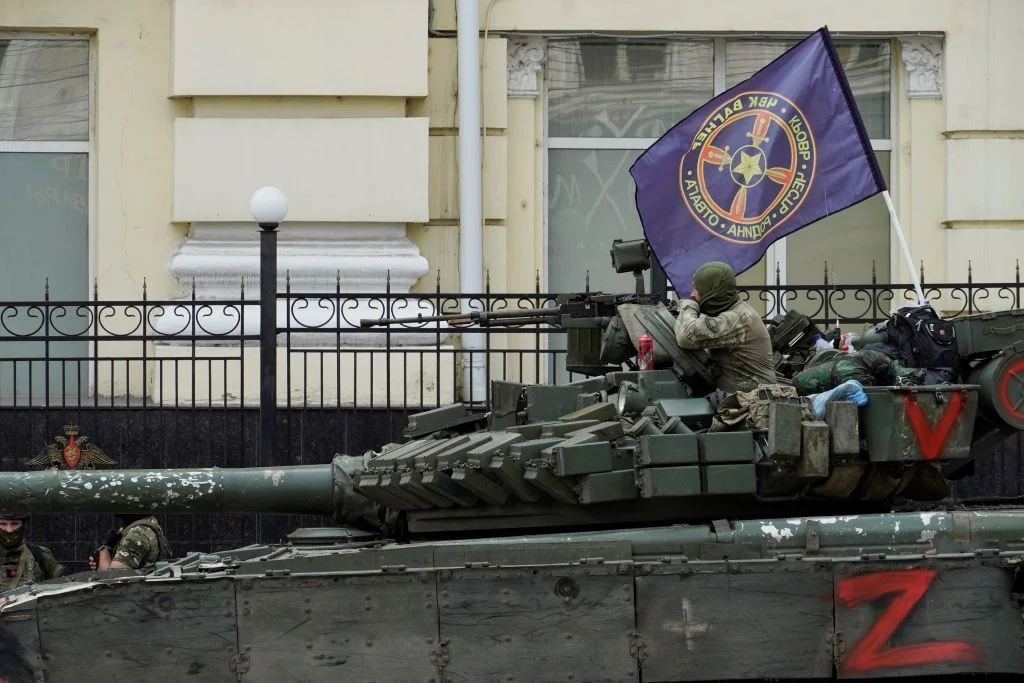
Recent developments in the Russian Ministry of Defense (MoD) indicate that the leadership remains intact despite their poor response to the Wagner Group mutiny. The MoD announced the receipt of arms from Yevgeny Prigozhin's mercenaries, Defense Minister Sergei Shoigu inspected arms factories, and Chief of the Russian General Staff Valery Gerasimov dismissed Lieutenant General Ivan Popov. The conflict between Gerasimov and Popov highlights the lack of consolidation within the Russian military leadership and the growing issues faced by Russian forces in Ukraine. The transfer of arms from the Wagner Group back to the Russian Armed Forces eliminates the counterbalance they provided. However, the footage of the transfer reveals outdated and non-operational equipment. The Russian military's reliance on Soviet-era arms and the degradation of their repair facilities pose challenges as the Ukrainian counteroffensive continues. The Russian Armed Forces are at a critical turning point and need to find answers on how to continue fighting.
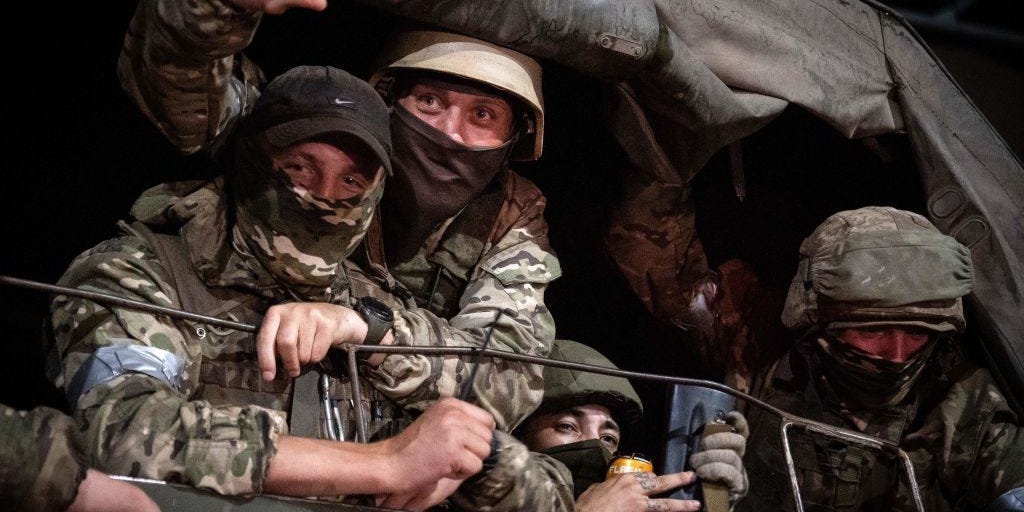
A former Wagner fighter who defected to the Russian army has criticized Yevgeny Prigozhin, the leader of the paramilitary group, calling him a "cocky idiot" and blaming him for pitting soldiers against each other for personal gain. The fighter expressed shock at Prigozhin's attempted rebellion and occupation of a military base, stating that he and his comrades fought for the country, not for Prigozhin's personal ambitions. Another former fighter also expressed disapproval of Prigozhin's actions and emphasized that he would never turn weapons against his own people or country. The armed rebellion has exposed a long-standing feud between Prigozhin and Russian military officials, leaving the future of Russia's military and Wagner's role in Ukraine uncertain.
Vitaly, a Ukrainian agronomist turned gunner officer, shares his experience on the frontline in the Donbas region of Ukraine. His artillery battery, equipped with Ukrainian-made 2S22 Bohdana self-propelled howitzers, is part of the 57th Motorized Infantry Brigade. While the Ukrainian army takes pride in their weaponry, conversations among soldiers reveal heavy losses and the formidable positions of the Russian army. The counteroffensive has yet to reach its decisive phase, with both sides vying for control. Despite the challenges, the spirit and courage of the Ukrainians remain strong.
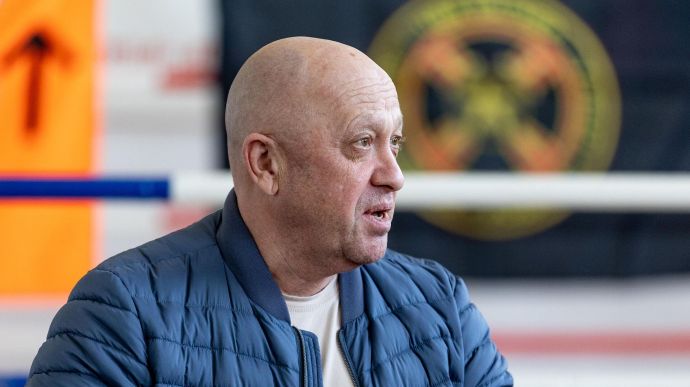
Yevgeny Prigozhin, founder of the Wagner Private Military Company (PMC), stated in an audio recording that the "march of justice" conducted by his PMC was aimed at fighting traitors and mobilizing society. He expressed confidence in achieving future victories but did not provide further details or disclose his whereabouts. Prigozhin's statement follows his claim that the Russian army launched a missile strike on Wagner mercenaries, prompting him to deploy 25,000 mercenaries to restore justice. The situation remains fluid, with reports of Wagner Group fighters heading towards Moscow and subsequent developments indicating a change in plans.
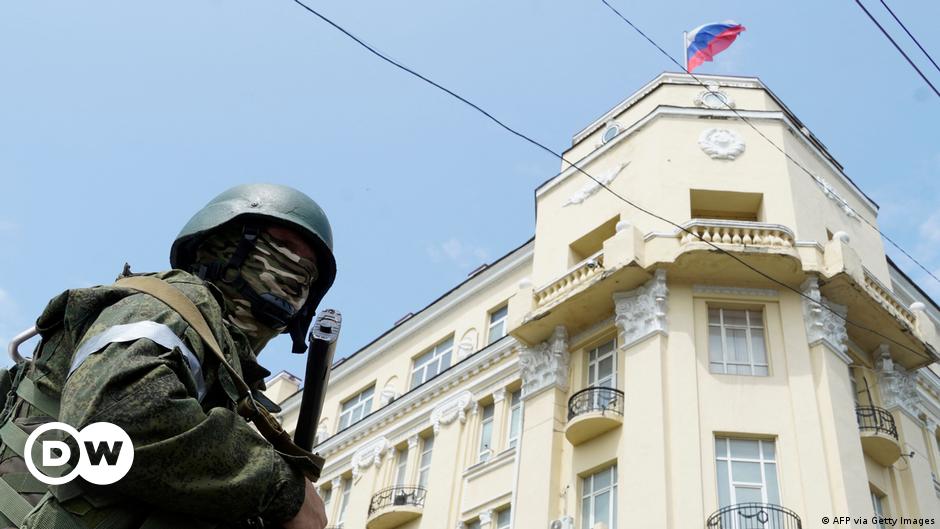
Around 50 ethnic Dagestani soldiers in Zaporizhzhia Oblast have refused to fight in the Russian army and have destroyed their weapons, according to the General Staff of the Armed Forces of Ukraine. The desertions are increasing as Ukraine's defense forces achieve success and Russia suffers significant personnel losses. Russian forces are also reported to be using the civilian population as human shields.
Questions have arisen regarding the support the Wagner Group received from within the Russian army during their brief revolt. Military experts suggest that collaboration is likely, as the Wagner fighters were using equipment from the Russian army and would have had to pass through important garrisons without facing opposition. US intelligence sources claim that General Sergei Surovikin, the former commander of Russian troops in Ukraine, had advance knowledge of the revolt. However, some observers believe these claims may be part of an information operation to help Surovikin cleanse his record and regain a prominent position within the military. The role of private armies like the Wagner Group in Russia's military strategy and the growing mistrust among military officers remain unclear.
Russian President Vladimir Putin vows to bring Wagner mercenary group leader Yevgeny Prigozhin to justice, but also acknowledges that an immunity deal struck between the two to end the standoff will be upheld for now. Putin offers those who participated in the rebellion the option to leave with Prigozhin to Belarus and avoid prosecution or return home to their families, while also extending them the opportunity to repent by joining the Russian army. Putin thanks Belarusian president Alexander Lukashenko for his help in bolstering a treaty.
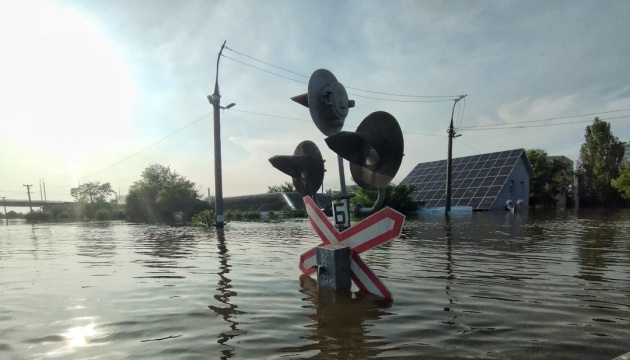
Six settlements in the Kherson region remain flooded after the Russian army blew up the Kakhovka Hydroelectric Power Plant dam, causing a large-scale flood. As many as 1,274 houses remain under water, and 16 people have been killed, with 31 people still missing. Explosives specialists have examined almost 310 hectares of territory where water could carry explosives, with four explosive items discovered and neutralized there.