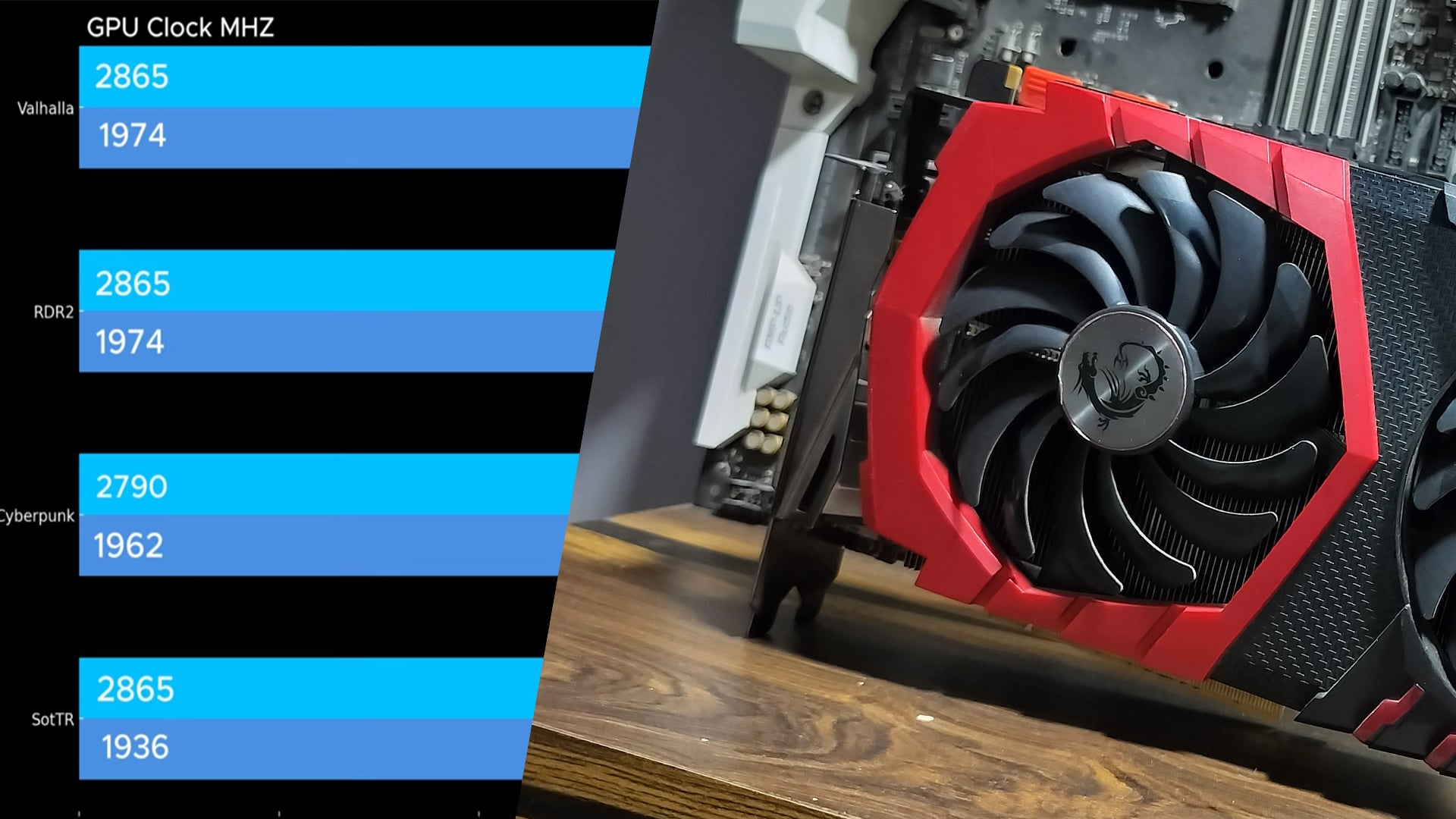
The GTX 1080 Ti, once a top gaming GPU, is outperformed by the entry-level RTX 5050 even with custom liquid cooling and overclocking, highlighting the rapid advancement in GPU technology and the decline of older high-end models.
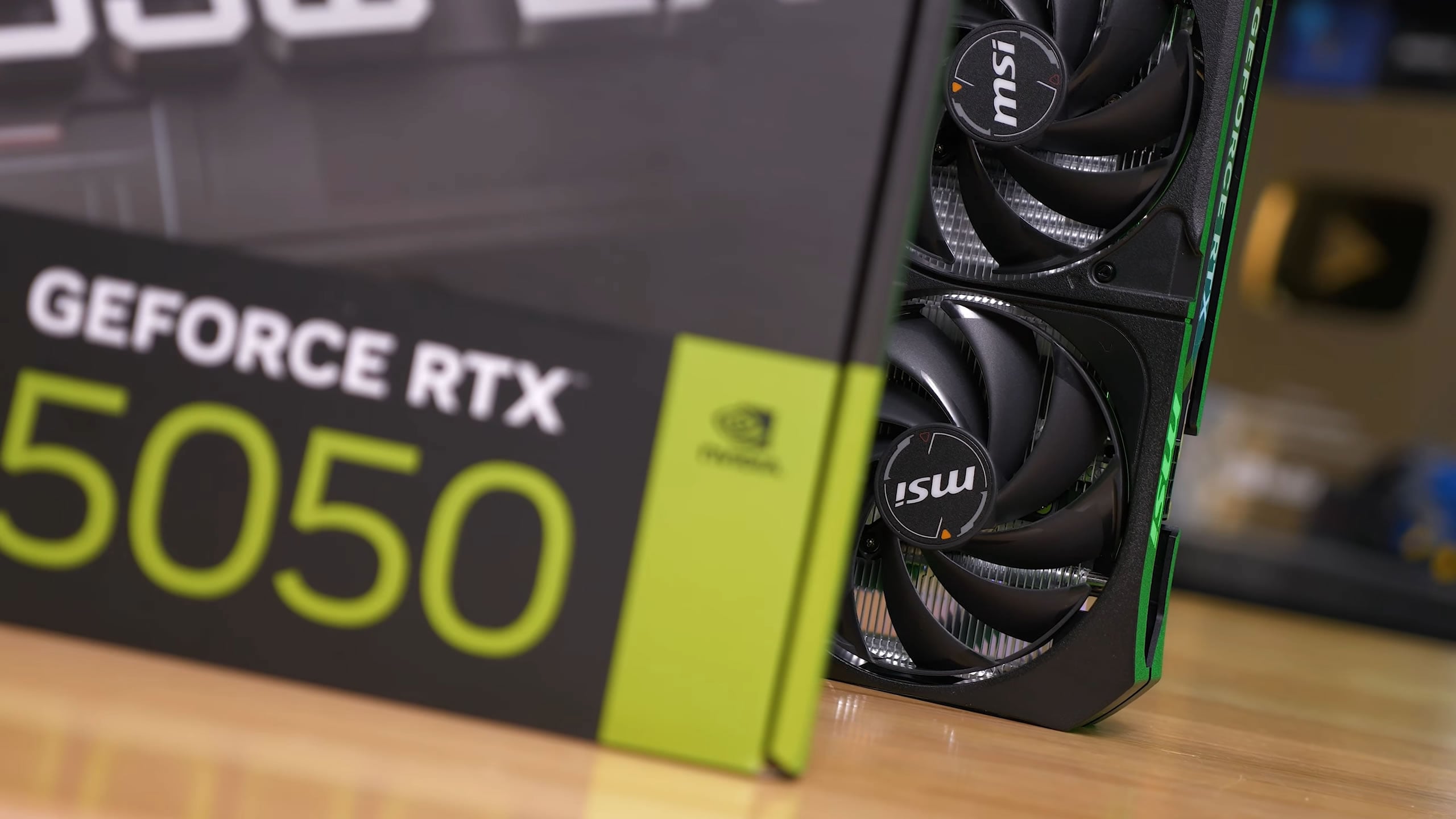
The Nvidia GeForce RTX 5050, launched at $250, offers modest gaming performance, comparable to older or lower-tier GPUs, with significant limitations in ray tracing and value, especially compared to higher-end or AMD alternatives. Its low power consumption and DLSS 4 support are positives, but overall, it is not recommended as a good investment given its performance and price relative to competitors.
Nvidia announced the GeForce RTX 5050, a budget-friendly graphics card starting at $249, featuring the Blackwell architecture with 2560 CUDA cores, 8GB GDDR6 memory, and support for DLSS4 and Reflex 2, expected to be available in July, with a mobile version also shipping in laptops.
Nvidia announced the RTX 5050 GPUs for desktops and laptops, starting at $249 for desktops with 8GB GDDR6 VRAM and 2,560 CUDA cores, and at $999 for laptops with GDDR7 VRAM. The desktop version uses GDDR6, while the laptop version features more power-efficient GDDR7. The GPUs support ray tracing and DLSS 4, promising high-performance gaming experiences, with shipments expected in July.