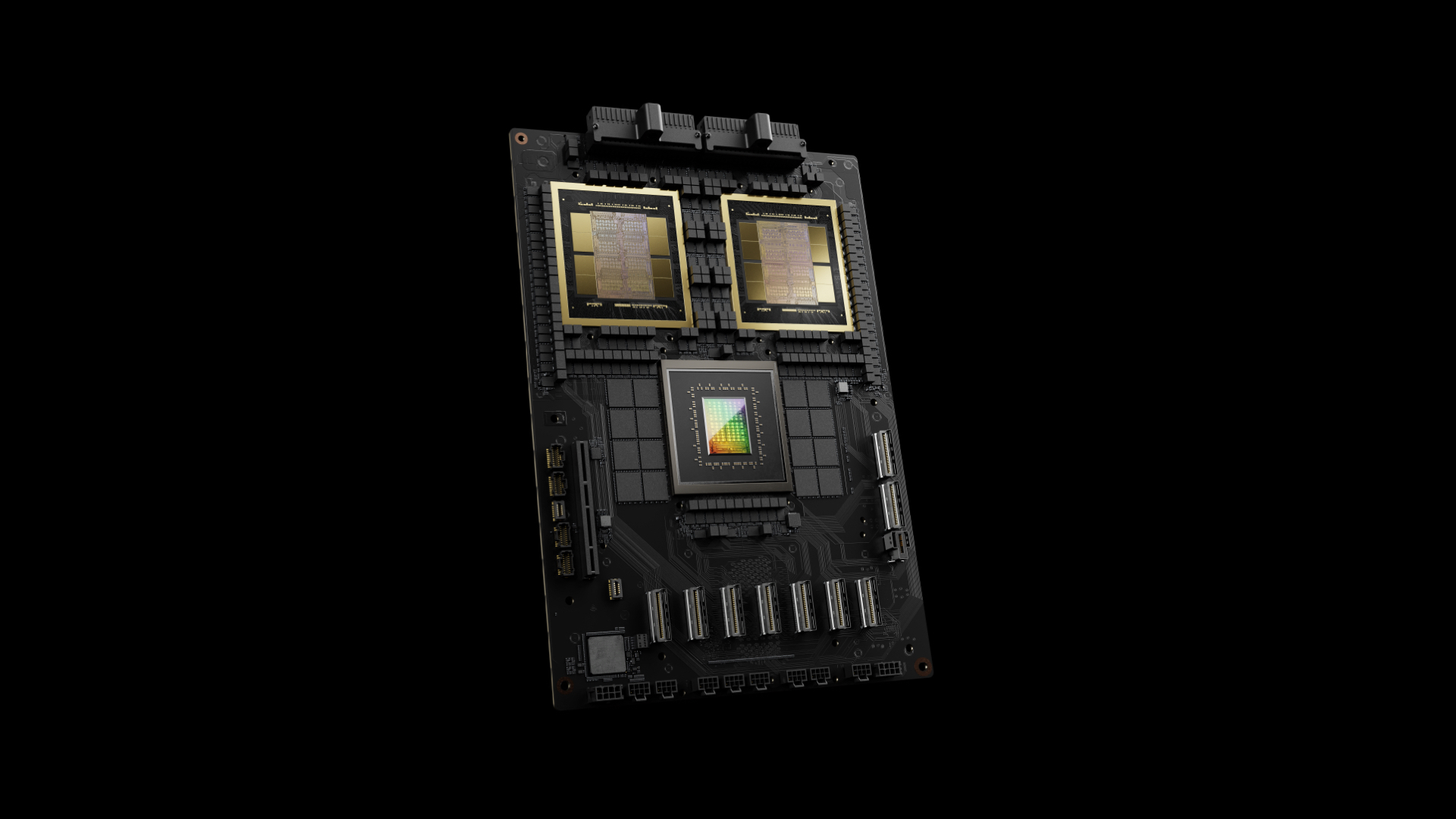
U.S. President Trump plans to discuss Nvidia's advanced AI chips, particularly the Blackwell architecture, with Chinese President Xi Jinping, amid ongoing trade restrictions and China's recent ban on Nvidia's chips, highlighting the geopolitical and technological tensions surrounding AI chip development.
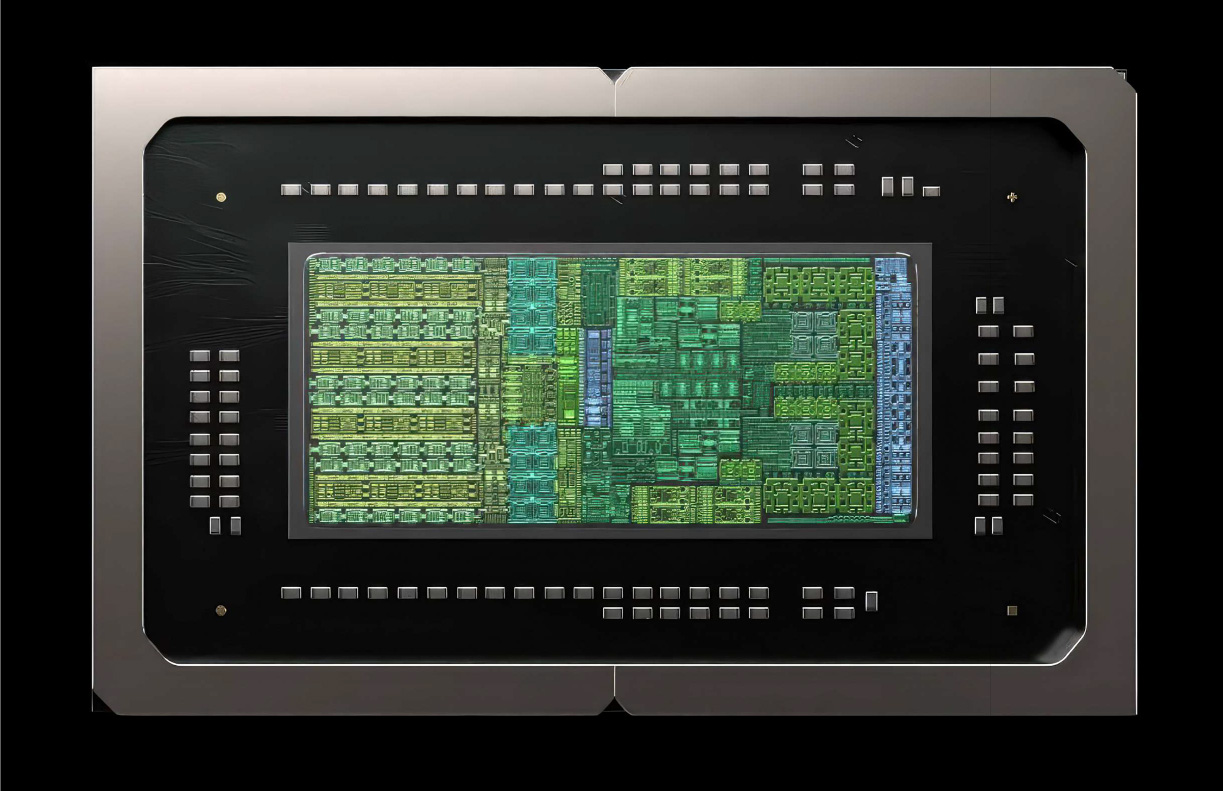
NVIDIA unveiled the GB10 SoC at Hot Chips 2025, a compact, high-performance multi-die chip featuring a Blackwell GPU and MediaTek Arm CPU cores, designed for small form factor AI workstations like the DGX Spark. It supports advanced features such as FP4, unified memory, and high bandwidth, enabling powerful AI workloads in a small, efficient package, and exemplifies a successful collaboration between NVIDIA and MediaTek.
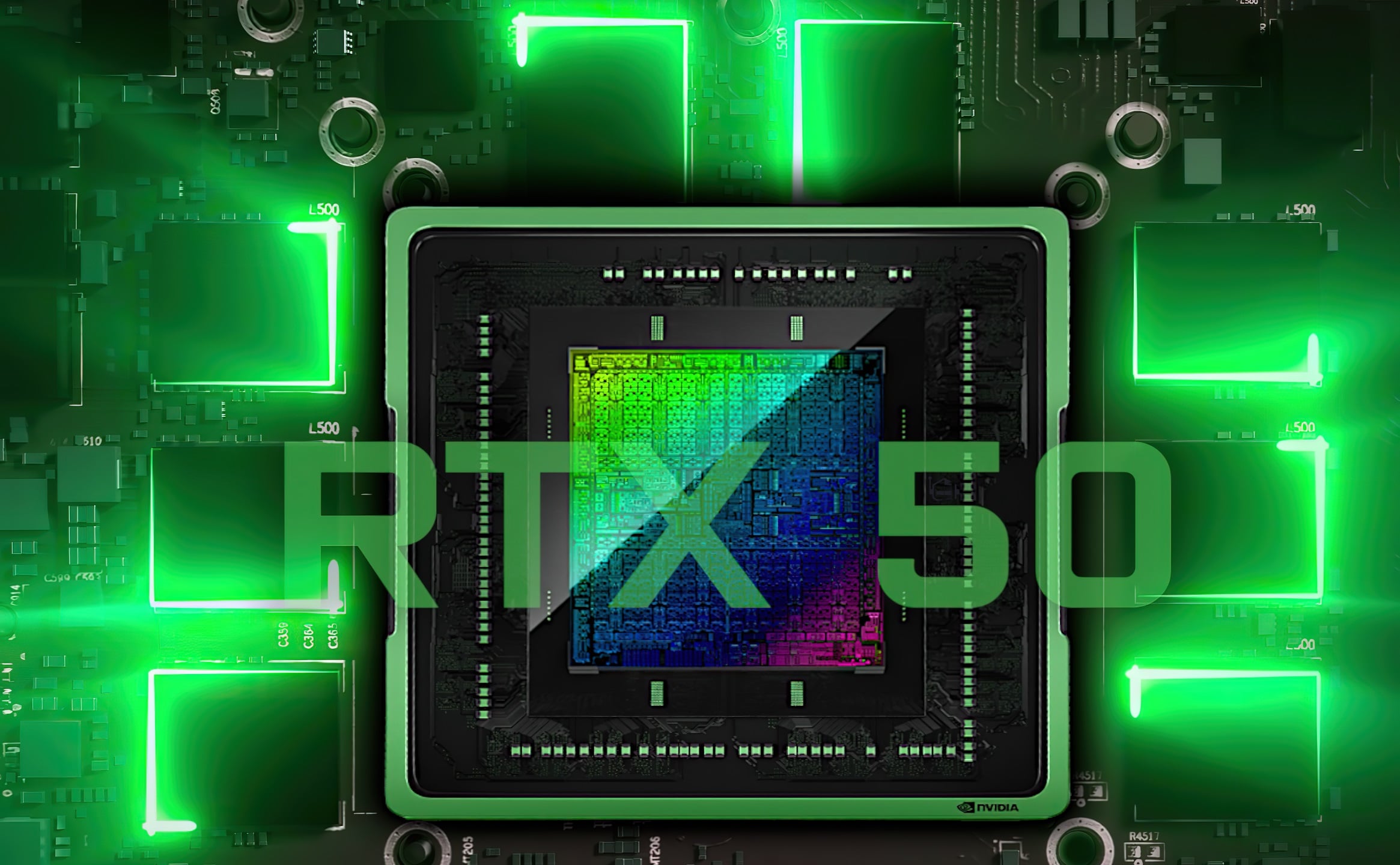
NVIDIA's Hot Chips 2025 presentation focused on the upcoming RTX 5090 and the Blackwell architecture, emphasizing advancements in neural rendering, AI integration, and memory technology. The new architecture aims to enhance machine learning performance, efficiency, and scalability across data centers and mobile devices, with features like shader execution reordering, FP4 ML compute, GDDR7 memory, and support for simultaneous AI and graphics workloads, paving the way for more realistic graphics and AI-powered gaming experiences.
Nvidia is developing a new, more powerful AI chip for China based on its latest Blackwell architecture, potentially surpassing the current H20 model, amid ongoing U.S.-China trade tensions and regulatory uncertainties.
Nvidia announced the GeForce RTX 5050, a budget-friendly graphics card starting at $249, featuring the Blackwell architecture with 2560 CUDA cores, 8GB GDDR6 memory, and support for DLSS4 and Reflex 2, expected to be available in July, with a mobile version also shipping in laptops.
Nvidia is set to launch a more affordable Blackwell-architecture AI chip for China, priced between $6,500 and $8,000, using conventional memory and simpler manufacturing, as a response to US export restrictions that limit its market share and product capabilities in China. The new chip aims to maintain Nvidia's competitiveness despite weaker specifications and is expected to begin mass production as early as June.
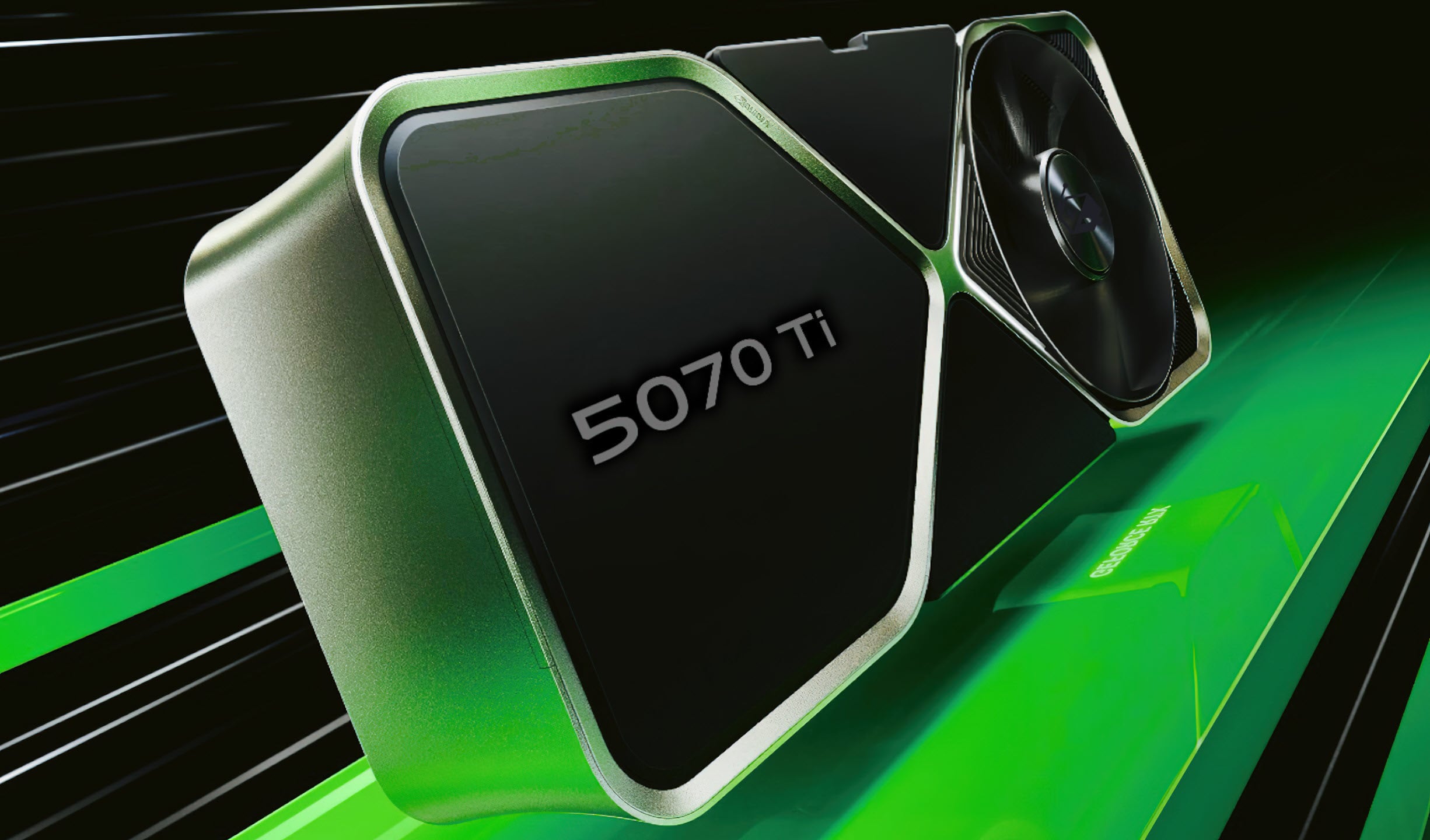
NVIDIA's upcoming GeForce RTX 5070 Ti will feature a GB203-300 GPU with 16 GB of GDDR7 memory and a 350W TBP, offering a high-end option for gamers. It uses a cut-down version of the same chip as the RTX 5080, providing improved performance over its predecessor, the RTX 4070 Ti. The card is expected to launch in Q1 2025 as part of NVIDIA's RTX 50 "Blackwell" series, alongside other new GPUs from AMD and Intel.
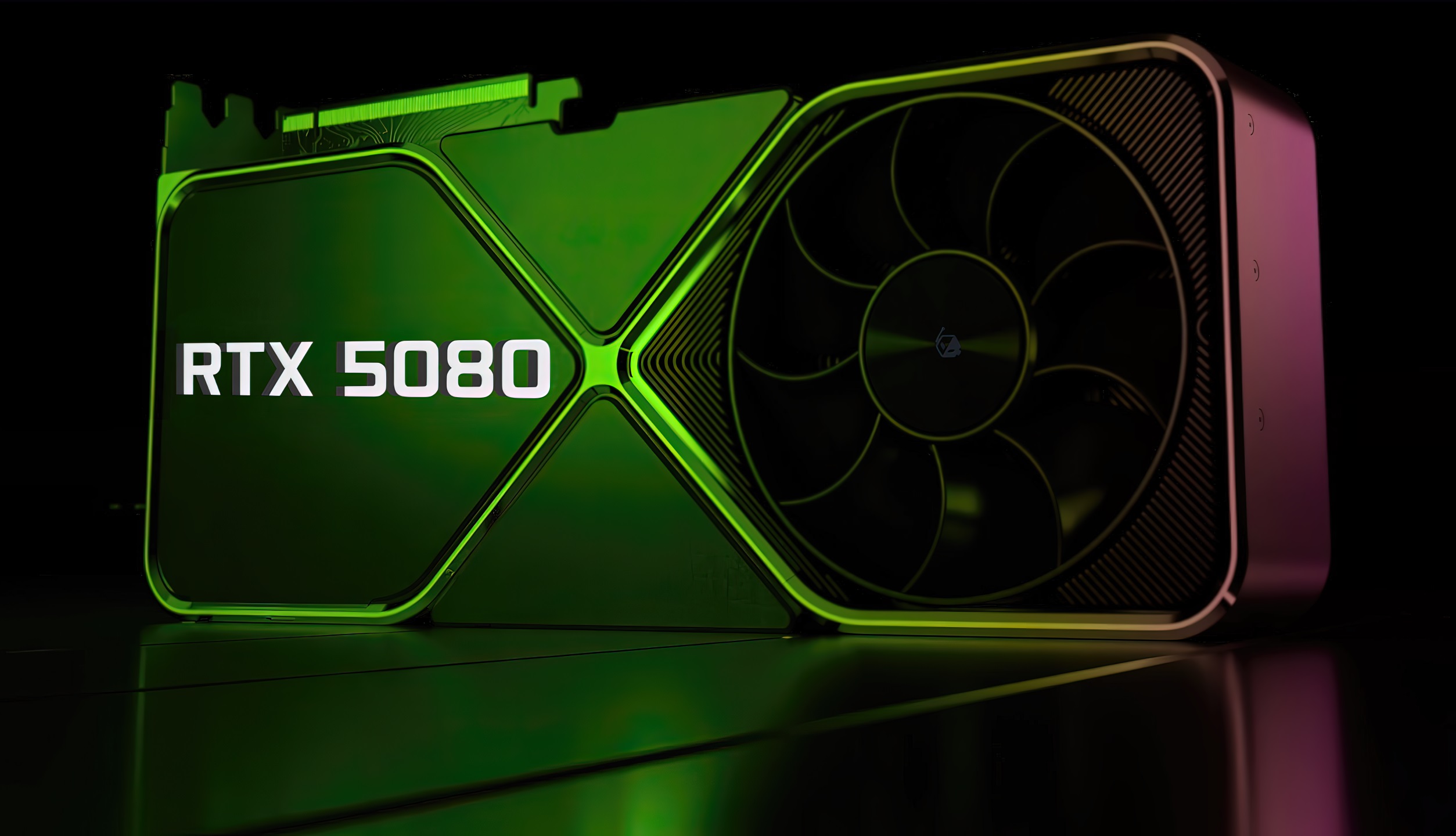
NVIDIA's upcoming GeForce RTX 5080 GPU, part of the Blackwell architecture, is set to be the second fastest in the RTX 50 series, following the RTX 5090. It will feature 10,752 Cuda Cores, 16 GB of GDDR7 memory, and a 256-bit bus, offering a significant performance boost over the RTX 4080. The RTX 5080 is expected to launch in early 2025, with pricing speculated around $1000, though official details remain unconfirmed.
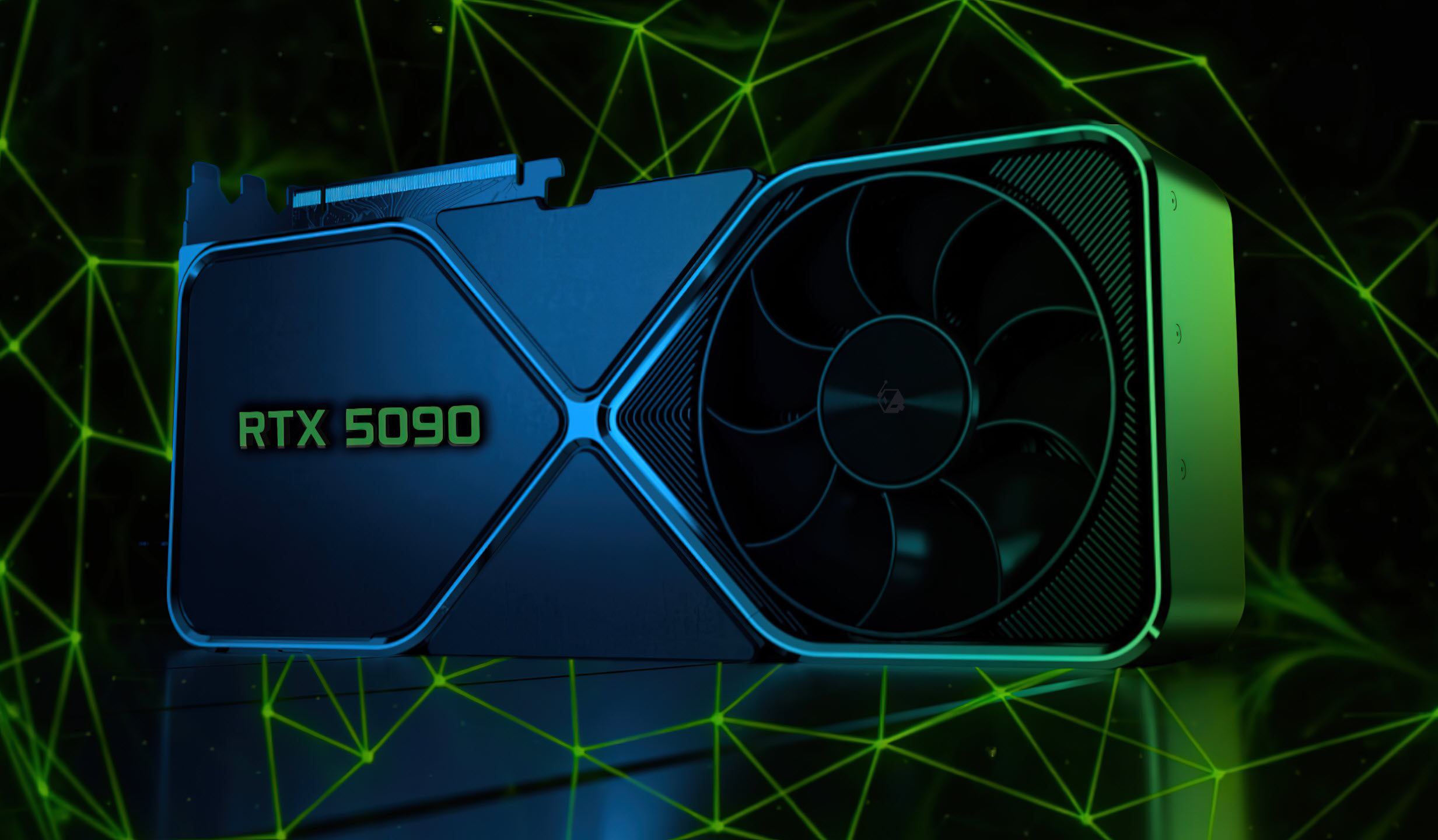
NVIDIA's upcoming GeForce RTX 5090, part of the Blackwell series, will feature a significantly larger GB202 GPU die size of 744mm2, a 22% increase over the RTX 4090. The card will include 32 GB of GDDR7 VRAM, a 512-bit memory bus, and a 600W TBP, promising substantial performance improvements. The RTX 5090 is expected to launch at CES 2025.
NVIDIA's upcoming GeForce RTX 5090, expected to release in Q1 2025, is set to be the flagship of the RTX 50 "Blackwell" GPU lineup, promising unprecedented performance levels. The GPU will feature a new architecture, increased VRAM capacity of 32 GB GDDR7, and a 600W TBP, marking significant improvements over the RTX 4090. While pricing is not confirmed, it is anticipated to be higher than the RTX 4090's $1,599 MSRP. The RTX 5090 is expected to be unveiled at CES 2025, with availability by the end of Q1 2025.
Nvidia's stock, which has surged nearly 150% in the first half of the year, is predicted to continue climbing due to the upcoming launch of its Blackwell architecture. This new chip architecture promises significantly faster performance and lower costs, driving high demand and potentially boosting Nvidia's revenue and stock performance in the second half of the year.
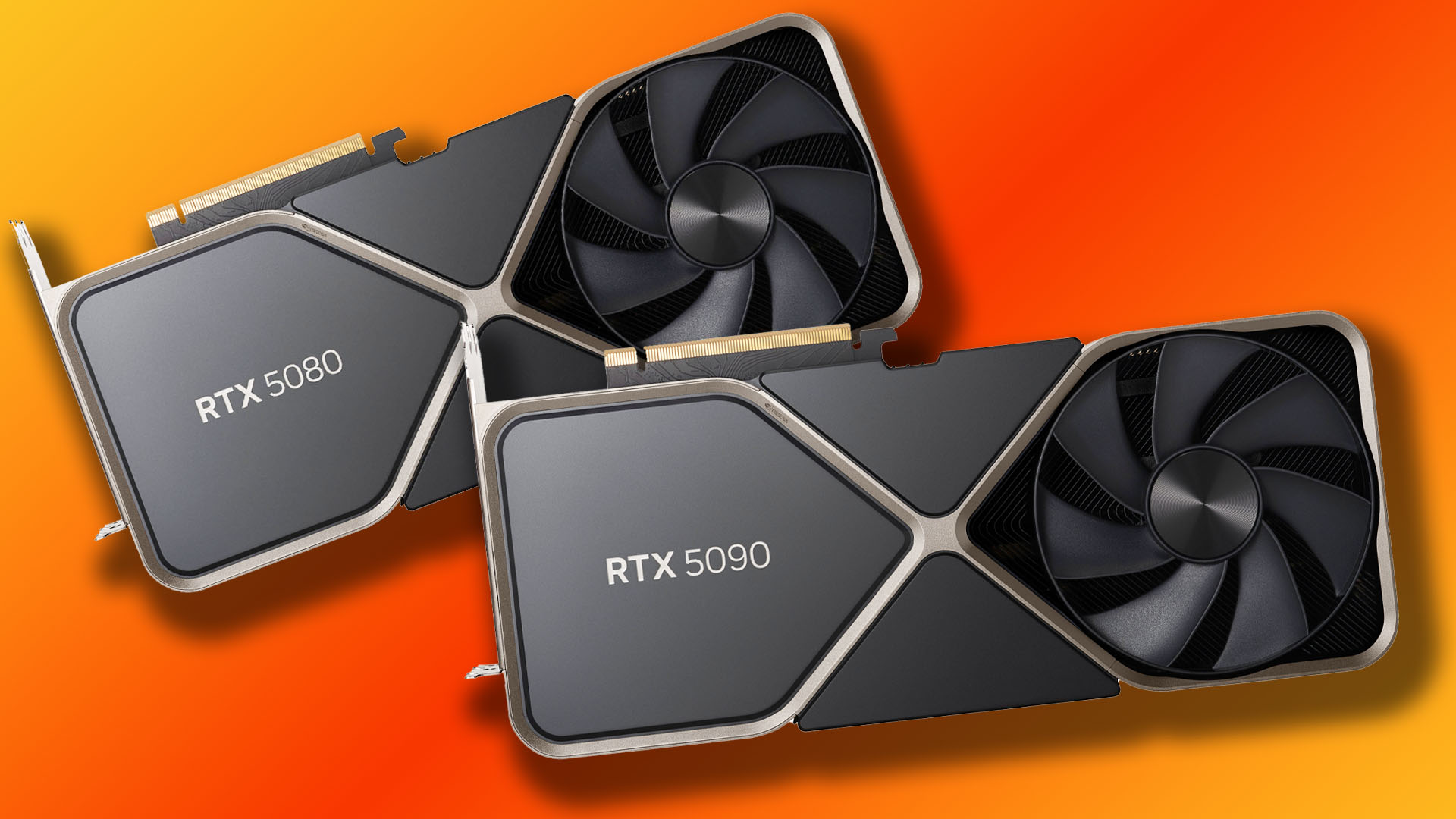
Nvidia is reportedly planning to release the GeForce RTX 5090 and RTX 5080 gaming GPUs in Q4 2024, featuring the new 4nm Nvidia Blackwell architecture and GDDR7 memory. The RTX 5090 is rumored to have a massive 24,576 CUDA cores. This follows the launch of the RTX 4090 in 2022 and is expected to compete with AMD’s RDNA 4 graphics cards.
Nvidia unveiled its Blackwell architecture at the GPU Technology Conference, introducing the GB200 Grace Blackwell Superchip as the "world's most powerful chip" for AI, posing a significant challenge to rival AMD. The new processors boast industry-leading technical specifications and aggressive pricing, potentially increasing Nvidia's dominance in the AI space and putting AMD at a disadvantage, though AMD remains a worthy competitor.
Nvidia's CEO Jensen Huang will kick off the GTC 2024 conference with a keynote outlining the company's future plans, including the expected debut of the Blackwell architecture and B100 graphics card, successors to the Hopper architecture and H100 GPU. The conference will also likely showcase advancements in Nvidia's CUDA software and may include announcements about producing the H20 AI chip for the Chinese market. With 300 exhibitors and speakers from prominent tech companies, the event promises to be a platform for major announcements and debuts in the AI and graphics card space.