Tag

Rice University

All articles tagged with #rice university

health6 months ago

Innovative 'drug-factory' implants effectively target various cancers

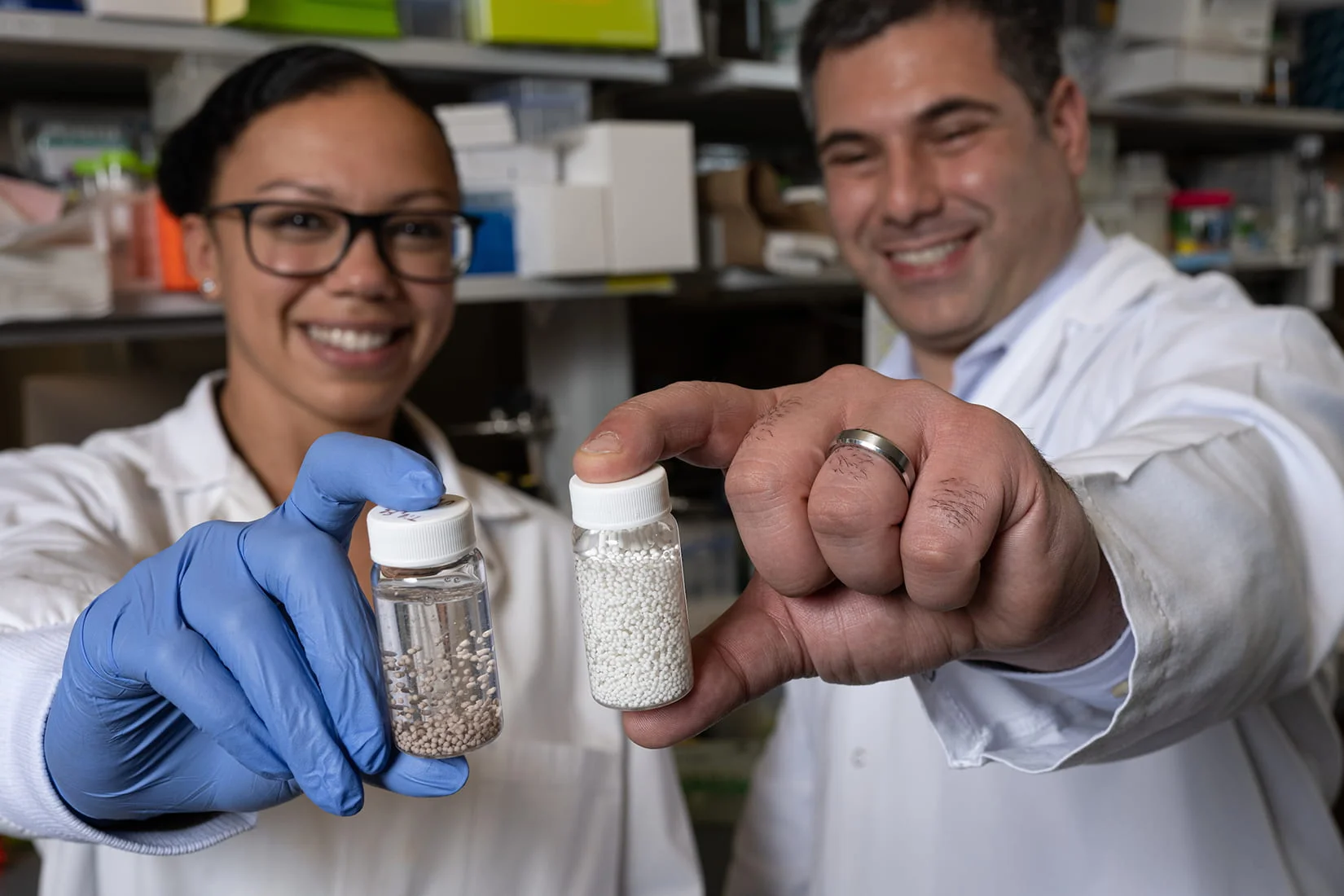
Scientists have developed tiny implants called cytokine factories that produce immune-stimulating proteins directly at tumor sites, significantly improving cancer treatment efficacy and reducing side effects. These implants have shown promising results in animal studies for various cancers, including ovarian, colorectal, and mesothelioma, and are moving toward human clinical trials, with potential applications for other immune-related conditions.

healthtech1 year ago

"Revolutionary Pea-Sized Brain Stimulator Offers Breakthrough Treatment for Neurological Disorders"

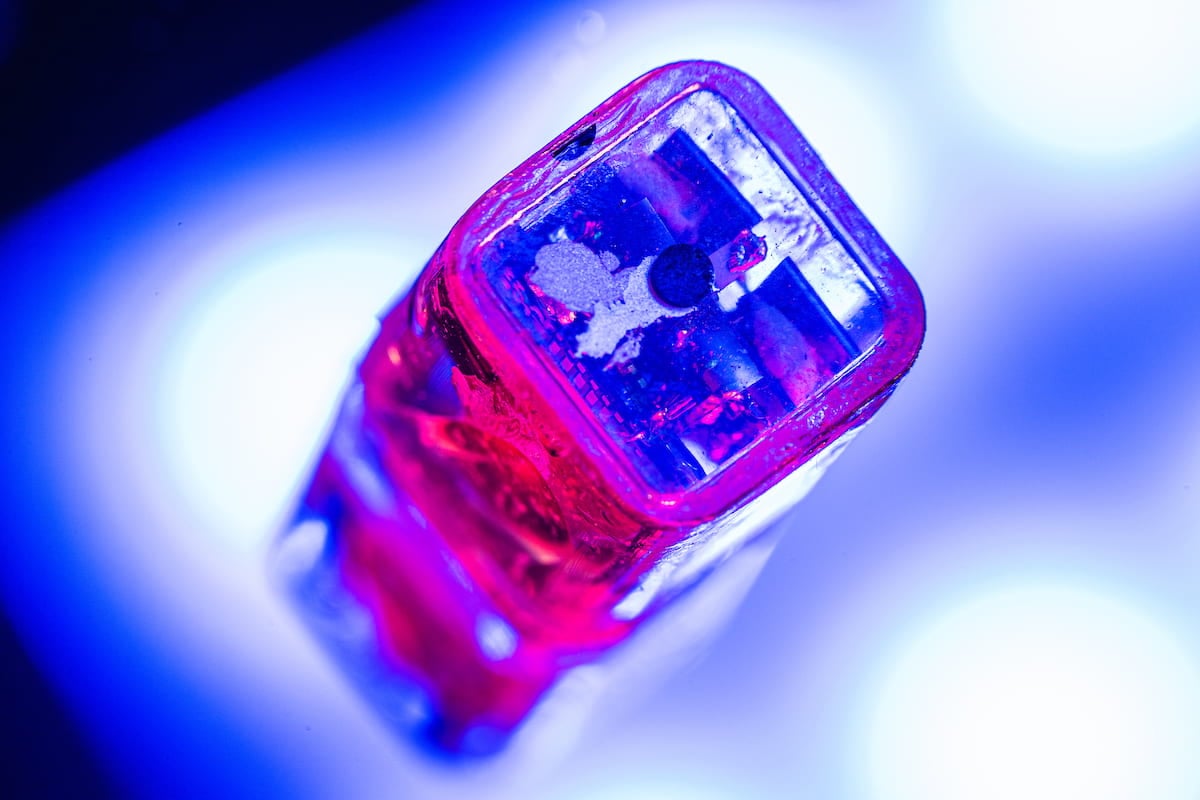
Researchers at Rice University have developed a pea-sized brain implant called Digitally programmable Over-brain Therapeutic (DOT) that can stimulate the human brain to treat neurological disorders, offering a safer and more convenient alternative for conditions like drug-resistant depression and other psychiatric disorders.

science-and-technology1 year ago

"Revolutionary Quantum Memory Discovery for Flash-Like Qubit Storage"

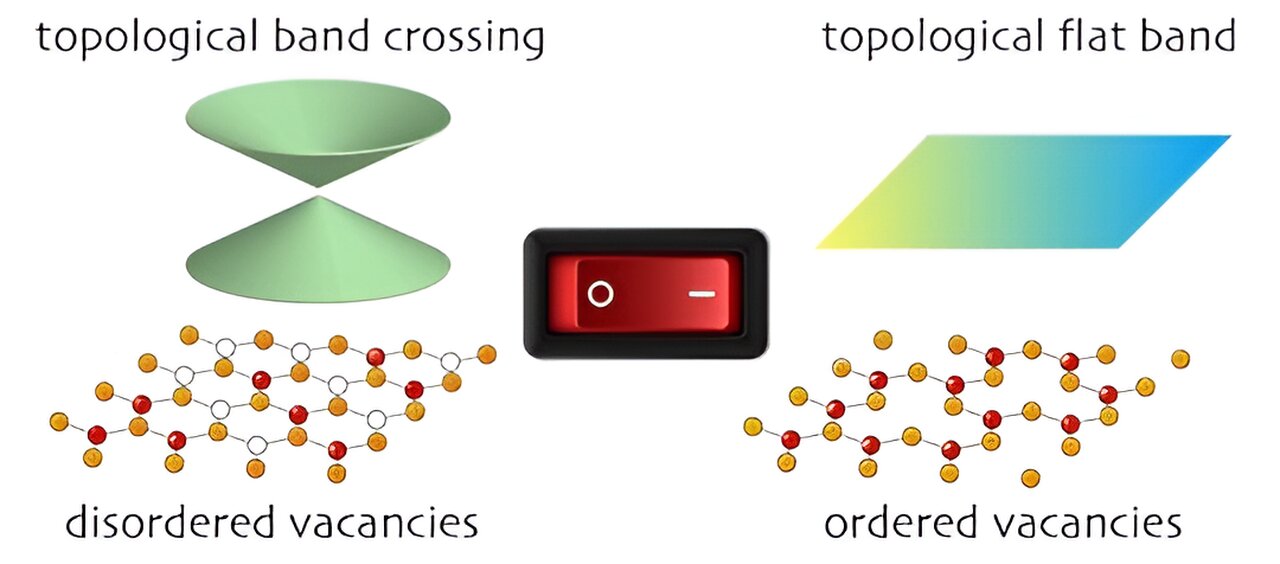
Physicists at Rice University have discovered a phase-changing quantum material that could potentially be used to create nonvolatile memory capable of storing quantum bits of information, or qubits, even when a quantum computer is powered down. The material, an iron-germanium-tellurium alloy, can be toggled between two electronic phases using heat, and the researchers found that the arrangement of vacancies in the crystal's lattice determines the phase. This discovery could potentially reduce errors in quantum computing and pave the way for flash-like memory for qubits.

science1 year ago

"Electrons Frozen in Place: The Discovery of a Strange New Material"

Researchers at Rice University have discovered a novel 3D crystalline metal with a pyrochlore lattice structure that locks electrons in place due to a unique interplay of quantum correlations and geometric frustration, leading to the formation of flat electronic bands. This discovery provides empirical evidence of the effect in a 3D material and sets the stage for further explorations into quantum materials with similar structures, offering potential for new states of matter and exotic electronic behaviors.

science-and-technology1 year ago

"Breakthrough: 3D Metal Crystal Halts Electrons in Quantum Collaboration"

Researchers at Rice University have discovered an alloy of copper, vanadium, and sulfur that forms crystals capable of trapping electrons due to quantum effects, resulting in flat bands with unique properties. This marks the first instance of a 3D crystal exhibiting this behavior, potentially holding significance for future quantum computers and the development of room-temperature superconductors.

sciencephysics1 year ago

"US Discovers Groundbreaking 3D Material that Electronically 'Locks'"

Researchers at Rice University have discovered the first-ever 3D crystalline metal in which electrons can be locked in place, a breakthrough that could lead to the discovery of many more such materials. The discovery is based on a Kagome lattice structure, first described in 1951, and represents a significant advancement in understanding the behavior of electrons in quantum electronic states. Qimiao Si, a theoretical physicist at Rice University, compared the discovery to finding a new continent, emphasizing the potential for further exploration and development in this area of physics.

science1 year ago

"Guided Discovery: Validating a Method for 3D Flat-Band Material Exploration"

Rice University scientists have discovered a 3D crystalline metal, a copper-vanadium-sulfur alloy, in which quantum correlations and crystal structure frustrate electron movement, resulting in a flat electronic band. The study, published in Nature Physics, details the theoretical design principle and experimental methodology used to find the material, which features a 3D pyrochlore lattice. The discovery may lead to new states of matter and potential applications, and the research team's predictive methodology could aid in identifying other materials with similar properties.