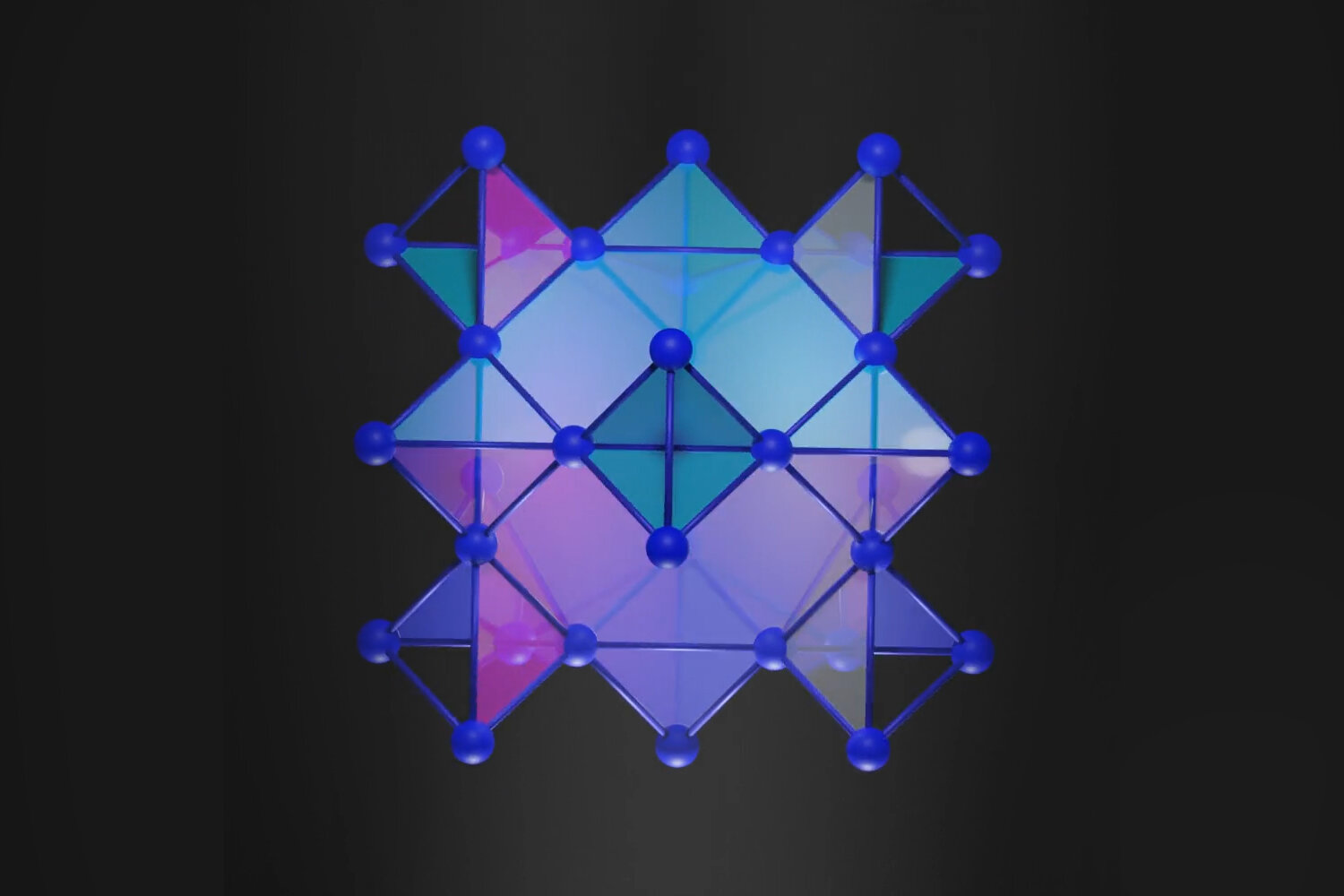
Researchers at Rice University have discovered an alloy of copper, vanadium, and sulfur that forms crystals capable of trapping electrons due to quantum effects, resulting in flat bands with unique properties. This marks the first instance of a 3D crystal exhibiting this behavior, potentially holding significance for future quantum computers and the development of room-temperature superconductors.
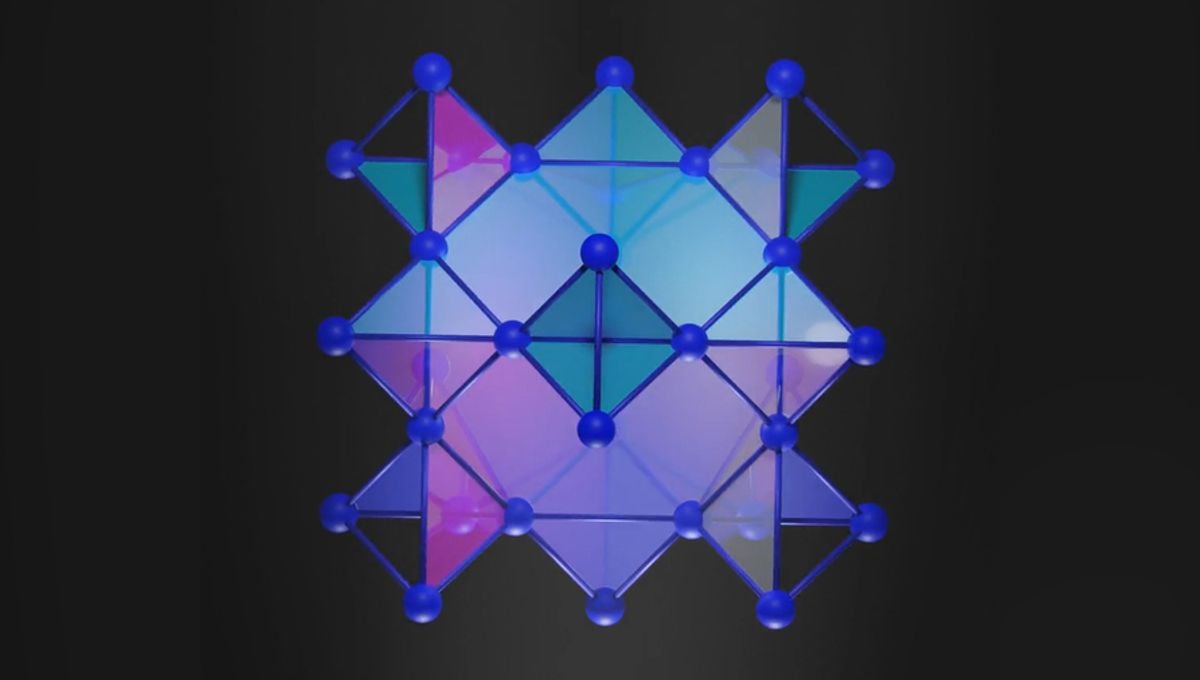
Researchers have successfully trapped electrons in a three-dimensional crystal, creating a flat band state that exhibits quantum effects such as superconductivity. By using a 3D kagome-shaped lattice, the team was able to trap electrons in all three dimensions. The crystal was then turned into a superconductor by making a chemical modification. This breakthrough opens up possibilities for studying new physics and developing technologies such as ultra-efficient power lines and faster electronic devices.
Physicists at MIT have successfully trapped electrons in a pure crystal, achieving an electronic flat band in a three-dimensional material for the first time. The crystal's unique atomic geometry, resembling the Japanese art of "kagome," allows the electrons to be trapped and settle into the same energy band. This breakthrough opens up new possibilities for studying rare electronic states in 3D materials and could lead to advancements in superconductivity and quantum technologies.