Scientists at Rice University have developed a new quantum material called a Kramers nodal line metal by adding indium to tantalum disulfide, which exhibits unique electronic and superconducting properties that could revolutionize energy-efficient electronics and future technologies.
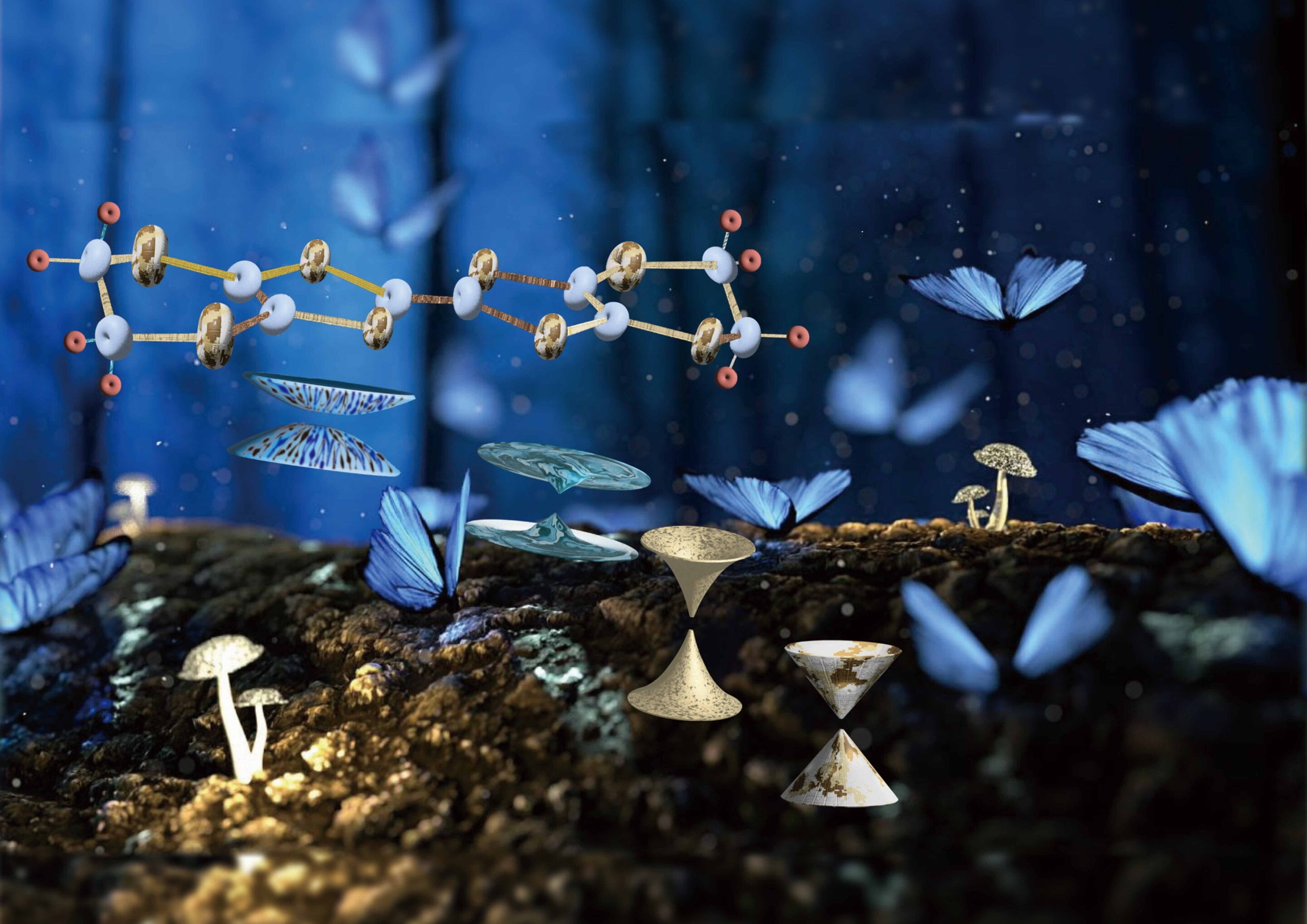
Scientists have discovered a method to selectively observe Dirac electrons in materials using electron spin resonance, allowing for the determination of their scope of action and energies in a four-dimensional world consisting of positions (x, y, z) and energy (E). This advancement in understanding Dirac electrons reveals that their velocity is anisotropic and depends on their direction and location, rather than being a constant velocity of light, potentially leading to unprecedented electronic properties in materials for efficient computation and communication.
Researchers at Vienna University of Technology have developed a comprehensive computer model that demonstrates the stability of graphene's exceptional electronic properties, even in the presence of imperfections. The model shows that graphene pieces that are not perfect can still be used effectively in quantum technology and sensing applications. The study highlights the potential of graphene for various technological advancements and provides valuable insights for applied research in the field.
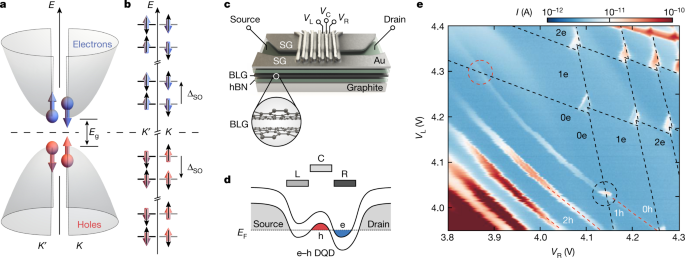
Researchers have discovered that particle-hole symmetry protects spin-valley blockade in graphene quantum dots, which could lead to the development of more efficient quantum computers. The study found that the symmetry of the electronic properties of graphene quantum dots prevents the loss of quantum information due to environmental noise, making them more stable and reliable for use in quantum computing.