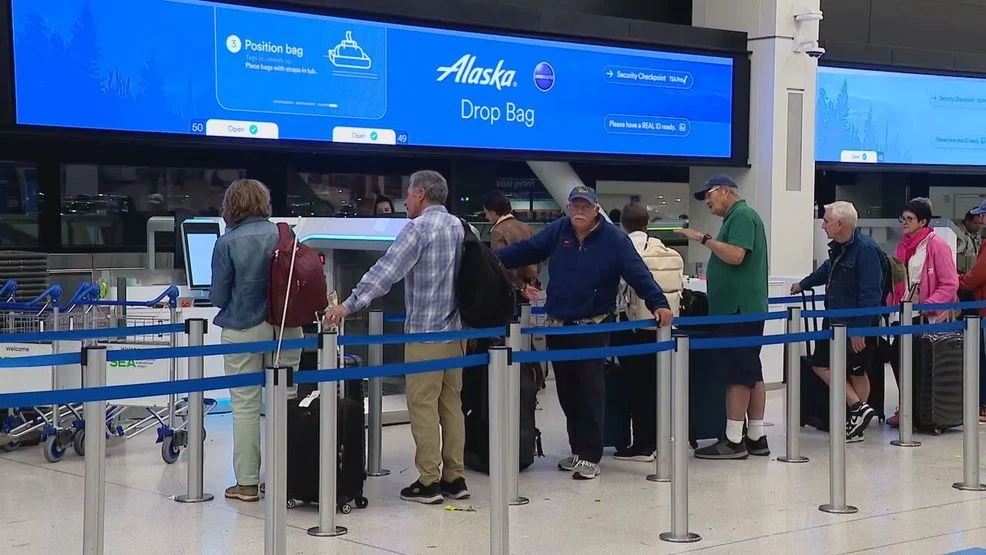
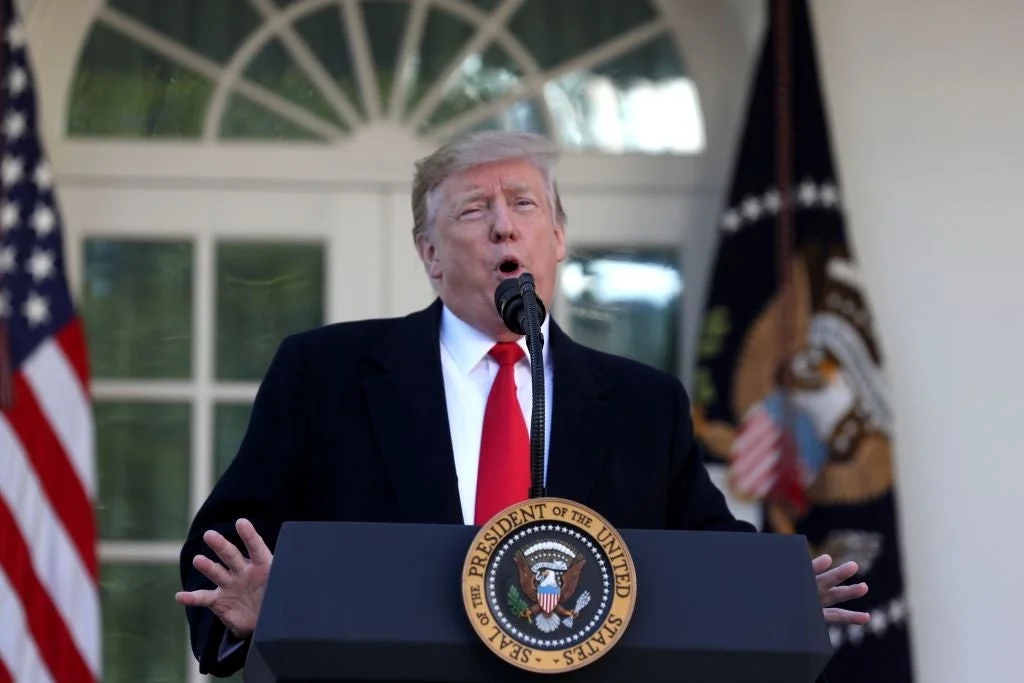
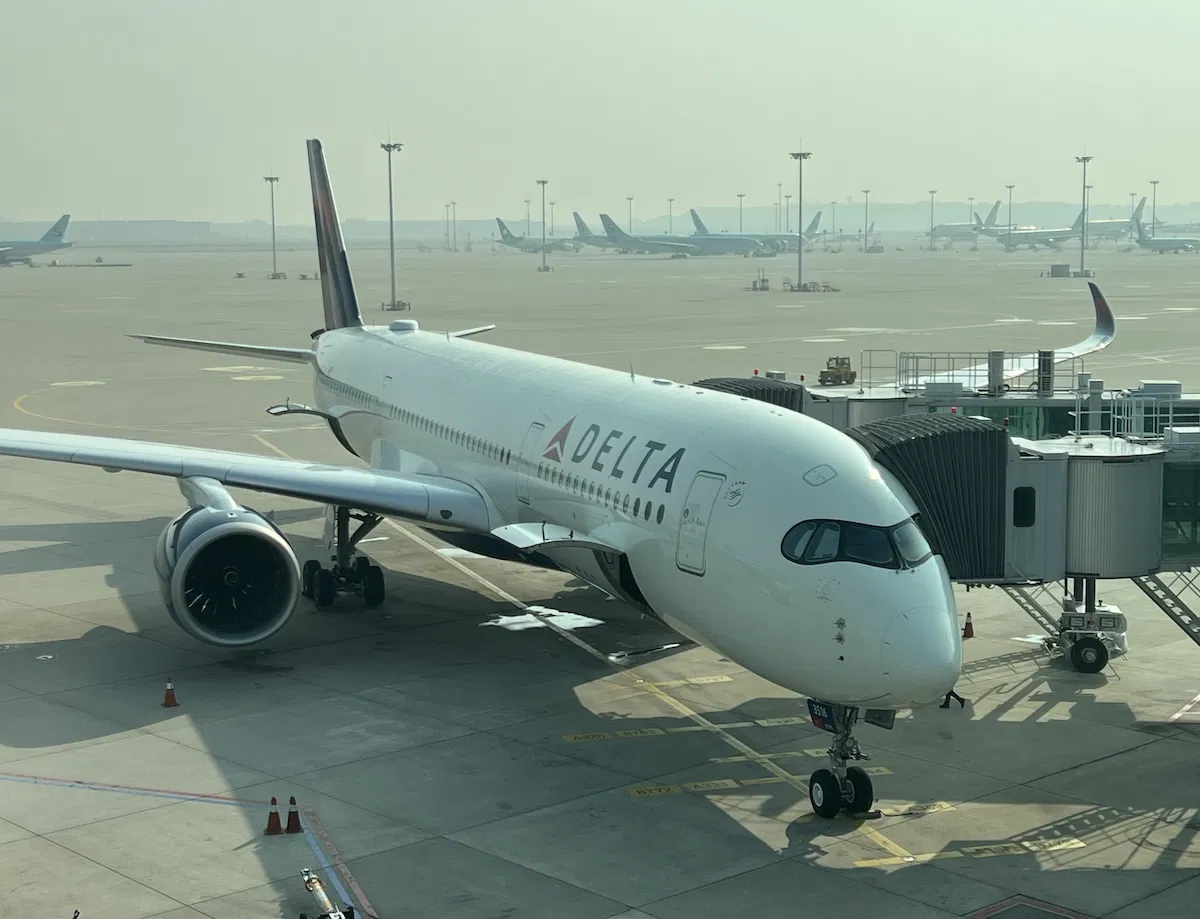
Duffy suggests firing problematic air traffic controllers amid ongoing staffing shortages and delays at various U.S. airports, highlighting the broader issue of controller understaffing that the FAA aims to address by hiring thousands more controllers by 2028.
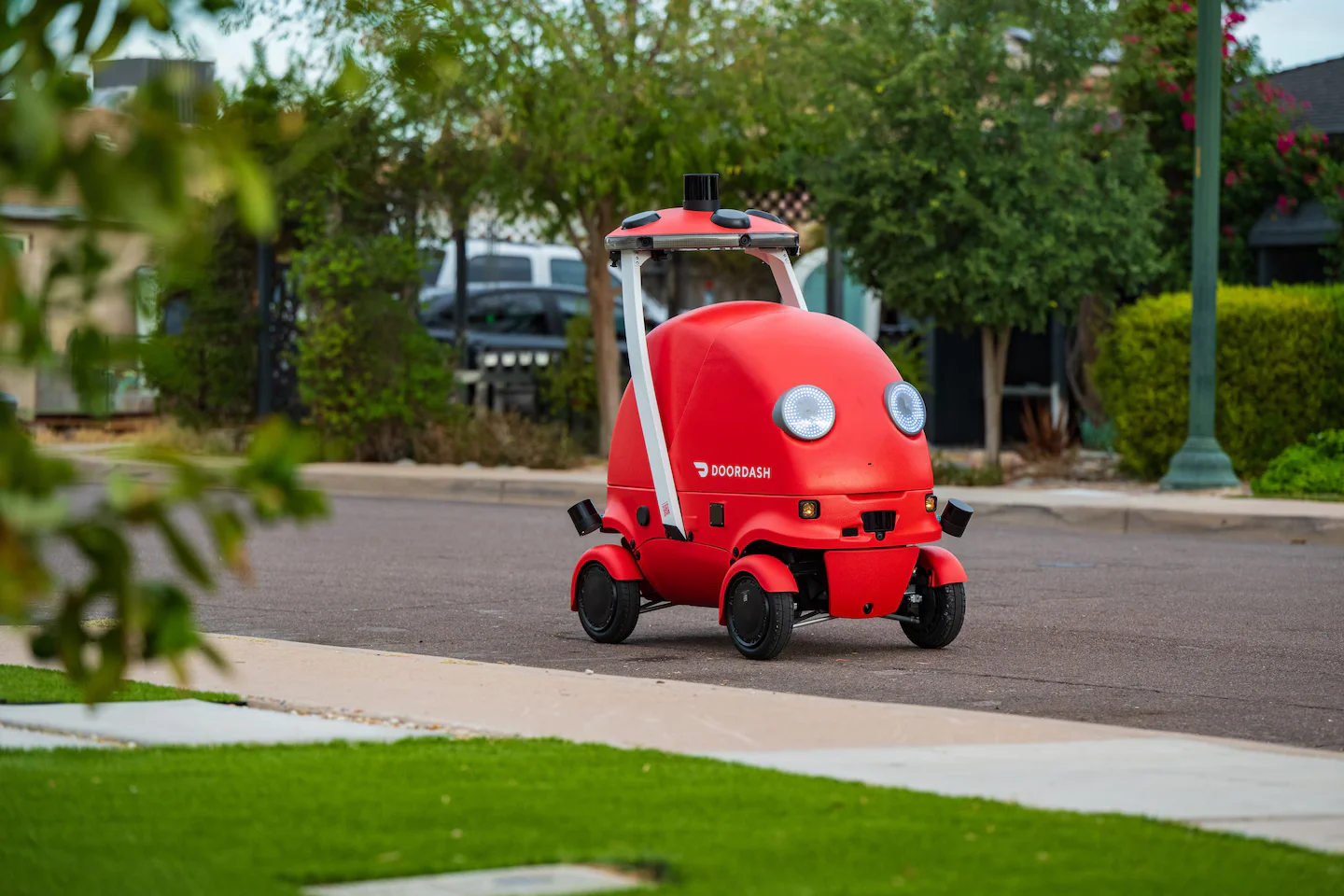
DoorDash has developed its first autonomous delivery robot named Dot, which can carry multiple pizzas and may soon be used for food and grocery delivery in suburban bike lanes.
DoorDash has introduced a delivery robot named Dot and a smart scale for restaurants, marking its entry into hardware development and autonomous delivery solutions, with plans to expand these technologies to more markets in the future.
DoorDash has introduced Dot, a small autonomous robot designed for food and package delivery, capable of navigating roads, bike lanes, and sidewalks at up to 20 mph. The robot, currently in testing in Phoenix, aims to revolutionize delivery by handling the first and last mile, with plans to expand to more regions by 2025. Despite safety and public perception challenges, DoorDash sees autonomous delivery as a significant future market and has invested years into developing Dot.
The U.S. Department of Transportation plans to weaken or eliminate several airline passenger protection rules enacted during the Biden administration, favoring airline industry interests over consumer rights, which could lead to less transparency, fewer refunds, and diminished accountability for airlines, similar to the less regulated systems in Europe and Canada.
The Trump administration's Department of Transportation has canceled a proposed rule that would have required airlines to compensate passengers $200-$300 for delays or cancellations caused by airline fault, reversing previous efforts under the Biden administration to enhance passenger protections.
The U.S. Department of Transportation has decided not to proceed with a proposed rule that would have required airlines to offer cash compensation to passengers for delays and cancellations within their control, citing concerns over regulatory burdens and consumer protection. Airlines opposed the rule, arguing it would increase ticket prices and reduce accessibility, and the DOT is also reviewing other regulations related to flight cancellations and fee disclosures.
The Department of Transportation plans to take over Washington's Union Station, which it already owns, aiming to boost income, security, and attract private investment for redevelopment, including potential expansion and improvements to safety and infrastructure. The move is part of broader efforts to increase control over key transit hubs and enhance their appeal and safety.
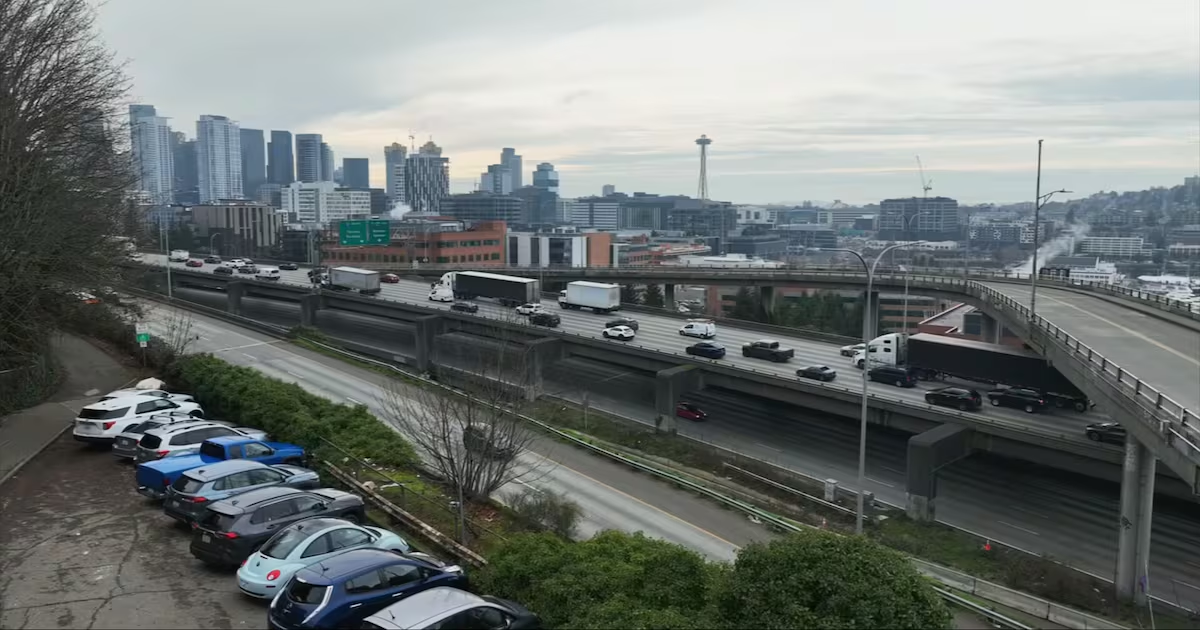
The U.S. Department of Transportation warned Washington, California, and New Mexico that they could lose federal funding if they do not enforce English Language Proficiency rules for commercial drivers, as part of efforts to improve road safety and oversight. Washington has been criticized for failing to properly enforce these standards, with the DOT citing significant enforcement gaps, and California's Highway Patrol stating it will not follow the federal regulation. The move aims to address safety concerns highlighted by recent crashes involving commercial drivers.
The State Department has halted employment visas for truck drivers after investigations revealed that some drivers, including involved in a fatal crash, obtained licenses improperly and failed English proficiency tests, highlighting enforcement failures and concerns over foreign drivers in the industry.
The U.S. Department of Transportation (DOT) has proposed new regulations requiring airlines to compensate passengers for delays and cancellations caused by the airline, similar to EU rules. The proposal includes cash compensation, rebooking on the next available flight, and covering expenses like meals and lodging. The public has 60 days to comment on the proposal, which aims to establish clear standards for airline obligations during disruptions. The future of this proposal depends on the incoming administration's decision to implement it.
Polkadot (DOT) has shown signs of recovery, nearing $6 after a slump, but a recent pullback to $4.75 has tested investor patience. Currently trading at $5.64, DOT's potential to break $6 depends on maintaining consolidation and buying pressure. Despite bullish signs, including a retracement and accumulation by bulls, DOT's volatility and competition with other cryptocurrencies pose challenges. A breakout towards $7 seems ambitious unless market dynamics change, particularly with Bitcoin's performance influencing investor behavior.
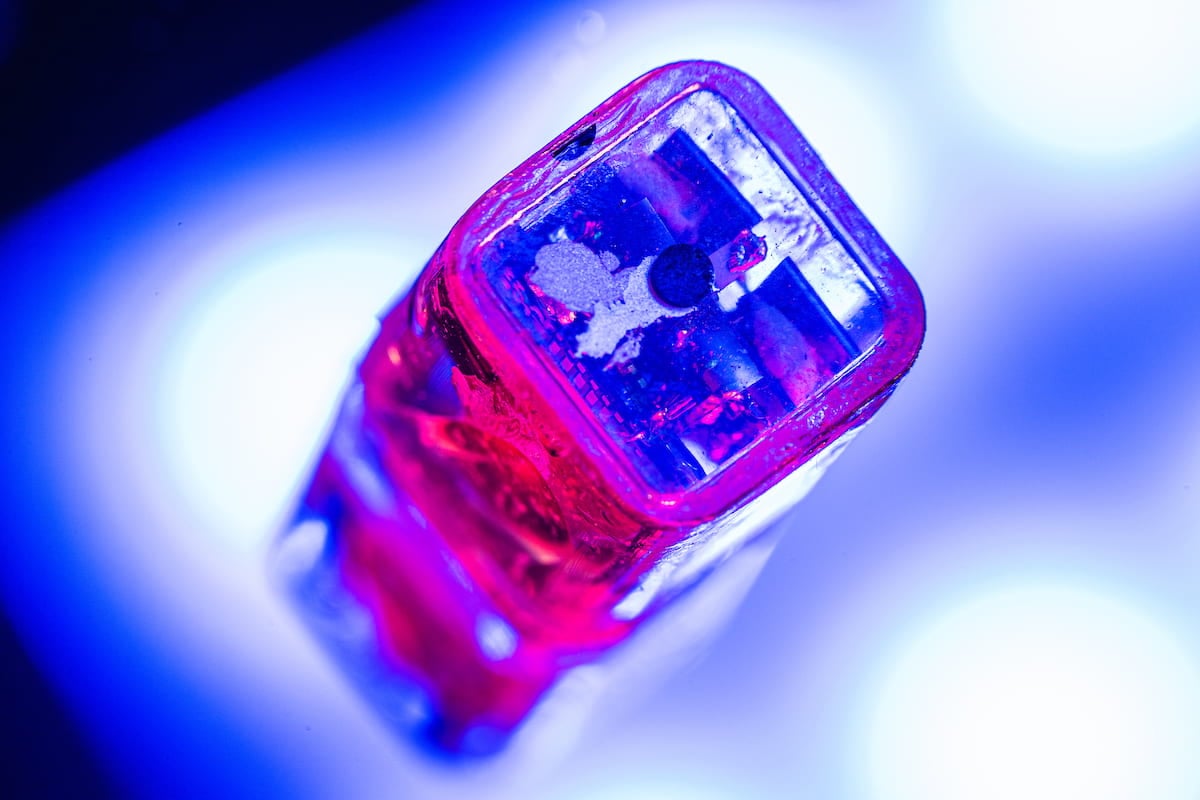
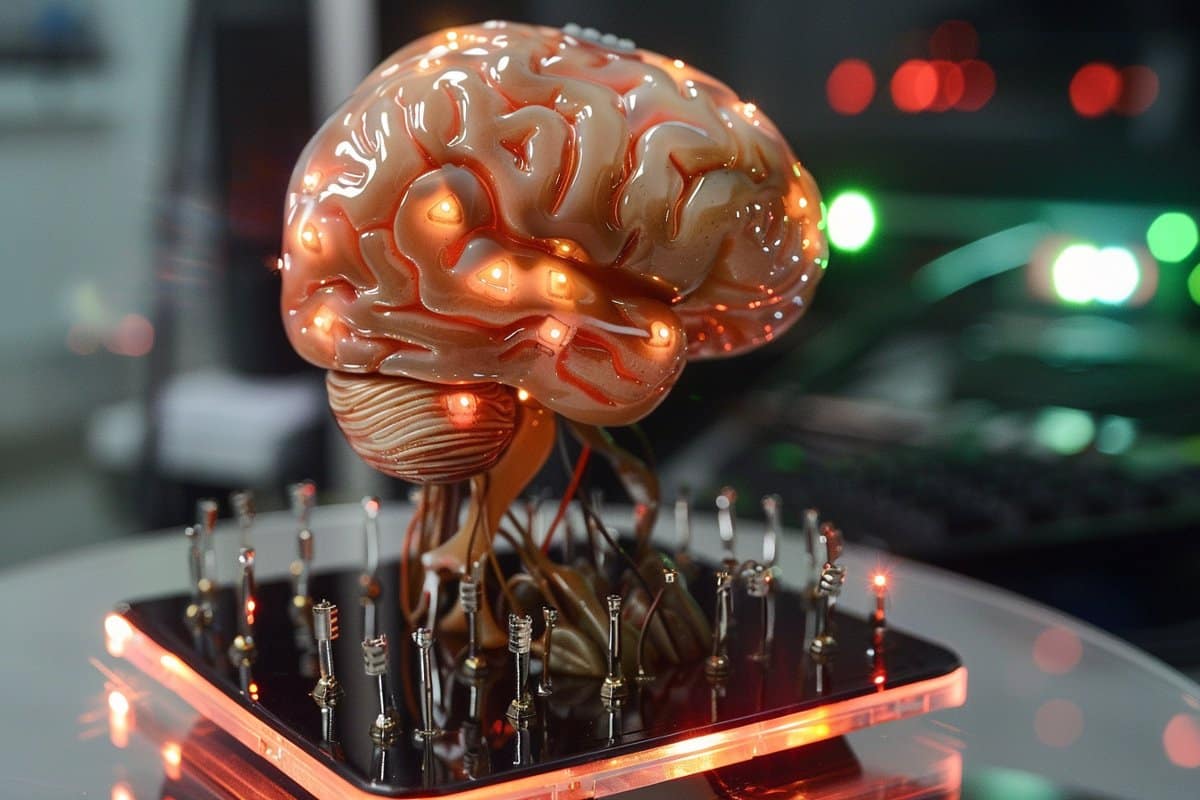
Researchers at Rice University have developed a pea-sized brain implant called Digitally programmable Over-brain Therapeutic (DOT) that can stimulate the human brain to treat neurological disorders, offering a safer and more convenient alternative for conditions like drug-resistant depression and other psychiatric disorders.
Researchers at Rice University have developed a groundbreaking pea-sized brain stimulator, the Digitally Programmable Over-brain Therapeutic (DOT), capable of wireless operation through magnetoelectric power transfer. This implantable device promises to revolutionize treatment for neurological and psychiatric disorders by enabling less invasive and more autonomous therapeutic options compared to traditional neurostimulation methods. The DOT’s ability to stimulate the brain through the dura without implanted batteries represents a significant advancement in medical technology, offering potential treatments for conditions like drug-resistant depression directly from the comfort of one’s home.
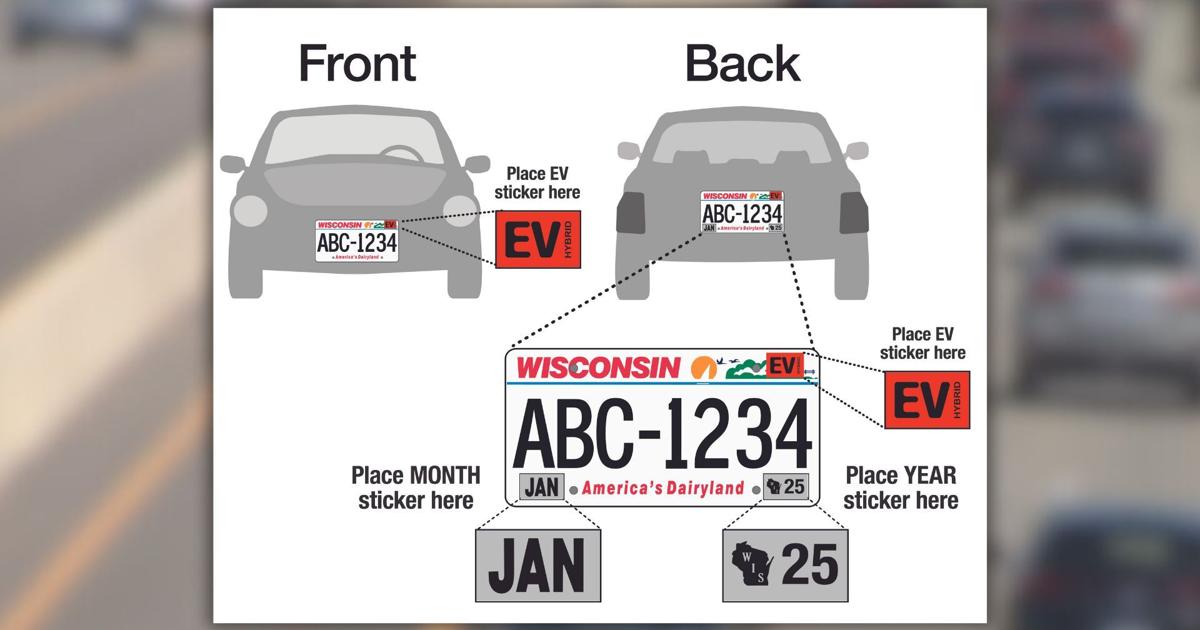
The Wisconsin Department of Transportation has started sending out new license plate stickers to electric vehicle (EV) and hybrid owners, as part of a new law that requires them to display a special identifier. The stickers will help law enforcement and tolling authorities identify vehicles that are eligible for certain privileges or subject to specific fees.