Astronomers have discovered one of the fastest relativistic jets in a radio-quiet galaxy, Markarian 110, revealing complex jet dynamics and spectral evolution, which challenge previous understanding of jet formation in such galaxies.
The microquasar SS 433, located in the Milky Way, has been found to emit very high energy gamma rays from its jets, challenging existing theories and shedding light on the mechanisms driving relativistic jets. The detection of gamma rays from SS 433's jets has provided insights into the acceleration of particles within the jets, with the H.E.S.S. observatory pinpointing the exact location of one of the galaxy's most effective particle accelerators. This groundbreaking discovery offers valuable information about the dynamics of relativistic jets and has the potential to enhance our understanding of cosmic phenomena.
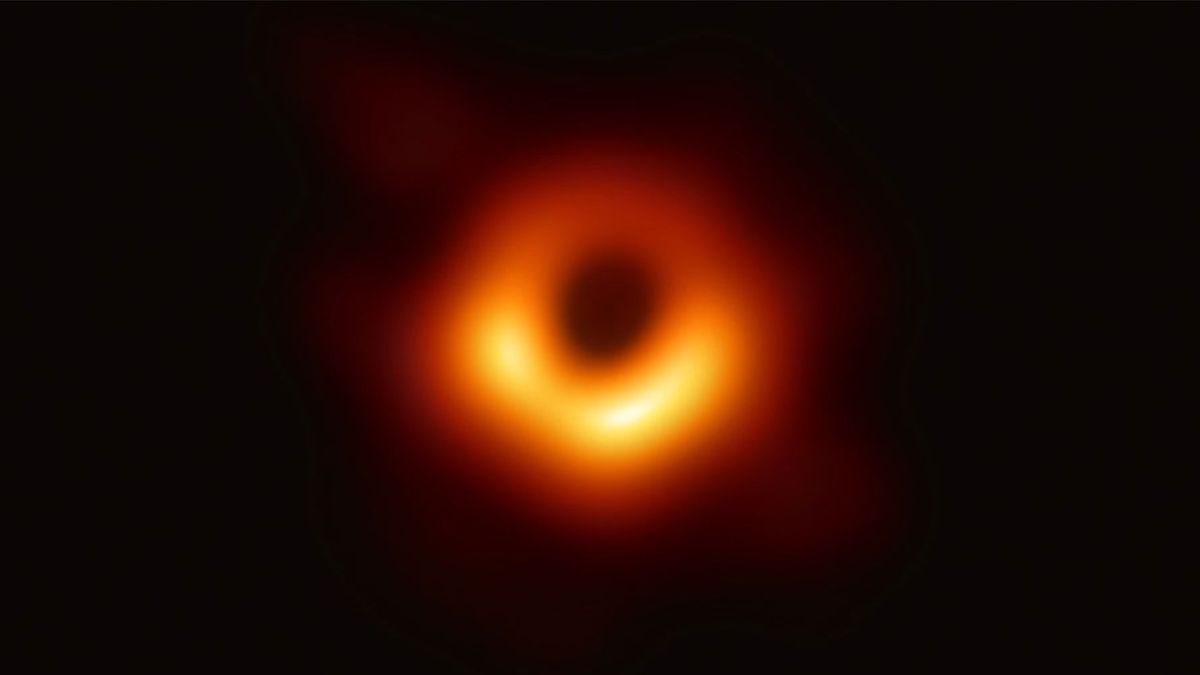
The first black hole ever imaged by humanity, known as M87*, is defying expectations by losing energy instead of solely consuming matter. Analysis of the black hole's magnetic field suggests that it is responsible for slowing down the rotation of the black hole. The energy loss is believed to flow out through relativistic jets, which extend up to 10 times longer than the Milky Way galaxy. The findings support Einstein's theory of relativity and could provide insights into the powering of the black hole's jet. Further observations with the Event Horizon Telescope and the development of a next-generation version may help confirm these theories.
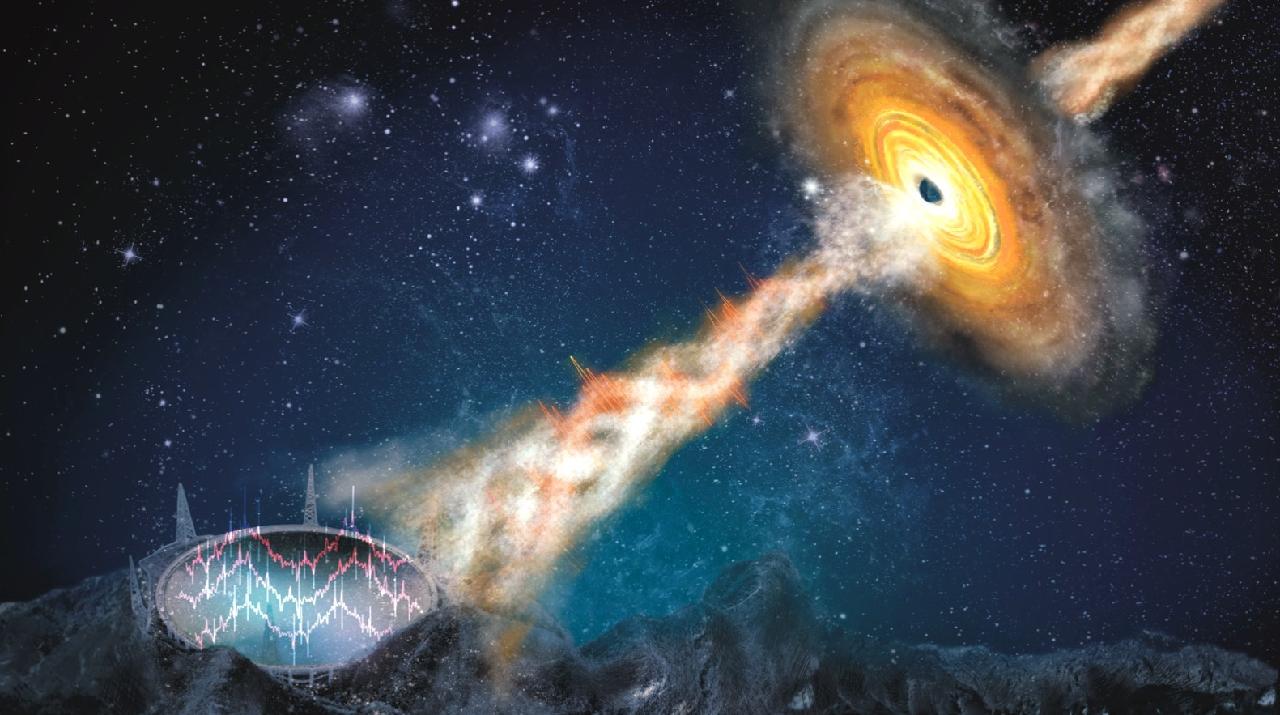
China's Five-hundred-meter Aperture Spherical Radio Telescope (FAST) has detected sub-second low-frequency radio quasiperiodic oscillations in a black-hole X-ray binary, providing insights into the dynamic features of relativistic jets. The observations, made from 2020 to 2022, revealed transient periodic oscillations and directly linked them to relativistic jets. This marks the first time such oscillations have been observed in a microquasar, opening up new avenues for radio observation and theoretical research of black holes. Additionally, five intelligent robot systems have been approved for maintenance of FAST, increasing its observation duration and efficiency.
Relativistic jets from a supermassive black hole in the Teacup Galaxy are moving, heating, and accelerating the galaxy's gas, according to new observations from the Atacama Large Millimeter Array (ALMA). Even low-power jets have an impact on the galaxy's ability to form new stars, as they redistribute and disrupt the surrounding gas. The biggest effects were actually perpendicular to the direction of the jets, instead of head-on, caused by the shocks induced by the jet-driven bubble, which heats up and blows the gas.