Tag

Radio Emission

All articles tagged with #radio emission

Unveiling the Enigmatic Connections of Extreme Stars and Neutron Stars
astronomy2 years ago

Unveiling the Enigmatic Connections of Extreme Stars and Neutron Stars

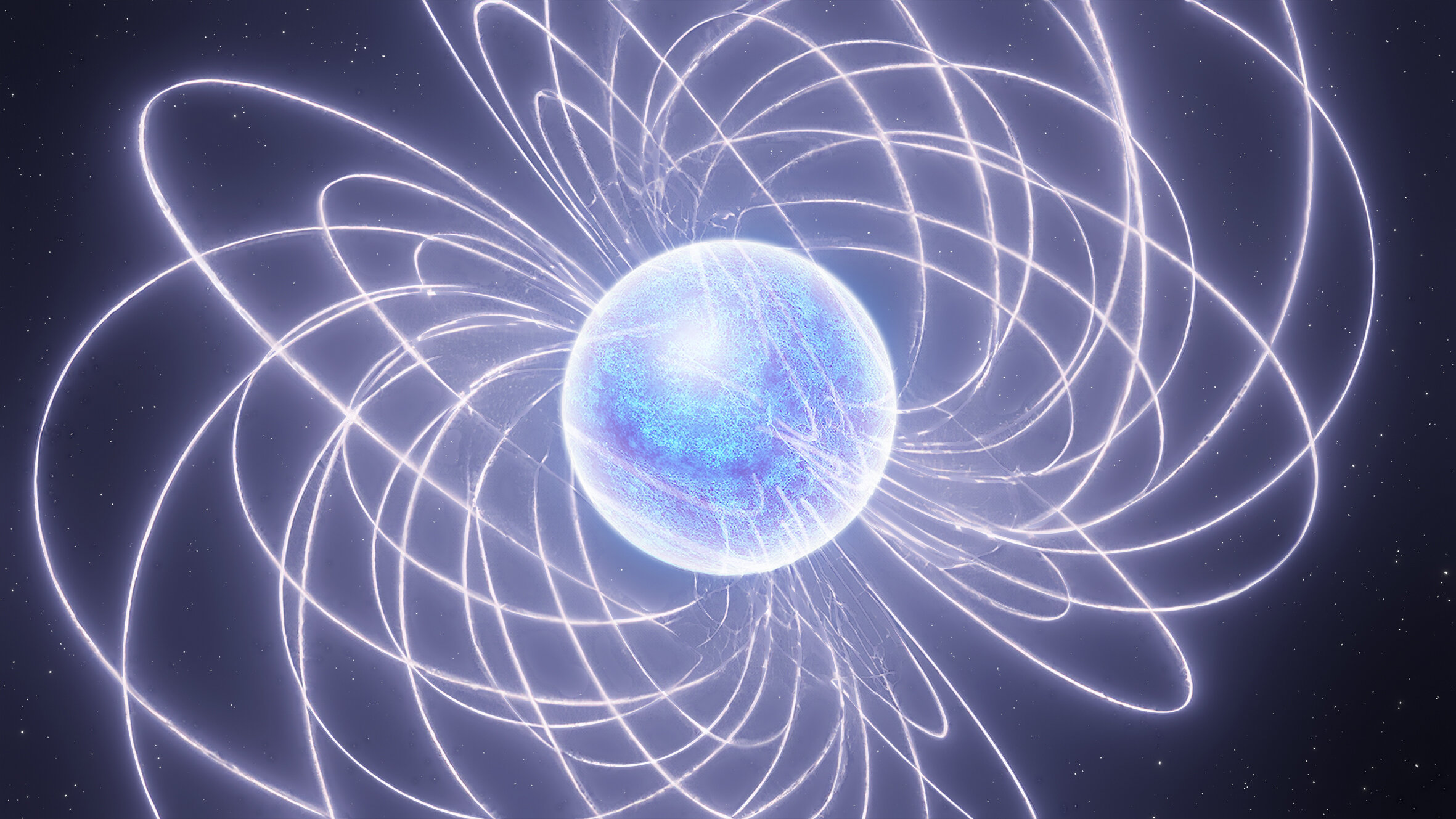
A study led by researchers from the Max Planck Institute for Radio Astronomy has discovered a universal law that applies to neutron stars, shedding light on how these extreme stars produce radio emission and potentially providing a link to the mysterious fast radio bursts (FRBs) observed in the cosmos. The study found that the subpulse structure of magnetars, neutron stars with ultra-strong magnetic fields, follows the same universal relationship as other types of neutron stars, scaling with their rotation period. This suggests that the subpulse structure is intrinsic to all radio-loud neutron stars and may help interpret similar structures seen in FRBs.

Unveiling the Enigma: Radio Signals Expose Hidden Supermassive Black Holes
astronomy2 years ago

Unveiling the Enigma: Radio Signals Expose Hidden Supermassive Black Holes

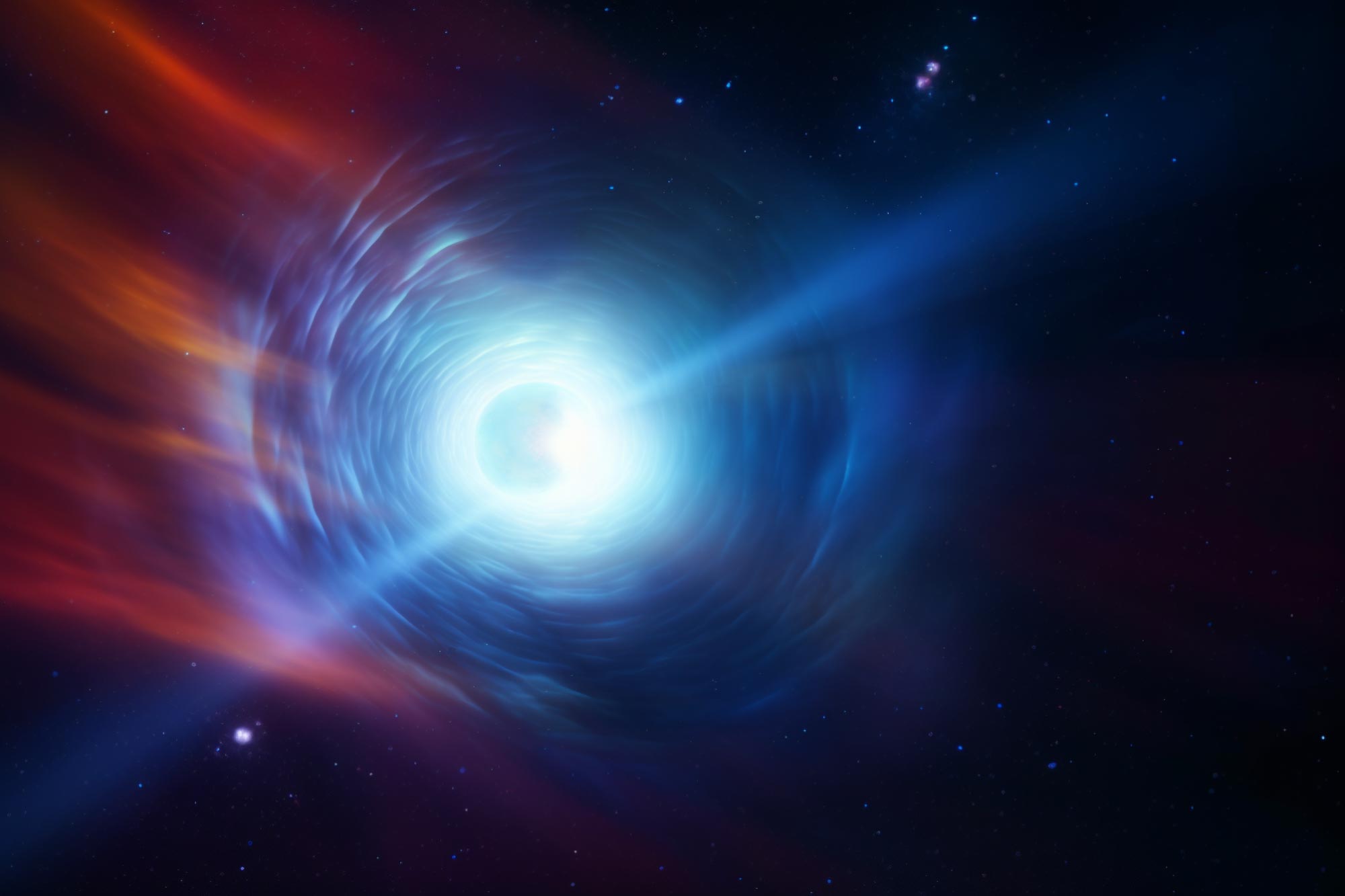
Astronomers using data from the Dark Energy Spectroscopic Instrument (DESI) have discovered a connection between the amount of dust surrounding a supermassive black hole and the strength of radio emission in extremely bright galaxies known as quasars. Quasars with more dust appeared redder and had stronger radio emission, while those with little-to-no dust appeared bluer. The findings suggest that powerful outflows of gas from the black hole collide with surrounding dust, causing shocks and radio emission. This connection provides insights into the evolution of galaxies and the role of red quasars in this process.

"FAST Telescope Reveals Surprising 'Dwarf' Pulses and Their Origins"
astronomy2 years ago

"FAST Telescope Reveals Surprising 'Dwarf' Pulses and Their Origins"

Astronomers using the FAST telescope have discovered "dwarf pulses" from the pulsar PSR B2111+46, representing a unique radiation state with a rare reversed spectrum. These weak, narrow pulses provide insights into the mysteries of pulsar radiation processes and the extreme plasma conditions within a pulsar's magnetosphere. The observations of PSR B2111+46 revealed dozens of unusually weak pulses during nulling periods, which have been named "dwarf pulses." This new emission state, different from ordinary pulsar radiation, is produced by one or a few "raindrops" of particles generated in a fragile gap of the pulsar. Further study of these dwarf pulses could uncover unknown aspects of pulsar radiation and reveal the extreme plasma state within the pulsar magnetosphere.

Supernova Explosion Sends Star's Core Across Galaxy.
astronomy2 years ago

Supernova Explosion Sends Star's Core Across Galaxy.

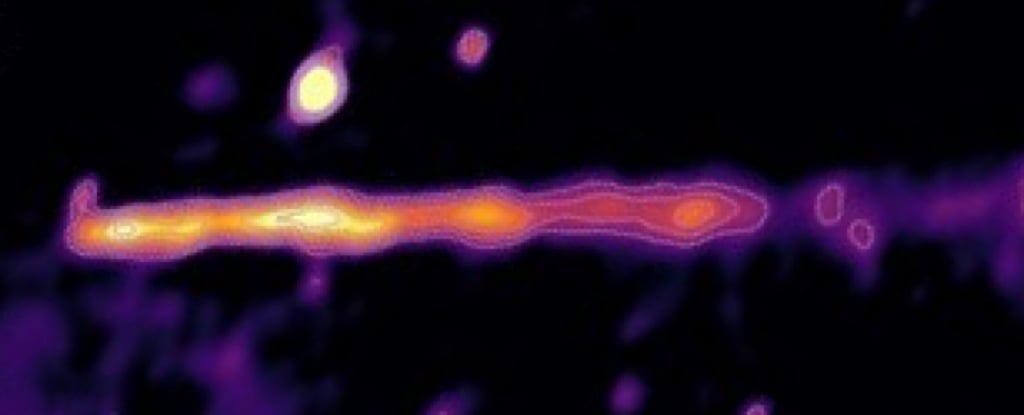
Astronomers have discovered a dead star, PSR J1914+1054g, rocketing away from its birth supernova, leaving a comet-like trail of radio emission in its wake. The star is just the fourth known of its kind: a radio pulsar kicked at high velocity across space, for which astronomers have observed not just the pulsar but the trail behind it known as a bow-shock nebula, and the supernova remnant from which it was kicked. The discovery will help astronomers better understand pulsars and their winds, supernova explosions, the local interstellar medium, high-speed particles, and wind-generated shocks.

New insights into radio emission from Abell 1213 cluster.
astronomy2 years ago

New insights into radio emission from Abell 1213 cluster.

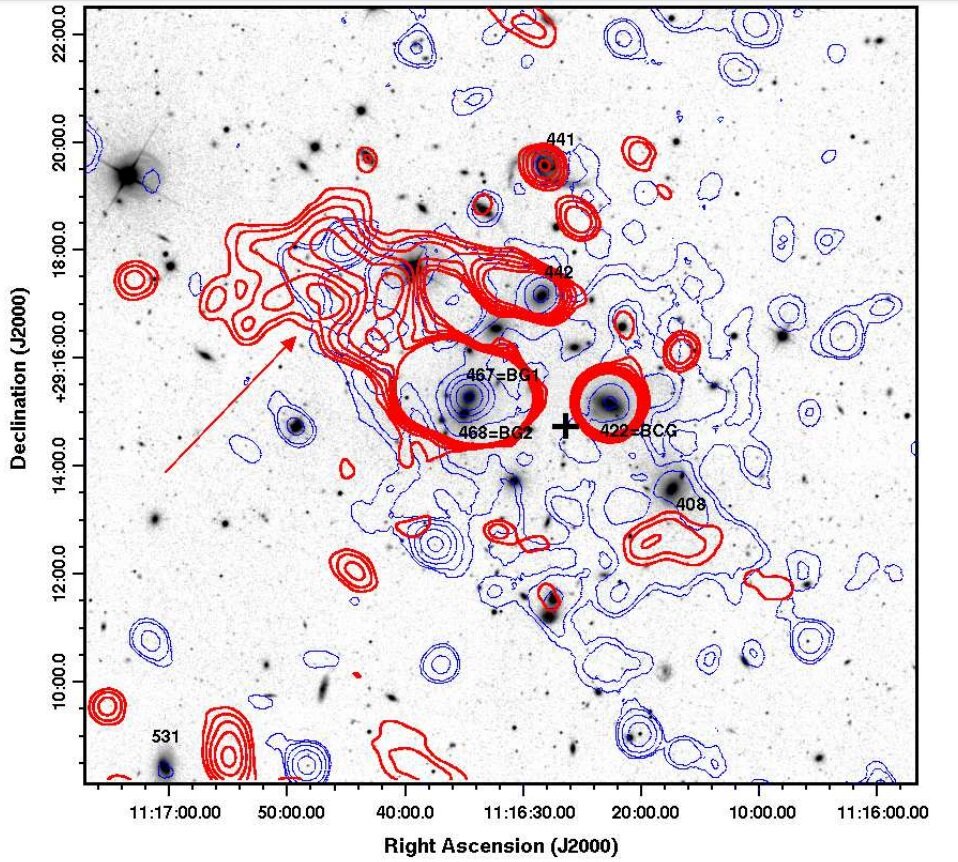
European astronomers have observed the galaxy cluster Abell 1213 using various spacecraft and ground-based facilities, unveiling essential information about the diffuse radio emission from this source. The observations found that Abell 1213 exhibits disturbed dynamics and is composed of several galaxy groups. The diffuse radio emission has a size of about 1.66 million light years and may be a tail of the central radio galaxy 4C29.41 bent by the interaction with the intracluster medium. The source of radio emission in Abell 1213 may be a radio relic, and deeper X-ray observations are necessary to draw final conclusions regarding the nature of its diffuse radio emission.