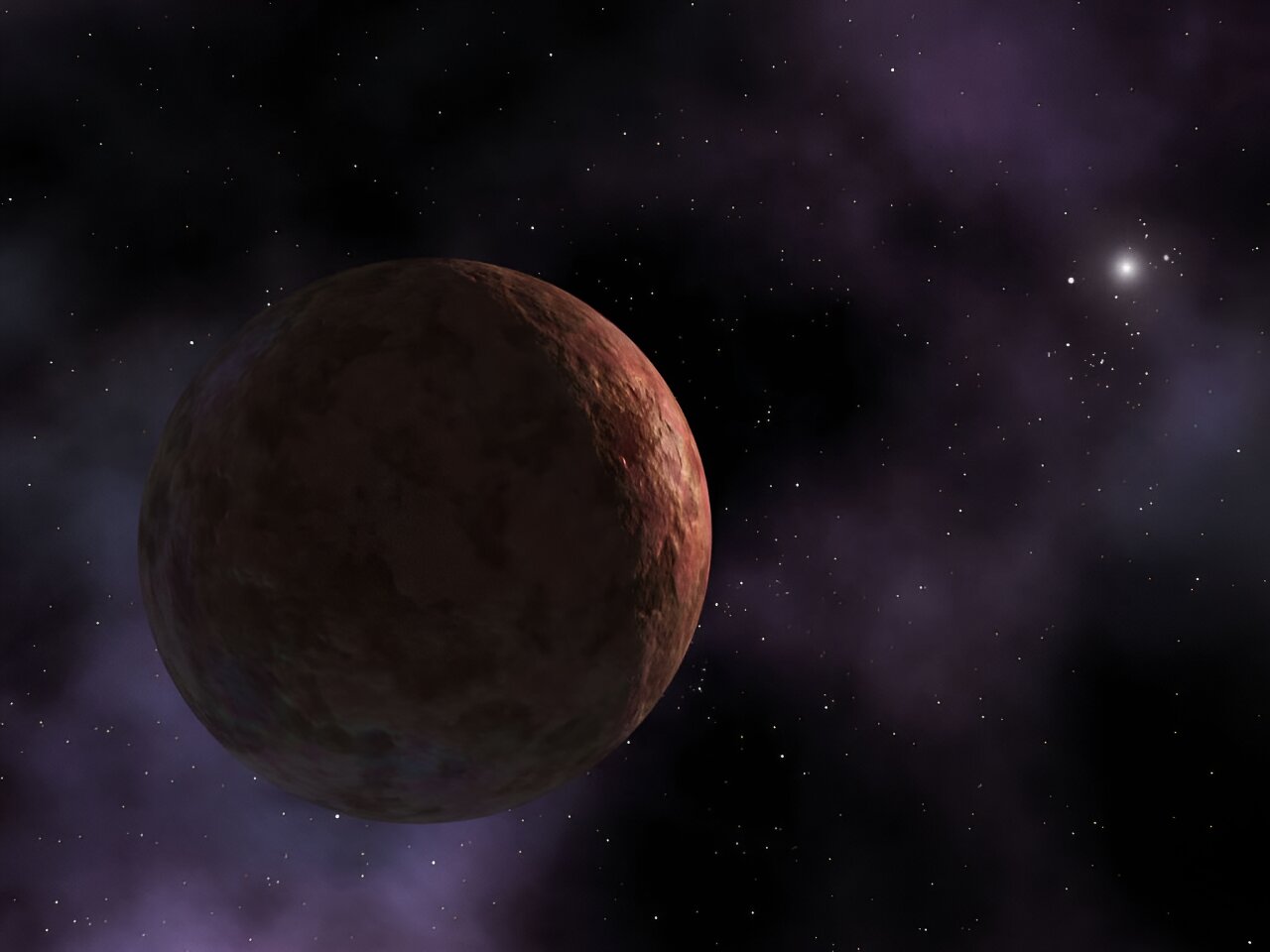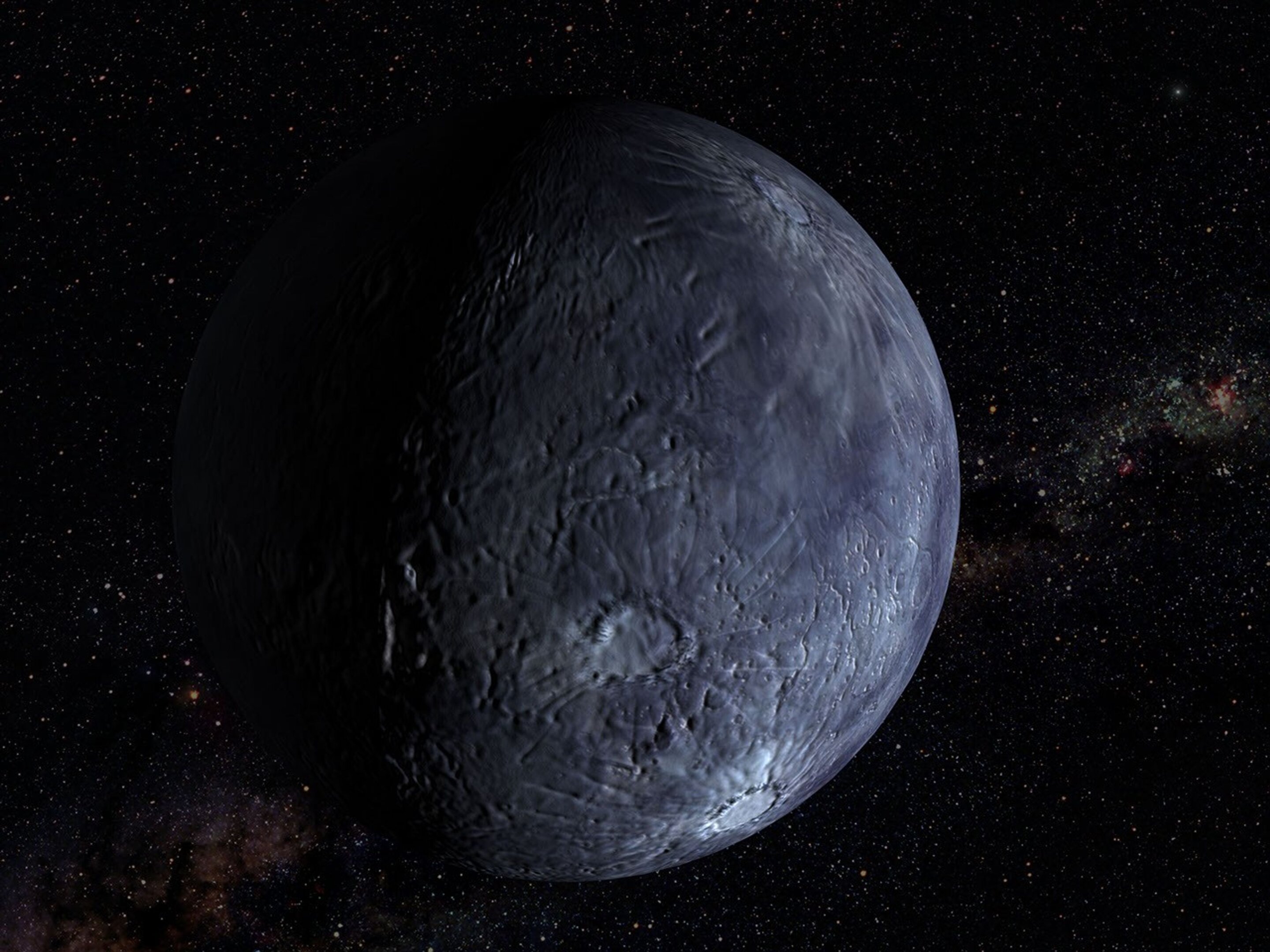
Astronomers have unexpectedly discovered a potential new moon or dense ring around the distant dwarf planet Quaoar during a stellar occultation, challenging existing theories about ring and moon formation in the Kuiper Belt. Further observations are needed to confirm the nature of this object and its implications for planetary system formation.
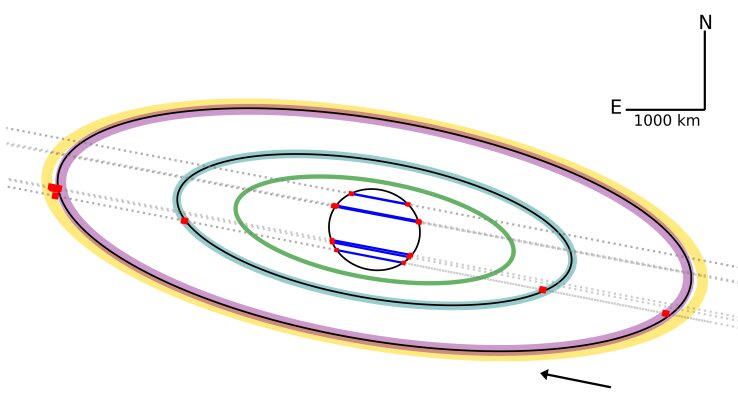
Astronomers may have discovered a new moon or a third ring around the dwarf planet Quaoar through occultation observations, with further confirmation needed. The findings suggest complex features in Quaoar's system, including potential new satellites or rings, and highlight the challenges of observing distant celestial bodies. The discovery was made during a carefully planned observation involving amateur and professional astronomers, emphasizing the importance of occultation studies in understanding the outer solar system.
The James Webb Space Telescope (JWST) has observed three dwarf planets in the Kuiper Belt - Sedna, Gonggong, and Quaoar - using its Near-Infrared Spectrometer (NIRSpec). The observations revealed interesting information about their orbits and composition, including the presence of light hydrocarbons and complex organic molecules believed to be the result of methane irradiation. These findings provide insights into the history and evolution of objects in the outer solar system and highlight the capabilities of the JWST in studying our cosmic neighborhood.
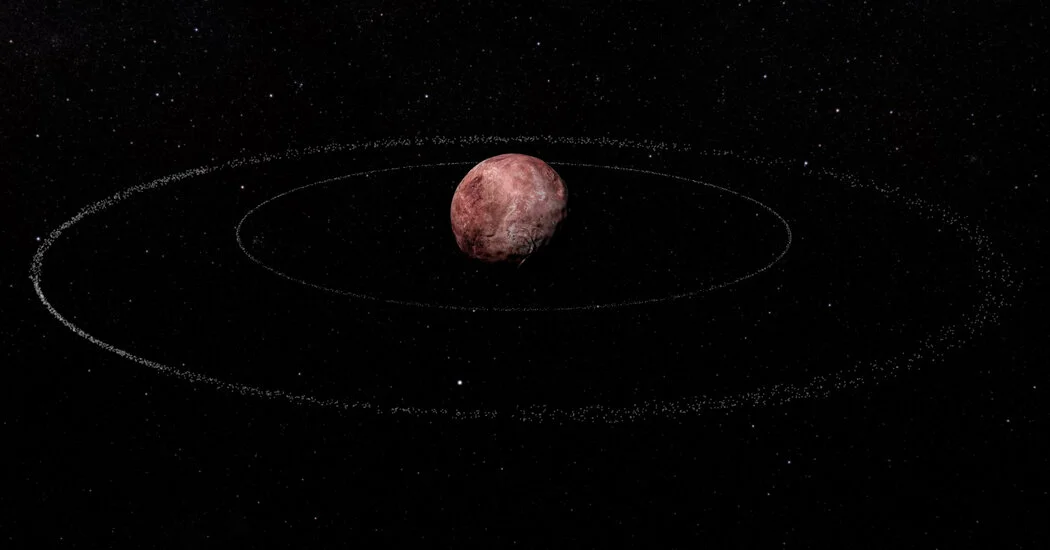
Astronomers have discovered a second ring around the dwarf planet Quaoar, which lies beyond the Roche limit, contradicting theories on how moons and rings form. The rings were found indirectly when Quaoar passed over light from distant stars behind it. The discovery of the second ring has led some to question current theories on moon and ring formation, while others suggest the rings could have formed due to the location of Quaoar's small moon, Weywot.
Astronomers have discovered a second "impossible" ring around Quaoar, a tiny world beyond Neptune in the Kuiper Belt. The new ring, about six miles wide, encircles Quaoar at a distance of about 1,500 miles. The discovery implies that Quaoar is a more complex system than initially thought. The ring was found indirectly when distant stars passed behind Quaoar, blocking the starlight. Another occultation will occur on May 13, visible to telescopes in the United States and Canada. The presence of a moon, Weywot, may explain the distant rings.