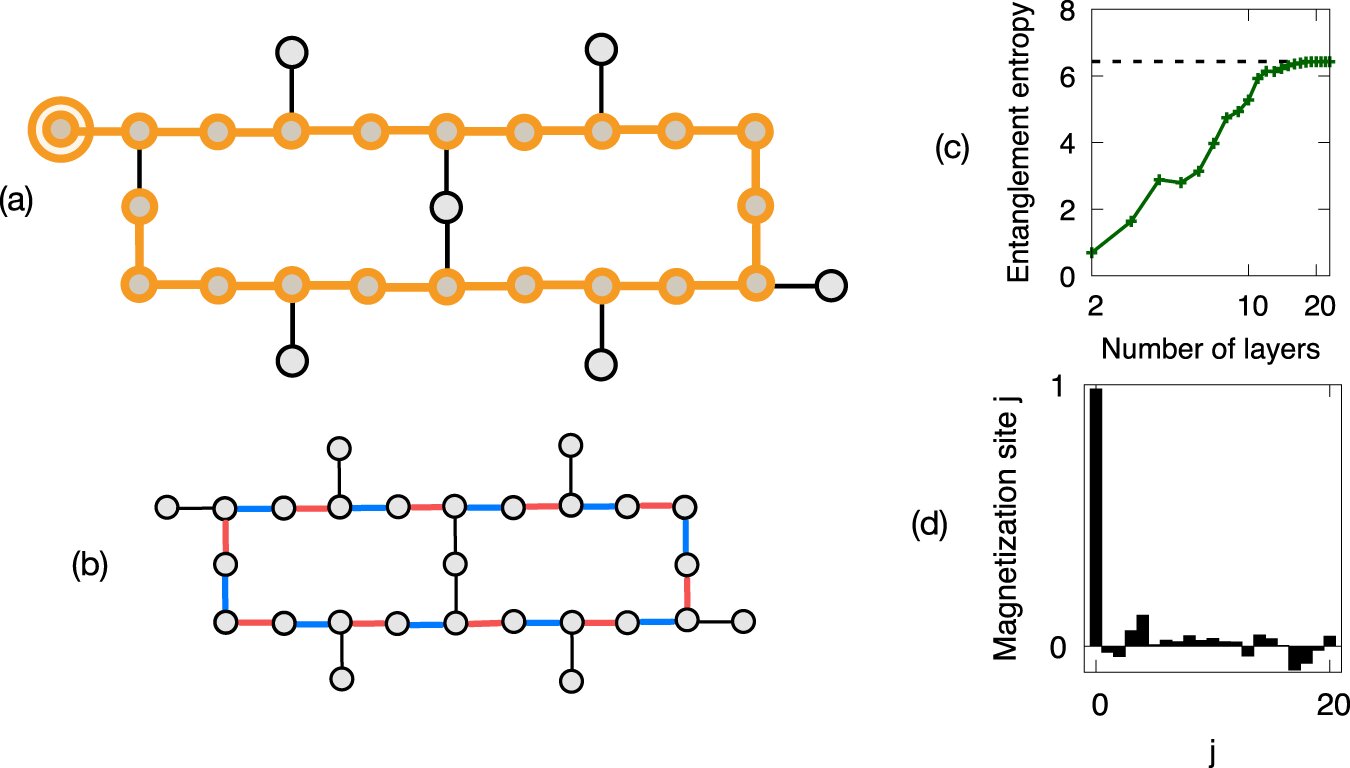
Physicists have successfully demonstrated a quantum 'lie detector' by testing Bell correlations in a 73-qubit system, confirming genuine quantum behavior in large, complex systems, which advances the development of truly quantum computers and quantum technologies.
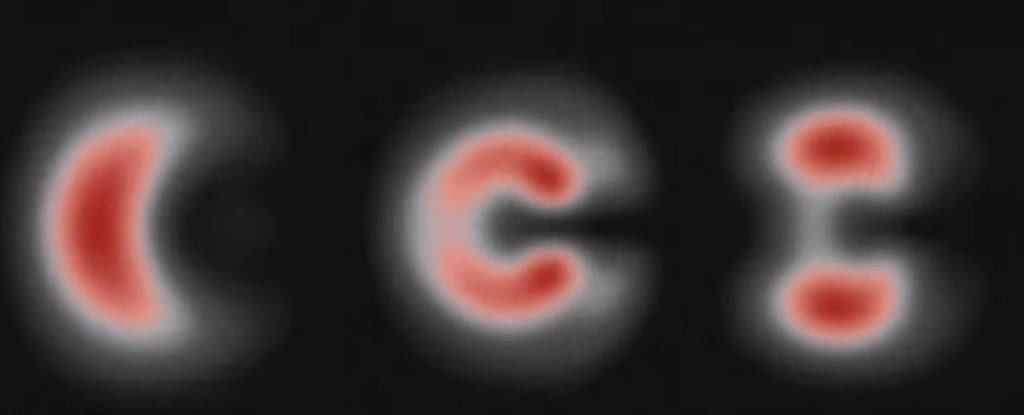
Scientists have successfully observed a conical intersection, a common interaction in quantum chemistry, by using a quantum computer to slow down the process by 100 billion times. This allowed them to make meaningful observations and measurements that were previously impossible due to the extremely short duration of the interactions. The research team used a charged particle trapped in a field to monitor the reaction, providing valuable insights into light-based reactions in various scenarios. The study demonstrates the potential of quantum computers in simulating reactions and opens up new possibilities in materials science, drug design, and solar energy harvesting.
Scientists have used a quantum computer to slow down a chemical reaction by 100 billion times, allowing them to directly observe a molecular interaction known as a conical intersection. This breakthrough could provide new insights into chemical reactions and have applications in materials science, drug design, and solar energy harvesting.
Scientists have successfully slowed down a chemical reaction by approximately 100 billion times using a quantum computer in a simulation. This breakthrough could have significant implications for various fields, including materials science, drug design, solar energy harvesting, and understanding processes like smog creation and ozone layer damage.
Trinity College Dublin, in collaboration with IBM Dublin, has successfully simulated super diffusion in a system of interacting quantum particles on a quantum computer. This achievement marks a significant step towards performing complex quantum transport calculations on quantum hardware, which could provide new insights in condensed matter physics and materials science. The research, conducted as part of the TCD-IBM predoctoral scholarship program, utilized a 27-qubit quantum computer located in IBM's lab in New York and programmed remotely from Dublin. Quantum simulation allows for the efficient description of complex quantum systems, overcoming the limitations of classical computers. The team focused on simulating the long-time behavior of spin excitations in a Heisenberg chain, observing super-diffusive transport governed by the Kardar-Parisi-Zhang equation.