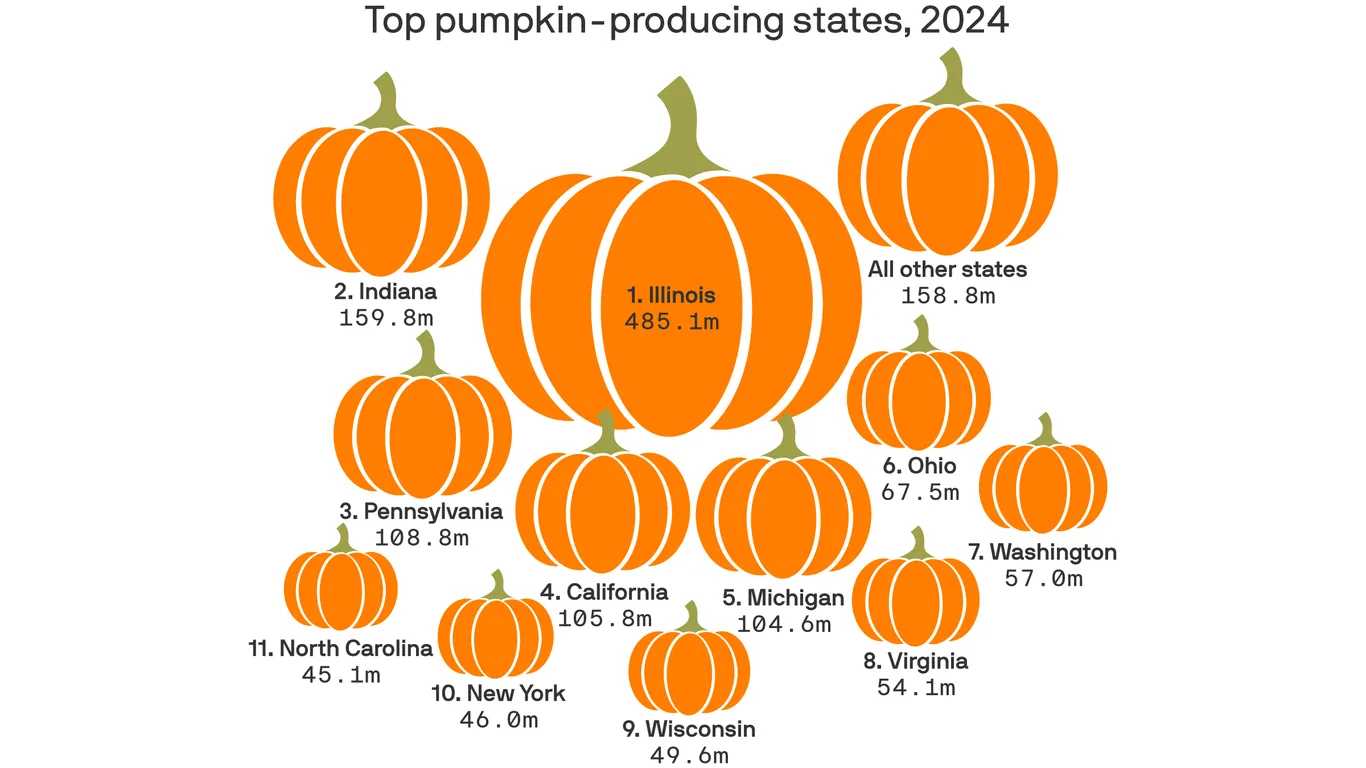
Illinois is the leading pumpkin producer in the US, with the majority of its harvest used for canned pumpkin products, especially from Morton, Illinois, which supplies up to 95% of the US canned pumpkin.
Millions of pumpkins and other organic fall decorations are often discarded in landfills after the holidays, contributing to greenhouse gas emissions and climate change. To sustainably dispose of these items, options like composting can be utilized. Composting allows for the natural decomposition of plant matter and food waste, creating nutrient-rich compost that can be used as fertilizer or mulch. Removing seeds and chopping pumpkins into smaller pieces can expedite the decomposition process. Other materials like straw bales, corn stalks, and leaves can also be composted. Food waste is a significant contributor to landfills, accounting for over 24% of municipal solid waste in the US. Taking steps to reduce food waste is an effective way for individuals to combat climate change.
Different colored pumpkins and candy buckets have specific meanings during Halloween trick-or-treating. Purple pumpkins indicate a COVID-free household, teal pumpkins signify food allergies, blue pumpkins represent children with autism, and pink pumpkins support breast cancer awareness. These symbols help create a safe and inclusive environment for all trick-or-treaters, ensuring a fantastic Halloween experience.
Pumpkins are heavy-feeding plants that require regular fertilization throughout their growing season. Nitrogen promotes vine and leaf growth, phosphorus encourages flowering and fruiting, and potassium ensures healthy fruit development. It is important to fertilize pumpkins at the right time, starting with compost or balanced fertilizer before planting, then switching to nitrogen-heavy fertilizer during rapid vine growth, phosphorus-heavy fertilizer during flowering, and high-potassium fertilizer when fruits start to form. Conducting a soil test and following recommended rates from the manufacturer are crucial. Coffee grounds can be used as a supplemental feed, and leftover pumpkins can be used as compost or buried to release nutrients into the soil.