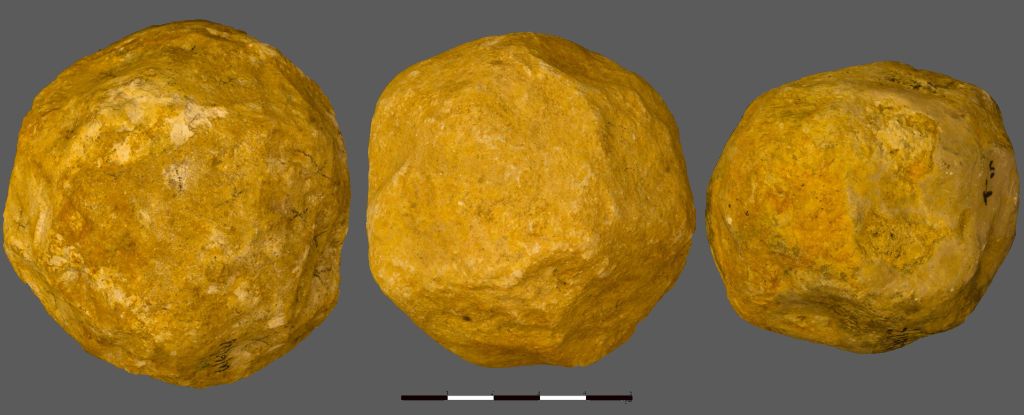
Ancient limestone spheroids found at the 'Ubeidiya prehistoric site in Israel, dating back 1.4 million years, were intentionally shaped to achieve a spherical form, according to archaeologists. The more the spheroids were worked, the rounder they became, indicating a deliberate goal of achieving perfect geometry. The purpose of these spheroids remains unknown, but their intentional production suggests a complex cognitive process and the earliest attempt at imposing symmetrical geometry on stone tools.
Archaeologists have discovered a collection of 12,000-year-old flutes made from bird bones at a prehistoric site in Israel. The flutes, which were carved by the Natufians, the last hunter-gatherers in the Levant, mimic the calls of certain birds of prey. The Natufians were methodical in selecting small bones to create high-pitched sounds similar to those made by Eurasian sparrowhawks and common kestrels. The flutes are the oldest sound instruments imitating bird calls in the world and provide evidence of the Natufians' relationship with symbolically valued birds of prey.
Archaeologists have discovered a collection of 12,000-year-old flutes made of bird bones at a prehistoric site in Israel. The flutes, which mimic the calls of certain birds of prey, were likely used for hunting, music, or even communication with the birds. The Natufians, a cultural group that were the last hunter-gatherers in the Levant, created the flutes by selecting small bones to produce high-pitched sounds similar to those made by falcons. The flutes are the oldest sound instruments imitating bird calls in the world and demonstrate the Natufians' knowledge of acoustics and technical precision.