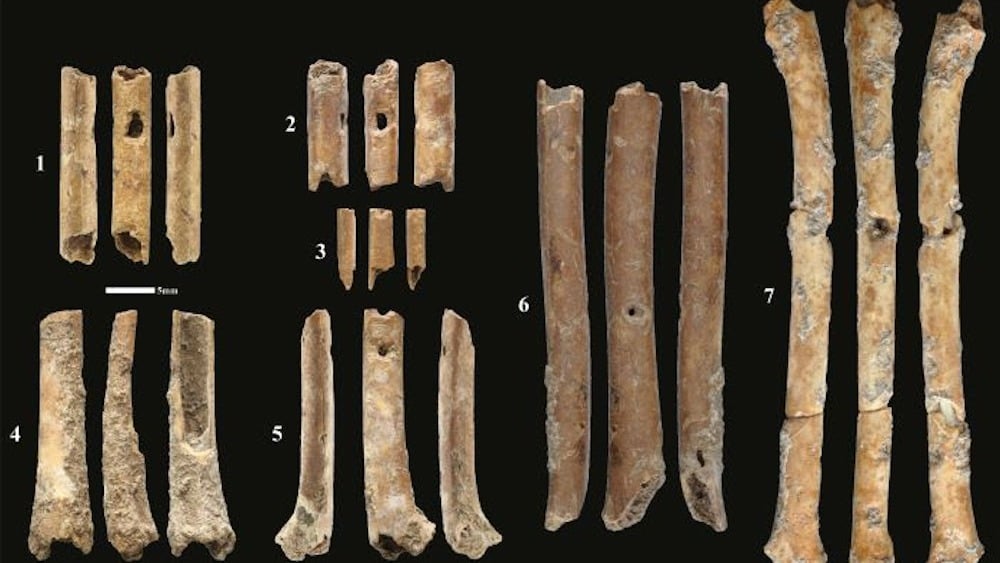
Tiny bird bones from prehistoric times found in northern Israel have been identified as 12,000-year-old flutes. The seven wing bones from coots and teals had holes bored into them, which mimicked the sound of birds of prey when tested on replicas. It is thought that the flutes could have been used to scare waterfowl, making them easier to catch as flocks took flight. Another theory is that the flutes could have also been played for music.
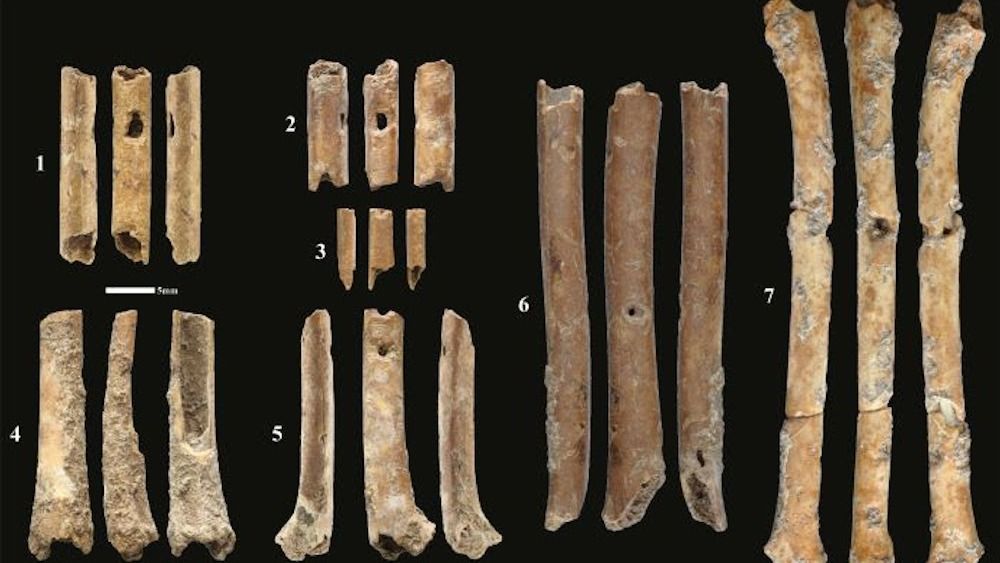
Archaeologists have discovered a collection of 12,000-year-old flutes made from bird bones at a prehistoric site in Israel. The flutes, which were carved by the Natufians, the last hunter-gatherers in the Levant, mimic the calls of certain birds of prey. The Natufians were methodical in selecting small bones to create high-pitched sounds similar to those made by Eurasian sparrowhawks and common kestrels. The flutes are the oldest sound instruments imitating bird calls in the world and provide evidence of the Natufians' relationship with symbolically valued birds of prey.
Archaeologists have discovered a collection of 12,000-year-old flutes made of bird bones at a prehistoric site in Israel. The flutes, which mimic the calls of certain birds of prey, were likely used for hunting, music, or even communication with the birds. The Natufians, a cultural group that were the last hunter-gatherers in the Levant, created the flutes by selecting small bones to produce high-pitched sounds similar to those made by falcons. The flutes are the oldest sound instruments imitating bird calls in the world and demonstrate the Natufians' knowledge of acoustics and technical precision.