Scientists have explained that large holes in Antarctic sea ice, called polynyas, are caused by a combination of factors including ocean currents and underwater topography, and they may have significant implications for climate due to potential release of stored carbon.
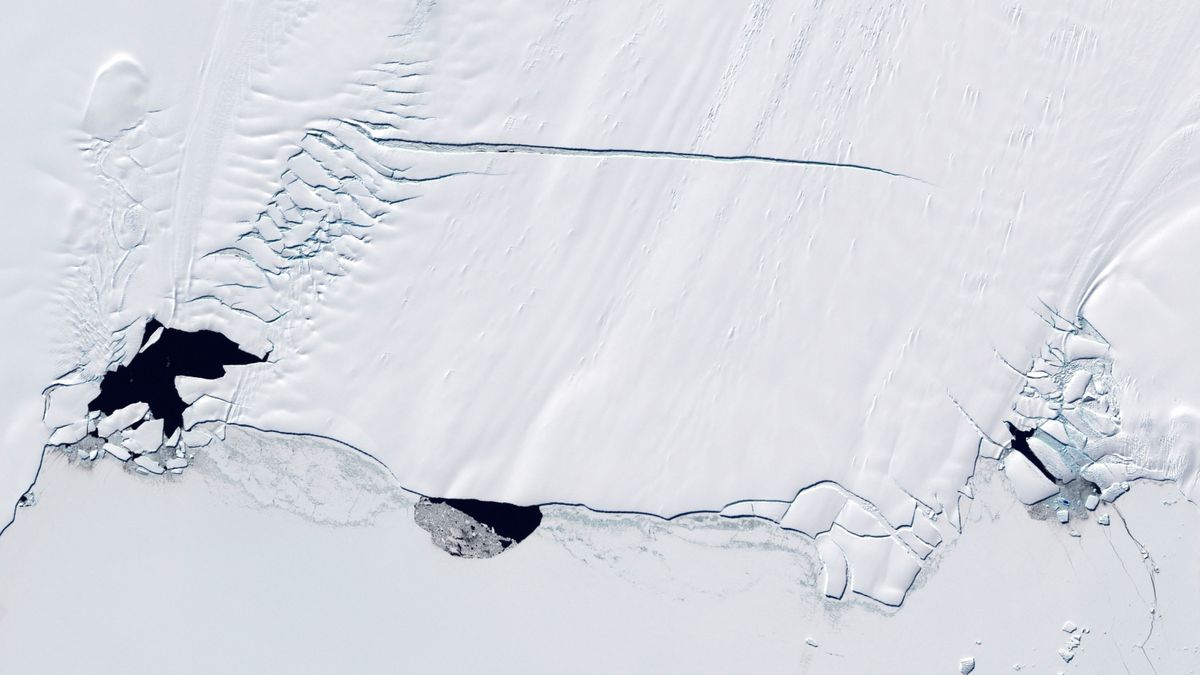
Enormous city-sized holes on Antarctica's ice shelves may be linked to the formation of giant icebergs, offering a glimpse into the continent's melting process. A study focused on polynyas, large open ocean areas in the ice shelf, near the vulnerable Pine Island Glacier, using satellite data to track their changes over 22 years. The researchers found that polynyas are indicators of melting and may influence the structural integrity of the ice shelf, potentially contributing to calving. This research provides valuable insights into the complex dynamics of Antarctica's ice shelves and their response to climate change.