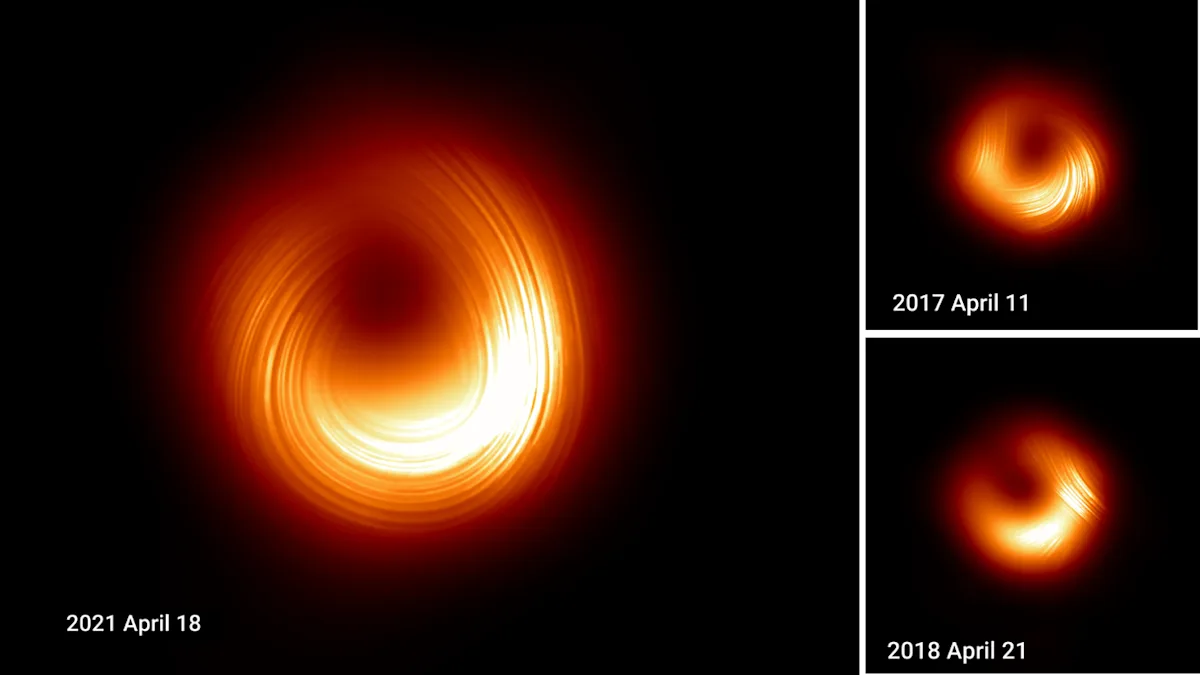
New images of the supermassive black hole M87* reveal unexpected changes in magnetic field polarization over four years, challenging existing models and providing insights into the dynamic environment near black holes, including the first detailed view of the jet of matter emerging from it.
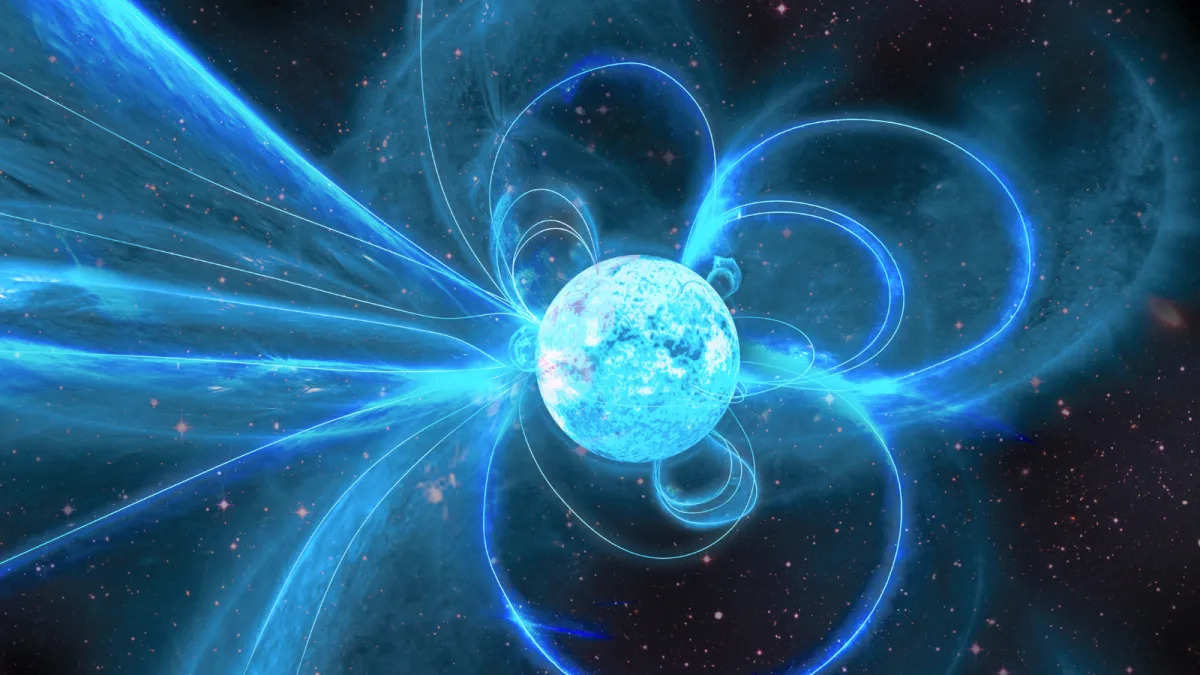
Astronomers using the Parkes radio telescope in Australia have detected unusual radio signals from Earth’s closest magnetar, XTE J1810-197, which is behaving in unprecedented ways by emitting rapidly changing circular polarization. The signals, first detected in 2003 and then again in 2018, suggest complex interactions at the star's surface, challenging previous theoretical explanations. The cause of these unusual signals remains a mystery, but researchers believe they may be linked to superheated plasma above the magnetar's magnetic pole. Further studies are needed to unravel the complexities of these radio waves, which could provide insights into various extreme phenomena in the universe.
Scientists were surprised when a "dead" neutron star with an incredibly powerful magnetic field, known as a magnetar, unexpectedly emitted strange radio signals, challenging current understanding of these celestial objects. The magnetar, XTE J1810-197, located 8,000 light-years away, exhibited unprecedented circularly polarized light, defying expectations. This discovery, made using the Australian CSIRO Parkes radio telescope, suggests the presence of superheated plasma above the magnetar's magnetic pole. Further observations aim to shed light on various extreme magnetar-related phenomena, offering insights into these enigmatic cosmic entities.
NASA's Eclipse Megamovie Project 2024 aims to enlist citizen scientists equipped with DSLR cameras and equatorial mounts to capture around 1,200 images of the corona and chromosphere during the total solar eclipse on April 8, 2024. The project seeks to help solar physicists solve the mystery of solar jets and plumes, providing valuable data that cannot be obtained through space-based observations. With improved equipment and an expected increase in solar activity, the project aims to produce more detailed and dramatic images compared to the 2017 effort.