New research published in Nature Neuroscience challenges long-held beliefs about brain plasticity, showing that the brain's body map remains stable even years after amputation, which has significant implications for treating phantom limb pain and developing prosthetic technologies.
A study shows that the brain's map of the body remains unchanged even years after amputation, challenging previous beliefs about brain reorganization and providing hope for brain-computer interfaces and phantom limb pain treatment.
A recent study challenges the long-held belief that the brain's map of the body reorganizes significantly after amputation, showing instead that the brain maintains the circuits for the missing limb even years later, which has implications for future treatments like prosthetics.
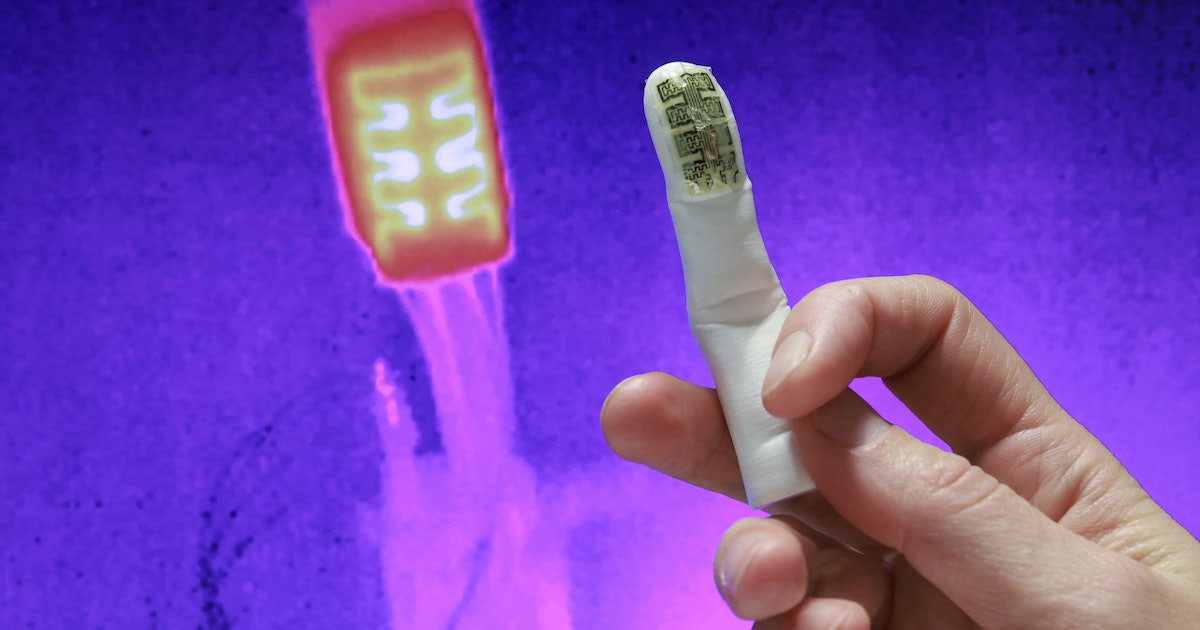
Researchers at Johns Hopkins Applied Physics Laboratory (APL) have developed a wearable thin-film thermoelectric cooler (TFTEC) that can help amputees perceive temperature with their phantom limbs. The TFTEC is lightweight, energy-efficient, and can provide intense cooling in less than a second. It has potential applications in prosthetics, augmented reality haptics, and thermally-modulated therapeutics. The device was tested on amputees and demonstrated faster and more intense cooling sensations compared to traditional thermoelectric technology. The technology also has potential industrial applications in cooling electronics and lasers, as well as energy harvesting in satellites.
Scientists have discovered that amputees can feel temperature changes in their phantom limb, which could help create better prosthetics that include thermal sensation. The team developed a new piece of equipment they call the MiniTouch, which is a portable device that allows amputees to detect temperature through their prosthetic limb. A prosthetic that detects temperature can create a more natural feeling of embodiment. The MiniTouch could help return a sense of embodiment to those who use prosthetics after losing a limb.