Tag

Path Of Totality

All articles tagged with #path of totality

How to Confirm You're in the Path of Totality for the Solar Eclipse
science5 months ago

How to Confirm You're in the Path of Totality for the Solar Eclipse

The article explains that the path of totality for solar eclipses is less precise than maps suggest due to uncertainties in the sun's size, moon's topography, and Earth's terrain, leading to a 'zone of uncertainty' at the edges where visibility of the eclipse's totality can vary. New methods and more accurate measurements are improving predictions, but small discrepancies still exist, especially near the edges.
"High-Flying Eclipse Sightings: Airlines Capture Stunning Views and Missed Opportunities"
travel1 year ago

"High-Flying Eclipse Sightings: Airlines Capture Stunning Views and Missed Opportunities"

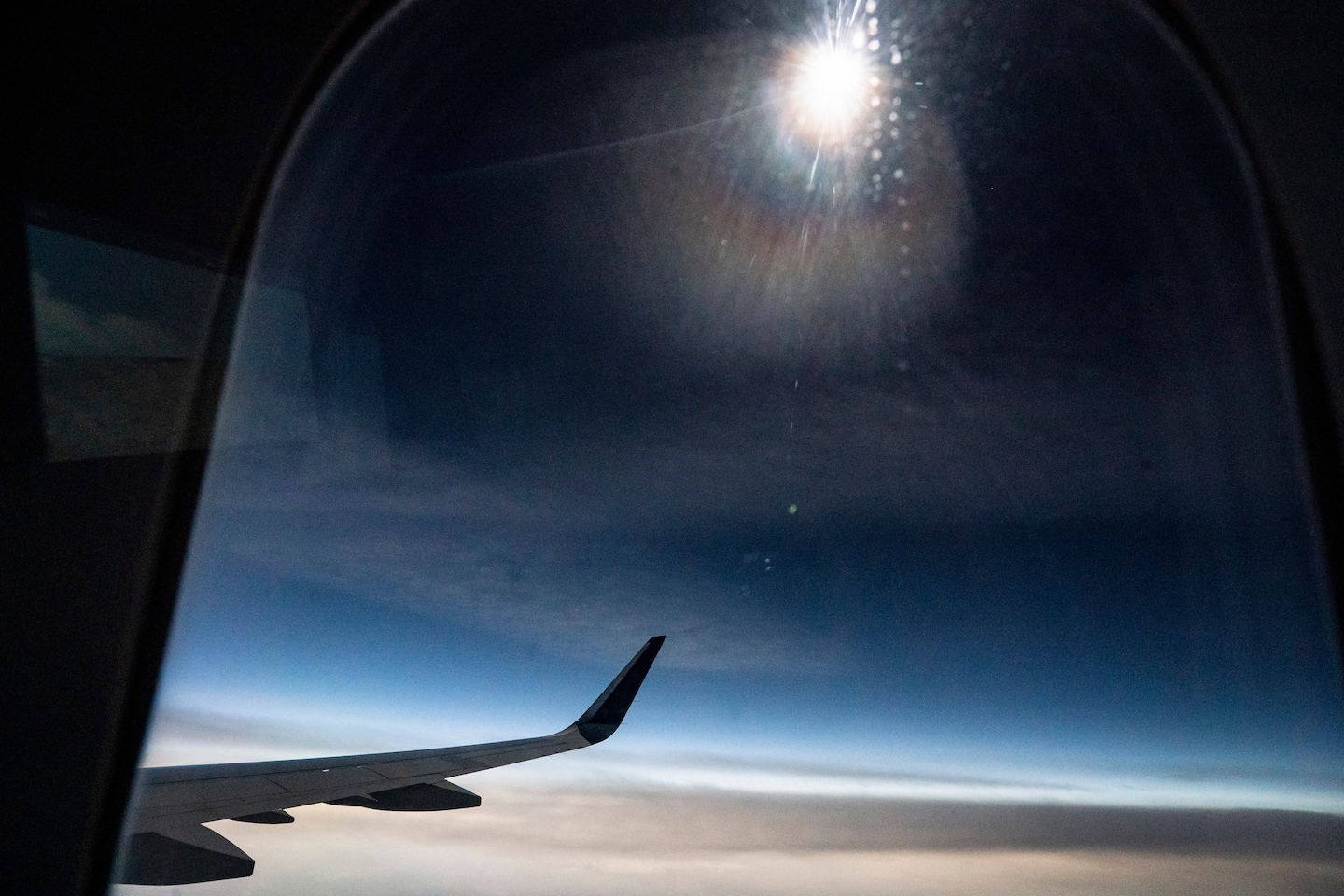
Delta Air Lines' special eclipse flight from Dallas to Detroit deviated from the path of totality due to air traffic control restrictions, causing passengers to miss a prime view of the total solar eclipse. The airline's Airbus A321neo flew in a circle at 33,000 feet to give both sides a look, but passengers didn't get the view they expected. Despite the disappointment, some passengers still enjoyed the experience, while others expressed frustration over the missed opportunity and financial investment.

"Upcoming Solar Eclipses: Naples' Essential Guide"
astronomy1 year ago

"Upcoming Solar Eclipses: Naples' Essential Guide"

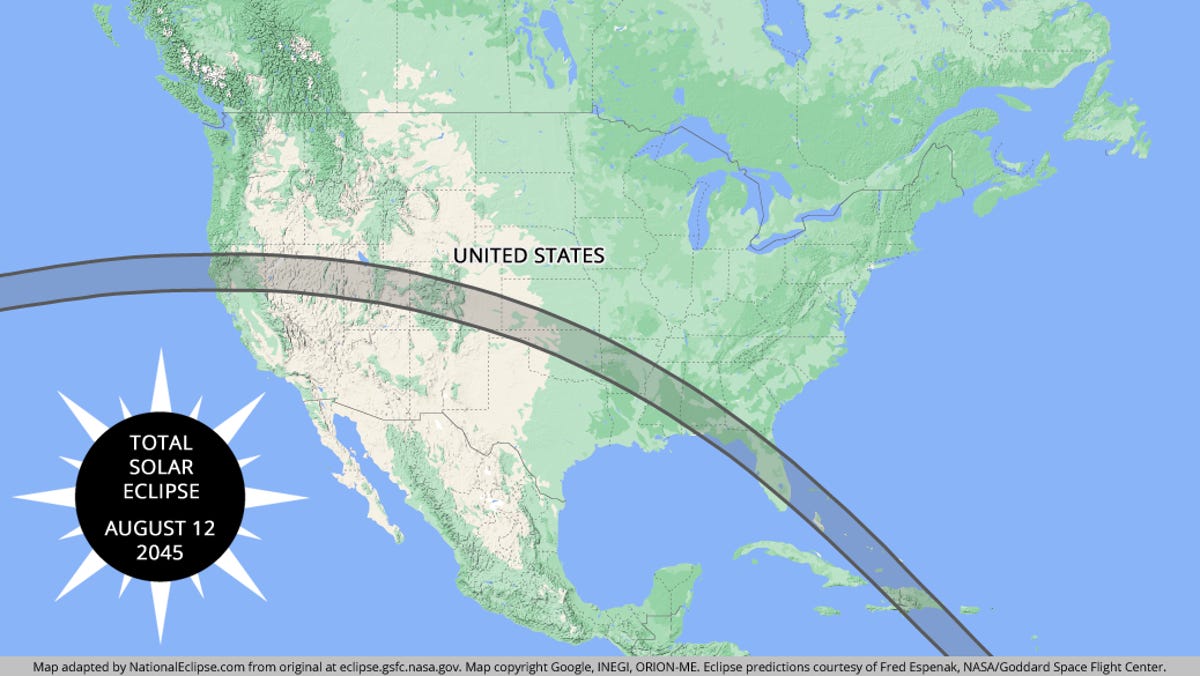
Naples, Florida experienced a partial solar eclipse on April 8, 2024, and the next total solar eclipse visible in the U.S. will occur on March 30, 2033, with Alaska being the only state in the path of totality. Florida will witness a total solar eclipse on August 12, 2045, with the path of totality covering several states, the Caribbean, and South America. The maximum duration of totality for the 2045 eclipse will be 6 minutes and 6 seconds. Additionally, there are several other total solar eclipses scheduled between 2024 and 2045, but the 2045 eclipse will be the next one visible across most of the contiguous United States.

"2024 Total Solar Eclipse: Where and When to Watch Across the U.S."
astronomy1 year ago

"2024 Total Solar Eclipse: Where and When to Watch Across the U.S."

Millions of people across North America witnessed the total solar eclipse as it moved across the U.S., with the first sighting in Mazatlán, Mexico, followed by a "path of totality" spanning over 100 miles. The sun was fully obscured by the moon for a few minutes in 15 states, with at least partial visibility in 49 states, excluding Alaska. This event marked one of the rare occurrences of total solar eclipses in the U.S., with the next one not expected until 2033.

"Upcoming Total Solar Eclipses: Dates and Locations Revealed"
astronomy1 year ago

"Upcoming Total Solar Eclipses: Dates and Locations Revealed"

The next total solar eclipse will occur on Aug. 12, 2026, passing mostly over the Arctic Ocean, with subsequent eclipses in 2027, 2033, 2044, and 2045. The 2045 eclipse will trace a path from coast to coast across the continental U.S., similar to the one in 2017, and will continue over the Caribbean and parts of South America. During a total solar eclipse, the moon covers the face of the sun, temporarily masking its light and casting the moon’s shadow on Earth’s surface.

"Total Solar Eclipse to Grace Erie, Pennsylvania in 2024"
astronomy1 year ago

"Total Solar Eclipse to Grace Erie, Pennsylvania in 2024"

Erie, Pennsylvania experienced an unforgettable 3 minutes and 42 seconds in the path of totality for the 2024 solar eclipse, with the sky going dark, streetlights coming on, and a noticeable temperature drop. The next opportunities to witness a total solar eclipse in the U.S. will be in 2033 (Alaska), 2044 (Montana, North Dakota), and 2045 (coast to coast). The next chance to see it in Erie will be in 2144.

"2024 Solar Eclipse: A Captivating Moment of Totality"
astronomy1 year ago

"2024 Solar Eclipse: A Captivating Moment of Totality"

The 2024 solar eclipse will be visible from Texas to Maine, marking the last eclipse visible from the continental United States for 20 years. This event is expected to attract tourists to towns in the path of totality, with the next solar eclipse visible from North America not occurring until 2044. NewsNation will be covering the eclipse as it moves across the U.S., and viewers are reminded to use eclipse glasses and beware of counterfeit ones.

"Oklahoma's Path of Totality: Witness the 2024 Solar Eclipse Live"
astronomy1 year ago

"Oklahoma's Path of Totality: Witness the 2024 Solar Eclipse Live"

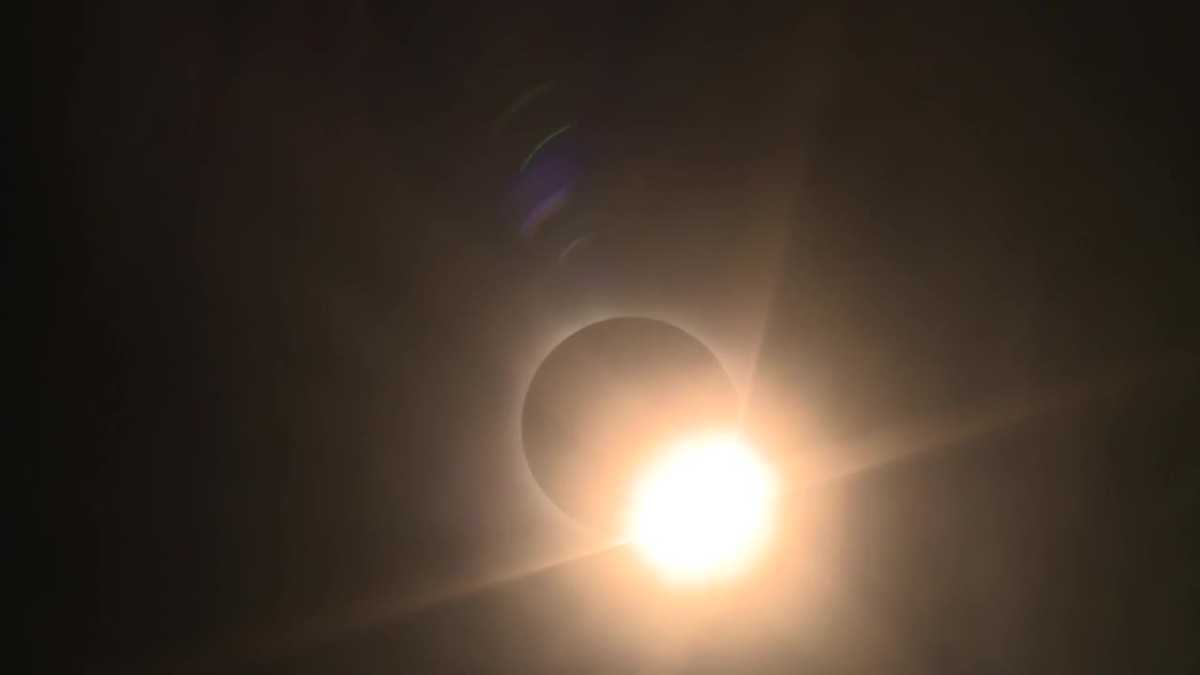
The Great American Solar Eclipse passed over southeastern Oklahoma, with the peak occurring around 1:45 p.m. The eclipse created a unique event, with the moon blocking the sun and creating a bright ring visible in the sky. KOCO 5 crews, including meteorologists Jonathan Conder and Michael Armstrong, provided live updates and coverage of the eclipse in Idabel and Broken Bow. The eclipse's path of totality clipped southeastern Oklahoma, offering a one-of-a-kind experience for observers.

"Stunning Photos of the Total Solar Eclipse"
astronomy1 year ago

"Stunning Photos of the Total Solar Eclipse"

Millions of people across the United States were captivated by the total solar eclipse, with many making trips to get into the path of totality. Parties and events were scheduled ahead of the event, and eclipse glasses were in high demand for safe viewing. This was the first total solar eclipse in the U.S. since 2017, and the next one in the Lower 48 won't occur until 2044.

"2024 Solar Eclipse: Viewing Guide for San Francisco, DC, and Beyond"
astronomy1 year ago

"2024 Solar Eclipse: Viewing Guide for San Francisco, DC, and Beyond"

On April 8, 2024, the San Francisco Bay Area will experience a partial solar eclipse, with 31% to 35% of the sun being blocked by the moon. The eclipse will begin at different times across the Bay Area, with the peak expected about an hour after it starts, and the entire event lasting approximately two hours. Eclipse watchers are advised to use certified solar viewing glasses or a pinhole camera to protect their eyes from permanent damage.