Tag

Nuclear Bomb

All articles tagged with #nuclear bomb

"Japanese Premiere of 'Oppenheimer' Follows 'Barbenheimer' Controversy"
entertainment2 years ago

"Japanese Premiere of 'Oppenheimer' Follows 'Barbenheimer' Controversy"

The movie "Oppenheimer" will be released in Japanese cinemas on March 29, nearly eight months after the "Barbenheimer" memes, which mixed visuals from the film "Barbie" with atomic blasts, caused outrage in Japan. The delay in the release prompted an apology from Warner Brothers Japan. The decision to release the film in Japan was made after much debate and deliberation, as the themes covered in the film hold significant meaning for the Japanese people, particularly in light of the country's history with nuclear bombings during World War Two.


Israeli PM Suspends Far-Right Minister for Suggesting Nuking Gaza
politics2 years ago

Israeli PM Suspends Far-Right Minister for Suggesting Nuking Gaza

Israeli Heritage Minister Amichai Eliyahu, a member of the far-right Otzma Yehudit party, suggested that dropping a nuclear bomb on the Gaza Strip was one of Israel's options in the war against Hamas. Prime Minister Benjamin Netanyahu swiftly disavowed the comments and suspended Eliyahu from cabinet meetings. Eliyahu also expressed objection to providing humanitarian aid to Gaza and called for the retaking of the Strip and rebuilding Israeli settlements. Opposition leaders called for Eliyahu's dismissal, while Netanyahu stated that Israel is acting in accordance with international law to prevent harm to civilians. The Prime Minister's Office later announced Eliyahu's indefinite suspension from cabinet meetings.

"US Pursues Development of 24x More Powerful Nuclear Bomb"
defense2 years ago

"US Pursues Development of 24x More Powerful Nuclear Bomb"

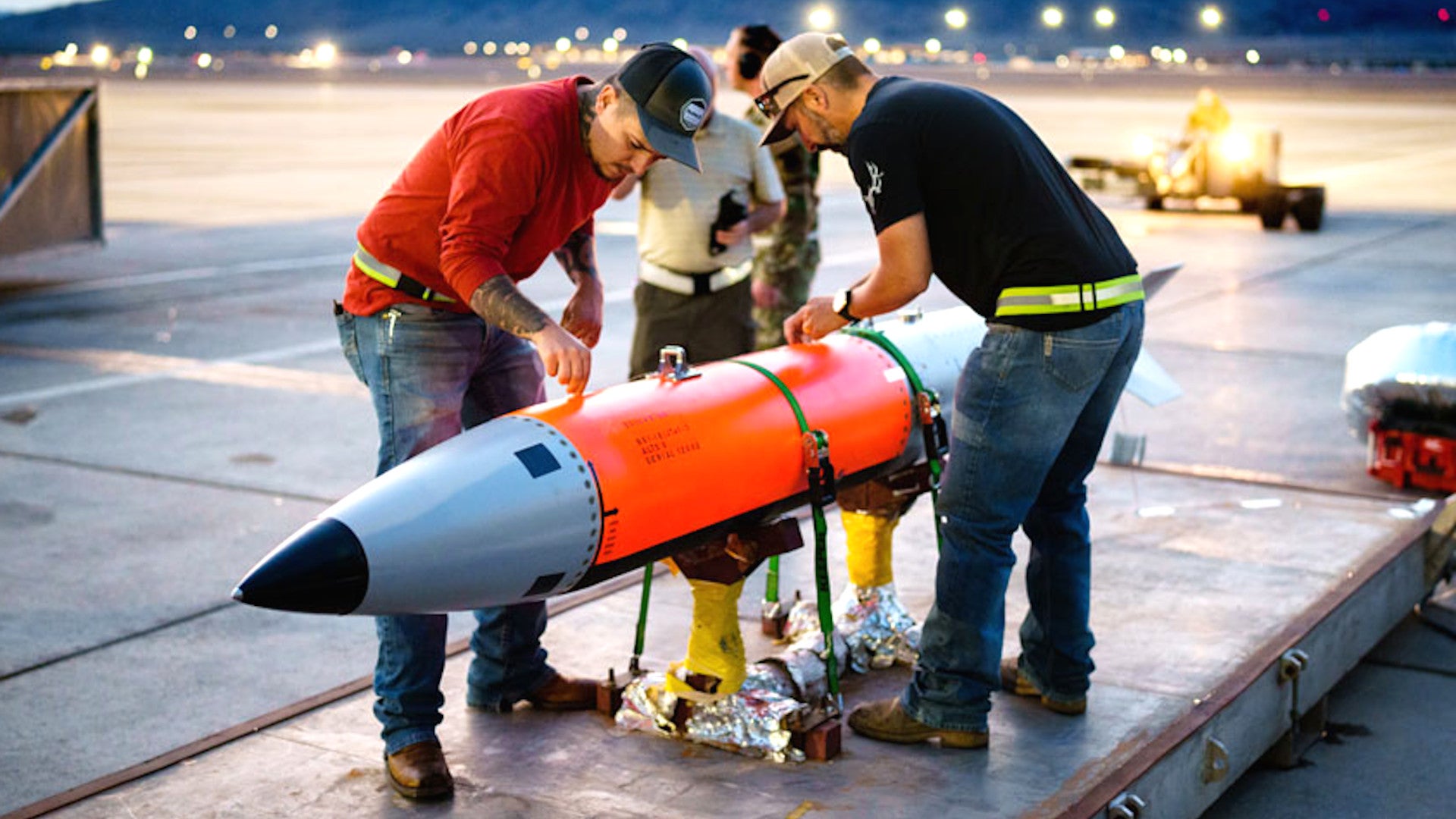
The US military plans to develop a new nuclear bomb, the B61-13, which would be more than 20 times more powerful than the one dropped on Hiroshima in 1945. The bomb would have a blast yield of 360 kilotons of TNT, compared to Hiroshima's 15 kilotons. The creation of the B61-13 requires approval and funding from Congress. The announcement comes as the US aims to modernize its nuclear stockpile amid growing threats from potential adversaries. The bomb would be designed to target harder and larger military targets and would incorporate safety, security, and accuracy features. The move has drawn cautious approval from top Republican members of the House and Senate Armed Services committees.

"Pentagon Unveils Devastatingly Powerful Nuclear Bomb, Dwarfing Hiroshima's Impact"
defense2 years ago

"Pentagon Unveils Devastatingly Powerful Nuclear Bomb, Dwarfing Hiroshima's Impact"

The Pentagon has announced its pursuit of a new nuclear bomb, the B61-13, which will be 24 times more powerful than the bomb dropped on Hiroshima during World War II. Seeking congressional approval and funding, the Department of Defense aims to develop this bomb to address the changing security environment and growing threats from potential adversaries. The B61-13 will have a similar yield to the B61-7, with a maximum yield of 360 kilotons. The bomb will include modern safety, security, and accuracy features, and will be deliverable by modern aircraft. If approved, it will replace some of the current B61-7s in the U.S. nuclear stockpile without increasing the overall number of weapons.

"Pentagon Unveils Devastatingly Powerful Nuclear Bomb, Dwarfing Hiroshima's Impact"
defense2 years ago

"Pentagon Unveils Devastatingly Powerful Nuclear Bomb, Dwarfing Hiroshima's Impact"

The Pentagon has announced its pursuit of a new nuclear bomb, the B61-13, which will be 24 times more powerful than the bombs dropped on Japan during World War II. Seeking congressional approval and funding, the Department of Defense aims to develop a modern variant of the B61 nuclear gravity bomb to address the changing security environment and growing threats from potential adversaries. The bomb will have a similar yield to the B61-7, with modern safety, security, and accuracy features. If approved, it will replace some of the current B61-7s in the U.S. nuclear stockpile without increasing the overall number of weapons.

"US Unveils Plans for More Advanced B61-13 Nuclear Bomb"
defense2 years ago

"US Unveils Plans for More Advanced B61-13 Nuclear Bomb"

The Pentagon has announced plans to develop a new nuclear bomb, the B61-13, which would offer increased capability against hardened facilities and larger area targets. The bomb would replace some of the B61-7s in the current nuclear stockpile and have a similar yield. The B61-13 would be deliverable by modern aircraft and would strengthen deterrence and assurance for allies. The development of this bomb is dependent on Congressional authorization and appropriation. The announcement suggests that confidence in the abilities of the B61-12, which was expected to replace other variants, was not achieved. The Pentagon's plans may also indicate a new pathway to replacing the B83-1 bomb.

history2 years ago

Oppenheimer's Impact on Nuclear Power, World Government, and AI Explored

The Nazis failed to develop a nuclear bomb due to a combination of factors. Germany was losing scientists, with many fleeing persecution and joining the Manhattan Project in the US. Wartime pressure and resource scarcity also hindered progress. Additionally, Hitler's lack of understanding and support for the project limited its resources and budget. The German scientists themselves were morally opposed to the atomic bomb and secretly sabotaged the effort. Ultimately, the German nuclear program shifted focus to building a nuclear reactor, but it never achieved a successful chain reaction.

Exploring the Challenges and Impact of 'Oppenheimer'
entertainment2 years ago

Exploring the Challenges and Impact of 'Oppenheimer'

The US Army has warned that there may be larger than normal crowds at the Trinity Site in New Mexico, the location of the world's first nuclear bomb detonation, due to the release of Christopher Nolan's film "Oppenheimer." The site is only open to visitors two days each year, and those hoping to visit may experience wait times of up to two hours. The film, which is about the creation of the world's first nuclear weapon, is rated R and has a runtime of three hours. The Trinity Site is marked by an obelisk and contains historical photographs and samples of trinitite, a glasslike substance created during the bomb's explosion. The site is safe to visit, and public access is limited due to the White Sands Missile Range's frequent weapons testing.

"Nuclear Bomb's Surprising Connection to Aurora Revealed"
science-and-technology2 years ago

"Nuclear Bomb's Surprising Connection to Aurora Revealed"

On July 9, 1962, the United States detonated a thermonuclear bomb named Starfish Prime above the Pacific Ocean, resulting in an artificial geomagnetic storm and triggering an aurora visible as far as New Zealand. The bomb's electromagnetic pulse (EMP) caused streetlights to go out, radio blackout, and temporary telephone outages in Hawaii. Similar effects can occur during powerful geomagnetic storms triggered by the sun, as seen in the 1989 blackout in Quebec.

"Christopher Nolan's Oppenheimer: A Devastating and Horrifying Tale of AI Dangers"
entertainment2 years ago

"Christopher Nolan's Oppenheimer: A Devastating and Horrifying Tale of AI Dangers"

Christopher Nolan has described his upcoming biopic, Oppenheimer, as "kind of a horror movie" due to its depiction of the invention of the atomic bomb. The film tells the story of J. Robert Oppenheimer, the scientist behind America's top-secret nuclear weapons program during World War II. Nolan revealed that some early viewers had an emotional reaction to the film, leaving them devastated and unable to speak. The film stars Cillian Murphy as Oppenheimer, alongside an all-star cast including Emily Blunt, Matt Damon, Robert Downey Jr, and Rami Malek.

US Military's Near Miss: Almost Nuked the Moon.
science-and-technology2 years ago

US Military's Near Miss: Almost Nuked the Moon.

In the late 1950s, the US military considered detonating a nuclear bomb on the surface of the moon as part of a project codenamed A119, which was partly intended to one-up the Soviet Union in the space race. The project was revealed by physicist Carl Sagan, who had worked on the project and came up with the nuclear concept. The proposal was considered for scientific, military, and political reasons, but ultimately failed to launch due to lack of funding and attention.