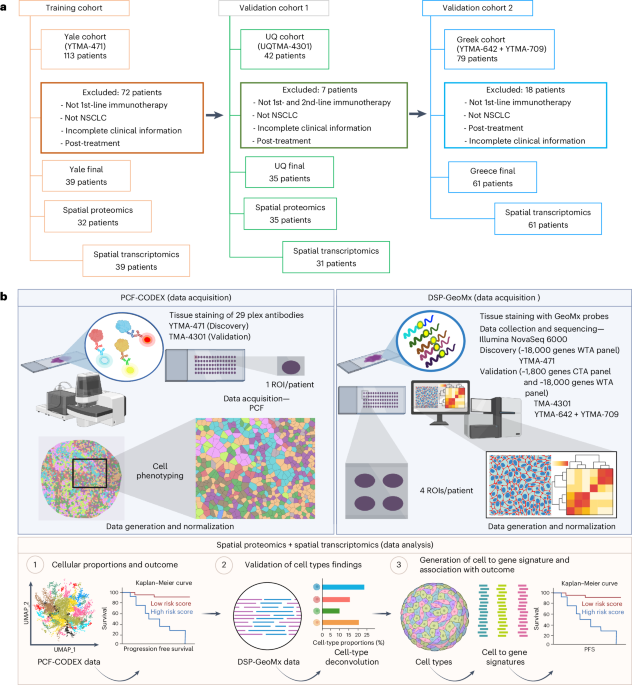
This study develops spatial multi-omics and machine learning-based biomarkers to predict immunotherapy outcomes in advanced non-small cell lung cancer, highlighting the roles of immune cell spatial organization, macrophage PD-L1 expression, and gene signatures in resistance and response, validated across multiple cohorts.
Cancer biotech company Nuvalent has announced a $300 million public offering of its common stock following positive Phase I results for its ALK-selective tyrosine kinase inhibitor candidate, NVL-655, in ALK-positive non-small cell lung cancer patients, with a 39% objective response rate observed in evaluable patients.
Merck's Phase 3 KEYNOTE-671 trial investigating KEYTRUDA as a perioperative treatment for resectable stage II, IIIA, or IIIB non-small cell lung cancer (NSCLC) has met its dual primary endpoint of overall survival (OS). The trial demonstrated a statistically significant and clinically meaningful improvement in OS when KEYTRUDA was used as neoadjuvant therapy followed by surgery and adjuvant therapy, compared to placebo plus chemotherapy. These results mark a significant milestone in the treatment of resectable NSCLC and offer potential extended survival for patients in earlier stages of the disease.
Gilead and AstraZeneca/Daiichi Sankyo have presented preliminary mid-stage data on their rival TROP2 antibody-drug conjugates (ADCs) combined with immune checkpoint inhibitors in non-small cell lung cancer. While Gilead noticed a slightly higher response rate, analysts consider the results to be broadly similar. Both ADCs target the TROP2 receptor and have shown promise in breast cancer and NSCLC, with AstraZeneca's Dato-DXd in Phase III and Gilead's Trodelvy already approved for certain forms of breast cancer and bladder cancer.
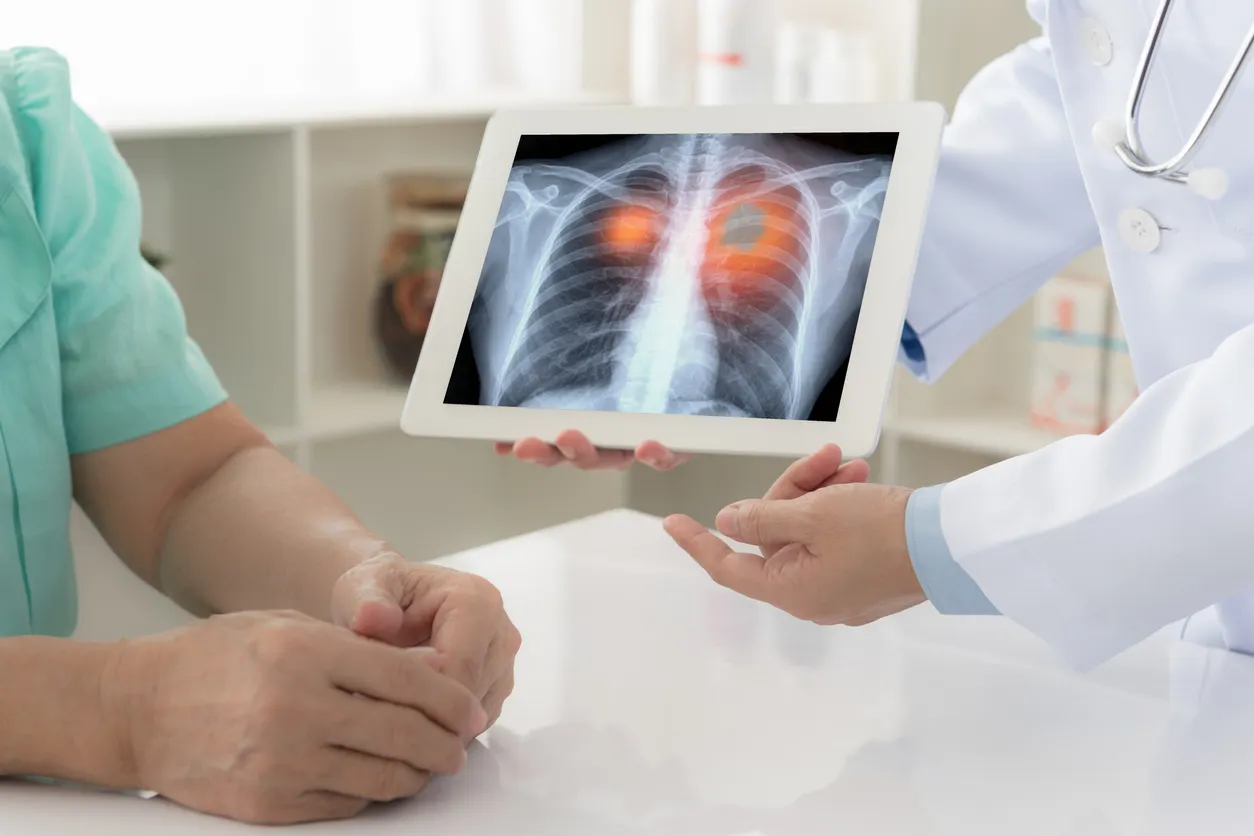
Lung cancer is a common and often fatal disease, with smoking being a major risk factor. There are two main types of lung cancer: non-small cell and small cell. Common symptoms include a persistent cough, chest pain, and shortness of breath. Early detection is crucial for better survival rates. Imaging tools such as X-rays and CT scans are used to diagnose lung cancer, and treatment options include surgery, chemotherapy, radiation therapy, and targeted therapy.