Tag

Neuroprosthetics

All articles tagged with #neuroprosthetics

neuroscience1 year ago

"Light-Controlled Muscles Offer Superior Fatigue Resistance"

MIT researchers have developed an optogenetic technique to control muscles using light, offering more precise control and significantly reducing fatigue in mice compared to traditional electrical stimulation. This approach, while not yet feasible in humans, could revolutionize prosthetics and aid individuals with impaired limb function. The team is working on safely delivering light-sensitive proteins to human tissue to make this method clinically viable.

science-and-technology1 year ago

MIT Researchers Develop Light-Controlled Muscle Technology

MIT researchers have developed an optogenetic technique to control muscle contractions using light, offering more precise control and reduced fatigue compared to traditional electrical stimulation. This method, tested in mice, could potentially benefit people with paralysis, amputations, and other limb impairments, though challenges remain in safely delivering light-sensitive proteins to human tissue.

neuroscience1 year ago

Mapping Movement: Unveiling the Complexity of Brain-Sensory Partnership

A new study delves into the mechanisms of proprioception, the body's ability to sense limb position and movement, using musculoskeletal simulations and neural network models to understand how the brain integrates sensory data from muscle spindles. The research suggests that the brain prioritizes limb position and velocity in processing proprioceptive input, offering potential implications for neuroprosthetic design and advancing our understanding of sensory processing.

medical-science2 years ago

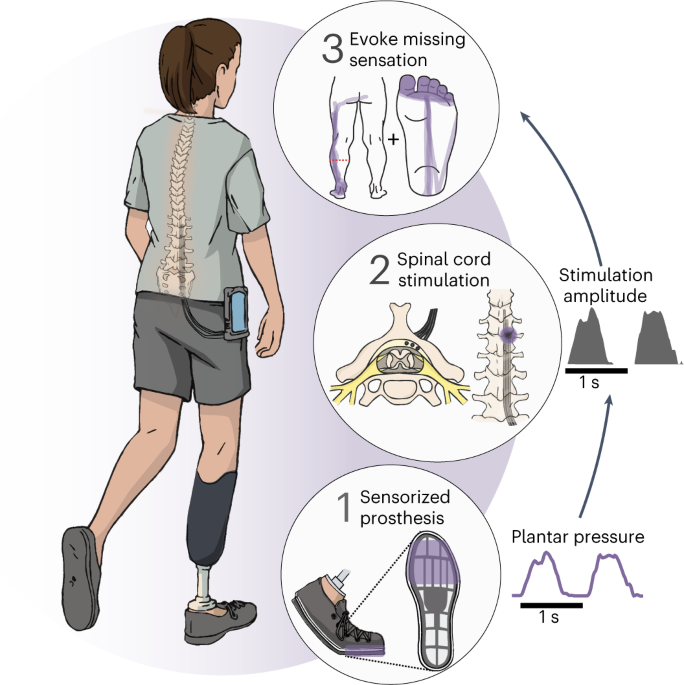
Closed-loop Spinal Cord Stimulation: Restoring Foot Sensory Feedback and Alleviating Phantom Limb Pain

Researchers have demonstrated the successful restoration of sensory feedback from the foot and reduction of phantom limb pain in individuals with lower-limb amputations through closed-loop spinal cord stimulation. By stimulating the spinal cord in response to pressure sensors on the sole of the foot, the study participants were able to perceive sensations in their missing limb and experience relief from phantom limb pain. This breakthrough could significantly improve the quality of life for amputees and pave the way for the development of more advanced neuroprosthetic devices.

science-and-technology2 years ago

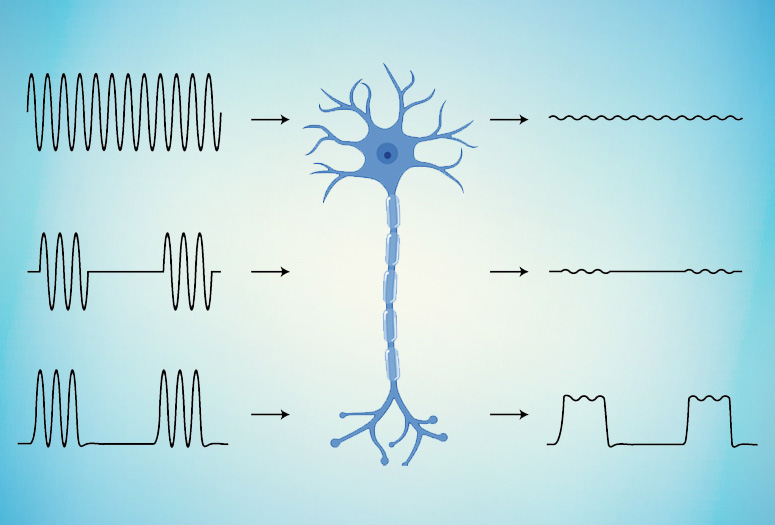
Revolutionary Rice-engineered Material Reconnects Severed Nerves

Researchers at Rice University have developed a magnetoelectric material that can stimulate neurons remotely and bridge the gap in a severed nerve. The material performs magnetic-to-electric conversion 120 times faster than similar materials, making it suitable for neurostimulation treatments. The material's properties could lead to less invasive procedures, as it can be injected at the desired site instead of requiring implantation. The research also provides a framework for advanced materials design that could drive innovation in various fields.

neuroscience2 years ago

Intelligent Neuroprosthetics Offer Hope for Motor Disease Patients.

Researchers at the University of Montreal have demonstrated the possibility of autonomously optimizing the stimulation parameters of prostheses implanted in the brains of animals, without human intervention, using autonomous learning algorithms. This advance may prove to be beneficial for those with spinal cord injury and diseases that affect movement, such as Parkinson's disease. The researchers combined expertise in neuroscience and artificial intelligence to develop the algorithmic framework capable of handling optimization in large parameter spaces.