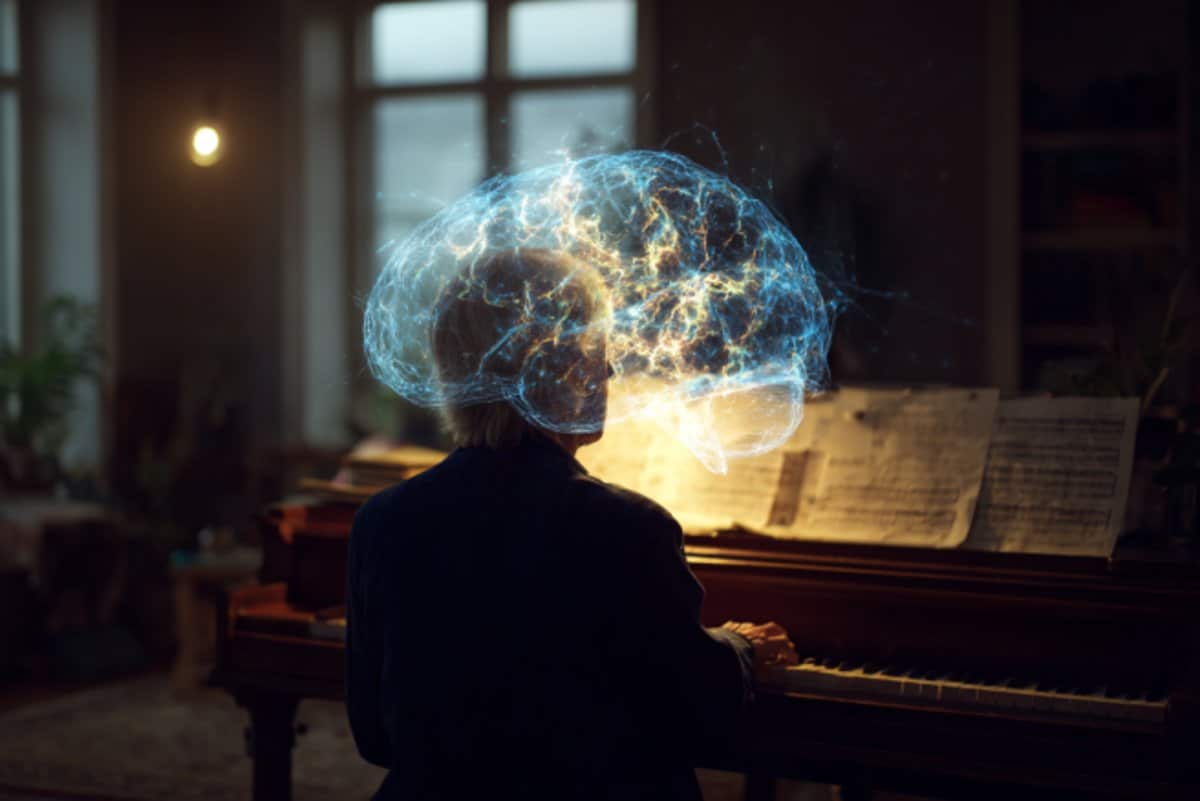
A study reveals that musicians experience less pain and have more refined brain maps related to hand control, suggesting that musical training can rewire the brain to reduce pain sensitivity and response, highlighting potential for new pain management therapies.

Research suggests that musicians experience less pain and have more refined brain maps related to hand control, likely due to their extensive training, which may provide a buffer against pain and influence how their brains respond to it.
A neuroimaging study suggests that long-term musical training helps older adults maintain youthful brain connectivity patterns, which may protect against age-related decline in speech understanding in noisy environments, supporting the idea that engaging in music can build cognitive reserve and promote brain health with age.
Lifelong musical training helps older adults maintain youthful brain patterns, particularly in processing speech in noisy environments, potentially protecting against age-related cognitive decline by building cognitive reserve.
Research shows that long-term musical training helps older adults maintain youthful brain connectivity patterns and improves speech perception in noisy environments, supporting the idea that musical activity builds cognitive reserve and mitigates age-related cognitive decline.
A study published in PLOS Biology suggests that long-term musical training can help mitigate age-related decline in speech perception by enhancing cognitive reserve and maintaining youthful neural connectivity patterns, supporting the idea that engaging in music can promote brain health as we age.