Rapamycin, a drug originally approved for organ transplant patients, is gaining attention for its potential to extend lifespan and improve health by inhibiting the mTOR enzyme, which plays a key role in cell growth and aging. While studies in animals like mice and monkeys show promising results, its effects on human aging remain uncertain. Researchers caution against widespread use until more is known about its safety and efficacy in humans, with ongoing clinical trials aiming to provide clearer insights.
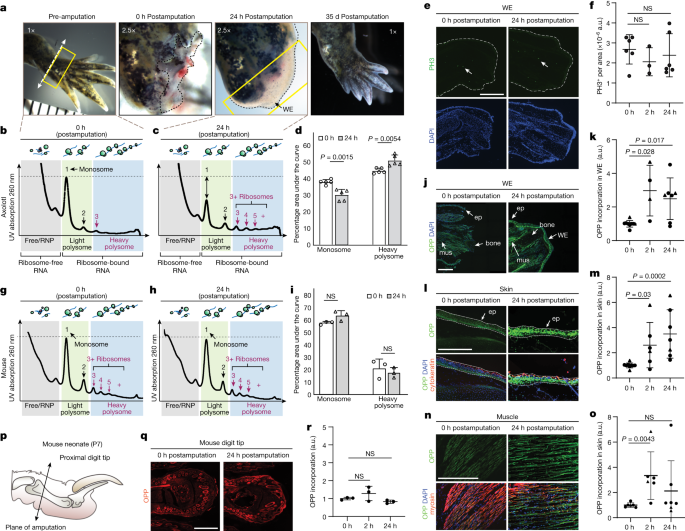
Researchers have discovered that the evolutionarily divergent mTOR protein plays a crucial role in remodeling the translatome during tissue regeneration. By analyzing the regenerating limbs of axolotls, the researchers found that mTOR regulates the translation of specific mRNAs, leading to the activation of genes involved in tissue regeneration. This study provides insights into the molecular mechanisms underlying tissue regeneration and highlights the importance of mTOR in this process.
Rapamycin, a drug with contradictory effects, was discovered as an antifungal but was later found to be an immunosuppressant. However, it was also found to be a powerful anti-cancer drug that inhibits cell growth. Further research revealed that rapamycin extends the lifespan of animals and humans by suppressing mTOR, a protein that controls growth and metabolism. Rapamycin also rejuvenates the immune system and improves resilience to pathogens. Despite its potential, rapamycin has been unlucky, but scientists are now studying its long-term safety and anti-aging effects in healthy older adults.