
Nitric Oxide Triggers TSC2 Loss, Overactivates mTOR in Autism
TL;DR Summary
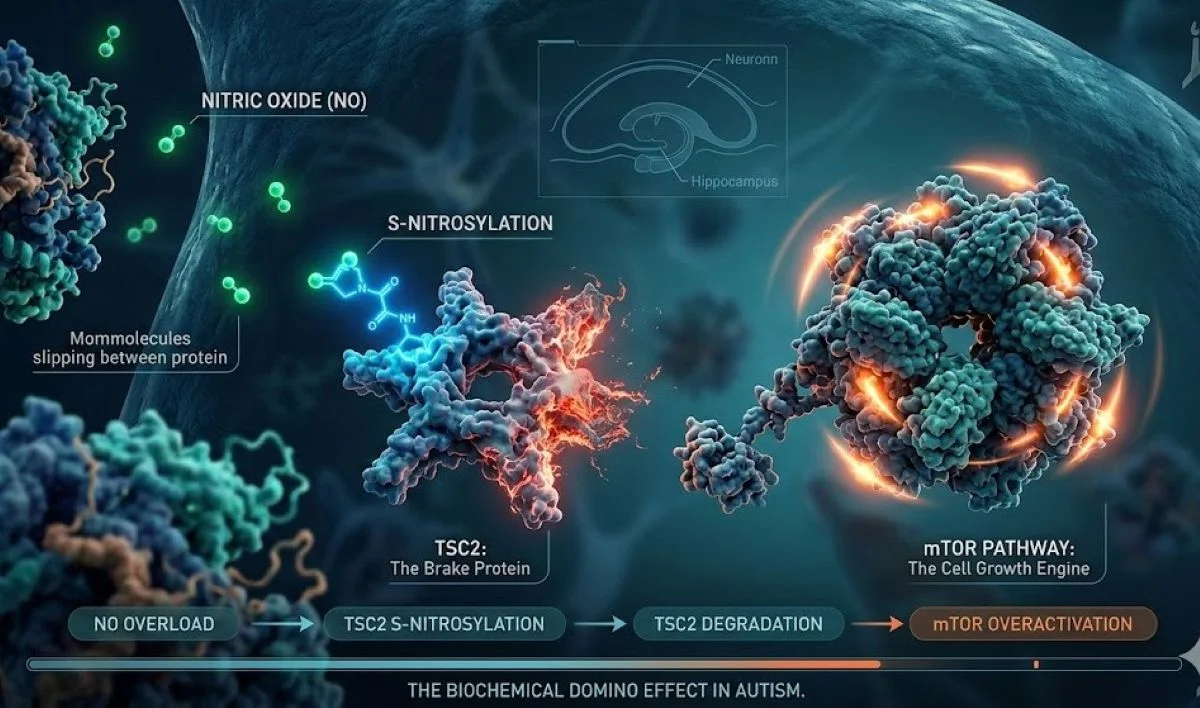
Excess nitric oxide can modify TSC2 via S-nitrosylation, marking it for destruction and removing the mTOR 'brake.' With TSC2 diminished, mTOR activity surges, disrupting neuronal signaling in autism models. Blocking NO signaling or engineering a NO-resistant TSC2 normalized mTOR and improved related cellular readouts in SHANK3 and CNTNAP2 mouse models, and clinical samples from children with SHANK3 mutations and idiopathic ASD showed reduced TSC2 and elevated mTOR, supporting a NO–TSC2–mTOR mechanism and suggesting nitric oxide inhibitors as a potential ASD therapy and biomarker target.
- Molecular Chain Reaction Behind Autism Identified Neuroscience News
- A Tiny Brain Molecule May Trigger a Chain Reaction Linked to Autism SciTechDaily
- Hebrew University Researchers Identify Nitric Oxide Disruption as Potential Factor in Autism Spectrum Disorder geneonline.com
- When a Brain Signal Falters: Uncovering New Insights into Autism Biology BIOENGINEER.ORG
- When a helpful brain signal gets stuck: An autism-linked chain reaction Medical Xpress
Reading Insights
Total Reads
0
Unique Readers
9
Time Saved
7 min
vs 8 min read
Condensed
94%
1,449 → 84 words
Want the full story? Read the original article
Read on Neuroscience News