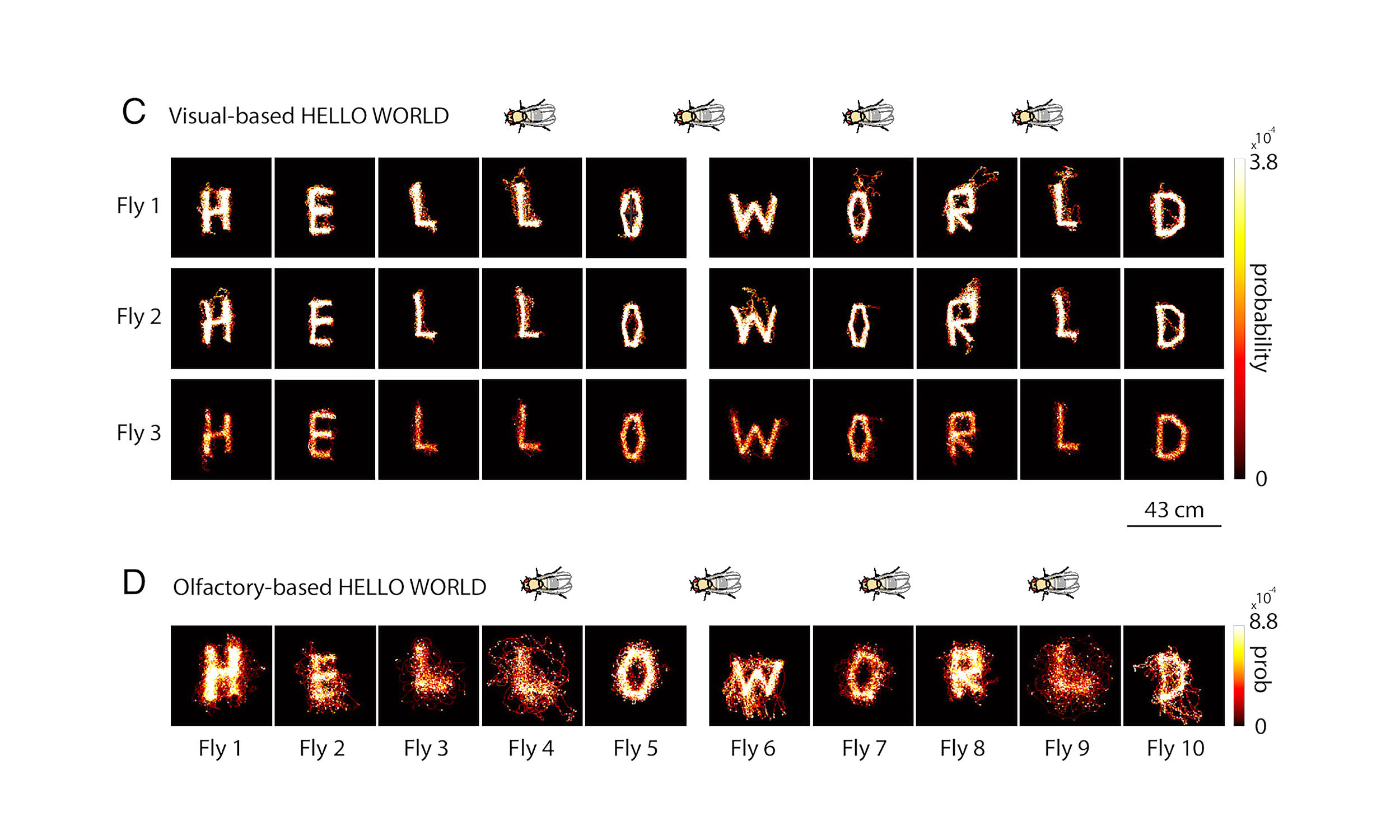
Scientists at Harvard have developed a method to control living fruit flies as microrobots, guiding swarms to perform complex tasks like writing 'HELLO WORLD' and navigating mazes, leveraging the flies' natural reflexes and optogenetics, with potential applications in environmental monitoring and disaster response.
A Caltech-led team has developed bioresorbable acoustic microrobots (BAM) capable of targeted drug delivery within the body. These microrobots, made from a hydrogel, can navigate complex biofluids and release drugs precisely at tumor sites, as demonstrated in mice with bladder tumors. The microrobots incorporate magnetic nanoparticles for navigation and ultrasound imaging for real-time tracking. This innovation could revolutionize precision medicine by delivering therapeutic agents directly to specific sites, minimizing side effects and improving treatment efficacy.
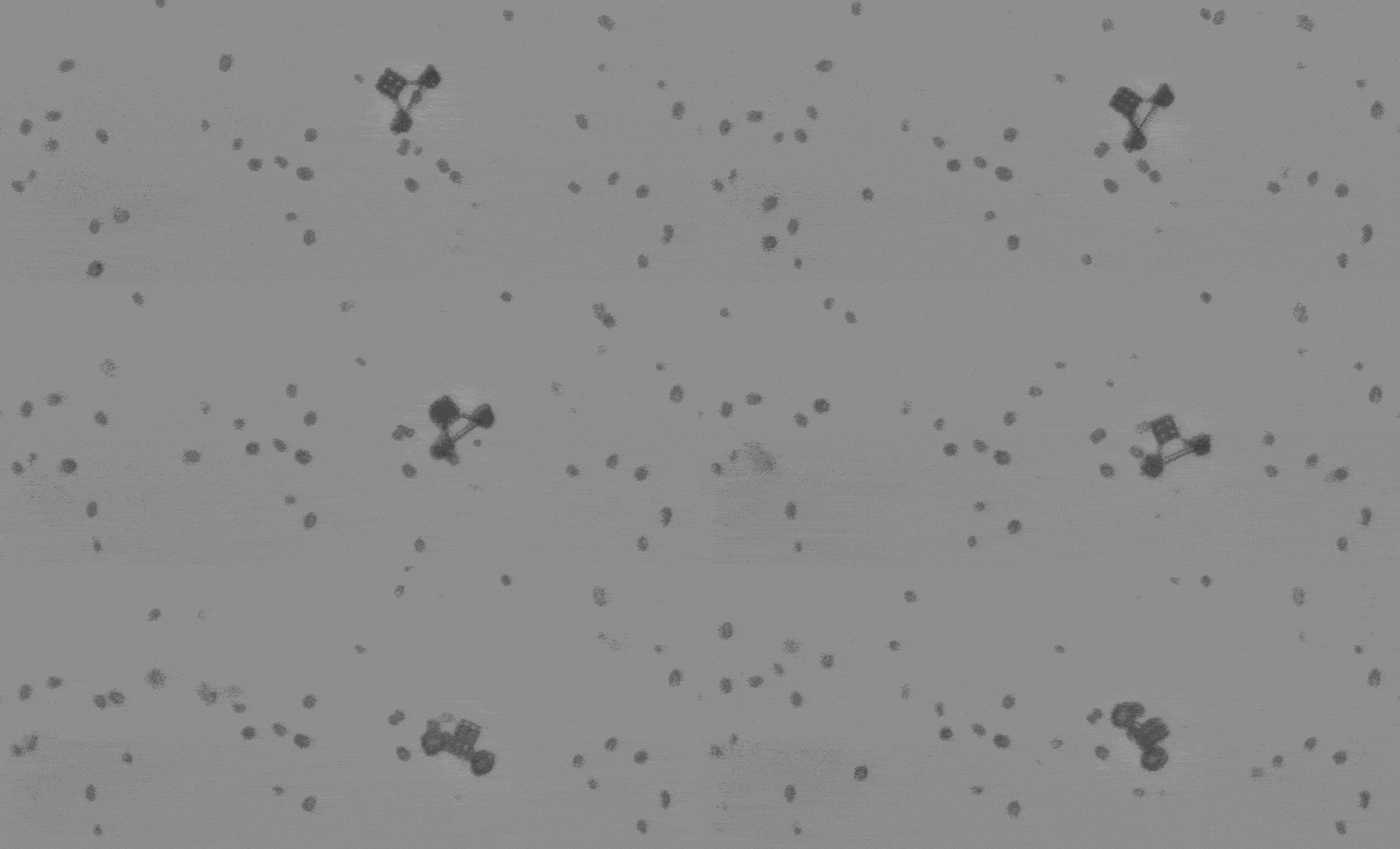
Engineers at the University of Tokyo have developed micromachines powered by single-celled algae, Chlamydomonas reinhardtii, which can autonomously move without external power sources. These tiny vehicles, designed to navigate viscous fluids like blood, could pave the way for advanced microrobots capable of delivering drugs or performing repairs inside the human body, fulfilling a vision first imagined by physicist Richard Feynman in 1959.
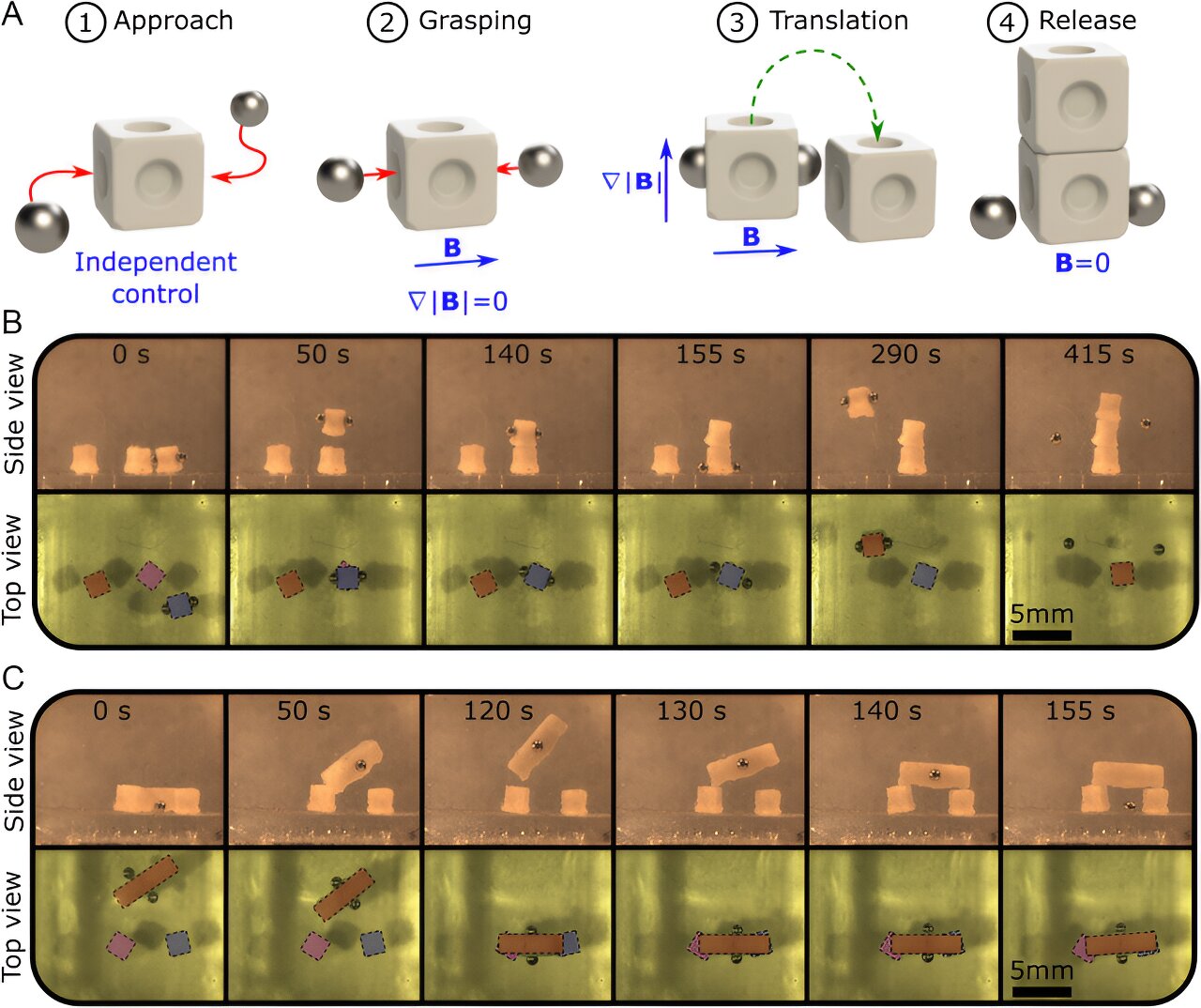
Researchers at the University of Twente have successfully demonstrated the collaboration of two magnetic microrobots in picking up, moving, and assembling passive objects in 3D environments. The achievement opens up possibilities for biomedical applications, allowing for remote manipulation of biomedical samples without contamination. The microrobots, controlled by a custom-made controller, are biocompatible and can operate in difficult-to-reach and enclosed spaces. The research was conducted as part of the European RĔGO project and published in the journal Advanced Intelligent Systems.
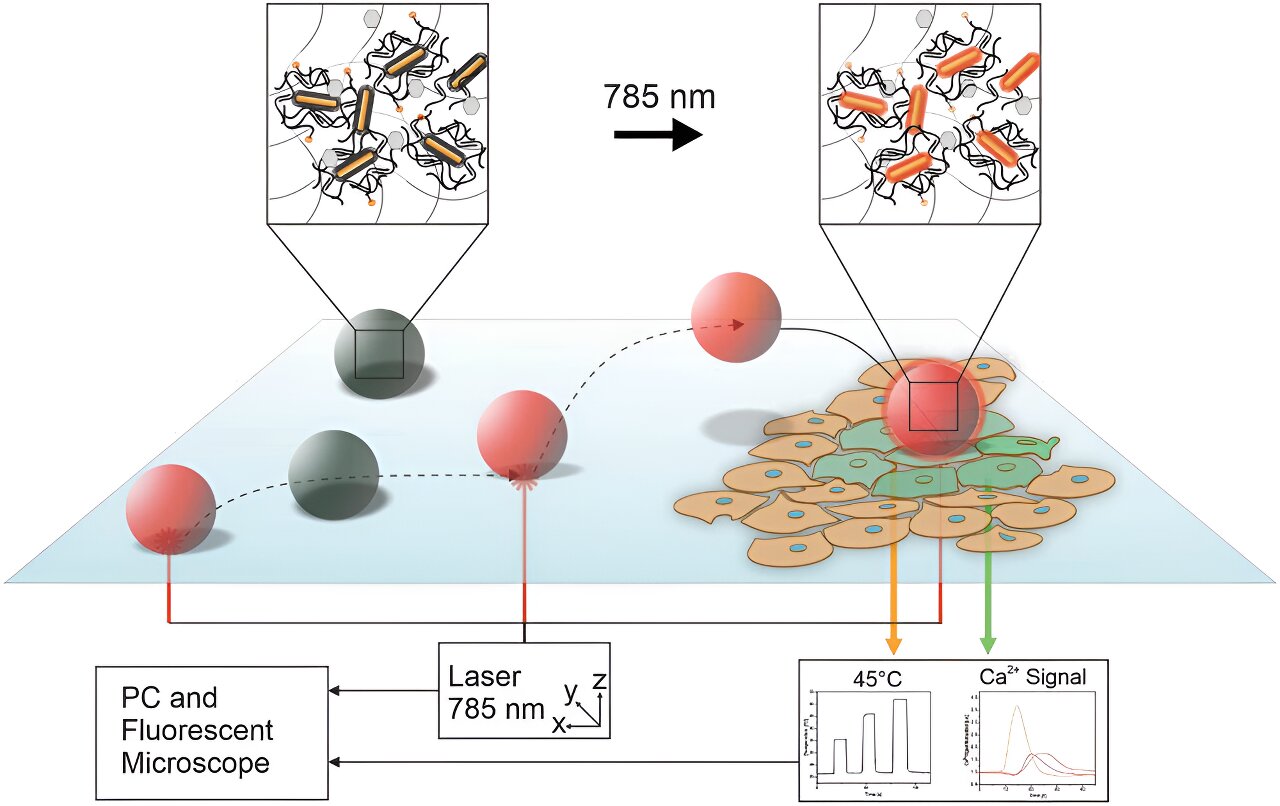
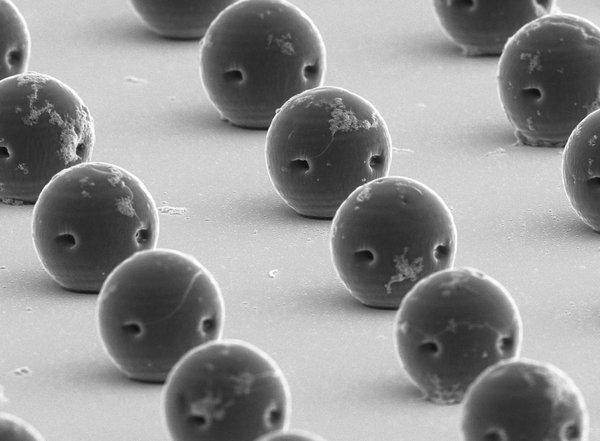
Researchers at the Technical University of Munich have developed microrobots capable of navigating within groups of cells and stimulating individual cells. These round microbots, driven by laser light, are half as thick as a human hair and contain gold nanorods and fluorescent dye. The robots can heat up and indicate their temperature, allowing them to heat specific cells or cell groups. The technology has potential applications in studying cellular processes, wound healing, cancer treatment, and drug delivery. The microbots are produced using a microfluidic chip-based manufacturing process and can be mass-produced.