Scientists have developed a novel patch with microneedles loaded with bacteriophages that can be applied to food to target and destroy bacteria like E. coli and Salmonella, potentially reducing food poisoning risks before consumption, though practical and perceptual challenges remain.
A study suggests that adding the natural sweetener stevioside to microneedle patches can significantly improve the delivery and effectiveness of minoxidil for treating androgenetic alopecia, showing promising results in mice and potential for future human applications.
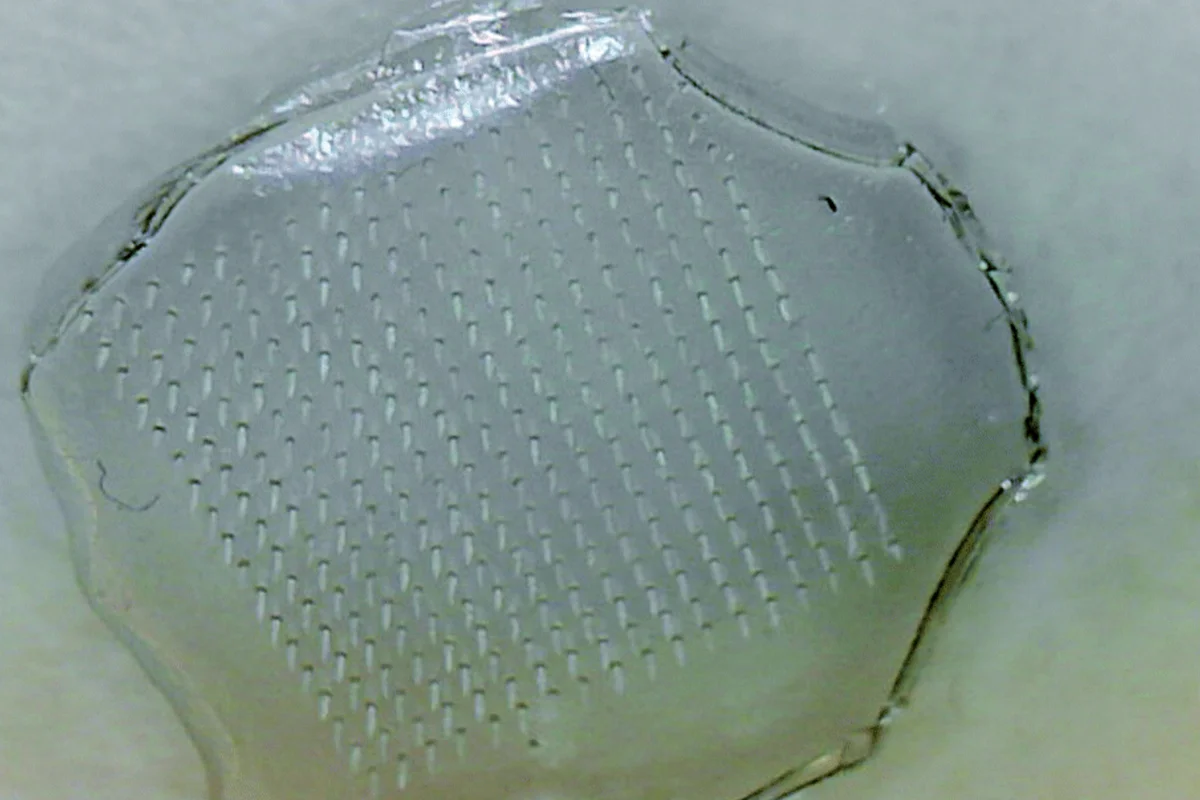
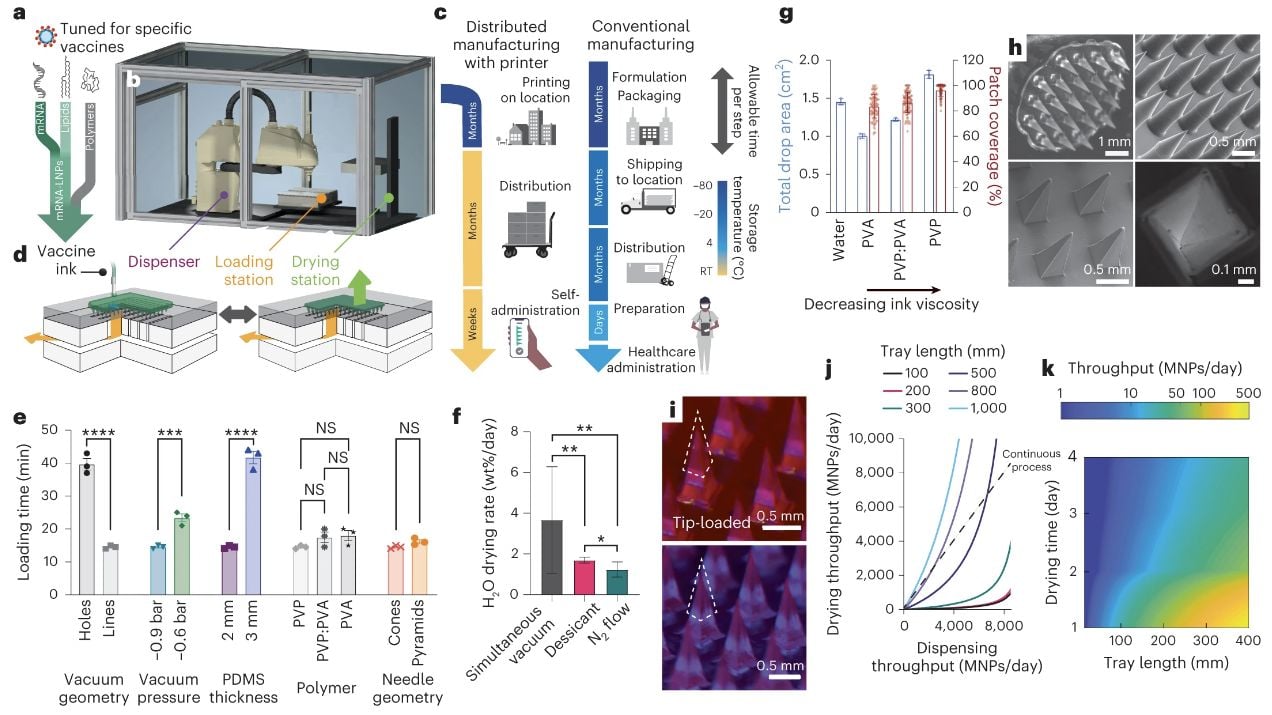
Researchers have developed a microneedle vaccine printer (MVP) that can print dissolving polymers containing stabilized mRNA vaccine, making it possible to strongly shorten the supply chain for vaccines in less developed regions. The patches are shelf-stable for at least six months and could also be used for diagnostics that might one day replace the need for drawing blood.
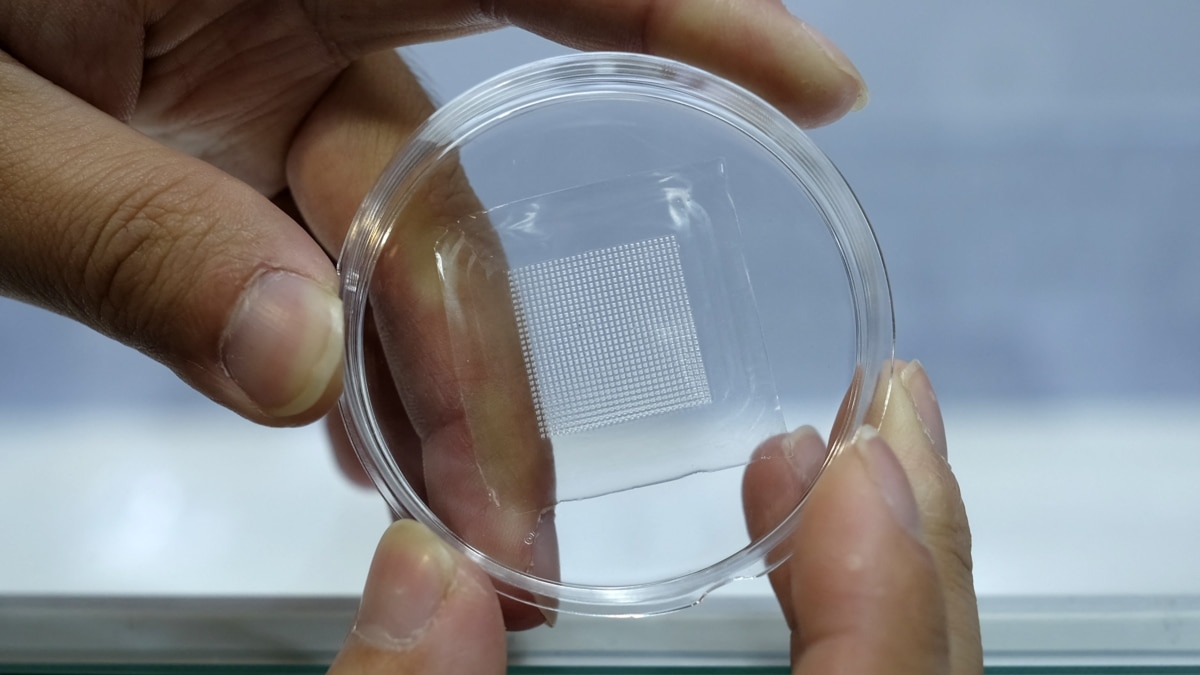
Scientists from MIT have developed a mobile printing device that can produce vaccine patches for COVID-19 and other diseases. The device prints 2-centimeter-wide patches that each contain hundreds of tiny needles that administer vaccine material when pressed against the skin. The patches offer major improvements over vaccine shots given in the arm, as they can be easily self-administered and are mostly painless. The printer was tested with the Pfizer and Moderna COVID-19 vaccines, but the goal of the international development team is for the device to be used for other vaccines as well.
Researchers at MIT's Koch Institute for Integrative Cancer Research have developed a mobile vaccine printer that can produce hundreds of vaccine doses in a day. The printer produces patches with hundreds of microneedles containing vaccine, and each patch could be attached to the skin, allowing the vaccine to dissolve without the need for a traditional injection. The researchers showed they could use the printer to produce thermostable Covid-19 RNA vaccines that would be stable in a variety of temperatures and could induce in mice a comparable immune response to that generated by injected RNA vaccines. The researchers plan to adapt the process to produce other types of vaccines, including vaccines made from proteins or inactivated viruses.