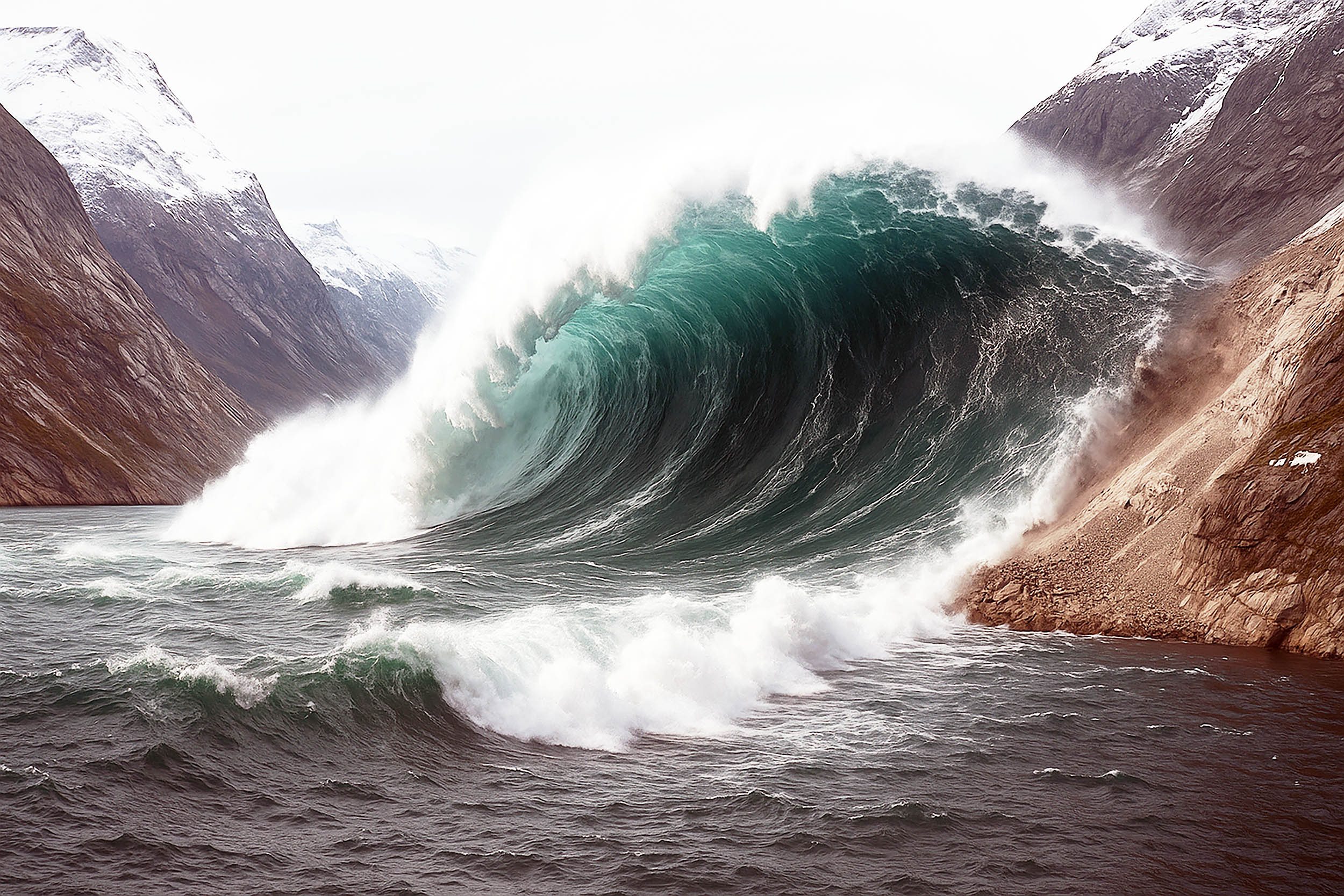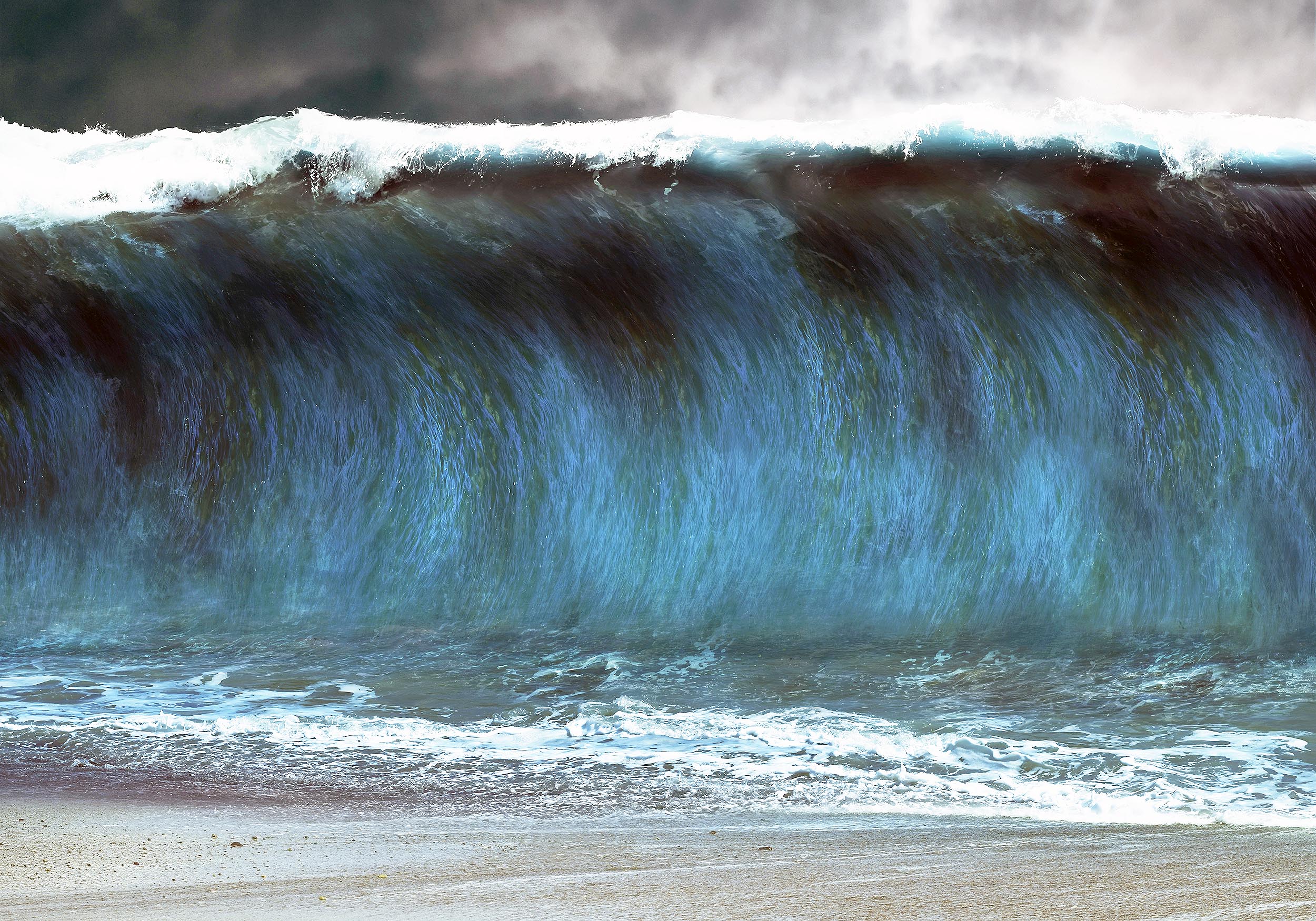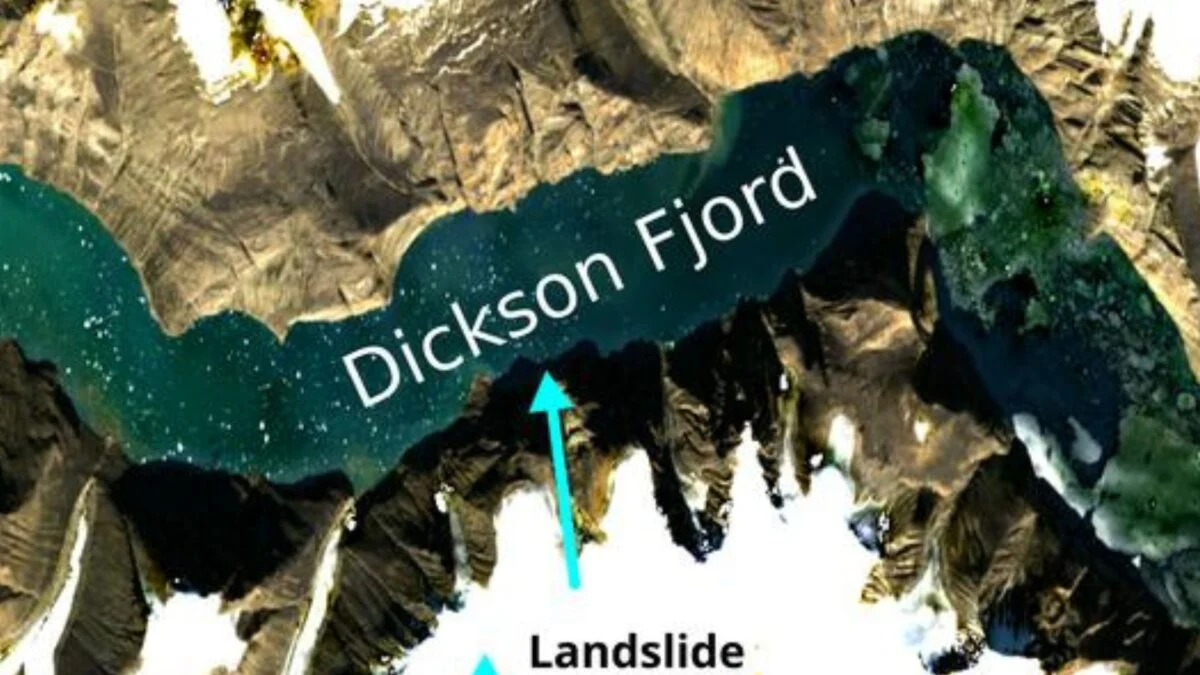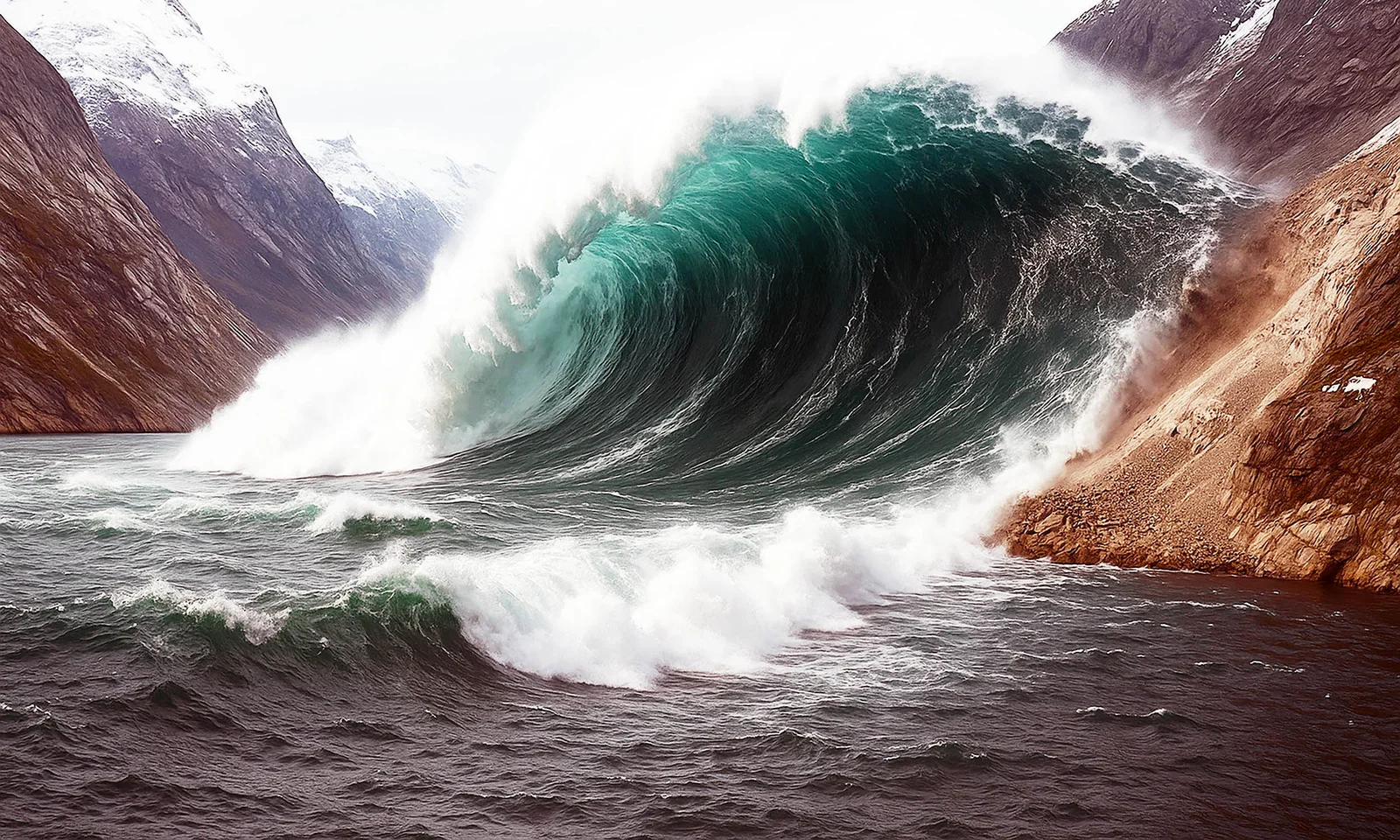
A massive 650-foot tsunami was triggered by a landslide in Greenland's Dickson Fjord, causing seismic waves detectable worldwide for nine days. This event highlights the increasing risks posed by climate change-induced glacier melting and demonstrates the potential of advanced satellite technology to monitor and understand such extreme natural phenomena. Researchers are now working to improve early warning systems and better predict similar events in the future.
Scientists warn that a 1,000-foot mega-tsunami, similar to historical events like the 1958 Lituya Bay surge, could potentially occur in the U.S., especially along the Cascadia subduction zone, posing significant risks to coastal communities and inland areas through land subsidence and large wave generation. Enhanced monitoring and preparedness are crucial to mitigate impacts.
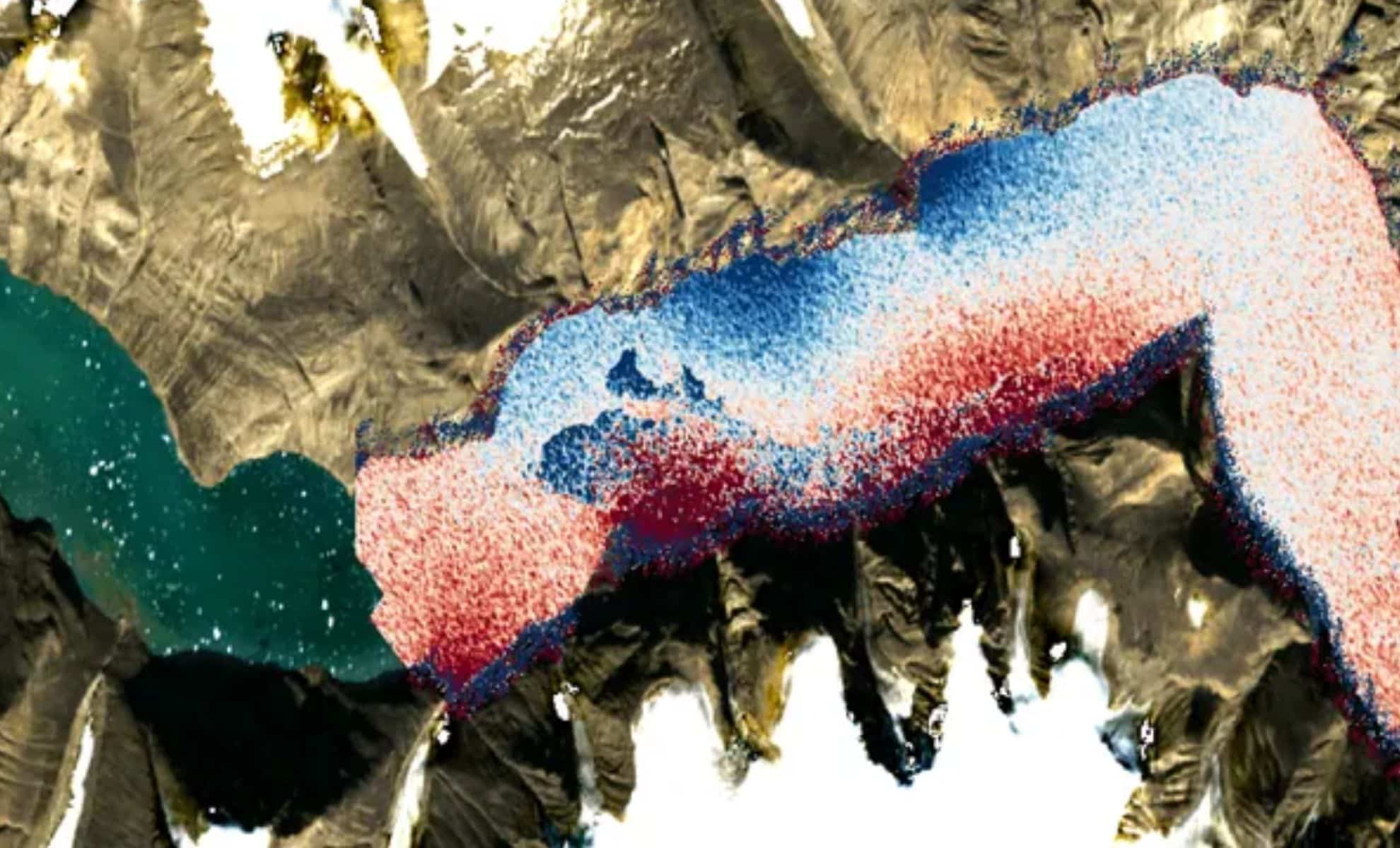
Scientists used NASA's SWOT satellite to confirm that two mega-tsunamis caused by landslides in Greenland's fjord triggered global seismic tremors over nine days, highlighting the impact of climate change on Arctic stability.
In 2023, two massive mega-tsunamis in East Greenland's Dickson Fjord, caused by glacier melting due to climate change, generated seismic waves that circled the globe for nine days. Advanced satellite technology from the SWOT mission provided the first direct evidence of these unusual seiches, revealing new insights into climate-driven ocean hazards and emphasizing the importance of next-generation monitoring tools for understanding environmental extremes.
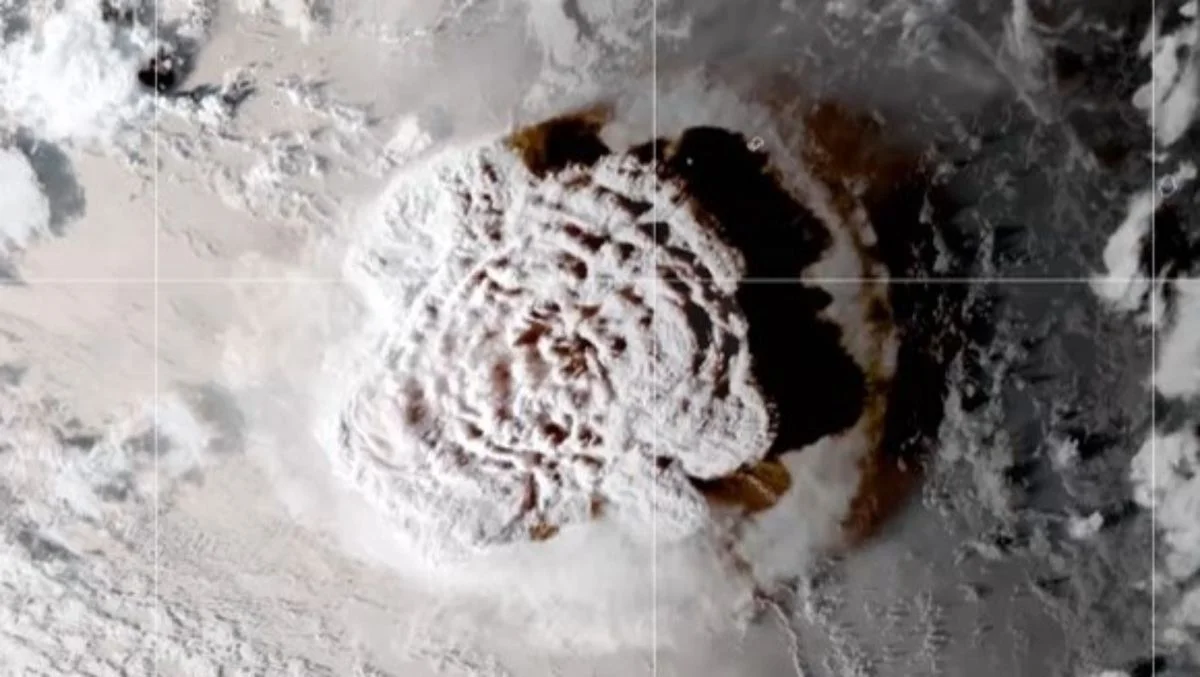
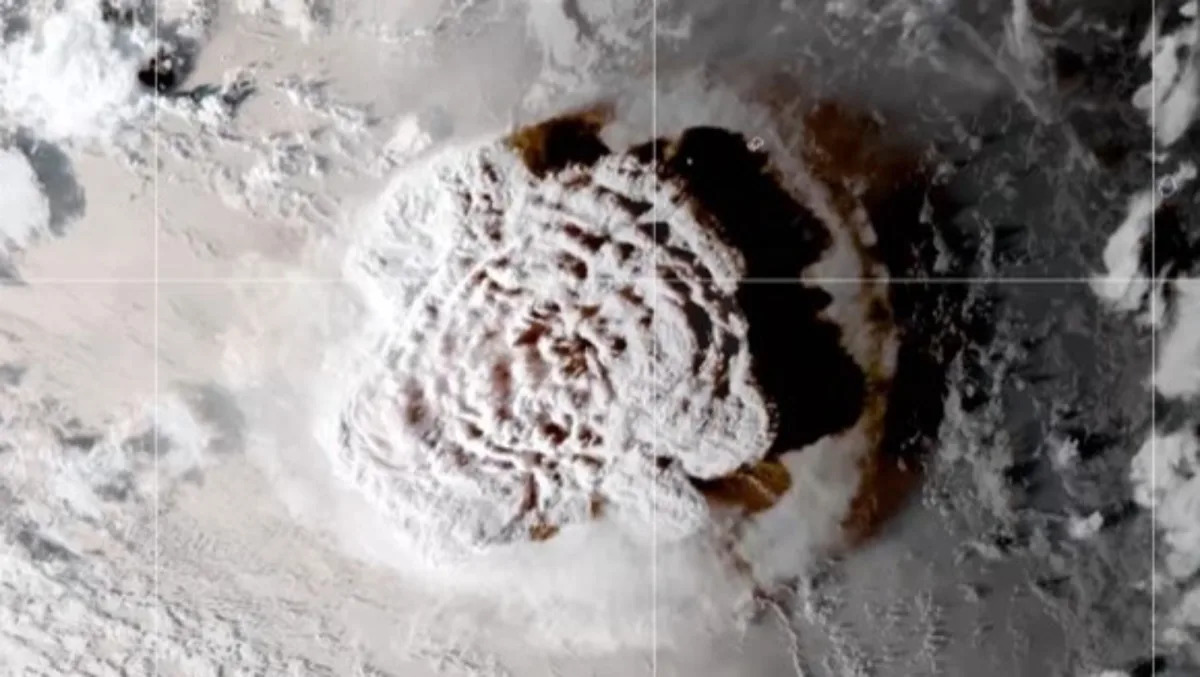
The eruption of the underwater Tonga volcano produced a mega-tsunami nearly the height of a 30-story skyscraper, according to a recent study. The explosion may have been as strong as 15 megatons of TNT, making it about as strong as the United States' largest nuclear detonation, Castle Bravo, in 1954. The eruption released at least five blasts, generating a tsunami up to 279 feet high one minute after the largest explosion. The scientists said the strength of the 2022 eruption rivaled that of the 1883 eruption of Krakatau that killed more than 36,000 people.
The January 2022 eruption of the Hunga Tonga-Hunga Ha'apai submarine volcano near Tonga generated a "mega-tsunami" nearly the height of a 30-story skyscraper, according to a recent study. The eruption may have been as strong as 15 megatons of TNT, making it the largest natural explosion in more than a century. The eruption released at least five blasts, generating a tsunami up to 279 feet high one minute after the largest explosion. The scientists found that the complex, shallow nature of the region's underwater terrain helped to trap low-velocity waves from the eruption, which in turn helped generate a mega-tsunami that lasted more than an hour.