Tag

Materials Research

All articles tagged with #materials research

"Revolutionizing Lunar Infrastructure: Turning Lunar Dust into Solid Roads"

Originally Published 2 years ago — by The Guardian

Featured image for "Revolutionizing Lunar Infrastructure: Turning Lunar Dust into Solid Roads"
Source: The Guardian

Scientists have proposed a solution to the challenge of lunar dust on the moon's surface by demonstrating that it can be melted using a giant lens to create solid roads and landing areas. The loose dust on the moon poses problems for space agencies, as it erodes equipment and interferes with scientific instruments. By heating the dust to about 1,600C, researchers were able to create bendy triangle shapes that could be interlocked to form solid surfaces. While the process is time-consuming, it offers a potential solution for establishing a permanent lunar outpost without the need to transport building materials from Earth.
Centuries-old Roman "wow glass" reveals stunning photonic crystal patina

Originally Published 2 years ago — by Ars Technica

Featured image for Centuries-old Roman "wow glass" reveals stunning photonic crystal patina
Source: Ars Technica

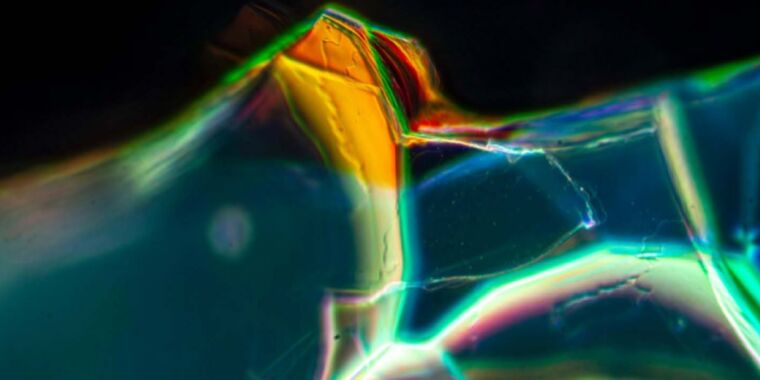
A shard of ancient Roman glass, known as the "wow glass," has been found to possess a rare golden-hued patina with unique optical properties. The patina is the result of the corrosion process slowly restructuring the glass to form photonic crystals, which create iridescent colors. Photonic crystals are tunable materials that can block certain wavelengths of light while allowing others to pass through. Scientists are studying natural structural coloration to develop commercial applications, such as plant-based films that cool when exposed to sunlight and chameleon-like films that change color when stretched. The shard was discovered near the ancient city of Aquileia, Italy, which was once a thriving center for trade and glass processing.

Decades-long mystery solved: Boron monoxide's structure revealed

Originally Published 2 years ago — by Phys.org

Featured image for Decades-long mystery solved: Boron monoxide's structure revealed
Source: Phys.org

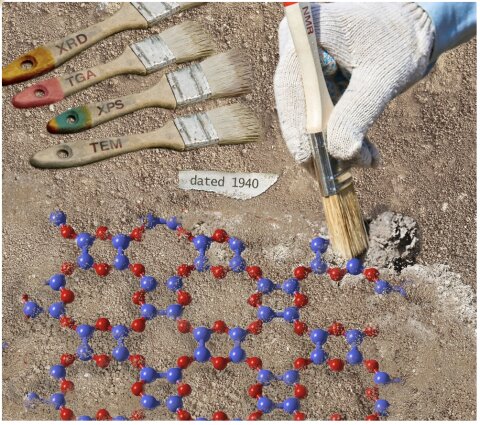
After 83 years, scientists from Ames National Laboratory have finally determined the structure of boron monoxide (BO), a compound that has eluded researchers since its discovery in the 1940s. Using new NMR methods and advanced analytical tools, the team was able to solve the structure of this deceptively simple material. The findings could pave the way for the synthesis of other useful boron-based 2D materials.

Terahertz technology illuminates microscopic and quantum worlds.

Originally Published 2 years ago — by Phys.org

Featured image for Terahertz technology illuminates microscopic and quantum worlds.
Source: Phys.org

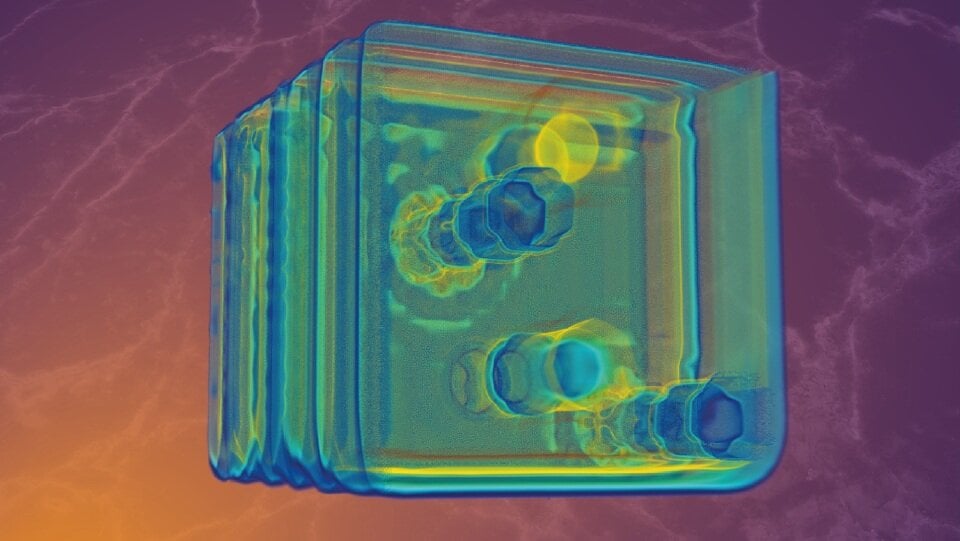
Scientists at Loughborough University have demonstrated that a terahertz wave camera can capture 3D images of microscopic items hidden inside small objects. The team's latest study could have major implications for a range of fields with relevance in cancer screenings, security, and materials research. Terahertz waves are a vastly unexplored part of the electromagnetic spectrum with frequencies ranging between microwave and infrared light. They have several properties that make them extremely useful, such as their ability to penetrate opaque objects without causing harm.

X-ray study settles debate on chiral phonons in quartz.

Originally Published 2 years ago — by Phys.org

Featured image for X-ray study settles debate on chiral phonons in quartz.
Source: Phys.org

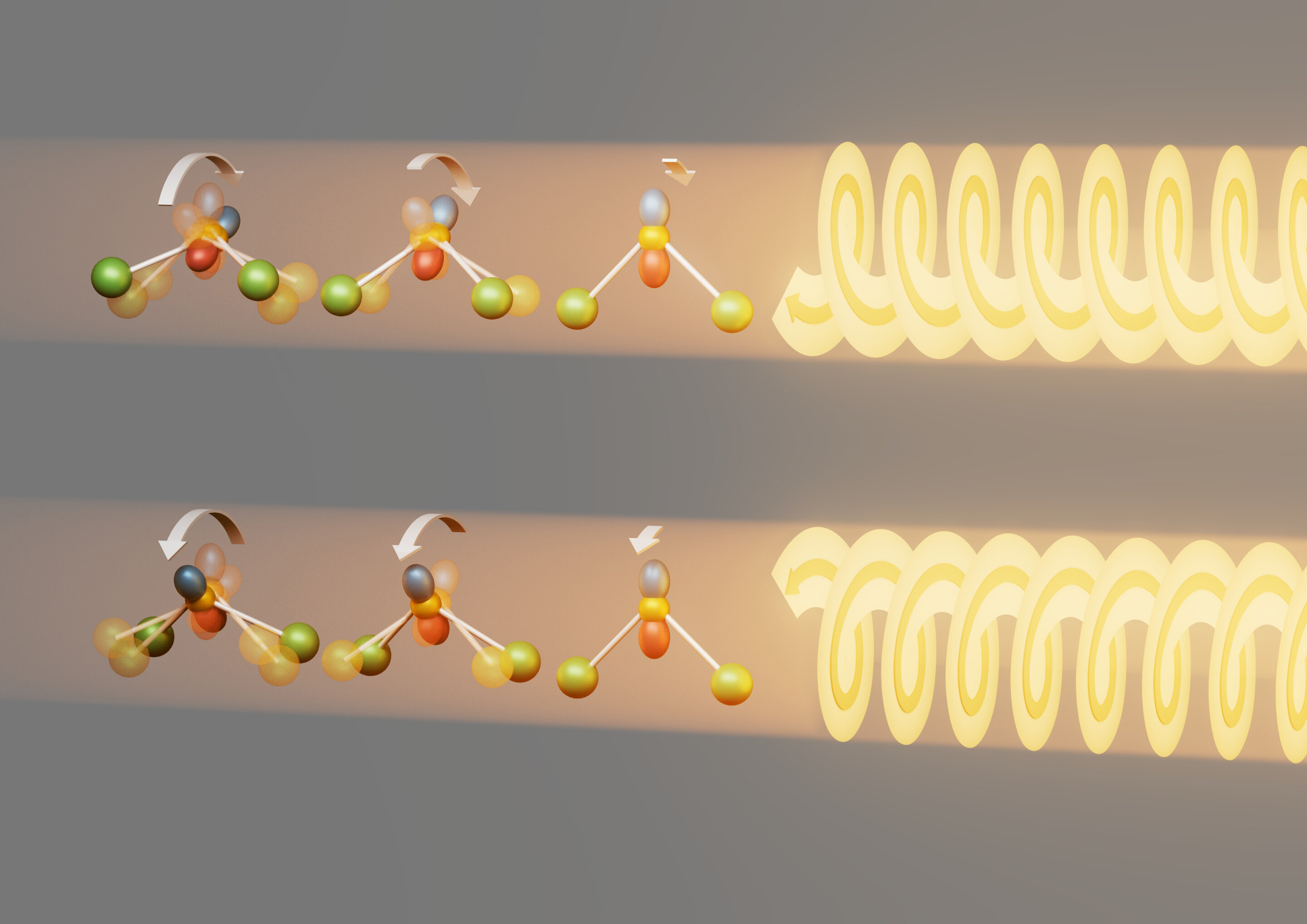
Researchers have settled the debate on whether phonons can be chiral, a fundamental concept in physics. Phonons are quasiparticles that describe the collective vibrational excitations of atoms in a crystal lattice. Using circular X-ray light, researchers at Paul Scherrer Institute PSI showed that phonons can twist like a corkscrew through quartz, demonstrating chirality. This discovery could have important implications for the fundamental physical properties of materials, particularly in the field of topological materials.

Revolutionizing Materials Research with ChatGPT.

Originally Published 2 years ago — by Phys.org

Featured image for Revolutionizing Materials Research with ChatGPT.
Source: Phys.org

Researchers at the University of Wisconsin-Madison have developed a technique using OpenAI's ChatGPT chatbot to extract data from scientific literature, reducing the workload of materials scientists by 99%. The technique involves asking the chatbot to review sentences and decide whether they contain relevant data, presenting the information in a table form for human review. The team has also developed a follow-up question sequence to double-check the accuracy of the data set. The technique could allow researchers to pursue projects they previously didn't have the time, money or people-power to undertake.