Tesla's new lower-cost Model Y and Model 3 models have failed to impress consumers and investors, with their limited features and higher-than-expected prices, leading to a lack of stock price movement and concerns about Tesla's market strategy and positioning as a car company. The models are unlikely to significantly boost sales in Europe due to more affordable local options, and the overall reception suggests Tesla's focus may be shifting away from traditional car manufacturing.

Dell's stock declined despite raising its full-year earnings outlook, indicating a disconnect between the company's optimistic forecast and investor sentiment or market reaction.
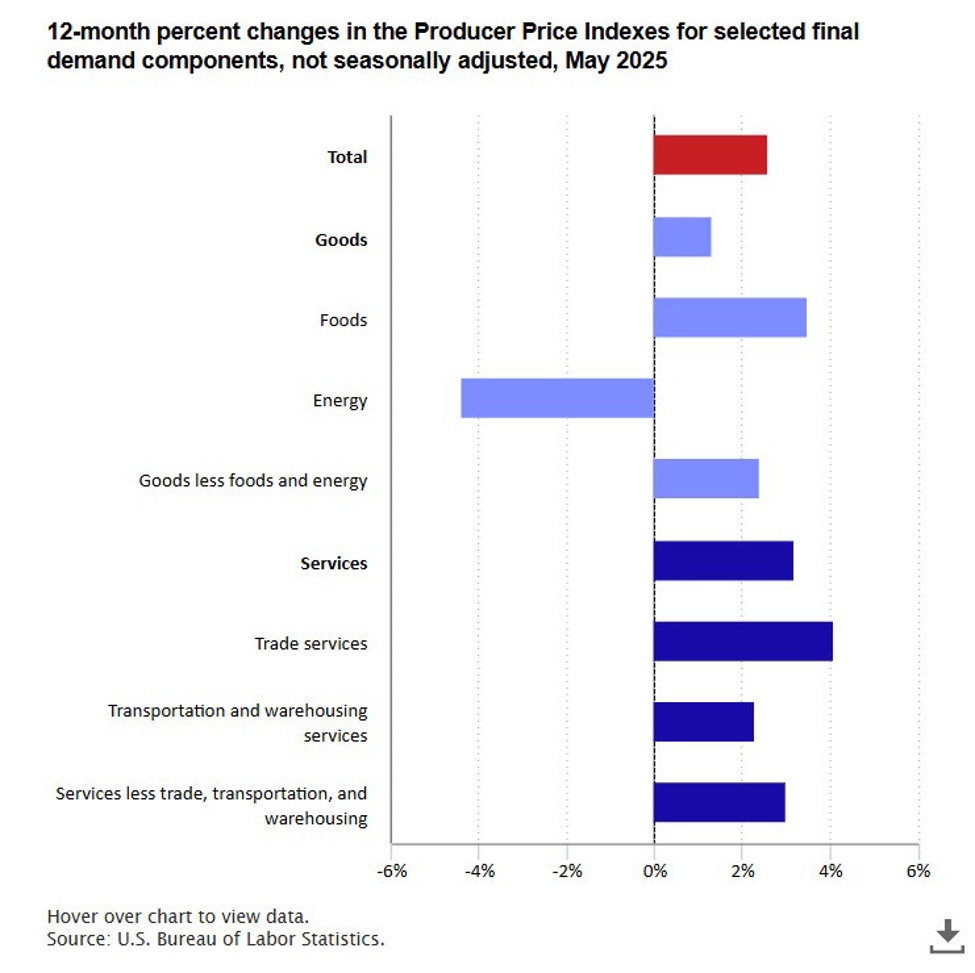
US Producer Price Index (PPI) data for June showed no month-over-month change at 0.0%, below the 0.2% estimate, and a year-over-year increase of 2.3%, slightly below the 2.5% forecast. Core PPI also came in lower than expected. Despite the softer inflation signals, US stock markets responded positively to the data. The report details price changes across goods and services, with some categories rising and others falling, indicating mixed inflation pressures.
Stock markets showed little reaction to President Trump's threat of a 30% tariff on EU goods, with analysts expecting lower actual tariffs and noting the potential economic impact, especially on European exporters. The market remains cautious ahead of earnings reports and inflation data, while geopolitical tensions and trade negotiations continue to influence investor sentiment.
The U.S. 10-year Treasury yield increased as trade tensions persisted, with President Trump extending tariff deadlines and threatening new tariffs, while BRICS nations criticized U.S. policies amid ongoing trade negotiations and potential tariff adjustments.
The Israel-Iran conflict has caused short-term market volatility, with initial stock sell-offs and rising oil prices, but investors remain cautiously optimistic, believing Israel's actions may weaken Iran and potentially lead to long-term benefits such as lower energy prices and improved regional stability. The situation remains tense, with ongoing military actions and geopolitical implications.
European nations and companies are adjusting their strategies in response to U.S. tariffs imposed by President Trump, with France strengthening ties with Vietnam through aircraft deals and Volvo downsizing due to tariff pressures, while markets react cautiously to tariff delays and global economic signals.
The Federal Reserve's decision on interest rates is likely to be influenced by the market's response in the coming days. While there is a case for a pause in rate hikes due to concerns about credit events, the Fed has expressed confidence in its ability to address financial stability issues while focusing on restoring price stability. The odds of a 25 basis point hike are high, but projections for rates in the future are vulnerable. The markets are currently pricing in a rate of 3.95% in January 2024, with a terminal rate of 4.83%.