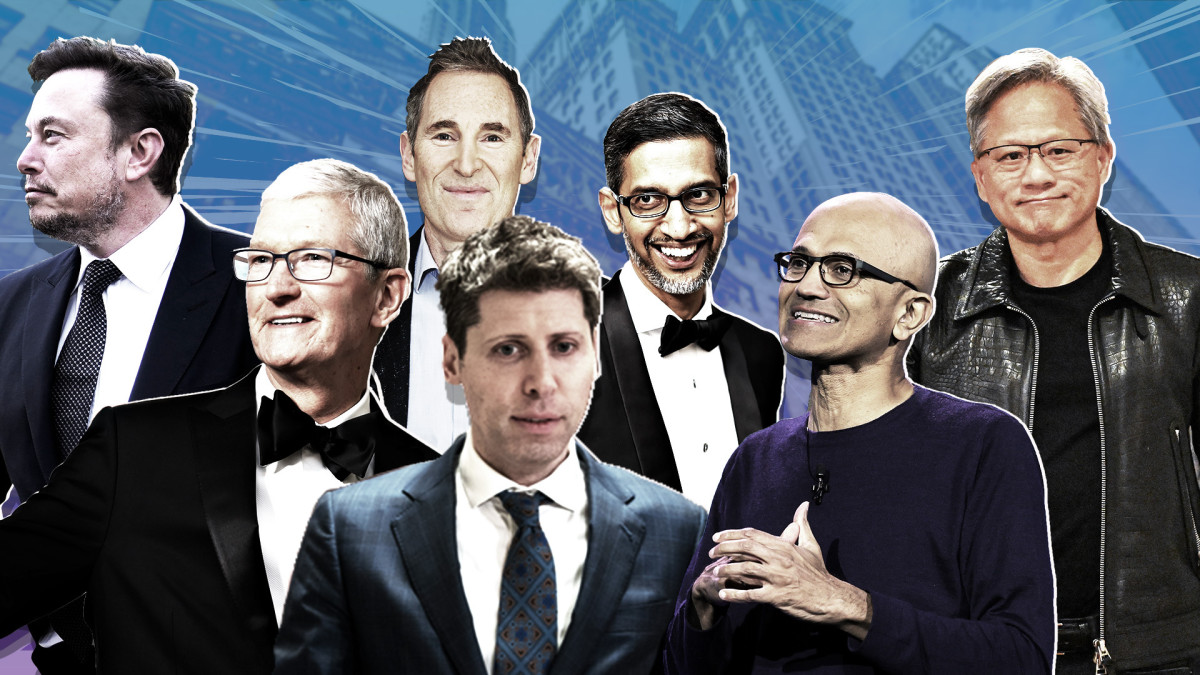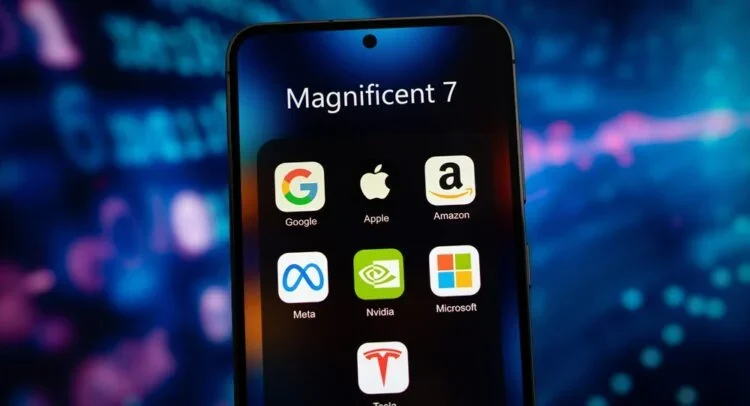
The 'Magnificent 7' tech stocks, initially seen as a one-trade AI investment, have underperformed in 2025, with only Alphabet and Nvidia beating the S&P 500, reflecting a maturing AI market where benefits are spreading beyond the original giants.
Gillian Tett predicts that the leading tech stocks, known as the Magnificent 7, will diverge in their performance in 2026, as the AI-driven growth era appears to be ending, leading to varied trajectories for these companies.
Lloyd Walmsley, a top Wall Street analyst, highlights Alphabet and Amazon as the best 'Magnificent 7' stocks to buy, citing their strong AI integration, robust financial performance, and growth potential, with target prices suggesting significant upside in the coming year.
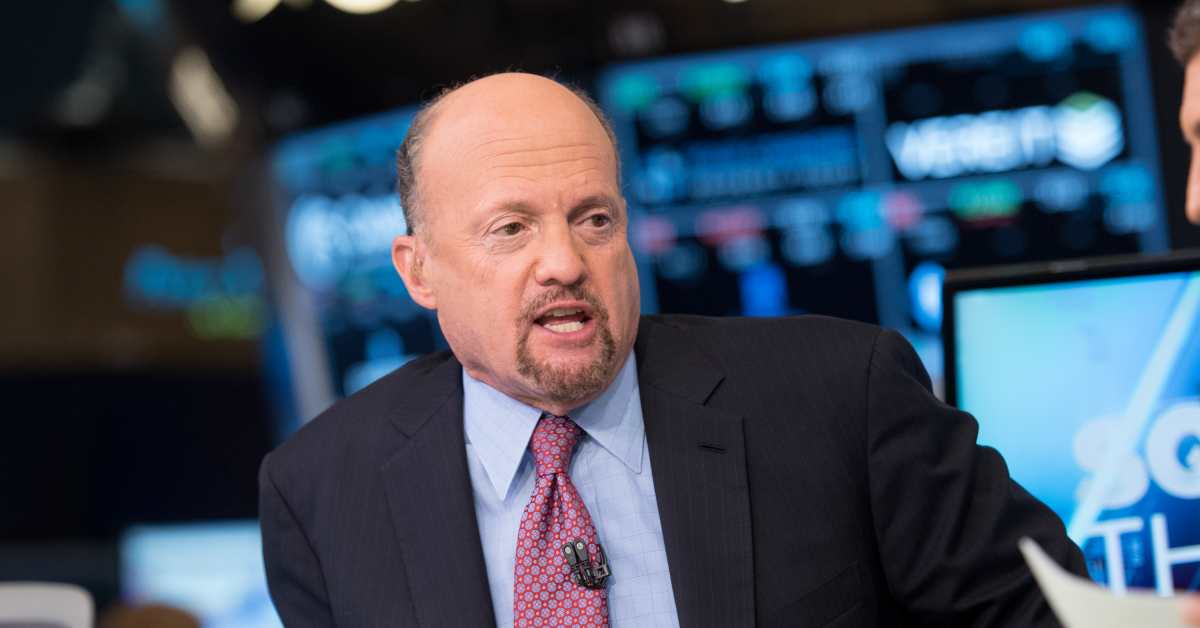
Jim Cramer challenges the notion that the Magnificent 7 tech stocks are nearing their peak, emphasizing their strong balance sheets, continuous reinvention, and strategic investments in AI as reasons to hold onto these giants despite concerns about their size and crowdedness.
Wall Street analysts from Goldman Sachs and Morgan Stanley predict the S&P 500 will reach 6,500 by the end of 2025, driven by economic expansion and corporate earnings growth. Both firms highlight potential impacts from U.S. election outcomes, including regulatory changes and fiscal policy shifts. The "Magnificent 7" tech giants are expected to continue outperforming, though by a smaller margin. Analysts also suggest exploring mid-cap and cyclical stocks, with a potential revival in merger and acquisition activity due to reduced regulatory uncertainty and increased corporate confidence.
Nvidia's impressive first-quarter earnings highlight the dominance of the "Magnificent 7" tech stocks, which include Microsoft, Apple, Alphabet, Amazon, Meta Platforms, and Tesla. These seven companies have driven more than half of the S&P 500's year-to-date returns, despite comprising only 31% of the index's weight. The collective net income of these tech giants reached $108.9 billion in Q1, a 50% increase from last year, significantly outpacing the broader market. However, some analysts predict that the dominance of these tech stocks may wane in favor of other sectors showing fundamental improvements.
The 'Magnificent 7' group, including Apple AAPL and Tesla TSLA, has been a dominant force in the market, but both stocks have faced scrutiny due to underperformance. Apple's revenue and EPS have shown growth, but demand worries in China have impacted its share performance. Tesla, once a growth stock favorite, has faced challenges with lower margins and competition in China, leading to bearish analyst outlook. While both stocks have long-term potential, their recent performance lags behind other members of the elite group, such as Amazon, NVIDIA, Meta Platforms, and Microsoft, which boast stronger earnings outlooks.
Deutsche Bank research shows that the combined profits and market capitalizations of the "Magnificent 7" U.S. tech giants exceed those of almost every major country in the world, raising concerns about the concentration of financial power in the stock market. While these companies have seen significant success, some analysts worry about the risks associated with such concentration. However, signs are emerging that opportunities in U.S. stocks could broaden beyond these megacaps due to the resilience of the U.S. economy and improving margins, potentially leading to missed investment opportunities if the market continues to heavily favor these few stocks.
The annual Exchange ETF conference in Miami Beach is drawing over two thousand attendees, with topics including the rise of bitcoin ETFs, the impact of artificial intelligence on investing, and strategies for diversifying equity allocation beyond the popular "Magnificent 7" tech stocks. Financial advisors are also exploring human-centric advice to engage clients on a more personal and emotional level. Notably absent from the discussions is any focus on international investing, particularly China, as political risk has led investors to flee China and seek emerging market exposure elsewhere.
Goldman Sachs discusses the sustainability of the Magnificent 7's outperformance in the stock market, comparing them to the Tech Bubble 5 of 2000. The group, including Apple, Amazon, and Microsoft, has shown strong performance driven by improving fundamentals rather than valuation expansion. However, there are varying growth estimates within the group, with Nvidia expected to grow sales at a rapid pace. The comparison to the Tech Bubble 5 highlights the importance of re-investment for growth, with the current stocks appearing considerably cheaper on an earnings yield gap basis.
Microsoft, Alphabet, Amazon, Apple, Meta, and Nvidia, known as the "Magnificent 7," are projected to be the top contributors to S&P 500 earnings for the fourth quarter, with a projected year-over-year earnings growth of 53.7%. Tesla is the only member not contributing to the gain in earnings. These companies are expected to drive significant growth compared to the other 494 S&P 500 companies, which are projected to post a 10.5% decline.
The 2023 stock market rally has entered a healthier phase, with sectors like financials and small caps surging. Research shows that 78% of S&P 500 stocks were above their 200-day moving average last week, indicating broad market strength. The rally is no longer solely driven by the Magnificent 7 tech stocks, as other stocks in the S&P 500 have joined the front. Stocks like Bath & Body Works, Illumina, and Norwegian Cruise Lines have outperformed the Magnificent 7 in the past month. The market rally has also broadened out to include sectors like Financials, Industrials, and Real Estate. If this trend continues, it could indicate a healthier and more sustainable bull market for 2023.
The Magnificent 7 stocks, including Nvidia, Tesla, Meta, Microsoft, Apple, Amazon, and Alphabet, may be facing a significant decline based on technical charts. The initial rise in these stocks was driven by a short-volatility dispersion trade, but the trade is now falling apart. The Bloomberg Magnificent 7 index shows a triple-top pattern, indicating that the recent rally may be over, and significant losses could occur.
The Magnificent 7 biggest technology stocks, including Apple, Microsoft, Alphabet, Amazon, Meta Platforms, Tesla, and Nvidia, all traded lower in premarket trading following stronger-than-expected September jobs data. The data dashed hopes of an end to the Federal Reserve's interest rate hikes, which had been weighing on equity valuations.
The combined market value of the "Magnificent 7" mega-cap tech stocks, including Apple, Microsoft, Google parent Alphabet, Amazon, Meta Platforms, Nvidia, and Tesla, has surged 60% this year to reach $11 trillion, nearly triple the GDP of Germany. This rally has been fueled by the hype over artificial intelligence. However, skeptics warn that economic headwinds could cause the rally to fade soon.