Tag

Lung Adenocarcinoma

All articles tagged with #lung adenocarcinoma

medical-research1 year ago

"Mapping Lung Adenocarcinoma Cell States and Plasticity"

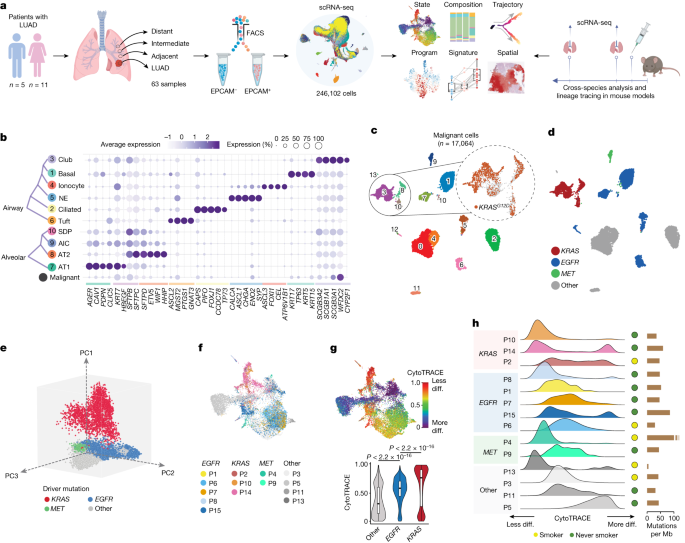
A study on lung adenocarcinoma (LUAD) reveals the transcriptional landscape of epithelial and malignant cells, identifying distinct cell subsets and their roles in LUAD development. The research shows that KRAS mutant LUADs exhibit unique transcriptional programs and extensive heterogeneity, while a subset of alveolar intermediate cells (AICs) transition to malignant cells, particularly KRAS mutant cells. These AICs, termed KRT8-high alveolar cells (KACs), are enriched in tumour-adjacent normal regions and display features of reactive epithelial cells. The study provides insights into the cellular and transcriptional phenotypes of LUAD, potentially identifying actionable targets for early treatment strategies.

health2 years ago

Uncovering the Crucial Role of a Renowned Tumor Suppressor in Tissue Repair

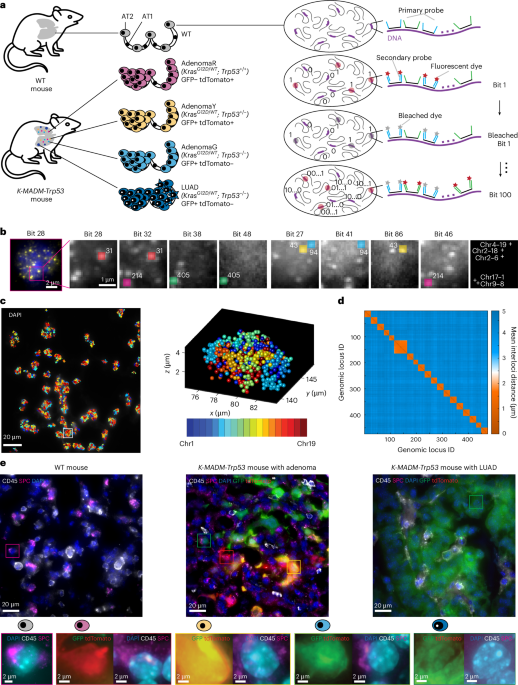
A recent study by researchers at Stanford Medicine has found that the well-known tumor suppressor protein, p53, may have a primary role in promoting tissue repair rather than solely preventing cancer. The study, conducted in laboratory mice, discovered that p53 facilitates the transition of lung cells during tissue damage repair. Without p53's involvement, the transitioning cells become unstable and can contribute to the development of cancer. This unexpected finding suggests that p53's role in tumor suppression may be secondary to its fundamental function in tissue repair. The researchers hope to explore the potential therapeutic implications of this discovery for lung cancer treatment.

cancer-research2 years ago

"STING Pathway Targeted for Antitumor Activity in Lung Adenocarcinoma"

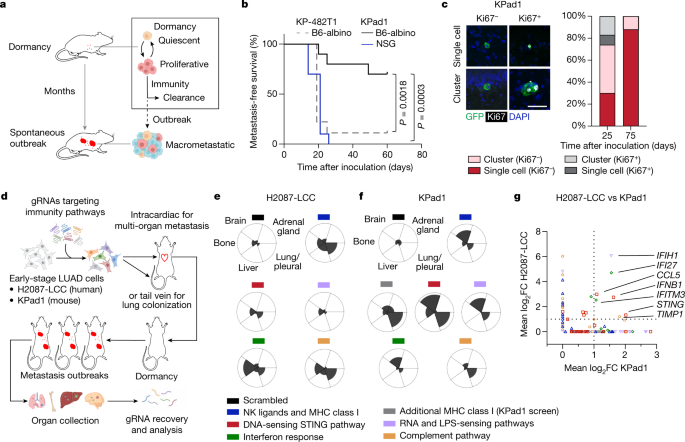
A new study has found that STING, a protein that plays a role in the immune system's response to cancer, can inhibit the reactivation of dormant metastasis in lung adenocarcinoma. Dormant tumor cells can remain inactive for years before reactivating and causing cancer to spread. The study suggests that STING could be a potential target for preventing the reactivation of dormant metastasis and improving cancer treatment outcomes.