A Phase 1 clinical trial has shown that a non-personalized vaccine targeting KRAS mutations can stimulate an immune response and potentially prevent recurrence of pancreatic cancer, with promising survival rates and immune activation observed, paving the way for further research and larger trials.
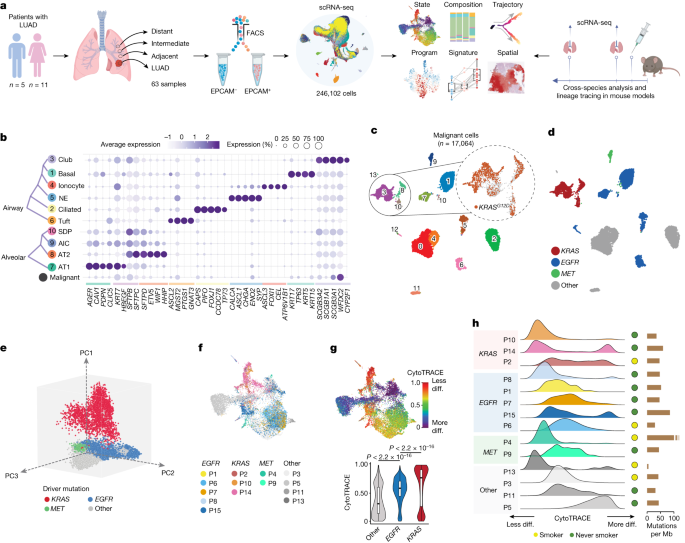
A study on lung adenocarcinoma (LUAD) reveals the transcriptional landscape of epithelial and malignant cells, identifying distinct cell subsets and their roles in LUAD development. The research shows that KRAS mutant LUADs exhibit unique transcriptional programs and extensive heterogeneity, while a subset of alveolar intermediate cells (AICs) transition to malignant cells, particularly KRAS mutant cells. These AICs, termed KRT8-high alveolar cells (KACs), are enriched in tumour-adjacent normal regions and display features of reactive epithelial cells. The study provides insights into the cellular and transcriptional phenotypes of LUAD, potentially identifying actionable targets for early treatment strategies.
Researchers have found that certain KRAS mutations in pancreatic cancer are linked to better survival rates, paving the way for potential cancer vaccines. Pancreatic cancer, with a low 5-year survival rate, is often resistant to traditional treatments. The study analyzed data from 803 pancreatic cancer patients and found that specific KRAS mutations were associated with improved survival. Targeting KRAS mutations for vaccine development is a promising avenue, with ongoing research and clinical trials showing potential for new therapies in pancreatic and colorectal cancers.