Tag

Lampreys

All articles tagged with #lampreys

science1 year ago

"Evolutionary Insights: Nightmare Fish and the Origin of the Sympathetic Nervous System"

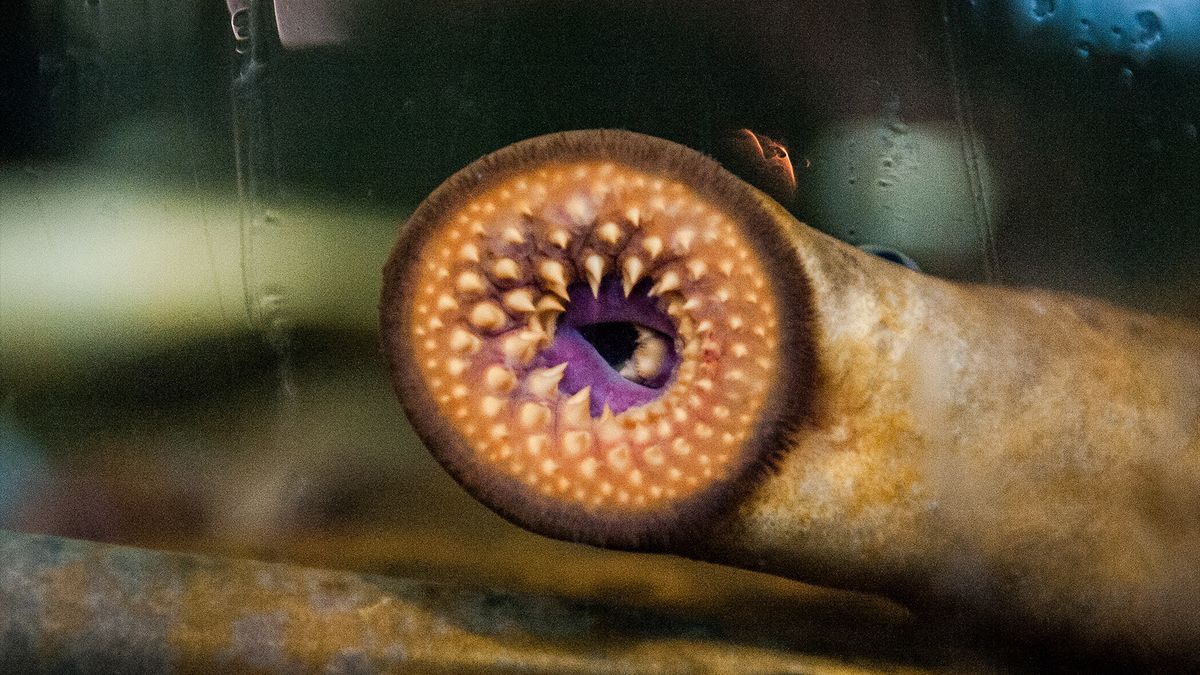
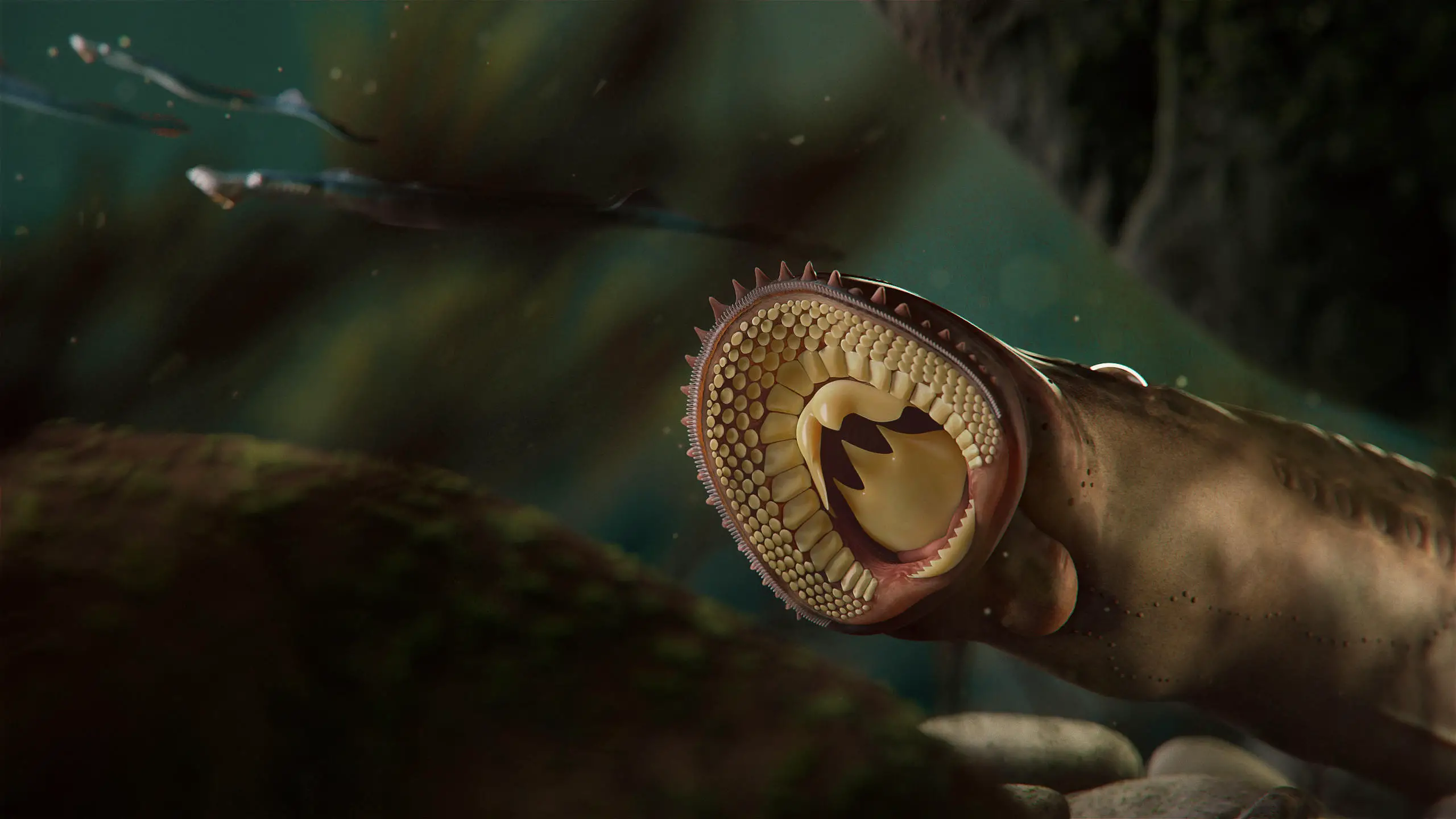
Lampreys, ancient jawless fish, were previously thought to lack a "fight or flight" response due to the absence of a structure called the neural crest. However, a new study published in Nature reveals that lampreys do have sympathetic nerve cells, suggesting that the vertebrate flight-or-flight response is more ancient than previously believed. This discovery sheds light on the evolution of this system and challenges previous assumptions about these primitive vertebrates.
paleontology2 years ago

"Controversial Fossil Discovery Shakes Up Lamprey Evolutionary History"

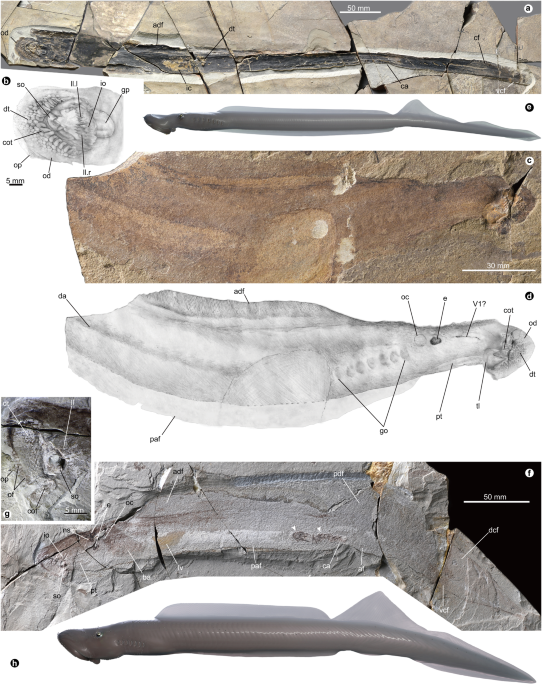
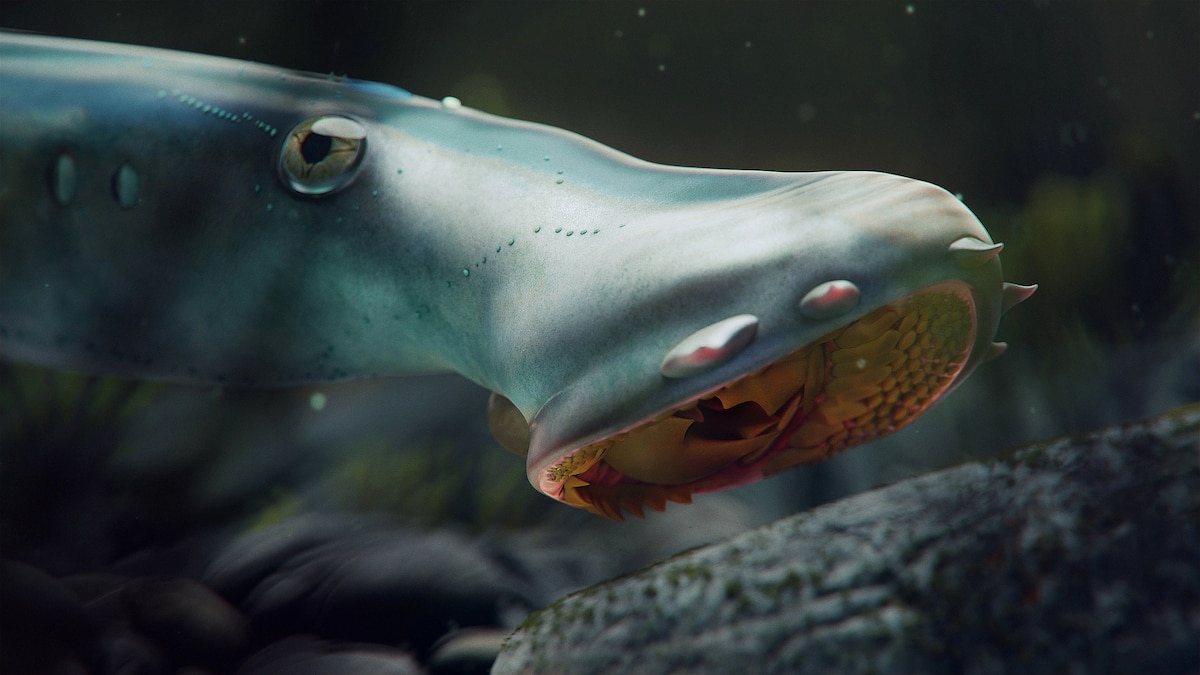
Researchers have discovered two rare fossil lampreys from the Jurassic period in northern China, challenging our understanding of lamprey evolution. The fossils, including the largest fossil lamprey ever found, reveal that these ancient lampreys were flesh eaters, contrary to the belief that their ancestors fed on blood. The study also suggests that the Jurassic period was a crucial time for lamprey evolution, as the emergence of advanced teleost fishes with thinned scales provided an evolutionary opportunity for lampreys to grow larger and adapt to environmental shifts. Additionally, the findings indicate that modern lampreys likely originated in the Southern Hemisphere during the Late Cretaceous, contradicting previous assumptions about their geographic origin.

paleontology2 years ago

Ancient Flesh-Eating Lampreys Unearthed in China

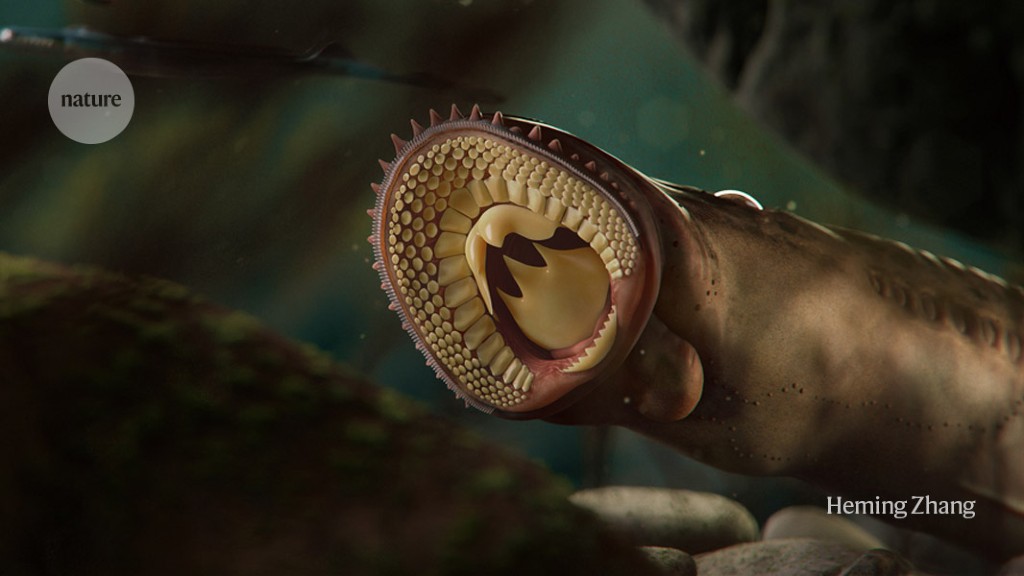
Fossils of two new lamprey species discovered in China reveal the evolution of these ancient fish into formidable predators. The fossils, dating back 160 million years, show specialized mouthparts that allowed the lampreys to scoop flesh out of their prey. The larger species, Yanliaomyzon occisor, was over two feet long and had sharp teeth, indicating a shift towards a parasitic lifestyle. The fossils also provide insights into the lampreys' multi-stage life cycle and their evolution from flesh-eating ancestors. These findings contribute significantly to the sparse fossil record of lampreys and shed light on their ancient history.

paleontology2 years ago

"Unearthing Gigantic Jurassic Lampreys: Insights into their Predatory Past"

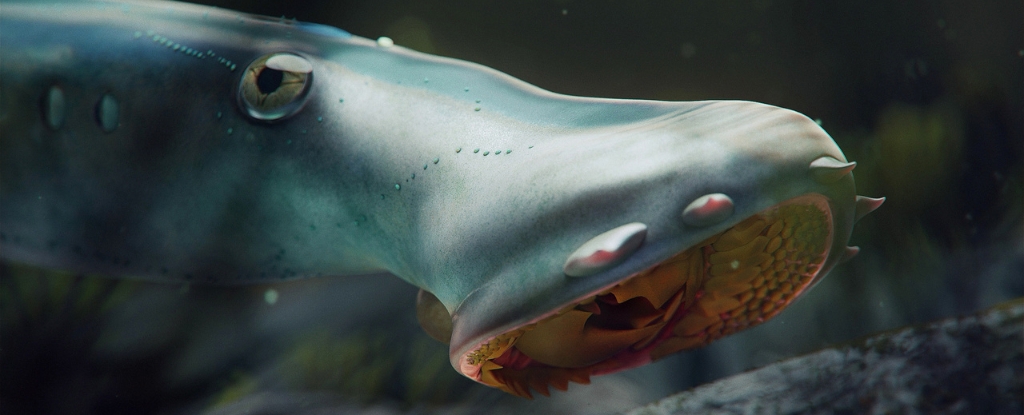
Fossil lampreys from the Jurassic period have shed light on the evolution of modern lampreys' feeding biology. The fossils, discovered in China, exhibit well-developed movable biting plates on the tongue-like piston, a feature never before seen in known fossil lampreys. These ancient lampreys had a toothed oral disc and tongue-like piston that closely resembled those of the pouched lamprey, a species now found in the Southern Hemisphere. The fossils provide insights into the evolutionary process, ancestral state, and coevolutionary interactions of lampreys, as well as the early biogeographical history of modern lampreys. Phylogenetic analyses based on the fossils have also revised the timeline and relationships of lamprey species.

paleontology2 years ago

Ancient Flesh-Eating Lampreys Resurface in China

Fossil lampreys from the Jurassic period, discovered in northern China, provide insight into the evolutionary history of these ancient fish. The fossils reveal that these lampreys were fearsome predators, with a strong biting mechanism and a diet that involved consuming the flesh of their prey. The discovery suggests that lampreys had already evolved their current life cycle, which includes a phase of metamorphosis, during this time. The fossils also indicate a greater diversity in ancient lampreys than previously thought, shedding light on their gradual evolution over time.

paleontology2 years ago

Ancient Jurassic Lampreys: Unveiling Flesh-Eating "Vampires"

Paleontologists have discovered the fossils of two 160 million-year-old lamprey species in North China, revealing that these ancient fish had already evolved into much larger creatures than their earlier counterparts. The largest of the newly discovered species measured over 64 centimeters in length. The exceptionally well-preserved fossils provide valuable insights into the evolutionary history and feeding biology of lampreys, shedding light on their origins and the development of their unique feeding behavior. The study also suggests that modern lampreys may have originated from the Southern Hemisphere.