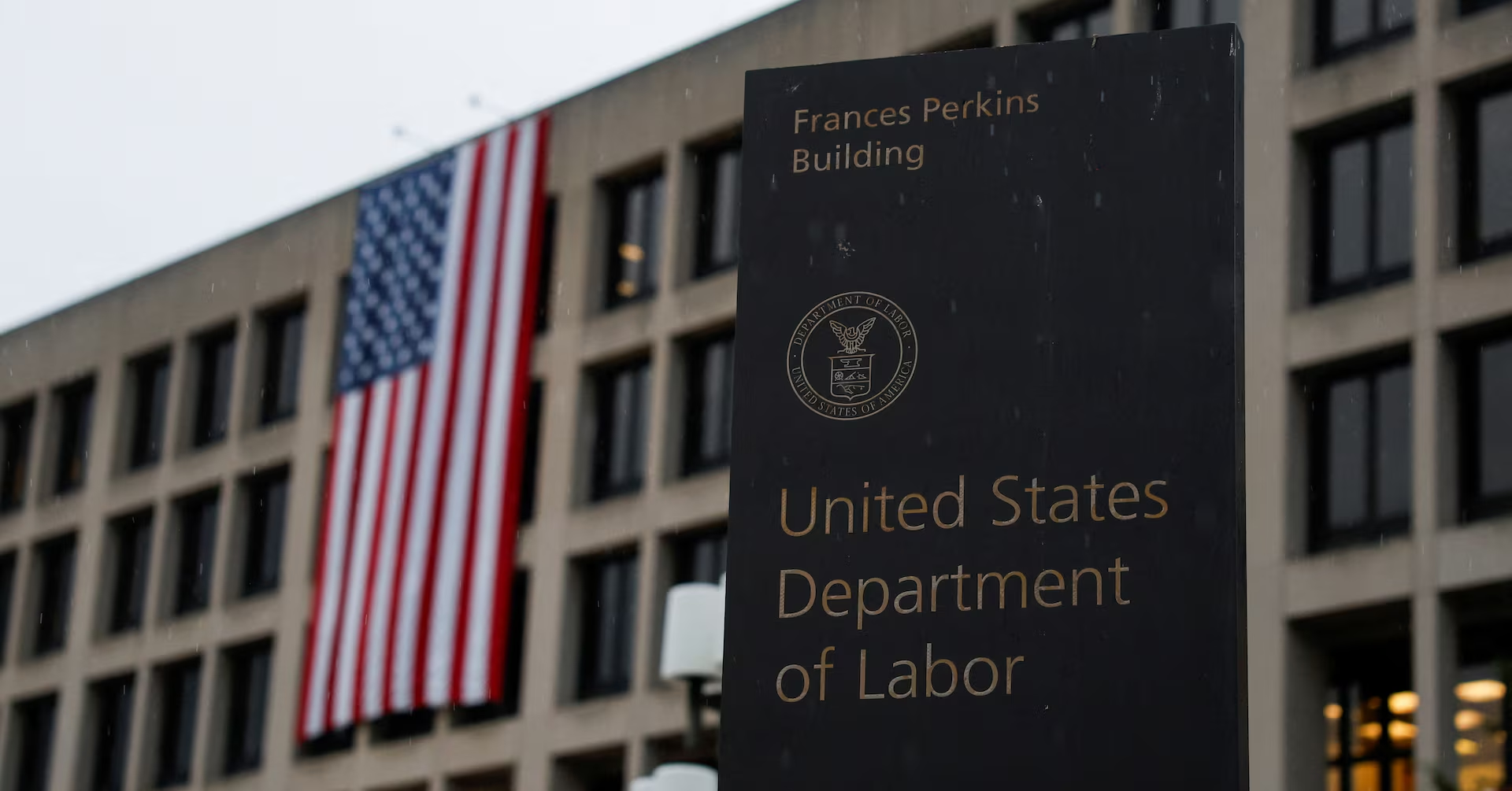
Inflation unexpectedly slowed in November with the consumer price index rising 2.7% annually, and core inflation at 2.6%, but analysts warn that data gaps prevent declaring victory for the White House.
The Labor Department has recalled furloughed workers to compile critical inflation data amid a government shutdown, which has halted other releases and raised concerns about the impact on economic decision-making and data quality, especially given recent political tensions and staffing issues at the BLS.
The US Labor Department's Bureau of Labor Statistics will resume work on September's consumer price index report despite the ongoing government shutdown, with the report scheduled for release on October 24, nine days later than planned, while other data releases remain delayed due to the shutdown.
The U.S. government shutdown has delayed the release of the crucial monthly jobs report, creating uncertainty about the country's economic outlook due to the lack of official economic data.
A potential US government shutdown could halt key economic data releases, including the September jobs report, construction, and trade data, impacting economic assessments and Social Security adjustments, with delays depending on funding resolution.
The US Labor Department has announced it will suspend the release of key economic data, including the upcoming jobs report and inflation indicators, if the government shuts down, potentially impacting economic analysis and Federal Reserve decisions.
Under Trump's plans for a government shutdown, many federal agencies would cease operations, leading to layoffs and closures, reflecting his vision of a smaller federal government.
The Department of Labor's internal watchdog is investigating the Bureau of Labor Statistics' methods for collecting and reporting economic data, including employment and inflation figures, amid recent revisions and political controversies involving former BLS officials and the Trump administration.
The Trump administration has intensified scrutiny on the Labor Department's Bureau of Labor Statistics, launching an inquiry into recent changes in data collection and reporting practices amid broader political pressures and concerns over data reliability, following the firing of the BLS head and controversial revisions to economic reports.
The Labor Department's Office of Inspector General has launched an investigation into how the Bureau of Labor Statistics collects and reports jobs and inflation data, amid concerns over recent data revisions and political influence, especially following the firing of BLS Commissioner Erika McEntarfer by President Trump.
Supporters of the Bureau of Labor Statistics emphasize the reliability and transparency of the US jobs data amid recent political controversies and a disappointing jobs report, asserting their commitment to nonpartisan, accurate economic statistics despite pressures and revisions.
Originally Published 4 months ago — by MarketWatch
Initial jobless claims decreased by 5,000 to 229,000 for the week ending August 23, indicating that the recent increase was not part of a rising trend in layoffs.
Stephen Colbert humorously criticizes President Trump for firing the Labor Department official over poor jobs report news, highlighting Trump's tendency to dismiss bad news by firing officials, while other late-night hosts joke about Trump's plans for a new White House ballroom and the revival of 'King of the Hill'.
The U.S. Department of Labor has proposed over 60 changes to eliminate or revise outdated workplace rules, aiming to reduce regulatory burdens but facing criticism for potentially increasing worker risks, especially for vulnerable groups like women and minorities. Key proposals include removing minimum wage requirements for home health care workers, rescinding protections for migrant farmworkers, and relaxing safety standards at construction sites and mines, with ongoing public comment periods before implementation.
The U.S. Department of Labor plans to overhaul over 60 workplace regulations to reduce burdensome rules, aiming to promote growth and deregulation, but critics warn these changes could increase risks for workers, especially in sectors like home health care, agriculture, construction, and mining.