An experimental off-the-shelf cancer vaccine called ELI-002 shows promising early results in prolonging survival and inducing immune responses in patients with pancreatic and colorectal cancers harboring KRAS mutations, with further trials underway to confirm its efficacy.
An off-the-shelf cancer vaccine has shown potential to prevent relapse in patients with pancreatic and colon cancer caused by the KRAS mutation, which accounts for up to 90% of the disease. The vaccine uses peptides to bind to the protein albumin, creating white blood cells that help fight off cancer markers present in the patients’ blood. The vaccine was 100% effective at creating an immune response in patients and could help lower cancer biomarkers. The vaccine won't have to be customized to each patient, making it more readily available and less expensive. Larger studies are needed to confirm its efficacy.
An off-the-shelf cancer vaccine has shown potential to prevent relapse in patients with pancreatic and colon cancer caused by the KRAS mutation, which accounts for up to 90% of the disease. The vaccine uses peptides to bind to the protein albumin, creating white blood cells that help fight off cancer markers present in the patients’ blood. The vaccine was 100% effective at creating an immune response in patients and could help lower cancer biomarkers. The vaccine won't have to be customized to each patient, making it more readily available and less expensive. Larger studies are needed to confirm its efficacy.
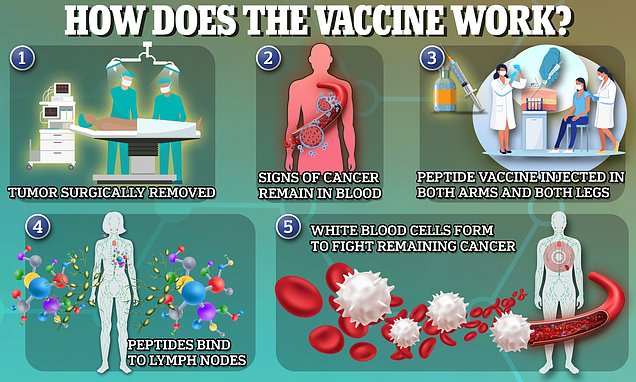
An off-the-shelf cancer vaccine developed by Elicio Therapeutics has shown potential to lower the risk of relapse in patients with colon and pancreatic cancers caused by the KRAS mutation, which accounts for up to 90% of cases. In an early trial, the vaccine was found to be safe and feasible, and could improve survival rates for these two deadly cancers. Unlike other experimental cancer vaccines, this vaccine does not need to be customized to each patient, making it more readily available and less expensive. The vaccine uses peptides to bind to the protein albumin, which then travels to the lymph nodes and creates white blood cells to fight off cancer markers found in the patients' blood.