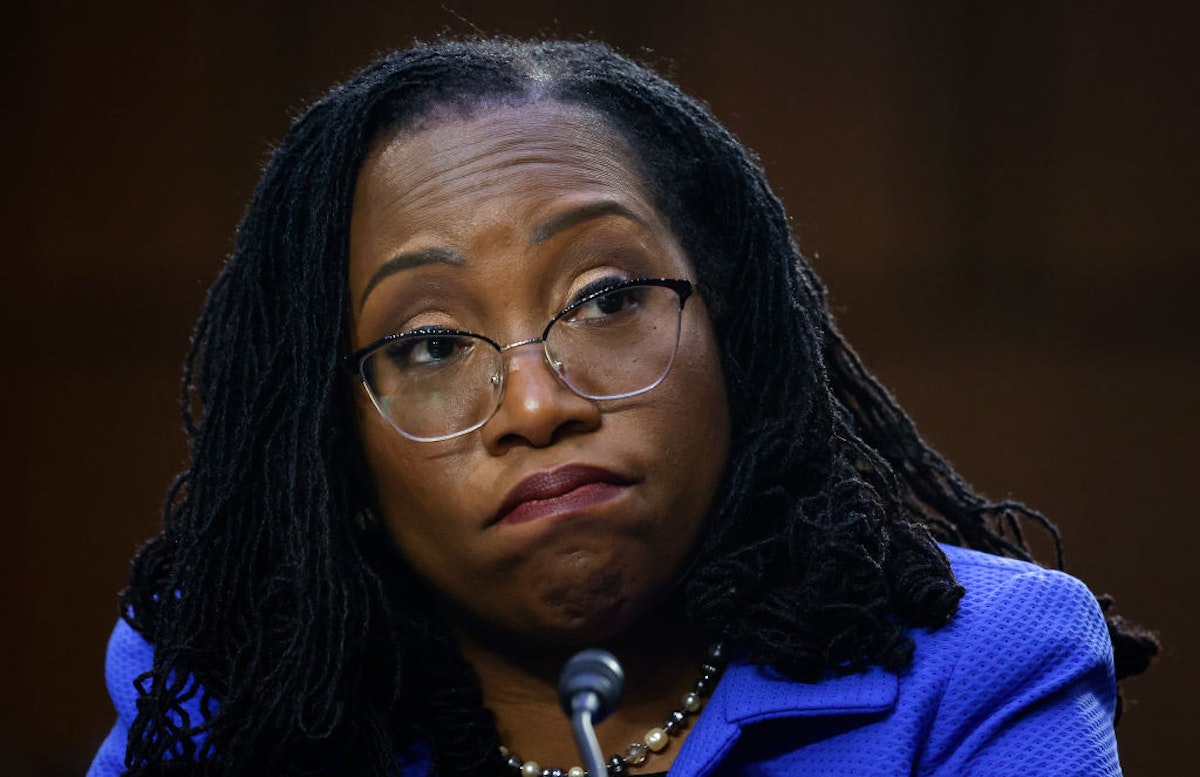
Justice Ketanji Brown Jackson criticized the conservative Supreme Court justices for their partisan approach and decision-making, particularly in a case involving the cancellation of NIH grants, accusing them of creating a confusing and biased legal process that undermines judicial review and hampers scientific and health research.
Michelle Obama and Justice Ketanji Brown Jackson drew crowds on Martha’s Vineyard during a series of cultural events, including a film festival and book discussions, celebrating Black culture and community, with notable appearances by celebrities and politicians.
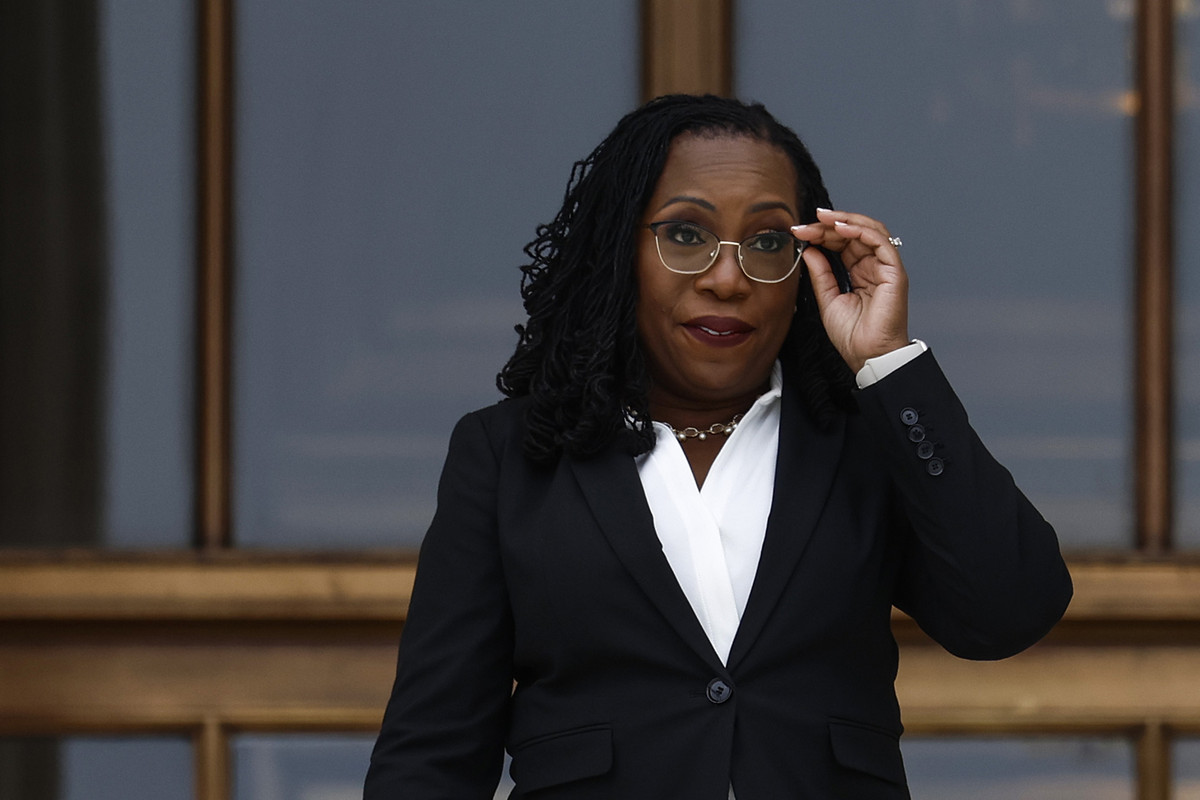
Justice Ketanji Brown Jackson has quickly established herself as a vocal critic of her conservative colleagues on the Supreme Court, frequently dissenting and warning against what she perceives as lawless shortcuts and threats to democracy, notably criticizing the court's approach to Trump-era policies and its handling of emergency applications.
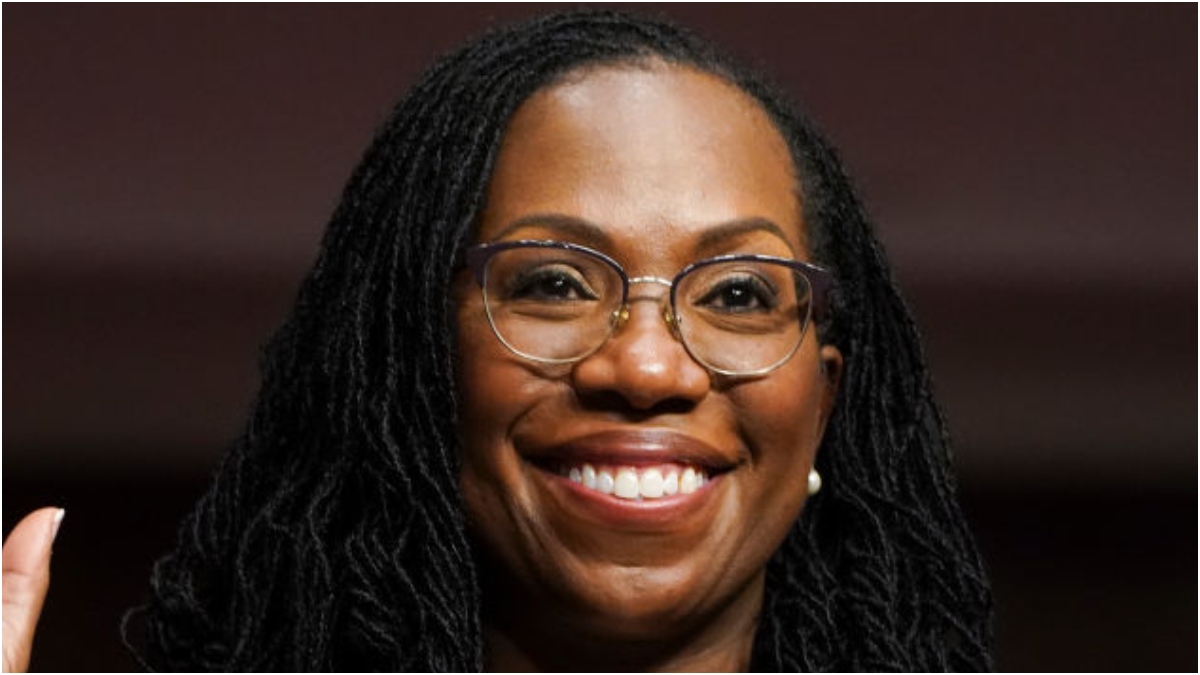
Supreme Court Justice Ketanji Brown Jackson will fulfill a lifelong dream by performing in a one-night Broadway show of the musical & Juliet. This marks a unique milestone for Jackson, who has expressed her theatrical aspirations since her Harvard days. The performance will include a post-show discussion, and an ensemble role was created specifically for her. Jackson's appearance on Broadway aligns with her history-making role as the first Black woman on the U.S. Supreme Court.
U.S. Supreme Court Justice Ketanji Brown Jackson will make a one-night-only Broadway debut in the musical '& Juliet' on December 14, fulfilling a lifelong dream. A new ensemble role has been created for her, and she will participate in a post-show talkback. This appearance makes her the first Black, female Supreme Court justice to perform on a Broadway stage, aligning with her early aspirations expressed in her memoir 'Lovely One.'
Supreme Court Justice Ketanji Brown Jackson warned that the conservative majority's decision to allow enforcement of Idaho's transgender youth health care ban during an appeal lacked "reason and restraint." She argued that the court failed to show respect for lower court judges and that Idaho had not demonstrated irreversible injury if the ban was blocked during the appeal. The decision does not apply to the two teenage transgender girls who filed the lawsuit. The ruling has sparked strong reactions from both transgender activists and Idaho Attorney General Raúl Labrador, highlighting the ongoing cultural and political debate over transgender rights and gender-affirming medical care for youth.
During oral arguments in the social media censorship case Murthy v. Missouri, Justice Ketanji Brown Jackson expressed concerns over the First Amendment restraining the government, suggesting that the government should have the power to dictate what can be posted on social media, particularly in times of crisis like the COVID pandemic. Her comments have sparked criticism from Rep. Jim Jordan and others, who argue that her view goes against the intended purpose of the First Amendment and could lead to government censorship of political speech.
During oral arguments at the Supreme Court, Justice Ketanji Brown Jackson made a false claim about bump stocks, stating that they allow guns to fire "800 rounds a second," which is significantly higher than their actual rate of fire. Another justice, Sotomayor, questioned why individuals with arthritis should be allowed to possess weapons with high rates of fire. These statements have raised concerns about the justices' understanding of gun laws and firearms, as well as the potential impact on future rulings.
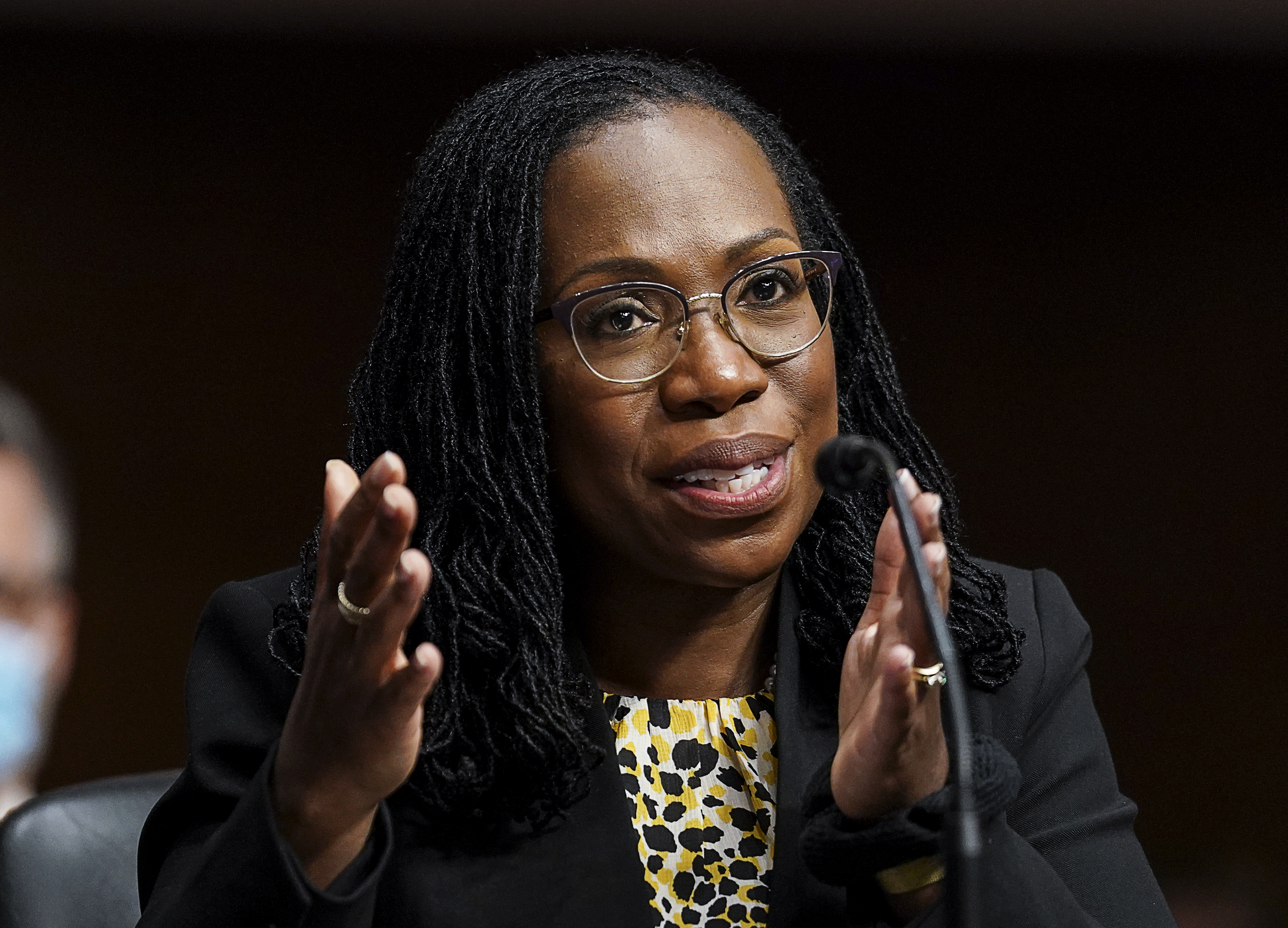
During her Supreme Court confirmation hearings, nominee Ketanji Brown Jackson delved into the definition of "officer of the United States," a term critical to the separation of powers. The discussion centered on the scope of executive authority and the potential impact on the judiciary, with senators and Jackson exploring the nuances of the term in the context of her judicial philosophy.
Supreme Court Justice Ketanji Brown Jackson sided with Justice Samuel Alito in a ruling that left in place a conservative appeals court ruling on a voting rights case, but clarified her disagreement with the use of an extraordinary writ of mandamus. Jackson emphasized the need to resolve the case before the 2024 congressional elections in Louisiana and called on the state to stand by its representation that the legislature will not consider alternative maps while litigation is pending. The district court is scheduled to resume the remedial process for selecting a new map in early February. Jackson has been vocal about her opposition to race-based gerrymandering, citing the intent of the Reconstruction Amendments to ensure equal rights for Black voters.
The Supreme Court heard arguments in the case of Pulsifer v. United States, which centers around the interpretation of the word "and" in the First Step Act, a criminal justice reform bill. Mark Pulsifer, who pleaded guilty to a drug-related felony, argues that he should be eligible for a sentencing reduction because he does not meet all three eligibility criteria outlined in the law. Federal prosecutors argue that anyone who fails to meet any of the criteria is ineligible for relief. The justices engaged in a detailed analysis of the language and implications of the law, with Justice Gorsuch expressing concern about the power imbalance between defendants and the government. The court's decision will have implications for future criminal justice reform efforts.
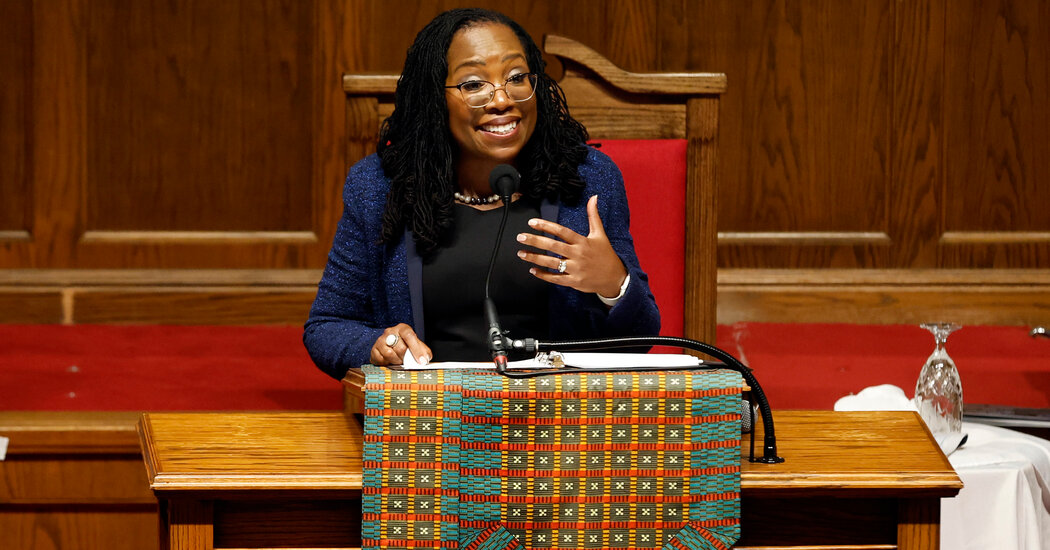
Supreme Court Justice Ketanji Brown Jackson delivers a speech at the Sixteenth Street Baptist Church in Birmingham, Alabama, commemorating the 60th anniversary of a Ku Klux Klan bombing that killed four young Black girls. She calls on the nation to confront the uncomfortable truths of its history, emphasizing the importance of remembering and learning from past atrocities. Justice Jackson's speech highlights her role in history and the ongoing battle for racial justice, while also acknowledging the sacrifices made by those who fought for civil rights. She urges the country to confront the same evils of violence, hatred, and prejudice that persist today.
US Supreme Court Justice Ketanji Brown Jackson, the first Black woman appointed to the high court, emphasized the importance of confronting the nation's history and educating children on Black history during a gathering commemorating the 60th anniversary of the 16th Street Baptist Church bombing in Birmingham, Alabama. The bombing, carried out by Ku Klux Klan members, resulted in the deaths of four young Black girls and served as a pivotal moment in the Civil Rights Movement. Justice Jackson urged Americans to remember the sacrifices made for liberty and to acknowledge and learn from the darkest parts of the country's past.
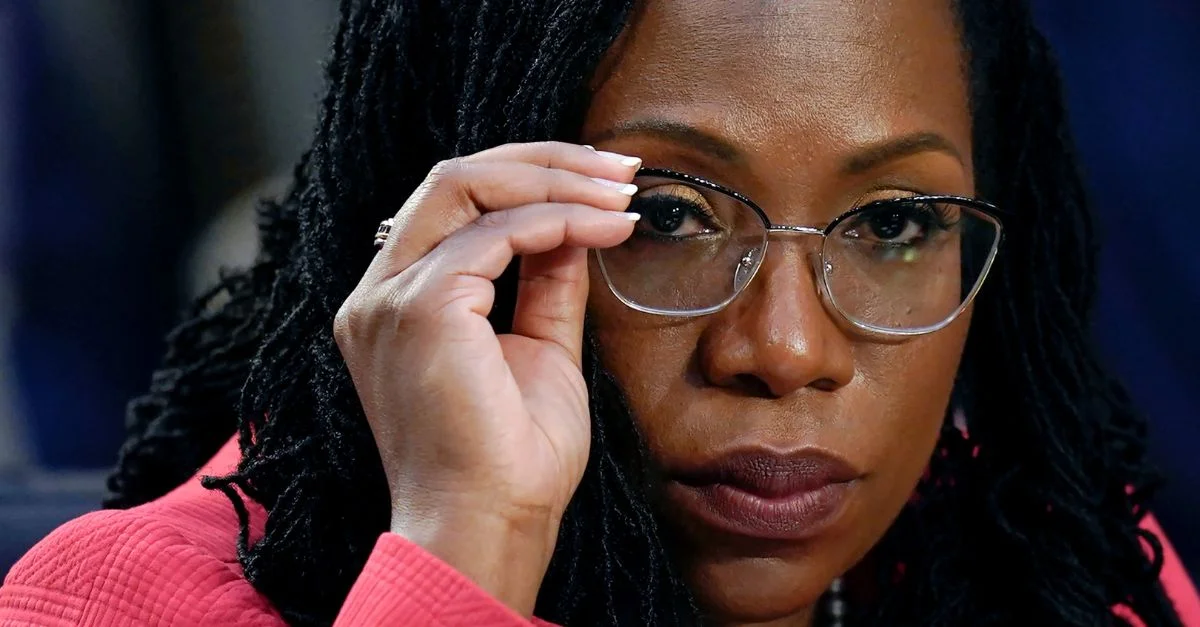
Justice Ketanji Brown Jackson, the newest member of the Supreme Court, has made her presence known by becoming the most prolific questioner among the justices and displaying a willingness to dissent. As the first Black woman to serve as a justice, she has passionately defended race-conscious measures to address discrimination and has shown a deep understanding of criminal defendants' perspectives. While she has sought cross-ideological consensus on certain issues, she remains part of the liberal minority on the court. Jackson's impact is limited in the most divisive cases, but she has used written dissents to highlight her priorities and draw attention to perceived injustices. She has also aligned with conservative Justice Neil Gorsuch in some cases, particularly those involving individual rights versus the state. Overall, Jackson's first term has been impressive, but her ability to change the law significantly is constrained by her minority position.
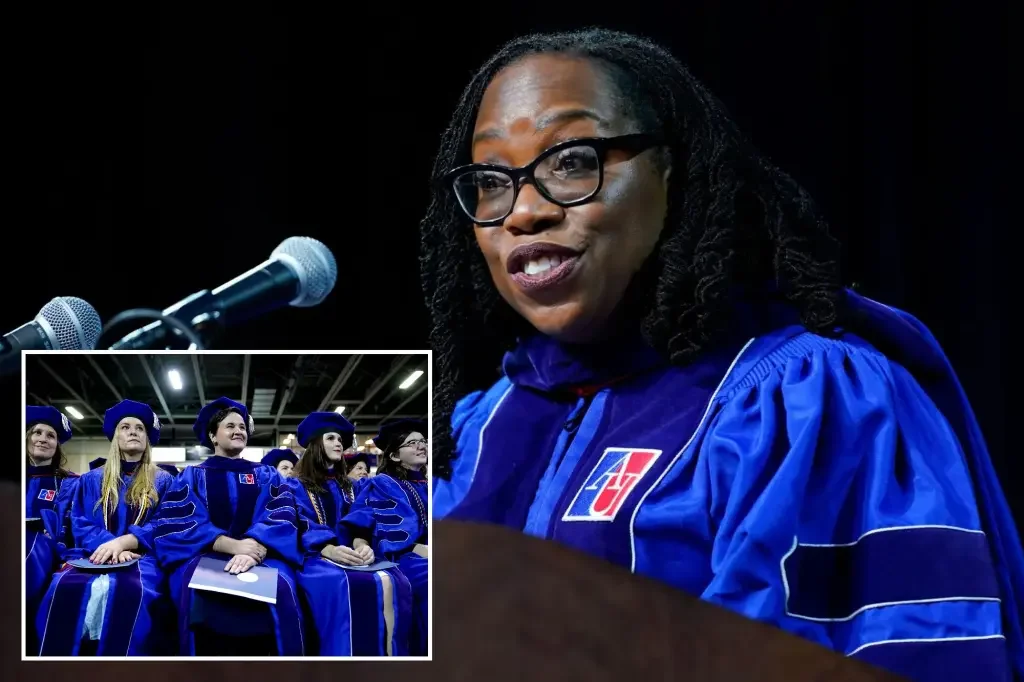
Supreme Court Justice Ketanji Brown Jackson, a self-proclaimed "Survivor superfan," offered lessons from the reality TV show to graduating law school students during her commencement address at American University's law school in Washington. Jackson drew parallels between the show and becoming a good lawyer, including making the most of resources, knowing your strengths, and playing the long game. She also advised shutting out distractions and staying even-keeled. Jackson's speech was her first as a justice and she will also give a commencement address at Boston University's law school.